Leaning In - Getting Back to Basics When Life is in Upheaval - Part 2: Diagnosing the Problem -(A) Too Much Information
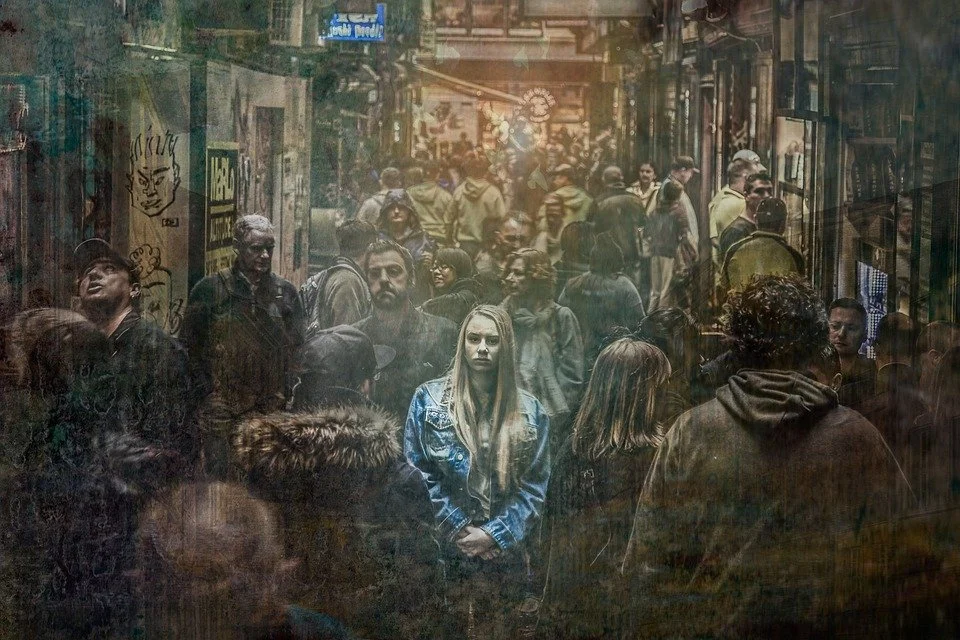
In this series it is my intention to talk about the basics when it comes to our Christian faith. In recent years it has become more clear to me that we need to regularly come back to the truths on which our faith is based. This has become even more evident in our current situation with so much information coming from every direction to the point where we find confusion and frustration becoming a regular part of our lives. I find myself asking: what has happened to my peace, my hope, and my joy? Why am I feeling so discouraged and angry?

Image by Lukas Bieri from Pixabay
I’d like to look at four areas I believe are contributing to our slide away from the basics of our Christian faith: Too Much Information, Too Many Things to Do, Too Much Isolation, and Too Little Time Spent with God. This week we are going to narrow in on TMI.
Too Much Information - Before this current age of the IPhone most of our information was delivered via the television or the newspaper. News stories were typically reported after something happened and television kept information buffered in a blanket of what was appropriate to show or talk about. Obviously, over time things became much more open and sensationalized, but there were still parameters surrounding what sort of information was appropriate for the public to view or read. Crime reporting, accidents and tragedies didn’t talk about or show every sordid detail. The truth was presented, but with respect and concern for the victims and the audience.

Today we are spoon fed every detail about every crime. We are given “truth” that is slanted to whatever reality the media, or the social influencer deems important. News is no longer reported, but dramatized in order to sway the public’s opinion in one direction or another. Profanity is rampant. Death is celebrated, and perversion is an alternative lifestyle. Nothing goes unsaid, and hate speech is everywhere. To find light and real facts they have to be dug for like looking for buried treasure.
What does the Bible have to say about all of this? Let’s take a look.
“1 I will sing of lovingkindness and justice,
To You, O Lord, I will sing praises.
2 I will give heed to the blameless way.
When will You come to me?
I will walk within my house in the integrity of my heart.
3 I will set no worthless thing before my eyes;
I hate the work of those who fall away;
It shall not fasten its grip on me.
4 A perverse heart shall depart from me;
I will know no evil.
5 Whoever secretly slanders his neighbor, him I will destroy;
No one who has a haughty look and an arrogant heart will I endure.
6 My eyes shall be upon the faithful of the land, that they may dwell with me;
He who walks in a blameless way is the one who will minister to me.
7 He who practices deceit shall not dwell within my house;
He who speaks falsehood shall not maintain his position before me.
8 Every morning I will destroy all the wicked of the land,
So as to cut off from the city of the Lord all those who do iniquity.”
This psalm was written by David, a man who was familiar with both sides of treachery, and deceit, but through his sin, and his repentance God remained faithful to him and continued to bless his rule as King of Israel.

Image by Webster2703 from Pixabay
If we truly look at the information that is coming at us we begin to see so much of it is worthless, perverse, slanderous, prideful, deceitful and false. Unfortunately, many times we take it in as gospel truth. If it’s on social media it must be true; if it is a video recorded at the time it must be real. If the mainstream news is reporting it I must believe it. As Christ followers we are commanded to bring everything back to the truth of God’s word.
The book of Proverbs was written by King Solomon. In it he is writing to his son to encourage him to follow the commands and teachings of God; to pursue godly wisdom; and to not lean on his own understanding.
“1 My son, do not forget my teaching,
But let your heart keep my commandments;
2 For length of days and years of life
And peace they will add to you.
3 Do not let kindness and truth leave you;
Bind them around your neck,
Write them on the tablet of your heart.
4 So you will find favor and good repute
In the sight of God and man.
5 Trust in the Lord with all your heart
And do not lean on your own understanding.
6 In all your ways acknowledge Him,
And He will make your paths straight.
7 Do not be wise in your own eyes;
Fear the Lord and turn away from evil.
8 It will be healing to your body
And refreshment to your bones.
9 Honor the Lord from your wealth
And from the first of all your produce;
10 So your barns will be filled with plenty
And your vats will overflow with new wine.
11 My son, do not reject the discipline of the Lord
Or loathe His reproof,
12 For whom the Lord loves He reproves,
Even as a father corrects the son in whom he delights.”
This proverb tells us that if we keep God’s commands and pursue His wisdom we will have peace. It also encourages us to hang on to both kindness and truth as with them we will find favor with God and with our fellow human beings. Verses 5 - 8 remind us that we are to trust God, not our own understanding. We are to acknowledge Him and He will make our paths straight. Our own thoughts and ideas, or the thoughts and ideas of others are not to be the wisdom we lean into, but we are to lean in to His wisdom. We are to fear the Lord and turn away from evil.

Image by erwin bosman from Pixabay
Whatever information we are allowing into our homes and into our hearts is going to have an impact on how we think, how we view others and how we view God. If you are struggling with fear and anxiety, anger or despair, perhaps it is time to take a social media break or at least start really looking at what accounts, news and influencers we are listening to.
Ask yourself these questions:
After I read this or watch this do I feel uplifted or dragged down?
Is this information confirming what I know to be true, or is it causing me to question?
Is watching this account regularly making me feel angry or hostile towards a people group, or towards individuals of a certain faith, skin color or persuasion? Or is it helping me to see every person as someone deserving of God’s love and salvation?
Our lives are meant to be God’s lights in a dark world. To allow outside information to affect that light is to allow our light to be hidden under a basket.
“14 “You are the light of the world. A city set on a hill cannot be hidden;
15 nor does anyone light a lamp and put it under a basket, but on the lampstand, and it gives light to all who are in the house.
16 Let your light shine before men in such a way that they may see your good works, and glorify your Father who is in heaven.”
Next time you turn on the news, or open up social media be sure to think about what ideas, views and thoughts are being talked about. It is not wrong to hear opposing views or to question our beliefs, but we must always bring them back to God’s truth in His word.
Next time we will look at how being too busy can affect our lives and cause our basic beliefs to get waylaid.