Embracing Sadness and Finding Joy: A Study of Our Life in Christ During the Holidays - Part 3: Bending our Knees Like the Shepherds

Merry Christmas, everyone! If you have been following along, you know I have been doing a series on embracing the emotion of sadness during the holidays as it pertains to our life in Christ. In Part 1, we looked at why it is okay to be sad, that God is the author of emotions, and tips for maneuvering grief during the holidays. In Part 2, we looked back at God’s faithfulness and how that pertains to dealing with sadness, and mulled over why remembering His faithfulness is like a wall of defense for our minds.

Today we are going to go directly to the Christmas story and look at what we can learn from the Shepherds and how that enables us to have joy, even in the midst of heartache and grief.

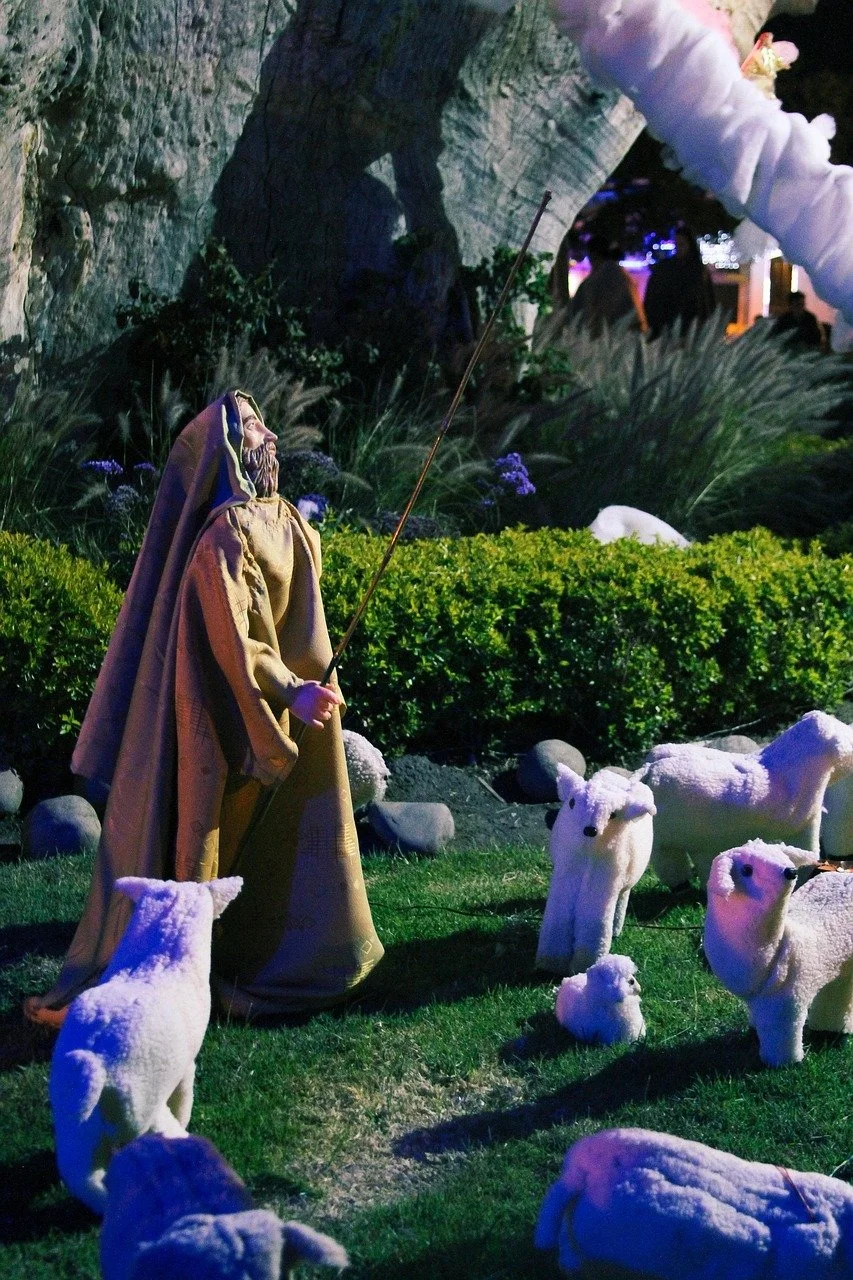
Image by Eduin Escobar from Pixabay

8 In the same region there were some shepherds staying out in the fields and keeping watch over their flock by night.
9 And an angel of the Lord suddenly stood before them, and the glory of the Lord shone around them; and they were terribly frightened.
10 But the angel said to them, “Do not be afraid; for behold, I bring you good news of great joy which will be for all the people;
11 for today in the city of David there has been born for you a Savior, who is Christ the Lord.
12 This will be a sign for you: you will find a baby wrapped in cloths and lying in a manger.”
13 And suddenly there appeared with the angel a multitude of the heavenly host praising God and saying,
14 “Glory to God in the highest,
And on earth peace among men with whom He is pleased.”
15 When the angels had gone away from them into heaven, the shepherds began saying to one another, “Let us go straight to Bethlehem then, and see this thing that has happened which the Lord has made known to us.”
16 So they came in a hurry and found their way to Mary and Joseph, and the baby as He lay in the manger.
17 When they had seen this, they made known the statement which had been told them about this Child.
18 And all who heard it wondered at the things which were told them by the shepherds.
19 But Mary treasured all these things, pondering them in her heart.
20 The shepherds went back, glorifying and praising God for all that they had heard and seen, just as had been told them.
— Luke 2:8-20 (NASB 1995)

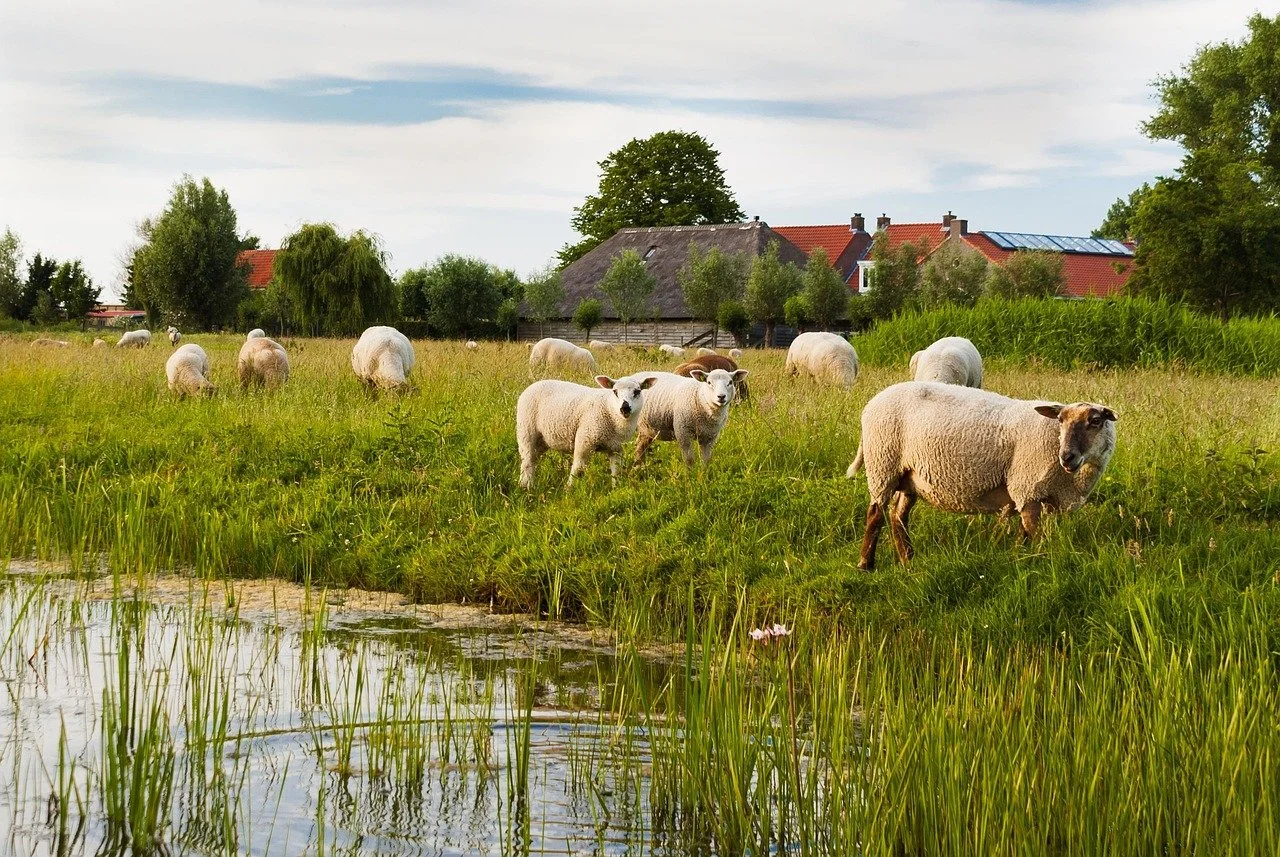
Shepherding was a vital industry all throughout the Old Testament with numerous “big names” in Biblical history doing this difficult, outdoor, sometimes life threatening job. Abel, Abraham, Issac, Moses and David were all shepherds. Though the socioeconomic status of a shepherd had declined by the time of Jesus’ birth, the commitment of shepherds to care for their flocks still stood strong. They regularly faced predators that included wolves, lions, bears, hyenas, and leopards. They walked many miles to find feeding areas, as well as water. Shepherds were always vigilant. Even after the sheep were led into the fold for the night, a shepherd would place his body across the doorway to keep out unwanted predators. Apparently there were occasions where shepherds would mix their herds together for the evening to split the guarding shifts. In the morning they were easily able to sort the sheep by the sound of each shepherd’s voice.

It might be, on the night the angel came to these shepherds that was the case. Perhaps four or five shepherds had come together, and while a few of them slept the others kept watch over the sheep. I am pretty sure they were all wide awake when that angel showed up!

Image by Jeff Jacobs from Pixabay

There are many things we can learn from the shepherds that can help us in our season of sadness around the holidays. Let’s take a look.

1 - Shepherds were living life. These shepherds were doing their work. They were guarding their sheep: leading, guiding, feeding, watching, giving aid, tending to wounds, and certainly searching for any lambs that may have wandered away. Any one of those shepherds or shepherdesses (yes, women were shepherds too…talk about bad a**) could have been feeling sad. They could have been grieving the loss of a family member, the loss of a sheep (they were required to pay for any sheep lost or killed); they could have been struggling with illness, or blisters on their feet, or maybe they were discouraged because they really wanted to be a singer in the temple choir, but here they are tending sheep.

When we are dealing with sadness or grief, one of the best things to do, is keep living life. Go to work, meet with friends, get groceries, work on a closet, clean a bathroom; even the most mundane tasks that contribute to living life help us to process and get through. Listen to this quick snippet that reminds us why even making the bed can help.

2. Shepherds were brave and intelligent. Frankly I find it fascinating that shepherds were not seen as super heroes. I mean, beating off wolves, bears, an occasional lion or two had to be a tough job. These people were not weak, nor were they soft. They were weathered, strong, and probably wiry. They also had to have job intelligence, meaning they knew where to go to feed the sheep, where to find water, which in itself was a challenge in an arid climate. Sheep being what they are don’t like to drink from moving water, as it spooks them. They needed still water that wasn’t tainted with bacteria or other things that would make the sheep sick.

Image by Richard Haddeman from Pixabay

If you are working through a time of grief, learn what works for you to not only process that grief, but also the things that help you to continue living life. That will look different for every person. I personally like the “grief blanket” idea. I can allow myself to feel sadness for a time, and then get up and do other things. Maybe for you dealing with sadness is easier when you keep busy while also allowing your mind to remember why you are sad. Know what things will cause you to give in to the sickness of despair and depression, and find “safe water” to drink - like the water of God’s truth in His word.

3 - The shepherds were curious. After they got over the initial shock of seeing angelic beings, the shepherds high tailed it for Bethlehem to see the child of which they were told. In your sadness, be curious. Ask God what He wants you to learn about His character, yourself, or someone else. Be curious about Biblical accounts of people who dealt with grief and sadness. Read about Sarah, Hannah, Naomi, David, Nehemiah, Job (read the whole book to not only understand his grief, but know better the God who deals, reveals and restores,) and even Jesus as he is moved with compassion, and yes grief in the Gospel accounts.

Image by Ag Ku from Pixabay

4 - The shepherds were humble. I will acknowledge I am making an assumption about the shepherds’ humility. However, seeing the type of job they had and the lifestyle they lived I do not think they were the type of people who would put on airs and act as though they knew everything or had it all together. They really strike me as just regular, hard working people, that maybe were a bit smelly. Ha, ha. But they were real. The thing I love about this Biblical account is their unbridled enthusiasm. Why does that make them humble? Because they didn’t care about what people would think, they didn’t care that they were the best dressed, or clean, or had lots of money. They just wanted Jesus, and isn’t wanting Jesus all about humility?

Wanting the true Jesus of the Bible is about choosing to give up ourselves: our preconceived ideas, our knowledge base, our education, our upbringing, our trauma, our grief, our discouragement, our wealth, our status, our identity, and letting it all go to embrace the baby in the manger - the Wonderful Counselor, the Mighty God, the Everlasting Father, and the Prince of Peace.

For a child will be born to us, a son will be given to us;
And the government will rest on His shoulders;
And His name will be called Wonderful Counselor, Mighty God,
Eternal Father, Prince of Peace.
— Isaiah 9:6 (NASB 1995)


Maintaining the Presence of Peace

If you have been following along, you know I have been talking about the last name of Jesus mentioned in Isaiah 9:6, Prince of Peace. Even though we often refer to that scripture at Christmas, I believe it is one that we should look at again and again. We need to be reminded who this One is that we call Lord and Savior.

Image by Benjamin Balazs from Pixabay

While it is true that we always have the Prince of Peace with us, as I explain last week, we don’t always feel His peace. We all to often allow life and all of its difficulties and distractions to take the place of peace in our hearts.

Many of you are probably familiar with the “love bank” idea created by Dr. Willard F. Harley, clinical psychologist and author of a variety of relationship and marriage books, including His Needs, Her Needs. The sum up is that the more we put into someone else’s love bank, the more they will feel loved. When we criticize, demand, or do unkind things we make withdrawals from the their love bank, thus causing damage to the relationship.

Image by Gerd Altmann from Pixabay

I believe we can use a similar analogy when it comes to peace in our lives. When we read God’s word, pray, have fellowship with others, and abide in Him we add to our “peace bank”. When we neglect those activities, or do things that go against God and His truth, we make withdrawals from the bank. It is easy to suddenly find ourselves lacking funds in our bank account when we have been living life in our own strength and might.

For this final post on the Prince of Peace, I would like to look at some of the tools we can use to ensure our peace banks never run low. I want to look at a few specific ideas. As I said earlier, prayer, God’s word, etc. help us maintain peace, but I want to look at specific thoughts in this regard.

1 - Prayer

Image by Pexels from Pixabay

a - Prayers of confession and repentance. There is nothing faster at removing our peace than unconfessed sin. I like the idea of keeping “short accounts”. Did I hurt someone’s feelings at work today? Did I gossip when I was with my lady friends at lunch? Did I speak harshly towards my spouse? We must be ever vigilant to keep our minds and hearts clean before our Prince of Peace.

If we confess our sins, He is faithful and righteous to forgive us our sins and to cleanse us from all unrighteousness.
— 1 John 1:9 (NASB 1995)

b - Prayers of release. As a parent, and grandparent, this is one of the hardest things to do. You might wonder, if I let it go, how is that going to give me peace? Don’t I have to do something about it? Actually, the most important thing we can do is to lay our fears, doubts and desires at the foot of the cross. We need to find our Lord to be the most trustworthy friend we will ever have. Let go of those things that are troubling you and let Him be God.

Be anxious for nothing, but in everything by prayer and supplication with thanksgiving let your requests be made known to God.
— Philippians 4:6

2 - Scripture

Image by peachknee from Pixabay

a - Using God’s Word for meditation. When we are having difficulty with peace going back to God’s word and mulling it over helps to bring back our connection to the Prince of Peace. I always have a journal and at least a pen when I read passages from the Word. The Holy Spirit is always able to give us new insights, even from passages we have read over and over. I am not afraid to underline and write notes in my Bible either. Being centered on His holy Word will always reconnect us to our wonderful Prince of Peace.

And I shall lift up my hands to Your commandments, Which I love; And I will meditate on Your statutes.
— Psalm 119:48 (NASB 1995)

b - Using God’s Word for battle. I have discussed my walkabouts on here before, but as a refresher, a walkabout is when I pace around my house praying out loud for the purpose of spiritual warfare. I do this often when I am praying for my children, grandsons and my spouse, although, many people end up on my walkabout list, because so many are struggling. During these times of intense communication with God, I take the Words He has inspired in the Bible and I pray them back to Him.

And take the helmet of salvation, and the sword of the Spirit, which is the word of God.
— Ephesians 6:17 (NASB 1995)

The Word of God is not passive. According to Hebrews 4:12 it is, “living and active.”

For the word of God is living and active and sharper than any two-edged sword, and piercing as far as the division of soul and spirit, of both joints and marrow, and able to judge the thoughts and intentions of the heart.
— Hebrews 4:12 (NASB 1995)

3 - Changing our thought life.

Image by Engin Akyurt from Pixabay

This might seem obvious, and certainly spending more time in prayer and the Word of God will help. However, I thought it important to give this a little more emphasis since we can change our thoughts by doing other things as well. The mind is not the only part of our bodies affected by a lack of peace. Anxiety, anger, lust, bitterness, and lack of forgiveness can affect our digestive systems, cause aches and pains and can rev up the inflammation triggers all over our bodies. One of the main areas we can control is our thoughts.

a - Scriptures to help our thoughts:

Finally, brethren, whatever is true, whatever is honorable, whatever is right, whatever is pure, whatever is lovely, whatever is of good repute, if there is any excellence and if anything worthy of praise, dwell on these things.
— Philippians 4:8 (NASB 1995)
You will keep him in perfect peace,
Whose mind is stayed on You,
Because he trusts in You..
— Isaiah 26:6 (NKJV)
The Lord will give strength to His people; The Lord will bless His people with peace.
— Psalm 29:11 (NASB 1995)
Those who love Your Law have great peace, And nothing causes them to stumble.
— Psalm 119:165 (NASB 1995)
The steadfast of mind You will keep in perfect peace, Because he trusts in You.
— Isaiah 26:3 (NASB 1995)
And the peace of God, which surpasses all comprehension, will guard your hearts and minds in Christ Jesus.
— Philippians 4:7 (NASB 1995)

I am particularly fond of this last verse. The word guard in this verse evokes the idea of a battalion of soldiers standing guard over our hearts and minds in Christ Jesus. This is what God’s word says about His peace. His peace is beyond our comprehension, meaning we can have it, even when it doesn’t make any sense, and it will be like a company of warriors watching over our hearts and minds.

Image by Amber Clay from Pixabay

c - Other ways to maintain our peace:

There are plenty of secular things people do to give them peace of mind from meditation, and medication, to music, to exercise and getting outside. All of these are good, but don’t forget, as a Christ follower your peace ultimately comes from the Prince of Peace. Nothing else will give you true, deep, lasting peace like Jesus.

I hope you have enjoyed this look at the word peace, and our Prince of Peace, Jesus Christ. Please let me know in the comments how our Prince has given His peace to you.

A Further Look at Peace

Last week we took a look at the last name of Jesus mentioned in Isaiah 9:6. Next month I plan on getting back to my monthly columns, but I thought this idea of the Prince of Peace something we need to sit on for a spell. Peace is a commodity that is hard to come by. Even as Christ followers we struggle with anxiety and worry, just like many people. If Jesus is the Prince of Peace, then why do we, who call Him our Savior, have such a hard time finding peace?

Image by Gerd Altmann from Pixabay

Finding peace is directly related to knowing the Prince of Peace; Jesus. It isn’t just a head nod to whether Jesus was a real, historical figure, but an understanding and acceptance of why He came to earth and what He did while He was here. Even that understanding can be on an intellectual level rather than a heart level. Truth faith is committing ourselves to what God says in His word, the Bible, about who Christ is, who the Holy Spirit is, and our part in the faith process.

Therefore, having been justified by faith, we have peace with God through our Lord Jesus Christ,
2 through whom also we have obtained our introduction by faith into this grace in which we stand; and we exult in hope of the glory of God.
— Romans 5:1-2 (NASB 1995)

Once we have that relationship with our Prince of Peace we begin to grow in our walk with Him. As we read His word our understanding of His movement in our lives and our responsibilities to Him become more clear. However, we are still walking in this world, daily affected by our flesh and all of its struggles and appetites. Peace comes more easily as we walk by the Spirit rather than the flesh.

16 But I say, walk by the Spirit, and you will not carry out the desire of the flesh.
17 For the flesh sets its desire against the Spirit, and the Spirit against the flesh; for these are in opposition to one another, so that you may not do the things that you please.
— Galatians 5:16-17 (NASB 1995)

What is it, then, that destroys our peace? What keeps us from having that peace from Prince of Peace? Why do we so often strive when we are facing difficulty, rather than just having the peace that passes all understanding. Let’s look at a few thoughts.

1 - Anxiety

Image by Pete Linforth from Pixabay

No amount of regretting can change the past, and no amount of worrying can change the future.
— Roy T. Bennett - The Light in the Heart
Worrying is carrying tomorrow’s load with today’s strength- carrying two days at once. It is moving into tomorrow ahead of time. Worrying doesn’t empty tomorrow of its sorrow, it empties today of its strength.
— Corrie Ten Boom

Here is an interesting article from Psychology Today on the difference between worry and anxiety. For this post today we are going to look at the two as one. Certainly worry can lead to anxiety, and it would be rare to have anxiety without some sort of worry.

Obviously anxiety/worry can take away our peace. If we live life in the realm of the “what if’s” we will never know the beauty of a life of peace or contentment. God’s word is very specific about worry and anxiety. Our great Creator knew we would struggle with this, so He gave us tools to use when we are in the anxious state. We’ll look at those next week, but for now, this is what the Bible says about worry and anxiety.

“For this reason I say to you, do not be worried about your life, as to what you will eat or what you will drink; nor for your body, as to what you will put on. Is not life more than food, and the body more than clothing?
26 Look at the birds of the air, that they do not sow, nor reap nor gather into barns, and yet your heavenly Father feeds them. Are you not worth much more than they? 27 And who of you by being worried can add a single hour to his life?
28 And why are you worried about clothing? Observe how the lilies of the field grow; they do not toil nor do they spin,
29 yet I say to you that not even Solomon in all his glory clothed himself like one of these.
— Matthew 6:25-29 (NASB 1995)
Be anxious for nothing, but in everything by prayer and supplication with thanksgiving let your requests be made known to God.
— Philippians 4:6 (NASB 1995)

2 - Unresolved Emotions

Image by Grae Dickason from Pixabay

You might wonder what I mean by unresolved emotions. I am referring to emotions that have come about due to difficult circumstances or relationships. Anger, sadness, or fear when left to fester will consume us and take away our peace.

Emotions are God’s gift to us. They give us the ability to live a full and productive life. Fear enables us to keep ourselves secure and away from harm. Sadness allows us to see that which is really important to us. Desire motivates us to do things. Anger itself can be a useful emotion if it moves us to take good action like lobbying for change or protecting someone who is being harmed. However, these emotions can also be the pathway for anxiety, bitterness, addiction, and wrath. What does the Bible say about our emotions?

The Lord is my light and my salvation; Whom shall I fear? The Lord is the defense of my life; Whom shall I dread?
— Psalm 27:1 (NASB 1995)
Why are you in despair, O my soul? And why have you become disturbed within me? Hope in God, for I shall again praise Him For the help of His presence.
— Psalm 42:5 (NASB 1995)
You open Your hand And satisfy the desire of every living thing.
— Psalm 145:16 (NASB 1995)
Be angry, and yet do not sin; do not let the sun go down on your anger,
— Ephesians 4:26 (NASB 1995)

God knows our emotions better than we know them ourselves and we were created with them to use them as a way to worship and draw closer to Him. Allowing those emotions to take over will take away our peace and cause further problems. Counseling offices are full with people who are trying to figure out how to manage their run away emotions.

3 - Pride

Image by Daniel Borker from Pixabay

How does pride get in the way of having God’s perfect peace? What does the Bible say?

Pride goes before destruction, And a haughty spirit before stumbling.
— Proverbs 16:8 (NASB 1995)

That one verse sums up God’s opinion on pride. The Bible is actually full of examples of men whose very kingdom’s fell due to their pride. Let’s not forget Satan, our enemy whose pride led to his being banished from heaven. See Ezekiel 28:13-19. Pride is the exact opposite of humility and humility is essential in our relationship with God.

Peace in our lives requires dependence on the Prince of Peace. Dependence requires a humble heart.

Next week I will share with you ways to combat these three thieves of peace. I hope you will come back again.

Have a great weekend!

A Look at Isaiah 9:6 - Part 3

I know Christmas is over, but I wanted to finish my little study of Isaiah 9:6. I thought it would be especially appropriate with all the unrest and war going on in the Middle East, and the Ukraine to pause on the last name named, the Prince of Peace.

For a child will be born to us, a son will be given to us;
And the government will rest on His shoulders;
And His name will be called Wonderful Counselor, Mighty God,
Eternal Father, Prince of Peace..
— Isaiah 9:6 (NASB 1995)

Looking at the word prince we get these definitions from Webster’s Online Dictionary: the ruler of a principality or state; male member of a royal family, especially the son of a sovereign. We can see by a few different scriptures that God is the King of Kings. God the Father and Jesus His son, while different are one in the same. What the Father owns, the Son has. The King and the Prince are head, rule and authority over all.

Image by Victoria from Pixabay

16 On his robe and on his thigh he has a name written, King of kings and Lord of lords.
— Revelation 19:16 (ESV)
9 And the Lord will be king over all the earth. On that day the Lord will be one and his name one.
— Zachariah 14:9 (ESV)
13 I charge you in the presence of God, who gives life to all things, and of Christ Jesus, who in his testimony before Pontius Pilate made the good confession,
14 to keep the commandment unstained and free from reproach until the appearing of our Lord Jesus Christ,
15 which he will display at the proper time—he who is the blessed and only Sovereign, the King of kings and Lord of lords,
16 who alone has immortality, who dwells in unapproachable light, whom no one has ever seen or can see. To him be honor and eternal dominion. Amen.
— 1 Timothy 6:13-16 (NASB 1995)

When we refer to Jesus as the Prince of Peace we are speaking about His authority over all things peaceful. This not only includes written treaties between nations that can’t see eye to eye, but peace within each of us in our chaotic, and fluctuating circumstances. But what does the word peace mean?

Webster’s defines peace in these ways: a state of tranquility or quiet such as: freedom from civil disturbance, or a state of security and order within a community provided for by law or custom; freedom from disquieting or oppressive thoughts or emotions; harmony in personal relations; a state or period of mutual concord between governments; a pact or agreement to end hostilities between those who have been at war or in a state of enmity; used as a greeting or farewell.

Image by Gordon Johnson from Pixabay

The 1960’s and 70’s often used this symbol as a greeting or farewell. It was a way of wishing one another a life of peace and serenity. During those decades, there was unrest in the world and in our country. People did not believe we should be fighting in other people’s wars and protests were plentiful especially on university campuses. The problem that arose is those protests, meant to be peaceful and serene, often became violent, the exact opposite of what the protesters wanted.

We live in a world of unrest. As long as there is sin and darkness in our world there will be war, violence and tragedy. People can work for peace, preach for peace, make laws for peace, fly banners for peace, and have calm, dignified protests for peace, but there will be no peace without Jesus.

In John 16, Jesus is talking to His disciples. He is telling them that He is going to be going away. He explains, if He doesn’t go away, the Helper will not come. The Helper Jesus is referring to is the Holy Spirit. He goes on to say this Holy Spirit will convict the world concerning sin, righteousness and judgment. Without the guiding of the Holy Spirit, we will continue to live in our sin and selfishness and we will not know peace.

33 These things I have spoken to you, so that in Me you may have peace. In the world you have tribulation, but take courage; I have overcome the world.”
— John 16:33 (NASB 1995)

The wonderful words that Jesus shares with us are these, “I have overcome the world.” Jesus, our Prince of Peace has overcome this dark, and violent world. He has given us all that we need to have peace.

I want to share more on this truth of our Prince of Peace, so I am going to extend this to next week when I will share with you some of my favorite verses on peace.

Thanks so much for stopping by the blog. Have a great weekend!