Faith Musings: Nothing to Boast About - Part 9

We should be drawing this study to a close this week. I hope you have enjoyed this look at 1 Corinthians 1 and 2. I can only say it was one of those Holy Spirit directed studies that I had not been intending to do. You must understand, what I put on the blog is most often things I am learning and/or struggling with. I hope I can always bring you the same clarity and understanding that the Holy Spirit gives me when revealing truth in His word.

Image by Pexels from Pixabay

10 For to us God revealed them through the Spirit; for the Spirit searches all things, even the depths of God.
11 For who among men knows the thoughts of a man except the spirit of the man which is in him? Even so the thoughts of God no one knows except the Spirit of God.
12 Now we have received, not the spirit of the world, but the Spirit who is from God, so that we may know the things freely given to us by God,
13 which things we also speak, not in words taught by human wisdom, but in those taught by the Spirit, combining spiritual thoughts with spiritual words.
14 But a natural man does not accept the things of the Spirit of God, for they are foolishness to him; and he cannot understand them, because they are spiritually appraised.
15 But he who is spiritual appraises all things, yet he himself is appraised by no one.
16 For who has known the mind of the Lord, that he will instruct Him? But we have the mind of Christ.
— I Corinthians 2:10-16 (NASB 1995)

Last week we looked specifically at verse 13 diving into the concept that it is the Holy Spirit who teaches us and who gives us God’s wisdom. Paul’s teaching came, not from human wisdom, but from the wisdom taught to him by the Spirit of God. The same is true in our own lives as we grow closer to God and learn to listen to His Spirit with open ears. We looked specifically at 1 John 2:27 which reminds us that when we have His anointing, or the Holy Spirit we have no need of other teaching or wisdom. God’s wisdom is all we need. I also made a note that we must have His discernment to make sure that what we are saying is of the Spirit actually is His Spirit and not the spirit of the world. Remember, the spirit of the world is not for God.

Let’s start looking at verses 14 - 15.

14 - But a natural man does not accept the things of the Spirit of God, for they are foolishness to him, and; and he cannot understand them, because they are spiritually appraised.

Image by Gina Janosch from Pixabay

I think this verse is pertinent to what is happening in the world as we look around at the violence, hatred, and sin that permeates all cultures. In our own country we have seen a definite uptick in violence as a way to respond to ideas, people, religion and beliefs that are not liked or agreed with. This is the response of the natural man. Our sin nature wants what it wants and it looks at the things of God as ridiculous.

Even as believers we find ourselves regularly battling against this old nature and fighting to turn to Jesus and His truth rather than give in to our baser sin nature. The difference is, we have God’s Spirit gently reminding us how much God loves us, what He did for us and why His wisdom is always better than the world’s.

Why does the natural man think God’s teaching and wisdom is foolish, after all, didn’t God create man in His image? Shouldn’t that give man His wisdom? Unfortunately, this is what Satan tempted Adam and Eve with in the Garden. See Genesis 3. There were two things going on in the Garden. The first, the Serpent, or Satan, was intent on causing God’s beautiful creation to crash and burn. The second, Adam and Eve made a choice to not trust God. If instead of listening to the Serpent they would have ran to God and asked Him what to do, they would not have made that same choice. God’s wisdom, would have given them the understanding to know what Satan was plotting.

Sin is what took away the ability to know and understand God’s wisdom. What God intended to be the norm, a regular, intimate, relationship with Him, became obscured by the veil of sin. It is only by giving our lives to Him in an intentional choice to trust Him, that we receive the Helper and the ability to know God and understand His teaching and wisdom.

12 Therefore having such a hope, we use great boldness in our speech,
13 and are not like Moses, who used to put a veil over his face so that the sons of Israel would not look intently at the end of what was fading away.
14 But their minds were hardened; for until this very day at the reading of the old covenant the same veil remains unlifted, because it is removed in Christ.
15 But to this day whenever Moses is read, a veil lies over their heart;
16 but whenever a person turns to the Lord, the veil is taken away.
17 Now the Lord is the Spirit, and where the Spirit of the Lord is, there is liberty.
18 But we all, with unveiled face, beholding as in a mirror the glory of the Lord, are being transformed into the same image from glory to glory, just as from the Lord, the Spirit.
— 2 Corinthians 3:12-18 (NASB 1995)

What we see in our country right now is the spirit of the natural man fighting against what they see as the foolishness of God, because they can’t understand it. Why does this surprise us? God has always had a better way, but He allowed mankind to make their own choices and He still does, even to the point of violence and persecution.

5 The Light shines in the darkness, and the darkness did not comprehend it.
— John 1:5 (NASB 1995)

15 - But he who is spiritual appraises all things, yet he himself is appraised by no one.

Image by Thomas from Pixabay

Seeing that our Creator is a spiritual being, and when we are in Him we are also spiritual beings, we are able to appraise, or to use a more unfavorable word, judge, all things. (I thought that chicken looked pretty judgmental to me. what do you think? Ha, ha.) What does this mean? In simple language it means that we are able to look at everything around us and discern what is actually happening. For instance, the things that are happening in our country are looked at political and idealogical differences, but one who has the Spirit of God, knows there is a spiritual element to these things. Of course if we speak that, we are seen as even more ridiculous and unaware. What is most concerning to me is the disparity in the church. We know it is okay to have differences of opinion, but when that turns into anger, and anger turns into hate, then as people with God’s Spirit we need to step back and recognize the spiritual side of things.

With regard to the second half of that verse, we are appraised by no one. In other words, people can judge us on the outside. If I commit a crime I will go to court and be sentenced, but only God judges our eternal soul. Only He knows where we are at spiritually. That, to me, is why it is important to get to know people and have dialogue with people. We may find we have a lot more in common than we do differences.

16a - For who has known the mind of the Lord, that he will instruct Him?

Image by srfparis from Pixabay

There is not one person on this planet that knows the mind of the Lord to the extent that he is able to instruct Him. God doesn’t have to be teachable. He knows everything. The theological word for this characteristic is omniscient. It is not just knowing things like 2+2=4, or that all matter is made up of atoms, and all the other billions of bytes of data in the world. Omniscience includes an awareness, understanding and insight. God doesn’t just know stuff, He knows us. Isn’t that mind bending? Read through Psalm 139. God knows our thoughts, when we lay down, when we rise, where we go, what we are going to say, and the very condition of our heart. He knows every child ever used in the sex trade. He knows every tumor rooting itself in a human’s body. He knows where your lost cat is. He knows the pain you carry deep beneath your smiling exterior.

To the natural man, this doesn’t make sense. In fact, it may be the case they don’t want it to make sense. Knowing that there is a being who knows your every thought, your every pain, your every dark sin is too much. The crazy part is, He knows all that and still He loves us. He loves you, and He wants you, every single bit…the good, the bad, and the dark ugly.

16b - But we have the mind of Christ.

Image by Chil Vera from Pixabay

Perhaps it is because I have the mind of Christ that as I have been typing this I want to fall to my knees and cry. Not only to shed tears for so many who are hurting, angry, and lost, but for my own wretched soul. He has done it all. He has provided a way when there was no way. He provided a light in the darkness, a path through rocky mountain slopes; food for my peckish soul and water for my dried up heart. He has done it all, and I have nothing to boast about, except in Him.


Faith Musings: Nothing to Boast About - Part 8

I have been doing a series that looks more in depth at the first couple of chapters of 1 Corinthians. You can see each of the previous parts in this series by clicking on the following links: Part 1, Part 2, Part 3, Part 4, Part 5, Part 6, and Part 7. Today we are going to dive deeper into the role of the Holy Spirit in our lives.

Image by Aritha from Pixabay

10 For to us God revealed them through the Spirit; for the Spirit searches all things, even the depths of God.
11 For who among men knows the thoughts of a man except the spirit of the man which is in him? Even so the thoughts of God no one knows except the Spirit of God.
12 Now we have received, not the spirit of the world, but the Spirit who is from God, so that we may know the things freely given to us by God,
13 which things we also speak, not in words taught by human wisdom, but in those taught by the Spirit, combining spiritual thoughts with spiritual words.
14 But a natural man does not accept the things of the Spirit of God, for they are foolishness to him; and he cannot understand them, because they are spiritually appraised.
15 But he who is spiritual appraises all things, yet he himself is appraised by no one.
16 For who has known the mind of the Lord, that he will instruct Him? But we have the mind of Christ.
— 1 Corinthians 2:10-16 (NASB 1995)

Let’s get a running start at the next few verses.

Now we have received, not the spirit of the world, but the Spirit who is from God, so that we may know the things freely given to us by God,

If you read through last week’s post you know that when we receive Christ as our Lord and Savior we do not receive the spirit of the world, which has to do with the mindset of the world, a mindset that is against God and all He wants us to know. We receive the Spirit who is from God, or the Holy Spirit. We are given the Holy Spirit as a help so that we might know the things of God which are freely given to us.

In other words, the Holy Spirit is the one who gives us understanding of God’s mind and ways. He gives us understanding of the Words of God in the Holy Scriptures, and He enables us to have God’s wisdom in all situations.

…which things we also speak…

Image by Naveen Goyal from Pixabay

Paul was referring to himself and the preaching, teaching and letter writing he was doing for the churches

…not in words taught by human wisdom, but in those taught by the Spirit…

Image by Raindom from Pixabay

Paul, is one of the most famous of the apostles, whose own testimony tells of him persecuting the Christian church with a fervor that included having many believers imprisoned and killed. On the road to Damascus Jesus appeared to him (at the time Saul) in a bright, blinding light and questioned, “Saul, Saul, why are you persecuting me?” (See Acts 9.) Saul became Paul and became a major contributor to the spread of the Gospel.

This same Paul was not teaching or preaching words that came from his own human wisdom, but words taught to him by the Holy Spirit. While he was alive at the time of many of the disciples, he was not one of the twelve that originally lived and walked with Jesus. His learning was not first hand, but through the work of the Holy Spirit, just as ours is.

I love this, especially when I feel utterly stupid in my Christian faith. Obviously, I know lots of things, just as Paul did, but my book learning is not what drives me to write these posts. I do it as a ministry of the Holy Spirit to encourage anyone in their Christian walk. Believe me, I have had numerous moments where I have been ready to give it all up, but it is then that I get that little prodding in the back of my mind. Even if only one person benefits there is a ripple affect with a single drop of water.

…combining spiritual thoughts with spiritual words

Image by Hans from Pixabay

27 As for you, the anointing which you received from Him abides in you, and you have no need for anyone to teach you; but as His anointing teaches you about all things, and is true and is not a lie, and just as it has taught you, you abide in Him.
— I John 2:27 (NASB 1995)

I came across this verse in 1 John some months ago and and it keeps coming back around to me. It talks about our anointing which we received from Him and abides in us. This anointing is not something special that only comes to those who are prayed over for the ministry. His anointing is the living, breathing, Holy Spirit inside of us when we accept Christ.

As we see with Paul, and I would say even someone like Charlie Kirk, they did not need a theology degree to speak, preach or teach. They got their words, responses, messages from the Holy Spirit who dwelled inside of them. This verse clearly tells us that we have no need for anyone to teach us because the Holy Spirit teaches us about all things and He is true and not a lie.

Now, do we need to be careful to not take this out of context and start spouting off anything that comes to mind? Yes! But do we need to hide the light of Christ under a bushel because we are not “educated” and might not know what to say? No!! We are meant to be the light of Christ in a dark world, and can be confident engaging people in conversations about Christ because His Holy Spirit lives in us.

I will add to this idea next time as we finish off this chapter.

Have a great week and remember you are anointed by God and have the Holy Spirit in you. Abide in Him and shine His light!

Faith Musings: Nothing to Boast About: Part 7

We have been looking at verses from I Corinthians 1 and 2. We have learned that the cross of Christ, born of God’s wisdom for a sinful world, is seen as foolishness to the very humanity it is able to save. We have also learned that God does not think as we think. He uses the very things we see as foolish and ridiculous to save the lost and confound the wisest individuals. In addition we have discovered God’s intention in choosing the foolish and weak things of the world was to remind us that without him we are nothing. We were created to be a reflection of His glory and every one of us bears His image.

Image by EmilyNumen from Pixabay

Last time, we began learning about the Holy Spirit’s part in our lives and in the work of revelation of God’s truth. Paul, himself, who determined to “know nothing…except Jesus Christ, and Him crucified,” recognized it was the Holy Spirit and His power that gave his preaching the desired outcome of people coming to know Jesus. We also learned it is God, through the Spirit, who reveals His truth to us, for it is His Spirit that searches and knows the very depths of God.

10 For to us God revealed them through the Spirit; for the Spirit searches all things, even the depths of God.
11 For who among men knows the thoughts of a man except the spirit of the man which is in him? Even so the thoughts of God no one knows except the Spirit of God.
12 Now we have received, not the spirit of the world, but the Spirit who is from God, so that we may know the things freely given to us by God,
13 which things we also speak, not in words taught by human wisdom, but in those taught by the Spirit, combining spiritual thoughts with spiritual words.
14 But a natural man does not accept the things of the Spirit of God, for they are foolishness to him; and he cannot understand them, because they are spiritually appraised.
15 But he who is spiritual appraises all things, yet he himself is appraised by no one.
16 For who has known the mind of the Lord, that he will instruct Him? But we have the mind of Christ.
— 1 Corinthians 2:10-16 (NASB 1995)

I want to take a closer look at the next two verses in this passage.

For who among men knows the thoughts of man except the spirit of the man which is in him?

Image by janrye from Pixabay

There are individuals who claim to be able to read our minds. They may have some sort of ability, but it is most likely they are extremely intuitive and can read people through their actions, words, body language and facial expressions. The point of the above question is that no one can truly know what is inside of us except our own spirit, or our own being.

Today it seems that many people do not even have that knowledge or understanding. People read books, listen to podcasts, go to psychiatrists, psychologists and others to help them understand themselves and even decipher what they are thinking. It seems to me, the further we have grown in the areas of knowledge and understanding the less we really know. Knowing these limitations is there any doubt that we cannot fully know or understand the Holy God?

Even so the thoughts of God no one knows except the Spirit of God.

Image by Joe from Pixabay

God is so far beyond our ability to truly understand, and our earthly wisdom, as we have seen already, is foolishness when it comes to knowing Him. However, God’s Spirit, the Holy Spirit, this same one who becomes part of us when we give our lives to Christ, He knows the thoughts of God.

You see, the Holy Spirit is not just the after thought of the God head when Jesus knew his ascension was soon to take place. The Holy Spirit is a living and active part of the trinity.

He was there at the beginning:

1 In the beginning God created the heavens and the earth.
2 The earth was formless and void, and darkness was over the surface of the deep, and the Spirit of God was moving over the surface of the waters.
— Genesis 1:1-2 (NASB 1995)

He was involved in human industry:

1 Now the Lord spoke to Moses, saying,
2 “See, I have called by name Bezalel, the son of Uri, the son of Hur, of the tribe of Judah.
3 I have filled him with the Spirit of God in wisdom, in understanding, in knowledge, and in all kinds of craftsmanship,
4 to make artistic designs for work in gold, in silver, and in bronze,
5 and in the cutting of stones for settings, and in the carving of wood, that he may work in all kinds of craftsmanship.
— Exodus 31:1-5 (NASB 1995)

He was involved in governance:

16 The Lord therefore said to Moses, “Gather for Me seventy men from the elders of Israel, whom you know to be the elders of the people and their officers and bring them to the tent of meeting, and let them take their stand there with you.
17 Then I will come down and speak with you there, and I will take of the Spirit who is upon you, and will put Him upon them; and they shall bear the burden of the people with you, so that you will not bear it all alone.
— Numbers 11:16-17 (NASB 1995)

See also the book of Judges as well as I Samuel 16:13.

The Holy Spirit was also regularly involved in prophecy, coming on whomever the Lord willed and speaking through them to those who needed to hear the prophetic word. This third person of the Triune God has been busy from the beginning of our world, and it is He who knows the thoughts of God.

Now we have received, not the spirit of the world, but the Spirit who is from God…

Image by StockSnap from Pixabay

Note there is a difference between the spirit of the world, and the Spirit from God. The spirit of the world is not seen as a proper noun, and it has to do with the mindset and attitude prevalent in the world. This mindset is anti-God, and moves to create a culture that is only set on serving itself.

On the other hand, the Spirit of God is completely in tune with the Father and the Son. He moves with them, agrees with them and is in complete communion with them. Jesus told us we would receive this helper. This Holy Being is the one we receive when we give our hearts and lives to Jesus. Isn’t that just mind blowing?

26 But the Helper, the Holy Spirit, whom the Father will send in My name, He will teach you all things, and bring to your remembrance all that I said to you.
— John 14:26 (NASB 1995)

Why did the the triune God head make this choice to send this helper?

…so that we may know the things freely given to us by God.

Image by Bob Dmyt from Pixabay

We would be in error to say God does not love us, care for us, or want to be intimate with us. He gave us One who knows Him. He gave us a part of Himself; a part that knows His very depths. Without this amazing helper we cannot know God. No matter how much head knowledge a person develops over time; no matter how much historical date a person can dredge up, there is only one way to truly know God, and that is by believing in the work of Jesus Christ and by receiving the Holy Spirit.

We will look a bit more at this work of the Holy Spirit in our lives next time. Until then, keep fanning the flame!

Thought's on the Reality of Living in this Fallen World

Since Charlie Kirk’s murder last week, I have been trying to figure out how to respond. It was only in the last four months that I started to follow Charlie on Facebook, so I certainly did not know him personally, but I liked what he was doing. If a person can get people to think and do it in a way that shows self-control and kindness, that’s awesome. I have seen a number of people talk about Charlie since his death and it sounds like he was one of the good guys: a young man who had a passion, not only for conservative values, but for God and His word. Was he perfect? Of course not, none of us are, but to dedicate your life to connecting and talking with others means something.

When deciding what to write about, I thought it best to honor Charlie by taking us back to God’s Word.

The Roaring Lion

Image by Robert C from Pixabay

8 Be of sober spirit, be on the alert. Your adversary, the devil, prowls around like a roaring lion, seeking someone to devour.
— 1 Peter 5:8 (NASB 1995)

While we do have enemies made of flesh and blood, our real enemy is much more crafty than any human being. He was an angelic being, created by God to serve Him, but given a free will Lucifer decided he should be the one making the decisions and tried to take God’s throne. God banished him from heaven along with a large number of angels who followed him. Earth is their dwelling place, and Satan loves to play with God’s most precious creation, humanity. (See Ezekiel 28:13-17, and Isaiah 14:12-14)

As I have said before on this blog, what better plan could an enemy concoct, but that which makes the prey think he doesn’t exist, and that the thing that matters most is their own selfish desires. The problem is, Satan has his fingers heart-deep in so many people’s lives due to his adept skill at manipulating the truth.

Charlie Kirk spoke truth. He spoke ideas and thoughts that aligned with God’s Word, and many lives were changed because he had the bravery and desire to make a difference. Yes, a 22 year old man shot him, but it was the unseen enemy, Satan, who was moving and manipulating behind the scenes. He moves and manipulates every time there is a school shooting, a child is forced into the sex trade, families wonder where their next meal is coming from, bullies try to have the upper hand, church ladies gossip; the list is endless. Look at the darkness in the world and you will realize Satan is at the core of all of it.

Difficult Times will Come

Isn’t it interesting that the lion above and the man below have a similar facial expression?

Image by Engin Akyurt from Pixabay

1 But realize this, that in the last days difficult times will come.
2 For men will be lovers of self, lovers of money, boastful, arrogant, revilers, disobedient to parents, ungrateful, unholy,
3 unloving, irreconcilable, malicious gossips, without self-control, brutal, haters of good,
4 treacherous, reckless, conceited, lovers of pleasure rather than lovers of God,
5 holding to a form of godliness, although they have denied its power; Avoid such men as these.
— 2 Timothy 3:1-5 (NASB 1995)

Why are we surprised by the responses that many people are leaving on social media in the aftermath of Charlie Kirk’s murder? These verses could not be any more accurate than if a news reporter wrote them this past week: boastful, revilers, ungrateful, unholy, unloving, malicious gossips, without self-control, brutal, haters of good…lovers of pleasure rather than lovers of God.

The last sentence in this group of verses tells us to avoid such men/women as these. Charlie Kirk did not avoid them. He met them face to face, and head on he broached the hard topics - racism, abortion, gun violence, and others.

Living According to God’s Word will Bring Persecution

Pixabay

12 Indeed, all who desire to live godly in Christ Jesus will be persecuted.
13 But evil men and impostors will proceed from bad to worse, deceiving and being deceived.
— 2 Timothy 3:12-13 (NASB 1995)

We are told if we desire to live godly in Christ Jesus we will be persecuted. In addition, Jesus said,

33 These things I have spoken to you, so that in Me you may have peace. In the world you have tribulation, but take courage; I have overcome the world.”
— John 16:33 (NASB 1995)

In this world we will have tribulation, but Jesus has overcome the world.

Our Purpose through it All

Image by Παῦλος from Pixabay

No matter what is going on in the world around us our identity and purpose does not change. We are made in the image of the almighty God (Genesis 1:26-27), and our purpose is to honor and glorify Him with our abilities, talents and our voices (Colossians 3:23). Charlie Kirk knew this and used the gifts God had given Him to lift up His truth and glorify Him. What is God’s will for us during these difficult times?

14 We urge you, brethren, admonish the unruly, encourage the fainthearted, help the weak, be patient with everyone.
15 See that no one repays another with evil for evil, but always seek after that which is good for one another and for all people.
16 Rejoice always;
17 pray without ceasing;
18 in everything give thanks; for this is God’s will for you in Christ Jesus.
19 Do not quench the Spirit;
20 do not despise prophetic utterances.
21 But examine everything carefully; hold fast to that which is good;
22 abstain from every form of evil.
— 1 Thessalonians 5:14-22 (NASB 1995)

These principles, are the same today as they were 2000 years ago. Evil has been here since Satan chose to defy His God and Adam and Eve chose to listen to his half-truth whispers. Thankfully our God has not changed. Whether you are angry at the injustice of Charlie’s murder, or you are rejoicing that his voice has been silenced, Jesus Christ is the same yesterday, today and forever (Hebrews 13:8) and no one on this planet can change that.

Do Not Lose Hope

I felt the aftermath of Charlie’s death as if he had been a close relative, and in a way he was. For those of us who believe, he was our brother in Christ and his wife is our sister in Christ. While I didn’t know him other than through social media clips, Charlie represented truth I believe in and qualities I want to have: love, boldness and joy.

My dear friends, do not lose hope.

Be strong and let your heart take courage,
All you who hope in the Lord.
— Psalm 31:23 (NASB 1995)
My soul, wait in silence for God only,
For my hope is from Him.
— Psalm 62:5 (NASB 1995)
Sustain me according to Your word, that I may live; And do not let me be ashamed of my hope.
— Psalm 119:116 (NASB 1995)
1 Therefore, having been justified by faith, we have peace with God through our Lord Jesus Christ,
2 through whom also we have obtained our introduction by faith into this grace in which we stand; and we exult in hope of the glory of God.
3 And not only this, but we also exult in our tribulations, knowing that tribulation brings about perseverance;
4 and perseverance, proven character; and proven character, hope;
5 and hope does not disappoint, because the love of God has been poured out within our hearts through the Holy Spirit who was given to us.
— Romans 5:1-5 (NASB 1995)

Our hope does not disappoint! We know that Charlie is now with Jesus, as are my father, father-in-law, and many, many others who have gone before. They are rejoicing in the presence of their Savior and the troubles of this world are dim compared to His eternal burning love.

Thank you Father for sharing your love with this world through people like Charlie Kirk, and thank you Charlie for being exactly who God wanted you to be.

Faith Musings: Nothing to Boast About - Part 5

As we see August come to an end, and September begin, I feel the pull of fall. I have always loved this season. From the changing leaves and the cooling temperatures, to the pumpkin muffins and jack-o-lanterns, fall always gives me a feeling of expectation. I think part of that stems from the fact that fall includes Halloween, Thanksgiving and leads to winter and my favorite time of year, Christmas. Seasonal changes give us many things to think about with regard to our faith walk with Jesus, and I will be pursuing some of those ideas soon, but today, I want to continue our walk through 1 Corinthians 2.

Image by claude alleva from Pixabay

1 And when I came to you, brethren, I did not come with superiority of speech or of wisdom, proclaiming to you the testimony of God.
2 For I determined to know nothing among you except Jesus Christ, and Him crucified.
3 I was with you in weakness and in fear and in much trembling,
4 and my message and my preaching were not in persuasive words of wisdom, but in demonstration of the Spirit and of power,
5 so that your faith would not rest on the wisdom of men, but on the power of God.
6 Yet we do speak wisdom among those who are mature; a wisdom, however, not of this age nor of the rulers of this age, who are passing away;
7 but we speak God’s wisdom in a mystery, the hidden wisdom which God predestined before the ages to our glory;
8 the wisdom which none of the rulers of this age has understood; for if they had understood it they would not have crucified the Lord of glory;
9 but just as it is written,

“Things which eye has not seen and ear has not heard,
And which have not entered the heart of man,
All that God has prepared for those who love Him.”
— 1 Corinthians 2:1-9 (NASB 1995)

Right now we are still looking at verses 1-9. We learned from Chapter 1:18-25 that man’s wisdom and God’s wisdom are two distinct things. The reality is God uses all that is contrary to our wisdom to accomplish His plan from the weak and foolish, to the cross of Christ, His wisdom is contrary to all that our wisdom believes is important. We see Paul reiterating these same ides as Chapter 2 begins and we read, “I determined to know nothing among you except Jesus Christ, and him crucified…”

6 - Yet we do speak wisdom among those who are mature; however, not of this age or of the rulers of this age who are passing away;

Paul, who has made clear that he was weak, and fearful when it came to his ability to speak, and who also made clear that his message was not of his own wisdom and ability, but God’s, now states with confidence he speaks wisdom among the mature.

Who were the mature? People who already knew the gospel, believed it and were living their lives following Jesus. Think of your own situation as a Christ follower. Do you feel like you know more now than when you first came to Him? Have you gained more understanding as you delved into His word? Would you consider yourself more mature than you were several decades ago? I say a resounding yes, but it is because of His work and His wisdom.

Let’s take a closer look at what this wisdom is (verses 6 - 9).

What it isn’t - Not of this age (and that is true just as much today as it was in Paul’s time). Not of the rulers of this age (who come and go, live and die). Not able to be understood without God.

What it is - Of God. A mystery. Hidden. Predestined before the ages. Prepared by God for those who love Him.

One may wonder if it is something God wants us to know and understand, why does He keep it a hidden mystery? Go back to the title of this series - Nothing to Boast About. He did the work. He does the work. He has hidden it, He will reveal it. What then is my part?

To believe.

It seems so very simple, but how often do we doubt? How often do we find ourselves second guessing? How often are we pacing the floor because we don’t see our prayers answered in our time line? How often do we live in the flesh, rather than in His Spirit?

Man’s wisdom says, “You do you! Be all you can be! Pull yourself up by your own bootstraps!”

God’s wisdom says, “Come to Me! Believe! Trust!”

How are you living today? By your own wisdom, or by trust God?

Faith Musings: Nothing to Boast About - Part 4

After a few more busy weeks we are at the end of our summer hiatus and schools are back in session. My spouse, who is a college professor, is back in the classroom next week. I wanted to return to the verses we had been looking at in 1 Corinthians. You can see the first three parts: Part 1, Part 2 and Part 3 by clicking on the links.

1 And when I came to you, brethren, I did not come with superiority of speech or of wisdom, proclaiming to you the testimony of God.
2 For I determined to know nothing among you except Jesus Christ, and Him crucified.
3 I was with you in weakness and in fear and in much trembling,
4 and my message and my preaching were not in persuasive words of wisdom, but in demonstration of the Spirit and of power,
5 so that your faith would not rest on the wisdom of men, but on the power of God.
6 Yet we do speak wisdom among those who are mature; a wisdom, however, not of this age nor of the rulers of this age, who are passing away;
7 but we speak God’s wisdom in a mystery, the hidden wisdom which God predestined before the ages to our glory; 8 the wisdom which none of the rulers of this age has understood; for if they had understood it they would not have crucified the Lord of glory;
9 but just as it is written,

“Things which eye has not seen and ear has not heard,
And which have not entered the heart of man,
All that God has prepared for those who love Him.”
— 1 Corinthians 2:1-9 (NASB 1995)

Image by Arnie Bragg from Pixabay

Last time we looked at the first two verses and we emphasized two important points: 1 - Paul determined, and 2 - to know nothing but Jesus Christ, and Him crucified. We looked at the disparity of a social gospel built only on the foundation of love and good works, and the true gospel of Christ’s death and resurrection. Make no mistake we are responsible to love and to do good works, especially to those who are less fortunate (see Matthew 25:31-46), for without the good works we are merely a clanging cymbal or a ringing bell in a symphony of humanity. Part of what makes Christianity different is the example Christ set of loving others, but not just that. The true difference lies in His death on a cross, and His ability to walk out of the grave. This is the power that gives us the ability to love the unlovely, and help the helpless.

Paul continues his letter by reminding them - I was with you in weakness, and in fear, and in much trembling. This was a reference to himself, and not to the people he was with. Paul was not an entertainer. Even though he was learned in the teachings and ways of the Torah and his own people, it is possible he felt “less than” among the intellectuals in Corinth. Orators of that time period were expected to wow the crowd, and this was not Paul’s gift. He simply preached the truth of the gospel. Paul continues this line of thought.

…and my message and my preaching were not in persuasive words of wisdom, but in demonstration of the Spirit and of power…

Image by Pexels from Pixabay

How often do we pine for the notoriety and visibility of being someone important? I grew up in an era where every young person wanted a guitar or a set of drums so they could become the next great rock and roll sensation; myself included. Now we live in a world saturated with images, and videos of people being “important” in what they say, how they dress, what they do, how they identify, and all of it being based on how many views, thumbs up or hits they get on their social media posts. We have people like Taylor Swift who started out by sharing her music on YouTube and now she is “…a cultural icon of the 21st century. She is the highest-grossing live music artist, the wealthiest female musician, and one of the best selling music- artists of all time.” (Wikipedia) How many will long to follow in her footsteps, but will never make it past the borders of the small town they grew up in?         

We now hear speakers in seminars, podcasts and talk shows discussing the art of persuasion. Being able to persuade seems to be important enough that it must be taught and discussed like ancient history or English grammar. Why are we so anxious to persuade? Because we want, not just recognition, but community in our ideologies and thoughts. We want people to agree with us, and join us in turning others to our side and our way of thinking.

Paul recognized the work of the Spirit was beyond a seminar on the art of persuasion. It was a supernatural affair. Any effect he had as an apostle he attributes to the work of the Holy Spirit. People coming to Jesus when he spoke were a demonstration of Spirit and the power. What power? God’s power?

but you will receive power when the Holy Spirit has come upon you; and you shall be My witnesses both in Jerusalem, and in all Judea and Samaria, and even to the remotest part of the earth.”
— Acts 1:8 (NASB 1995)

Image by Pexels from Pixabay

Do a quick walk through of the book of Acts and you will see numerous places where the Holy Spirit moved, and saved, and worked. His power filled the disciples and helped the fledgling churches to grow into a world wide movement that today still holds the power of God.

Once again we are reminded that we have nothing to boast about when Paul says, “so that your faith would not rest on the wisdom of men, but on the power of God.” God intended from the beginning that the foolish things would overcome the wise and the weak would overcome the strong.

Until next time, keep walking in His strength and in His Spirit!

Faith Musings: Nothing to Boast About - Part 3

This second chapter of 1 Corinthians seems a perfect continuation of the verses we looked at previously in Faith Musings: Nothing to Boast About - Part 1, and Nothing to Boast About - Part 2.

Image by Joe from Pixabay

1 And when I came to you, brethren, I did not come with superiority of speech or of wisdom, proclaiming to you the testimony of God.
2 For I determined to know nothing among you except Jesus Christ, and Him crucified.
3 I was with you in weakness and in fear and in much trembling,
4 and my message and my preaching were not in persuasive words of wisdom, but in demonstration of the Spirit and of power,
5 so that your faith would not rest on the wisdom of men, but on the power of God.
6 Yet we do speak wisdom among those who are mature; a wisdom, however, not of this age nor of the rulers of this age, who are passing away;
7 but we speak God’s wisdom in a mystery, the hidden wisdom which God predestined before the ages to our glory;
8 the wisdom which none of the rulers of this age has understood; for if they had understood it they would not have crucified the Lord of glory;
9 but just as it is written,

“Things which eye has not seen and ear has not heard,
And which have not entered the heart of man,
All that God has prepared for those who love Him.”
— I Corinthians 2:1-9 (NASB 1995)

Paul continues his discourse on the wisdom of God versus the foolishness of man by stating that when he came to the church at Corinth he did not preach by his own ability, but by the ability God gave him.

“And when I came to you, brethren, I did not come with superiority of speech or of wisdom, proclaiming to you the testimony of God.”

If anyone could have boasted in his own abilities it was Paul. Born a Hebrew, he was raised in the prosperous city of Tarsus, a center for trade on the Mediterranean coast, a city which also housed a well known school.

Image by sebastiano iervolino from Pixabay

4 although I myself might have confidence even in the flesh. If anyone else has a mind to put confidence in the flesh, I far more:
5 circumcised the eighth day, of the nation of Israel, of the tribe of Benjamin, a Hebrew of Hebrews; as to the Law, a Pharisee;
6 as to zeal, a persecutor of the church; as to the righteousness which is in the Law, found blameless.
— Philippians 3:4-6 (NASB 1995)
6 But perceiving that one group were Sadducees and the other Pharisees, Paul began crying out in the Council, “Brethren, I am a Pharisee, a son of Pharisees; I am on trial for the hope and resurrection of the dead!”
— Acts 23:6 (NASB 1995)

Paul referred to his upbringing not to boast in his abilities, but to appeal to the audience he was talking to. He always made clear that his abilities to teach and preach were from God .

For I determined to know nothing among you except Jesus Christ, and Him crucified.

This stands out to me for two reasons. First, Paul determined. This word does not give us a feeling of being wishy washy. It shows us the apostle was firmly resolved. It is convicting to me, because when I ask myself what am I firmly resolved or determined about, I realize in this chaotic world we are living in I have become more uncertain, unsure and even doubtful about many things, even my relationship with Christ. Yes, there are things I am sure of: my salvation, the Bible, God’s good character and so on. Perhaps, like Paul I need to focus on the main thing.

Image by DetBe from Pixabay

Second, what was Paul determined to know? Nothing…except Jesus Christ, and Him crucified. Why is this so important? Isn’t it more important to preach and teach love? After all Christ loves us and desires that we all be in heaven with Him. This is where I am beginning to see disparity in the church. If we do not preach the reason Christ came, and had to be crucified, all the love in the world will not fix all that is wrong with it. Christ came because we are sinners. Not one of us is good enough to earn our way into heaven, no matter how much love we show. And the truth is, if I only preach the love of God, then I do not really love. We have to talk about the darkness, the disobedience, and the distance between us and Him.

Remember these verses? Jesus said of Himself:

6 Jesus said to him, “I am the way, and the truth, and the life; no one comes to the Father but through Me.
— John 14:6 (NASB 1995)
5 I am the vine, you are the branches; he who abides in Me and I in him, he bears much fruit, for apart from Me you can do nothing.
6 If anyone does not abide in Me, he is thrown away as a branch and dries up; and they gather them, and cast them into the fire and they are burned.
— John 15:5-6 (NASB 1995)
23 He who hates Me hates My Father also.
24 If I had not done among them the works which no one else did, they would not have sin; but now they have both seen and hated Me and My Father as well.
25 But they have done this to fulfill the word that is written in their Law, ‘They hated Me without a cause.’
— John 15:23-25 (NASB 1995)
18 “Behold, we are going up to Jerusalem; and the Son of Man will be delivered to the chief priests and scribes, and they will condemn Him to death,
— Matthew 20:18 (NASB 1995)
31 And He began to teach them that the Son of Man must suffer many things and be rejected by the elders and the chief priests and the scribes, and be killed, and after three days rise again.
— Mark 8:31 (NASB 1995)

These are just a few of many verses in the Gospels where Christ talks about His purpose, which was to be obedient to the Father, and die on a cross for sinful humanity.

Does the Bible talk about God’s love? Of course it does. One of the most famous verses many of us memorized as youngsters in church follows:

16 “For God so loved the world, that He gave His only begotten Son, that whoever believes in Him shall not perish, but have eternal life.
— John 3:16 (NASB 1995)

Image by Engin Akyurt from Pixabay

However, even this verse talks about God’s love in the context of our need, and our sin. Why would we perish if we were perfect? Why would we need God if love was the answer to all our problems? Love is the answer, but it is God’s love; God’s pure, perfect, and holy love.

I would like to let these first two verses of this second chapter of 1 Corinthians sink in for the next week. Do you think we need to be more determined like Paul? If so, what are we to be determined about? I’d love to hear your thoughts, so leave a comment or two below.

Until next week, have a great weekend!

Faith Inspiration: Oswald Chambers - Our Great Capacity for God - Part 5: The Plague of Individuality

Since it has been a while since I have posted under this Faith Inspiration post, I wanted to give a bit of a refresher. We have been looking at a quote from Oswald Chambers, which inspired me to dive deeper into the ideas revolving in and around the quote, and into the Scripture to find God’s words on these ideas. Here’s a look at the quote, which I took from the devotional book put together by Oswald’s wife Biddy from copious notes she took of his preaching and teaching. (For a look back click on the links: Part 1, Part 2, Part 3, Part 4.)

We are designed with a great capacity for God, but sin, our own individuality, and wrong thinking keep us from getting to Him. God delivers us from sin——we have to deliver ourselves from our individuality. This means offering our natural life to God and sacrificing it to Him, so He may transform it into spiritual life through our obedience...We must see to it that we aid and assist God, and not stand against Him...we must discipline ourselves. God will not bring our ‘arguments...and every thought into captivity to the obedience of Christ’ (2 Corinthians 10:5)——we have to do it.”
— Oswald Chambers - My Utmost for His Highest - November 18th

Note: I took this quote out of my devotional book. If you go online to the website you will see the book has been reissued a number of times and the language changed slightly to make it more modern. I prefer the quote as I have shown it here because it actually lists three things: sin, our individuality and wrong thinking as the deterrents in our great capacity for God. I think all three of these need to be looked at.

Image by Gerd Altmann from Pixabay

Let’s look at this idea of individuality. Webster’s Online Dictionary defines individuality in this way: total character peculiar to and distinguishing an individual from another; personality; separate or distinct existence; individual, person; the quality or state of being indivisible.

Being an individual is not a bad thing. The Bible has many verses that talk about God creating us to be unique and gifted.

13 For You formed my inward parts;
You wove me in my mother’s womb.
14 I will give thanks to You, for I am fearfully and wonderfully made;
Wonderful are Your works,
And my soul knows it very well.
15 My frame was not hidden from You,
When I was made in secret,
And skillfully wrought in the depths of the earth;
16 Your eyes have seen my unformed substance;
And in Your book were all written
The days that were ordained for me,
When as yet there was not one of them.
— Psalm 139:13-16 (NASB 1995)
27 God created man in His own image, in the image of God He created him; male and female He created them.
— Genesis 1:27 (NASB 1995)
4 For just as we have many members in one body and all the members do not have the same function,
5 so we, who are many, are one body in Christ, and individually members one of another.
6 Since we have gifts that differ according to the grace given to us, each of us is to exercise them accordingly: if prophecy, according to the proportion of his faith;
7 if service, in his serving; or he who teaches, in his teaching;
8 or he who exhorts, in his exhortation; he who gives, with liberality; he who leads, with diligence; he who shows mercy, with cheerfulness.
— Romans 12:4-8 (NASB 1995)
10 As each one has received a special gift, employ it in serving one another as good stewards of the manifold grace of God.
— 1 Peter 4:10 (NASB 1995)

In addition to these verses we have been taught that our relationship with Christ is a personal one; one of intimacy, friendship and love, and one where our unique personalities remain intact.

Why, then, does Oswald say that our own individuality can deter us from our great capacity for God? For the rest of this post, I want to point out certain societal messages regarding individuality and how these can become problematic.

Image by Lucienne from Pixabay

Be yourself. This one seems relatively harmless, at least superficially. I think that in the beginning the idea of being yourself was not necessarily a bad one. Individual preferences like food, books, movies, or even singing in the shower are certainly part of who we are. I like pizza, fantasy novels, murder mysteries and only occasionally hum in the shower. These are my preferences and part of what make me myself. Being anything other than yourself would be to live a lie, but that is where this gets complicated.

Our enemy, Satan, is the Father of Lies. Jesus makes this clear in a conversation with the religious leaders of His time.

42 Jesus said to them, “If God were your Father, you would love Me, for I proceeded forth and have come from God, for I have not even come on My own initiative, but He sent Me.
43 Why do you not understand what I am saying? It is because you cannot hear My word.
44 You are of your father the devil, and you want to do the desires of your father. He was a murderer from the beginning, and does not stand in the truth because there is no truth in him. Whenever he speaks a lie, he speaks from his own nature, for he is a liar and the father of lies.
— John 8:42-44 (NASB 1995)

This idea of being yourself has become a toxic campaign instigated by Satan to turn people away from Christ and plant them in the soil of self centeredness and political agendas.

Image by wal_172619 from Pixabay

Don’t Follow the Crowd. I remember my own parents using this phrase when I was young, and I used it with my daughters. As parents we used this to try to keep our kids from following people we deemed were the bad influences. Unfortunately, for many, this only made our kids more interested in following some other crowd.

This is more fodder from the Liar King. There is no way to not follow a crowd. We live in community. We work, go to school, even go to church with other individuals, and the simple truth is, no matter what we decide to believe, or what choices you make, you will always be following another group of people who think they are all about being individuals. What really matters is who we are following.

Image by Daga_Roszkowska from Pixabay

Don’t Care What Others Think. If there is any being who doesn’t give a care it is the domestic feline. Ha, ha. Not caring what other’s think might seem innocuous, but once again a seemingly sublime idea can become a weapon when wielded by the Prince of Darkness. When we stop caring what others think we open ourselves to not caring about anything, or we begin to care more for ideas and appetites that revolve around pleasing ourselves.

In our current world is is easy to get caught up in caring too much. We have all heard horror stories of attempts gone wrong of people attempting to look like, act like or be someone they are not. Look for instance at the whole transgender culture. Women trying to be men; men trying to be women and parents leading their children to make decisions about their sexuality before they even know if they like colas or fruit sodas certainly has the flavor, on the one side, of caring too much; and on the other side of not caring enough.

Image by Pete Linforth from Pixabay

You Do You. This is the latest phrase I see and hear all over social media platforms. Once again, it sounds so kind. It has the feel of open mindedness, and tolerance. It seems to encourage rather than correct or control. Indeed it is quite freeing, and even I buy into this idea. I’m a casual style blogger, and I don’t have to be like all those other bloggers who regularly wear dresses and show off their pretty legs. Ha, ha.

However, just like the three other phrases, the mentality behind you do you is giving ourselves the permission to do whatever we want. In addition, it also relieves me of the responsibility of caring about people’s well being, especially when it comes to eternal issues, and engaging people in difficult and uncomfortable discussions.

All of these ideas overlap, and on the surface are relatively harmless, but there is a darker agenda going on here, that we as Christ followers need to remember and be in constant prayer about. Next month I will delve into the Scriptures to more clearly understand why these ideas keep us from owning our great capacity for God.

Faith Inspiration - Oswald Chambers - Our Great Capacity for God - Part 4: Sin's Effect on Our Capacity for God

Now that we have looked at sin’s beginnings, and the truth laid out in God’s Word about sin we need to talk about how sin affects our capacity to know and believe God. Obviously, sin is all around us. We are human and frequently fail to resist temptation, or find ourselves giving in to the sin nature in the form of anger, envy, gossip, or even over indulgence. Does the occasional sin keep us from this great capacity that Oswald was talking about?

Image by Ramon Perucho from Pixabay

The first thing we have to acknowledge as truth is that we have sin in us as long as we walk in the flesh. While we obtain salvation and are fully redeemed when we believe in Jesus we don’t automatically stop sinning. Won’t it be nice one day when sin no longer appeals to us: the lure of things that only momentarily satisfy, and the pull of wrong thinking? The key is to not allow sin to reign in us. Look at the following Scriptures.

5 This is the message we have heard from Him and announce to you, that God is Light, and in Him there is no darkness at all.
6 If we say that we have fellowship with Him and yet walk in the darkness, we lie and do not practice the truth;
7 but if we walk in the Light as He Himself is in the Light, we have fellowship with one another, and the blood of Jesus His Son cleanses us from all sin.
8 If we say that we have no sin, we are deceiving ourselves and the truth is not in us.
9 If we confess our sins, He is faithful and righteous to forgive us our sins and to cleanse us from all unrighteousness.
10 If we say that we have not sinned, we make Him a liar and His word is not in us.
— 1 John 1:5-10 (NASB 1995)
1 What shall we say then? Are we to continue in sin so that grace may increase?
2 May it never be! How shall we who died to sin still live in it?
3 Or do you not know that all of us who have been baptized into Christ Jesus have been baptized into His death?
4 Therefore we have been buried with Him through baptism into death, so that as Christ was raised from the dead through the glory of the Father, so we too might walk in newness of life.
5 For if we have become united with Him in the likeness of His death, certainly we shall also be in the likeness of His resurrection,
6 knowing this, that our old self was crucified with Him, in order that our body of sin might be done away with, so that we would no longer be slaves to sin;
7 for he who has died is freed from sin.
— Romans 6:1-7 (NASB 1995)

Image by Rob van der Meijden from Pixabay

If we have given our lives to Jesus sin no longer has ownership over us. We are no longer slaves to sin. That being said, it is a daily choice to live a sinless life. In fact, sometimes it is an hour by hour or even a moment by moment choice. As we saw above in 1 John 1:9 we have a pathway to deal with our sins. When we fall, we confess, and Jesus who is faithful and just will forgive us. What a blessing.

Sin affects our capacity to know and understand God in the following ways:

1 - It keeps us in the dark. Look back at 1 John 1 again. Sin, when regularly allowed to have sway in our lives puts a veil over our ability to know God’s truth and dig deeper into His layers. We will find ourselves stumbling in the dark because we are not making use of the light He has given us.

2 - It prevents us from having full fellowship with God. It is in this intimate fellowship that we really begin to understand this Almighty Being who created us and loves us. When we walk in the light and we keep short accounts of our sin by confessing to Jesus, we start to engage in a relationship that is so much more than just believing words written in a book. It becomes vital, essential and real.

3 - It warps our thinking. We will look at this more in the future, but for now we know that our old self was crucified with him, in order that our body of sin might by done away. In order to live a victorious life we must bring our thinking into line with the truth we find in His word. In addition, we must allow the Holy Spirit to have sway in our thinking so that we are living according to Him rather than our flesh.

Next month we will begin our descent into the depths of wrong thinking and how that affects our great capacity for God.

As always thank you for following along as we journey deeper into the layers that are God!

Faith Inspiration - Oswald Chambers - Our Great Capacity for God - Part 3: The Truth About Sin

I think most of us would agree that we are living in dark times. Yes, the light of God is still present, but if we believe God’s Word we know hard times are coming and the darkness will reach all across the world. The cause of this darkness revolves around the existence of sin in the world and the desire of Satan to destroy. There will come a time when God will pull His protective hand away from this world and Satan and his evil will reign, but only for a time.

Image by Harmony Lawrence from Pixabay

The world, since the fall, has been guilty of propagating the lies of Satan. Today the word “sin” is no longer politically correct. Children no longer learn about sin and its ramifications. Now parents are raising their children with the “benefits” of learning, not only academic, but psychological. We tell our children to embrace their emotions and teach them to “work through” those feelings and thoughts, hopefully with the end result of becoming a mature adult who embraces all people and treats everyone with kindness and respect.

I do not downplay what these parents are doing, but even with all the proper training, a child can still experience influences that will change his/her thinking and behavior that a parent has no control over. What does the Bible say about sin?

9 “The heart is more deceitful than all else
And is desperately sick;
Who can understand it?
— Jeremiah 17:9 (NASB 1995)

Image by Tumisu from Pixabay

The Bible tells us the heart is deceitful, and desperately sick. Those are pretty harsh words. It doesn’t say that only the hearts of bad people are deceitful, it is referring to all of our hearts. A heart, even a kind one, can be turned to stone by the difficult circumstances of life. Jeremiah even asks, “Who can understand it?” The Bible and its author reminds us why the heart is deceitful and sick, and we can follow the trail back to Genesis.

We know what happened there, as we reviewed a few weeks ago Sin’s Beginning. Sin entered into the world at that point and has been the bane of man’s existence ever since. Mankind turned away from the omnipotent, loving God and turned inward in an attempt to fill the hole that sin left behind. Murder, lust, envy, stealing, lying, cheating, adultery, the list is long, are all an attempt to fill that which only God can fill.

God’s Word is clear on sin. Let’s take a look.

18 For the wrath of God is revealed from heaven against all ungodliness and unrighteousness of men who suppress the truth in unrighteousness,
19 because that which is known about God is evident within them; for God made it evident to them.
20 For since the creation of the world His invisible attributes, His eternal power and divine nature, have been clearly seen, being understood through what has been made, so that they are without excuse.
21 For even though they knew God, they did not honor Him as God or give thanks, but they became futile in their speculations, and their foolish heart was darkened.
22 Professing to be wise, they became fools,
23 and exchanged the glory of the incorruptible God for an image in the form of corruptible man and of birds and four-footed animals and crawling creatures.
— Romans 1:18-23 (NASB 1995)

Image by Darpan Joshi from Pixabay

In the account of Adam and Eve’s sin we see these words fulfilled, “…their foolish heart was darkened. Professing to be wise, they became fools…” Satan is a master of deception, and we buy into it allowing our foolish hearts to be darkened. The darker we become in our understanding of God and His truth, the more foolish we become

10 As it is written, “There is none righteous, not even one;
11 There is none who understands,
There is none who seeks for God;
12 All have turned aside, together they have become useless;
There is none who does good,
There is not even one.”
13 “Their throat is an open grave,
With their tongues they keep deceiving,”
“The poison of asps is under their lips”;
14 “Whose mouth is full of cursing and bitterness”;
15 “Their feet are swift to shed blood,
16 Destruction and misery are in their paths,
17 And the path of peace they have not known.”
18 “There is no fear of God before their eyes.”
— Romans 3:10 -18 (NASB 1995)

These words are not popular. We want to believe we are good by our own merit. We also want to believe that we can work our way to God, or whatever afterlife image we believe. We don’t want to be accountable to someone else, particularly a being we are trying to run away from. However, that does not delete the reality of who God is, what sin is and what God has done for us through His son, Jesus Christ.

Image by Gerd Altmann from Pixabay

21 But now apart from the Law the righteousness of God has been manifested, being witnessed by the Law and the Prophets,
22 even the righteousness of God through faith in Jesus Christ for all those who believe; for there is no distinction;
23 for all have sinned and fall short of the glory of God,
— Romans 3:21-23 (NASB 1995)

We all fall short. End of story. We cannot measure up to the glory of this enduring, eternal, perfect God. We are exactly what the text says, sinners. We all stand condemned due to the original sin.

8 So then as through one transgression there resulted condemnation to all men, even so through one act of righteousness there resulted justification of life to all men.
19 For as through the one man’s disobedience the many were made sinners, even so through the obedience of the One the many will be made righteous.
20 The Law came in so that the transgression would increase; but where sin increased, grace abounded all the more,
21 so that, as sin reigned in death, even so grace would reign through righteousness to eternal life through Jesus Christ our Lord.
— Romans 5:18-21 (NASB 1995)
23 For the wages of sin is death, but the free gift of God is eternal life in Christ Jesus our Lord.
— Romans 6:23 (NASB 1995)

Image by Christopher Keough from Pixabay

I wonder if this is how we appear to God before being washed in the blood of Jesus…?

At this point we may be feeling rather hopeless. If we are all sinners, and the wages of sin is death, are we not all condemned to die? Read on.

9 that if you confess with your mouth Jesus as Lord, and believe in your heart that God raised Him from the dead, you will be saved;
10 for with the heart a person believes, resulting in righteousness, and with the mouth he confesses, resulting in salvation.
11 For the Scripture says, “Whoever believes in Him will not be disappointed.”
12 For there is no distinction between Jew and Greek; for the same Lord is Lord of all, abounding in riches for all who call on Him;
13 for “Whoever will call on the name of the Lord will be saved.”
— Romans 10:9-13 (NASB 1995)

There are two things from this last passage that I want to point out. The first is the if - then truth. If we confess with our mouths, Jesus as Lord, and believe in our hearts that God raised Him from the dead, (then) we will be saved. The confession is essential. It is a statement that we are placing ourselves under the Lordship of Jesus. There are many who call themselves “Christian”, but they have not confessed the Lordship of Christ.

Belief is the the next ingredient in this first if - then truth. We have to believe what happened over 2000 years ago in Jerusalem. Jesus died on a cross and then three days later God raised Him from the dead. There are many doctrinal points we can quibble over, (though I prefer to just believe what the Scriptures say), but if we do not believe He died and rose again we cannot call ourselves Christians.

The second thing I wanted to point out from this passage is the Scriptural truth stated, “Whoever believes in Him will not be disappointed.” I have heard people say they are disappointed in God, because He let them down in one way or another. We can be disappointed in people, circumstances, life, but there is no reason to be disappointed in God. He loves us without reservation, He knows us like no other, and only He is completely trustworthy.

Next month we will look at how sin keeps us from realizing our great capacity for God.

Faith Inspiration - Oswald Chambers - Our Great Capacity for God - Part 2: Sin's Beginning

Last month we started a deeper dive into this quote from Oswald Chamber’s My Utmost for His Highest.

We are designed with a great capacity for God, but sin, our own individuality, and wrong thinking keep us from getting to Him. God delivers us from sin——we have to deliver ourselves from our individuality. This means offering our natural life to God and sacrificing it to Him, so He may transform it into spiritual life through our obedience...We must see to it that we aid and assist God, and not stand against Him...we must discipline ourselves. God will not bring our ‘arguments...and every thought into captivity to the obedience of Christ’ (2 Corinthians 10:5)——we have to do it.”
— My Utmost for His Highest by Oswald Chambers - November 18

I discussed what it might mean for us to have a great capacity for God. You can see that post here. This week we are going to start looking at the three things keeping us from experiencing this great capacity for God. The first of these deterrents is sin. Let’s do a quick Biblical review of sin’s origins.

Image by Petra Ohmer from Pixabay

Once again, we are taken to the beginning. In the book of Genesis we see the story of the creation of the world, including all that is living from plants and animals, to fish and humans. We see that God placed Adam, the first man, and his wife, Eve in a beautiful garden called Eden. He gave them everything they needed and they could eat from any tree in the garden but one, the tree of the knowledge of good and evil.

15 Then the Lord God took the man and put him into the garden of Eden to cultivate it and keep it.
16 The Lord God commanded the man, saying, “From any tree of the garden you may eat freely;
17 but from the tree of the knowledge of good and evil you shall not eat, for in the day that you eat from it you will surely die.”
— Genesis 2:15-17 (NASB 1995)

Image by NoName_13 from Pixabay

All we need to do is read the following chapter to see that Adam and Eve chose to do exactly what God told them not to do and from that tree they ate. Of course, they were manipulated by God’s enemy, Satan, who was disguised as a beautiful serpent.

1 Now the serpent was more crafty than any beast of the field which the Lord God had made. And he said to the woman, “Indeed, has God said, ‘You shall not eat from any tree of the garden’?”
2 The woman said to the serpent, “From the fruit of the trees of the garden we may eat;
3 but from the fruit of the tree which is in the middle of the garden, God has said, ‘You shall not eat from it or touch it, or you will die.’”
4 The serpent said to the woman, “You surely will not die!
5 For God knows that in the day you eat from it your eyes will be opened, and you will be like God, knowing good and evil.”
6 When the woman saw that the tree was good for food, and that it was a delight to the eyes, and that the tree was desirable to make one wise, she took from its fruit and ate; and she gave also to her husband with her, and he ate.
7 Then the eyes of both of them were opened, and they knew that they were naked; and they sewed fig leaves together and made themselves loin coverings.
— Genesis 3:1-7 (NASB 1995)

Image by NoName_13 from Pixabay

We need to look at this passage and really understand how easily one wrong thought, one wrong choice led to the downfall of humanity. Let’s look at Satan’s tactics (and yes I have covered this before, but it is important), and look at Adam and Eve’s responses.

1 - Satan went to Eve first. We are not told where Adam was, but the serpent started with Eve. I don’t know why he approached her first. Perhaps he knew she was more easily persuaded by his charm and beauty.

2 - Satan immediately manipulates God’s words. He asks Eve, Did God say you couldn’t eat from the trees in the garden? I am assuming he already knew exactly what God had told the couple. He knew they could eat from all the trees except the tree of the knowledge of good and evil.

3 - Eve misquotes God. We can see in chapter 2 God told them if they ate of the tree they would surely die. He said nothing about them touching it. Eve adds the idea of physical touch also leading to death, as though that would seem more dramatic.

4 - Once again, Satan manipulates. “You surely will not die!” While we know it was not an immediate physical death, we also know eating from the tree of the knowledge of good and evil did lead to both an eventual physical and spiritual death; just a little detail the serpent left out.

Image by Alex Yomare from Pixabay

5 - Satan turns the screw tighter. “For God knows that in the day you eat from it your eyes will be opened, and you will be like God knowing good and evil.” Satan offered, not only the possibility of being like God, but he caused Eve to question whether God was trustworthy. Can’t you hear her thinking, “If God really loves us, why didn’t He tell us this from the start? Why is He withholding it from us?”

6 - Eve looked and desired. Instead of turning away from Satan and looking for Adam to seek his input, she looked at the tree and saw it was desirable for food, and a delight to look at. You can see the wheels spinning in her mind. She saw that it was beautiful, then she desired it, then she remembered what Satan had just told her, it would make her wise…so she took and ate.

7 - Eve took her husband down with her. We can’t say Eve did this with any bad intentions. She may have just been very excited and perhaps the fruit tasted divine and she wanted to share it with her beloved. Whatever her reasons for including her husband in this defiance of God’s command it lead to the fall of humanity from the grace of their loving Creator.

Image by Nika Akin from Pixabay

8 - Adam and Eve immediately experience shame and want to hide. The serpent was absolutely right about one thing, their eyes would be open and they would know good and evil. It would be interesting to hear their conversation as they suddenly came to the realization they were naked and as they sought to find leaves to cover themselves.

The reason I covered this in detail is to show you the progression that all sin takes and has taken from the very beginning.

1 - Satan finds us when we are alone and vulnerable. When do the temptations come in our lives? It is always when we are struggling and discouraged, and most often when we feel no one has our back. Sin will creep in when we feel alone, sad, angry, discouraged, overwhelmed, anxious, and not enough.

2 - Satan will manipulate God’s words. How often have you heard people say, “If God is good, why is this bad thing happening?” Or, “God must not really love me, or I wouldn’t be struggling.” Or, “Where was God when this terrible thing happened?” Satan takes the truth about our God: that He is good, that He loves us, or that is with us always, and turns it on its head. “God didn’t really say….”

Image by Fathromi Ramdlon from Pixabay

3 - Satan doesn’t just manipulate God’s words, he manipulates our circumstances and the voices we hear around us to reinforce the lies he has begun to feed us. God isn’t really loving if He condemns people to hell. God isn’t really good, just look at all the terrible things going on in the world. There is no such place as hell, we will all be in heaven one day. When we die we become our spirit animals and play happily in the clouds. I am sure you can list other thoughts and ideas you have heard.

If we do not know God’s word well, or we begin to question God’s love and authority, we will begin to question the authenticity of the Bible. I know many who were raised in the the church who grew up under the teaching of God’s word who now are questioning that it was actually inspired by God, and that the men who wrote it were just interjecting their own opinions and thoughts. It is not too far a leap to give up on the truth of the Word all together when going down that path.

4 - We no longer talk about sin. The word sin is no longer politically correct, or woke. This is exactly where our enemy wants us to be. Sin has gone into hiding, covering itself with the beauty of the world’s philosophies that everyone is okay and no one is bad.

Next month we will delve deeper into what the Bible says about sin, this obstacle that keeps us from our great capacity for God. I hope you will join me.

Let me know your thoughts by leaving me a comment. I appreciate all of your feedback.

Mulling It Over: Romans 8:35-36

This month we are going to look at Romans 8:35-36. Last time we looked at two questions that needed to be answered. Here we find one more question written in two ways, that begs a response.

35 Who will separate us from the love of Christ? Will tribulation, or distress, or persecution, or famine, or nakedness, or peril, or sword?

36 Just as it is written,

’For Your sake we are being put to death all day long;
We were considered as sheep to be slaughtered.’”
— Romans 8:35-36 (NASB 1995)

As we learned in the last installment we are God’s elect, and as such there is no one who can bring a charge against us. Only God has the right to judge, because he is the only one who can do it with purity and without prejudice.

We also learned that while the world condemns, for those who are in Christ Jesus there is no condemnation. He is the one who died, who was raised from the dead, who sits at God’s right hand and who intercedes for us.

Image by Alexa from Pixabay

With this knowledge we are now faced with the most important questions of all: Who will separate us from Christ? Will tribulation, distress, persecution, famine, nakedness, peril or sword? This list Paul gives is meant to be inclusive of whatever trial or tribulation a Christian might find themselves in. Many of us have never known persecution, famine, nakedness, peril or sword, but that doesn’t mean we never will. The world is becoming more under the influence of our shadowed enemy and he regularly does all that he can to make us feel separated from our precious Savior’s love and care. However, that is all he can do.

These questions are followed by a description from Psalm 44:22. What does this mean, and why does it follow these questions? Our knowledge and understanding of the Old Testament remind us that as God’s people we will suffer. Christ, Himself, said, “…in this world you will have tribulation, but take heart I have overcome the world.” (John 16:33)

The phrase, “For Your sake we are being put to death all day long…” was part of a Maskil written by the Sons of Korah. A Maskil was a contemplative, didactic (meant to teach), and skillful psalm. In other words it was not written off the cuff, or in response to a difficulty being experienced. Many of David’s psalms are wholehearted emotional songs both of praise and thanksgiving or of discouragement and despair. This psalm was thought through and had the purpose of teaching us, not only about God, but about our struggle to find Him when we are suffering.

Let’s look a little more closely at this psalm.

O God, we have heard with our ears,
Our fathers have told us
The work that You did in their days,
In the days of old.
— Psalm 44:1 (NASB 1995)

Image by Robin Higgins from Pixabay

As the psalm begins the author(s) remember what they have learned from their forefathers. They understand how God moved and was involved in the lives of His people.

4 You are my King, O God;
Command victories for Jacob.
5 Through You we will push back our adversaries;
Through Your name we will trample down those who rise up against us.
6 For I will not trust in my bow,
Nor will my sword save me.
7 But You have saved us from our adversaries,
And You have put to shame those who hate us.
8 In God we have boasted all day long,
And we will give thanks to Your name forever. Selah.
— Psalm 44:4-8 (NASB 1995)

They recognize God as King. They know that it is not their own efforts that will save them, but God will give them the victory. However, in the next set of phrases we see that this same God who had given them victories and fought for them, allowed them to be brought low.

9 Yet You have rejected us and brought us to dishonor,
And do not go out with our armies.
10 You cause us to turn back from the adversary;
And those who hate us have taken spoil for themselves.
11 You give us as sheep to be eaten
And have scattered us among the nations.
— Psalm 44:9-11 (NASB 1995)

Image by M W from Pixabay

The psalmist is left questioning. He even goes on to suggest the unwritten question: Why?

17 All this has come upon us, but we have not forgotten You,
And we have not dealt falsely with Your covenant.
18 Our heart has not turned back,
And our steps have not deviated from Your way,
19 Yet You have crushed us in a place of jackals
And covered us with the shadow of death.
— Psalm 44:17-19 (NASB 1995)

Image by nadia Clarence from Pixabay

The author allows himself to question to the very end of the psalm, but he also makes that statement in verst 22. He knows it is for God’s purpose that God is silent. He knows it is for God’s glory that we suffer.

20 If we had forgotten the name of our God
Or extended our hands to a strange god,
21 Would not God find this out?
For He knows the secrets of the heart.
22 But for Your sake we are killed all day long;
We are considered as sheep to be slaughtered.
23 Arouse Yourself, why do You sleep, O Lord?
Awake, do not reject us forever.
24 Why do You hide Your face
And forget our affliction and our oppression?
25 For our soul has sunk down into the dust;
Our body cleaves to the earth.
26 Rise up, be our help,
And redeem us for the sake of Your lovingkindness.
— Psalm 44:20-26 (NASB 1995)

Image by Ara_a from Pixabay

I think it is important to end this post focusing on the very last phrase of the psalm, “….redeem us for the sake of Your lovingkindness.” For those of us who have been studying the Word, and maturing in our Christian walk we have wrestled with the very same thoughts that the author of this psalm did. “Why did you leave us? Where did you go? Why have you let us be cast down? We have been faithful, but still we suffer?”

We can certainly look at our own circumstances or those of the people around us that we love and care about and see the suffering. But, we can always appeal to His lovingkindness. God does not have to save us, or rescue us or give us comfort, but He does. Our struggles and feelings will come and go, but when we place our focus on Him and remain in Him (John 15), He will always be found faithful.

Nothing can separate us from the love of Christ, no matter how we feel; no matter how far away we might think He is, He is always with us.

9 Just as the Father has loved Me, I have also loved you; abide in My love.
— John 15:9 (NASB 1995)

Word for the Year: Trust

Here we are, barreling through another January. A new year has begun and time continues to fly. As I was mulling over the idea of doing another Word of the Year, I had several in mind including a return to believe, or a look at hope. As a friend and I were discussing after our Saturday morning Zoom Bible study the words believe and trust came up. Both words are rich and full of meaning and depth, especially when taken in the context of the Holy Scriptures and our relationship with Christ.
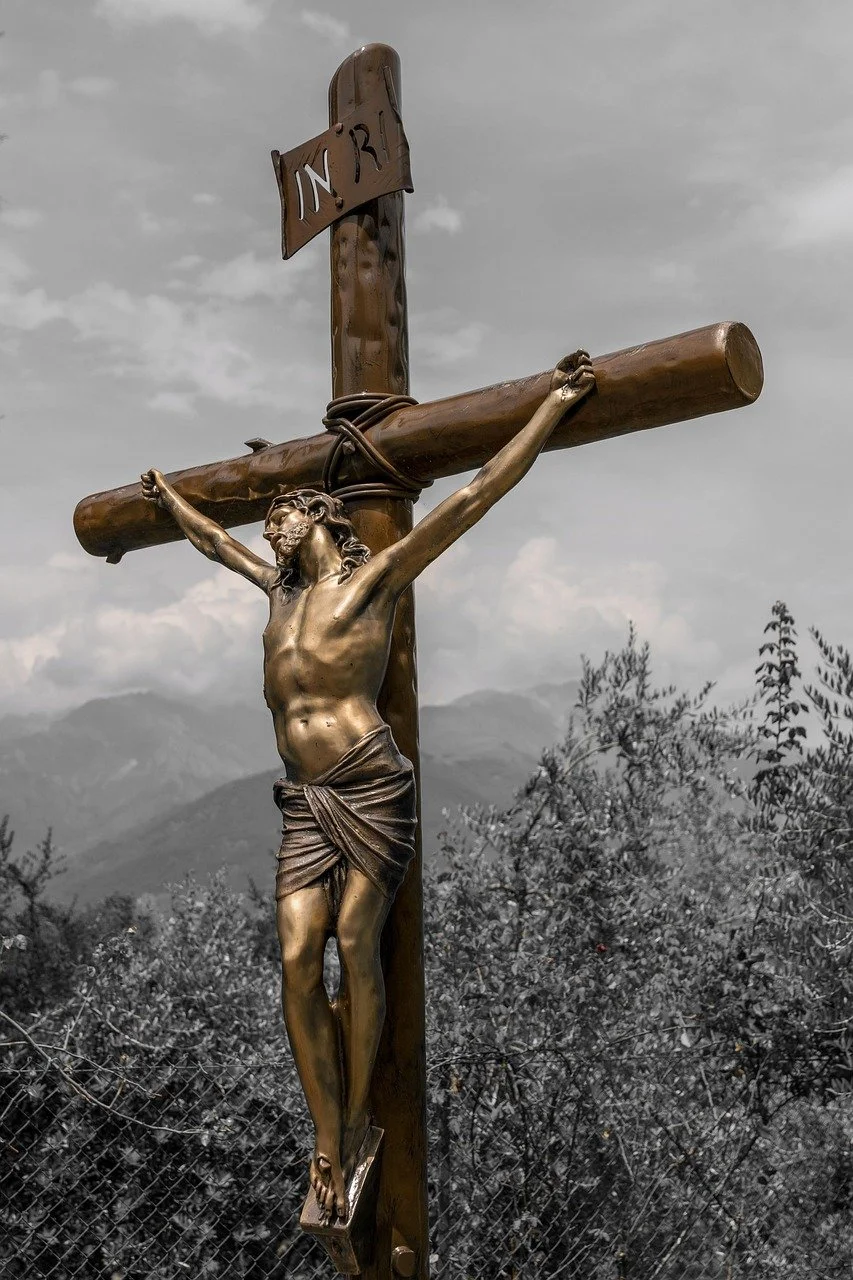
Image by Lisa Caroselli from Pixabay

The word believe is defined: to accept something as true, genuine or real; to have a firm, wholehearted religious conviction or persuasion that the existence of God is true; to have a firm conviction as to the goodness, efficacy or ability of something.

The word trust is defined: the assured reliance on the character, ability, strength or truth of someone or something; dependence on something future or contingent - hope; to rely on the truthfulness or accuracy of - believe; to place confidence in - rely; to hope or expect confidently.

Both of these words have similar tones and you honestly can’t have trust without belief, nor can you experience true, life changing belief without trust. We can see this idea in the the story of the man who brings his demon possessed son to Jesus for healing. I did a more in depth look at this passage in 2022 when I chose believe as my word for the year.

20 They brought the boy to Him. When he saw Him, immediately the spirit threw him into a convulsion, and falling to the ground, he began rolling around and foaming at the mouth.
21 And He asked his father, “How long has this been happening to him?” And he said, “From childhood.
22 It has often thrown him both into the fire and into the water to destroy him. But if You can do anything, take pity on us and help us!”
23 And Jesus said to him, “‘If You can?’ All things are possible to him who believes.”
24 Immediately the boy’s father cried out and said, “I do believe; help my unbelief.”
— Mark 9:20-24 (NASB 1995)

Image by Artur Skoniecki from Pixabay

This man took an actionable step from belief to trust. He recognized he did not have enough belief to go from “…if you can do anything…” to “Of course you can heal him! You are the Son of God.” (My own idea of what he might have said if he already placed his complete trust in Jesus.) He placed his trust in Christ when he exposed his vulnerability by saying, “help my unbelief."

This idea of trust is not easy. It is a step that takes us from a place of alleged safety to a place of exposure. Take for instance an individual going to a counselor seeking help for a mental health problem. Perhaps they are struggling with depression or anxiety. In order to take this action step they first need to see they have a problem that requires help. After they make that discovery they must call a therapist or psychiatrist. It might be that they ask friends and co-workers for the name of someone these people deem trustworthy. They make the call, setting up the appointment, then with some additional amount of fear they go to their first appointment.

When they are sitting in the therapist’s office they must answer this question: “Am I going to trust this person enough to really open up to them? Am I going to expose my inner most fears and struggles? Am I going to let them peek into my inner closet where all the skeletons and, perhaps demons, hang?” It is only by choosing to trust the professional with their struggles that the individual is going to make progress towards being mentally healthy and whole.

The same idea is true in our relationship with Christ. We come to Him by believing, but what makes our belief different than that of the fallen angels?

18 But someone may well say, “You have faith and I have works; show me your faith without the works, and I will show you my faith by my works.”
19 You believe that God is one. You do well; the demons also believe, and shudder.
20 But are you willing to recognize, you foolish fellow, that faith without works is useless?
— James 2:18-20 (NASB 1995)

Our belief is a choice to open up to a mighty God and the first thing we must do is admit we have a problem. We are sinners. We are of the lineage of Adam and Eve and their sin became our sin. The only healing for this problem is to place ourselves in the hands of a pure and holy God. We come to Him hoping for His mercy, love and forgiveness and He freely gives it to us. This is the beginning of a life of trust.

Over the next twelve months we will look at the word trust and how a lack of it leads to a life of worry and fear, whereas a life of abandoning all to Him will free us up to know joy unspeakable. I hope you will join me.

Faith Inspiration - Oswald Chambers - Our Great Capacity for God - Part 1

Oswald Chamber’s devotional book My Utmost for His Highest has been one of my most used devotionals over a span of nearly three decades. The book, put together by his wife after his death at the young age of 43, gives 365 devotions taken from her notes of his sermons, talks and writings. Each devotion emphasizes a verse or two from the Scripture, and my personal habit is to read the entire chapter where the verse or verses are found. This has been a great exercise in learning more from God’s word and understanding the context of certain passages. Today I want to look at a quote from the devotional that struck me as profound and has stimulated a good deal of additional thought and study.

Image by congerdesign from Pixabay

We are designed with a great capacity for God, but sin, our own individuality, and wrong thinking keep us from getting to Him. God delivers us from sin——we have to deliver ourselves from our individuality. This means offering our natural life to God and sacrificing it to Him, so He may transform it into spiritual life through our obedience...We must see to it that we aid and assist God, and not stand against Him...we must discipline ourselves. God will not bring our ‘arguments...and every thought into captivity to the obedience of Christ’ (2 Corinthians 10:5)——we have to do it.”
— November 18th

There are three things, Oswald lists that keep us from God. I want to take the next few months of these Faith Inspiration posts to look at these in depth and talk about steps we can take to get closer to our amazing God. Before we take an in depth look at the first of these deterrents, sin, next month, I want to talk about what it means to be “designed with a great capacity for God.”

We learn in the very first book of the Old Testament that we are creations of God. Not only are we His artistic work, we are made with His image stamped on our beings.

26 Then God said, “Let Us make man in Our image, according to Our likeness; and let them rule over the fish of the sea and over the birds of the sky and over the cattle and over all the earth, and over every creeping thing that creeps on the earth.”
27 God created man in His own image, in the image of God He created him; male and female He created them.
— Genesis 1:26-27 (NASB 1995)

We also see evidence of this Creator/creation connection in the New Testament.

10 For we are His workmanship, created in Christ Jesus for good works, which God prepared beforehand so that we would walk in them.
— Ephesians 2:10 (NASB 1995)

Image by endri yana yana from Pixabay

Just as an artist, or a craftsman puts a bit of themselves into the things they make: the pictures they paint, the statues they mold, the beautiful furniture they carve, God put a bit of Himself in each of us. It is in this imprint where our great capacity for Him lies. This image of Him we are created in enables us to know Him intimately, and to enjoy a pure and beautiful relationship with Him. This frontier is wide open, and yet we know so little. Just as many of the Israelites stood at the edge of the Promised land, but were denied access due to their stubborn sin of pride and lack of trust in God, we too stand at the edge of our great capacity to dive into the deeper layers of God, but fear, mistrust and pride keep us from jumping off the precipice.

The Psalmist also recognized our position before God. We are not His equal. We are His possession, but not a possession to be taken advantage of or abused. We are a possession He longs to come along side and care for.

6 Come, let us worship and bow down,
Let us kneel before the Lord our Maker.
7 For He is our God,
And we are the people of His pasture and the sheep of His hand.
Today, if you would hear His voice,
— Psalm 95:6-7 (NASB 1995)
1 Shout joyfully to the Lord, all the earth.
2 Serve the Lord with gladness;
Come before Him with joyful singing.
3 Know that the Lord Himself is God;
It is He who has made us, and not we ourselves;
We are His people and the sheep of His pasture.
4 Enter His gates with thanksgiving
And His courts with praise.
Give thanks to Him, bless His name.
5 For the Lord is good;
His lovingkindness is everlasting
And His faithfulness to all generations.
— Psalm 100 (NASB 1995)

Sheep do not care for themselves. They are cared for by a shepherd and Christ described Himself as our Good Shepherd. It is not the fact that we are truly like sheep. We can certainly take care of ourselves. Our humanity demands that we pull ourselves up by our own bootstraps and do what we have to do. Unfortunately, this independent spirit limits our capacity for God, and we will talk more about that when we look at the idea of our own individuality. No, we are not sheep, but perhaps the Psalmist and our Savior are making the same point, we should be.

11 “I am the good shepherd; the good shepherd lays down His life for the sheep. 12 He who is a hired hand, and not a shepherd, who is not the owner of the sheep, sees the wolf coming, and leaves the sheep and flees, and the wolf snatches them and scatters them.
13 He flees because he is a hired hand and is not concerned about the sheep.
14 I am the good shepherd, and I know My own and My own know Me,
15 even as the Father knows Me and I know the Father; and I lay down My life for the sheep.
— John 10:11-15 (NASB 1995)

I believe to truly understand, as Oswald states, “our great capacity for God,” we must learn the ins and outs of humility and trust. We will look at these more fully next time as we delve into how sin keeps us from truly experiencing what that great capacity is. I hope you will follow along.

Creative Christianity: The Widow's Quest - Part 4

(The following story is based on the parable in Luke 18:1-8. It is a fictional account with allegorical aspects. This is a fictional world with characters and events created by me.)

Connie, Rocky, and their little band of pups continued along through the manufacturing district until they entered another area of residences. This neighborhood looked a little better off than the area she had found Rocky, and substantially better than the Rift, but it still looked worn and weary. Connie wondered if that was how she looked?

She knew they needed to get something to eat, but toting along a pack of pups probably wasn’t going to let them in to very many places.

“I think we need to find a place to rest for a little while.” Connie spoke out loud.

“And get something to eat. I’m starving, and I think Isabella is too.” Rocky looked behind them.

Image by Lenka Novotná from Pixabay

“Isabella?” Connie looked to where the mother pup was following at some distance. She looked ready to drop. The two puppies who were walking still seemed to have plenty of spunk.

Rocky nodded. “Yeah, that was my baby sister’s name.”

Connie’s heart hurt. The boy had been through so much loss. She had too. She decided they weren’t going to lose Isabella. She stopped walking so the the pup could catch up, and as they waited she noticed a young woman pushing a stroller down a side street.

She handed Rocky her side bag with the two sleeping pups and said, “Stay right here. I am going to see if we can get some help.”

She jogged towards the woman. Trying to not look threatening, she slowed to a walk and smiled while still a few yards off.

Image by Patou Ricard from Pixabay

“Hello,” she began.

“I don’t got any money, so don’t try to sell me anything,” the woman clipped.

Connie could see as she got closer, while the woman was younger, she looked tired, and not particularly clean. She quickly attempted to put her at ease.

“Oh, I am not a sales person. I was just wondering if you might help me, you see I am new to the area, and my nephew and I have been walking for a while and wondered if there was a park nearby where we could rest for a bit.” She felt bad lying about Rocky, and she also didn’t mention getting food. She didn’t want the woman to think she had money.

“You got that dog’s papers?” The woman jutted her chin out towards where Rocky, Isabella and the two puppies waited.

Connie tried to think fast. “Well, I would gladly get her papers, but as I said I am new to the area and we actually just found her today. I felt so bad for her and her little pups.”

The woman drew closer, and Connie could see a little boy in the stroller, probably about two. “Do you think I could show them pups to my boy? He just loves animals, and they are such a rarity around here, since they all need to be papered. We can’t afford the fees, let alone the food to feed one.”

Connie relaxed a little. “I understand. Everything is so expensive. A pet is a big commitment. I am Connie, by the way.”

The woman finally smiled. “I’m Maribelle, and this is my boy Adam.”

Connie bent down. “It is very nice to meet you and your momma, Adam. If you don’t mind walking over, the mother pup is very tired. She needs food, but I wasn’t sure where to go.'“

She and Maribelle started walking and the young woman said, “If you need food there is an old church on the corner of Rawls and Jones. They serve lunch and dinner. You just have to sit and listen to the pastor talk about his religion.”

Connie took that information and filed it away. When they reached Rocky and the dogs, Maribelle picked up one of the puppies and showed him to her son. The boy laughed and wiggled in his seat with joy.

Maribelle stood up and asked, “You a steamer? I see your bag there.”

“Well, I uh…yes, I am.”

“If you and your family want to come to my house, I’ll give you food in exchange for work on our water heater. It stopped working a few weeks back. Sure would be nice to have hot water again.”

Constance looked at Rocky who nodded enthusiastically. She knew she was taking a chance. She had long ago stopped trusting people and knew this could be a trap. Desperate people did desperate things. She knew that fact well from living in the Rift. She looked at the young mother and her little boy and thought something about them felt right.

She nodded. “That would be nice, and I will take a look at your water heater.”

Image by Andreas Lischka from Pixabay

Maribelle smiled brightly. “Wonderful! Adam, did you hear that we are going to have company and you can play longer with the puppies.”

Adam clapped his hands and said, “…upppies!!”

They all laughed. Connie picked up her bag of tools, where the two smaller pups were just starting to wake up. She pulled each one out. Rocky took one, and Maribelle, much to Adam’s delight put the other one in the stroller with him. They made their way to Maribelle’s home.

Connie found herself marveling at feelings that rose inside her; feelings she hadn’t had for a very long time. Gratitude, joy and hope. Still, the Rift part of her wondered how long it would last. How long before she was, once again, disappointed, let down, and hurt? How long?

A Year of Waiting - Tarry

The word tarry as defined in Webster’s Online Dictionary means: to delay or be tardy in action or doing; to linger in expectation; wait; to abide or stay in or at a place; stay, or sojourn. Tarry is an older word used in the first few senses in the 14th century. Ask yourself, how often do I use the word tarry today? We don’t usually say, “I tarried at the train station.” “I’m going to tarry at the seashore.” “I’m sure to tarry in line at the concert.” It sounds rather archaic.

Image by Thomas from Pixabay

When it comes to this word journey I have been on for the year 2024, I like the way tarry opens up other doors and windows to this idea of waiting. As I have noted previously, waiting can be a complete drag, and most of us would not sign up for an adventure in waiting, but our lives are full of lines, traffic jams, delays, and prospects of a future that require we wait.

When I hear the word tarry, I do not think of a long term situation. However, if we look at the King James Version of scripture, which uses a synonym, sojourn we see that the span of time could be quite lengthy.

Now the sojourning of the children of Israel, who dwelt in Egypt, was four hundred and thirty years.
— Exodus 12:40 (KJV)

Still we get the sense that it was not intended to be forever. When God speaks of a long term living situation He often uses the word dwell, or abide. We took a closer look at the word abide in February. You can see that post here.

1 Behold, how good and how pleasant it is
For brothers to dwell together in unity!
2 It is like the precious oil upon the head,
Coming down upon the beard,
Even Aaron’s beard,
Coming down upon the edge of his robes.
3 It is like the dew of Hermon
Coming down upon the mountains of Zion;
For there the Lord commanded the blessing—life forever.
— Psalm 133 (NASB 1995)

Psalm 133 has a tone I would associate with a long term living situation. God intended that we dwell together in unity in a place where we experience the blessing of life forever. In this psalm it is a reference to Zion, which we can also look at as eternity with God. With the state many of our current churches are in it can be hard to imagine being able to dwell with those same brothers or sisters together forever in unity. Ha, ha. However, God said it will be true. We won’t just be tarrying, but putting down roots and dwelling.

Image by Filip Loczek from Pixabay

Since we already looked at the idea of abide, I wanted to spend some time thinking about what it means to tarry with God. I have learned, it is essential that we tarry with God as much as we can, especially when our lives are pulling us in so many directions. You might feel on any given day, “I don’t have time to abide. I am too busy.” However, if we don’t find the time, God will give us the time, and that is not always preferable as it usually comes with some sort of difficulty. God is not mean hearted, He loves you purely with everlasting love, and He knows exactly what you need, and that is directly linked to the time you spend with Him.

Let me give you a personal example. I was really struggling for several weeks this past month. I was exhausted, discouraged and my heart felt so heavy. Grief was a blanket I was regularly wrapping up in. Grief over my mom being in a nursing home and not being able to be there to help with her care. Grief over my children who have walked away from the truth of the scripture and the love of Jesus. Grief over the state of our country and the fear of the looming downward spiral. Grief over relationships. Grief over loved ones with cancer and other illnesses. Grief over other people’s kids who were struggling with addictions and various other issues. Grief over my own health. The list goes on.

Image by Tern70 from Pixabay

I am learning the importance of acknowledging these feelings and allowing myself to feel them. They are real, after all, and are felt on the deepest levels. However, we all know we can’t live in those dark places. We always need to return to the light, otherwise the darkness will become an all too comfortable place to abide and dwell.

I felt God pulling me. Whispering to me, “Amy, come to Me. Spend time with Me. Only I can meet every need and help you bear every burden.” I know this to be true, but as you know our flesh wars against us every chance it gets. Finally, one sunny afternoon, I took my Bible and my prayer journal out on the patio and began a search through the scriptures. I was looking for Psalm 34:18

The Lord is near to the brokenhearted And saves those who are crushed in spirit.
— Psalm 34:18 (NASB 1995)

I knew it was in the psalms, but I couldn’t remember where, so I just started leafing through. God brought me two different passages.

8 Depart from me, all you who do iniquity,
For the Lord has heard the voice of my weeping.
9 The Lord has heard my supplication,
The Lord receives my prayer.
— Psalm 6:8-9 (NASB 1995)

Image by wal_172619 from Pixabay

1 “I love You, O Lord, my strength.”
2 The Lord is my rock and my fortress and my deliverer,
My God, my rock, in whom I take refuge;
My shield and the horn of my salvation, my stronghold.
3 I call upon the Lord, who is worthy to be praised,
And I am saved from my enemies.
— Psalm 18:1-3 (NASB 1995)

Image by Enrique from Pixabay

When we tarry with God we can find peace and joy, even in the midst of our grief and pain. When we tarry we spend time, even just a small amount of time, doing the following:

1 - Remembering God’s character - He hears our weeping, our supplication and He receives our prayers. Don’t you love that? God isn’t ashamed of our emotions. He wants us to come and ask. He is our Abba, Father and He loves us. He wants to hear our prayers. He doesn’t just hear them, He receives them. He takes them on as His own. Remember The Bee Keeper? If you don’t, buzz on over to that post for a refresher.

2 - Acknowledging His abilities - He is our strength. He is our rock, our fortress, and our deliverer. He is our shield. He is our salvation. He is our stronghold. He is our refuge. All of these things are His abilities, and He gives them to us without reserve. He can protect, give strength, and get us through anything that comes our way.

7 Then the earth shook and quaked;
And the foundations of the mountains were trembling
And were shaken, because He was angry.
8 Smoke went up out of His nostrils,
And fire from His mouth devoured;
Coals were kindled by it.
9 He bowed the heavens also, and came down
With thick darkness under His feet.
10 He rode upon a cherub and flew;
And He sped upon the wings of the wind.
11 He made darkness His hiding place, His canopy around Him,
Darkness of waters, thick clouds of the skies.
12 From the brightness before Him passed His thick clouds,
Hailstones and coals of fire.
13 The Lord also thundered in the heavens,
And the Most High uttered His voice,
Hailstones and coals of fire.
14 He sent out His arrows, and scattered them,
And lightning flashes in abundance, and routed them.
15 Then the channels of water appeared,
And the foundations of the world were laid bare
At Your rebuke, O Lord,
At the blast of the breath of Your nostrils.
— Psalm 18:7-15 (NASB 1995)

3 - Renewing our understanding of Him - I have read Psalm 18 numerous times, but the Scripture, being that it is living and active, spoke to me anew. The above verses floored me. He is not just a gentle and loving God; He is a powerful, mighty force able to move mountains with a thought. He has, can and will display holy anger when the time is right for His wrath and will to be accomplished. It sets my heart to quaking, but also fills me with hope. He will have the final word, and all that is dark, and ugly, and painful will be burned away in His purest, most holy light.

16 He sent from on high, He took me;
He drew me out of many waters.
17 He delivered me from my strong enemy,
And from those who hated me, for they were too mighty for me.
18 They confronted me in the day of my calamity,
But the Lord was my stay.
19 He brought me forth also into a broad place;
He rescued me, because He delighted in me.
— Psalm 18:16-19 (NASB 1995)
49 Therefore I will give thanks to You among the nations, O Lord,
And I will sing praises to Your name.
— Psalm 18:49 (NASB 1995)

4 - Thanking Him for all He has done - If you can only tarry for a few minutes, I think this is the best bench to sit on. Gratitude is known to change hearts, minds, health, and perspective. When we sit for a few minutes on God’s goodness and provision to us it gives us the ability to keep going because we come away with hope. With God there is always hope.

Take it from me, if you are struggling with grief, pain, bitterness or other unresolved feelings and situations it certainly is helpful to talk it out with a trusted friend or counselor, but also don’t forget to tarry for a little while with Jesus. He makes all the difference.

Faith Topics: Quarrels or Kindness

We are living in a time where information is readily available at the push of a button. Whether we want to look up our symptoms on WebMD, watch a YouTube video on how to clean a headlight, or scroll through Instagram to see who’s wearing what, we can access anything at any time of day or night.

Image by Pixelkult from Pixabay

Not only is information instantaneous, but responses and opinions about the information are immediate as well. You can disagree with someone promptly without really thinking through if the things they said, or you said are going to be beneficial or helpful. From what I have seen, it is more often the case that the original information is not the issue, but how people respond to the information given.

Just what is our responsibility as Christ followers when it comes to the management of information, and our responses to that information? Are we suppose to stand up for God, and defend Him? Are we suppose to preach truth, no matter who it might hurt, or what toes we might step on? Are we being irresponsible if we don’t respond, or if we decide we no longer want to deal with the the messiness of disagreements and name calling?

While I am not a pastor, or a psychologist, I do believe God gave us clear instructions in His word for how to maneuver life in this chaotic world. As always, when we are unsure about something we should explore His word first and see what He says.

We are going to look at several passages that I think speak to this issue, and then I want to offer a few guidelines to keep in mind when you are wondering if you should “speak up”.

The Apostle Paul wrote to Timothy two times. In those letters he tried to encourage the young pastor with regards to handling his congregation. Paul knew it wouldn’t be easy for a young man taking on a group of people who were not only stubborn, but easily pulled along by the current trend of teaching and information.

20 O Timothy, guard what has been entrusted to you, avoiding worldly and empty chatter and the opposing arguments of what is falsely called “knowledge”—
21 which some have professed and thus gone astray from the faith.
— 1 Timothy 6:20-21 (NASB 1995)

Obviously, the letters to Timothy are included for our benefit as well, so we might take the same advice to avoid worldly, empty chatter and the opposing of arguments of what is falsely called “knowledge”. So much of what we see on social media and hear from what are often thought of as reputable news sources is falsely called “knowledge.” That will be a post for a different day, because today I want to focus on our response to “information” whether it is true or false.

Let’s look at another passage also in a letter written by Paul to Timothy.

23 But refuse foolish and ignorant speculations, knowing that they produce quarrels.
24 The Lord’s bond-servant must not be quarrelsome, but be kind to all, able to teach, patient when wronged,
25 with gentleness correcting those who are in opposition, if perhaps God may grant them repentance leading to the knowledge of the truth,
26 and they may come to their senses and escape from the snare of the devil, having been held captive by him to do his will.
— 2 Timothy 2:23-26 (NASB 1995)

What I like about the Apostle Paul is that he was very straight forward. Verse 24 is really all we need to remember when we ask the question, should we as Christ followers quarrel? No, we should not. Does that mean we shouldn’t discuss, try to make a point, give evidence to support what we believe and so on? Of course not, however, we must do it as the above passage states: with kindness, able to teach, patiently, with gentleness.

When I read many of the comments to volatile posts on social media I do not see a whole lot of kindness, patience, or gentleness. Most of the time it is not about teaching, it is about wanting to be right. Our job is not to be right. Our job is to lead others to the Lamb of God. We are here to lift up the name of Jesus, not prove how intelligent or special we are.

Image by Elsemargriet from Pixabay

Believe me, I get it. There are times I want to bring down all the hell fire and damnation I can find in the Bible to make a point. There have been many times I have thought about taking the blog in a different direction and trying to be more issue oriented, but that is not what God has called me to. He has called me to encourage, pray, love, and when there is opportunity lead back to Him. People don’t need my point of view, they need Jesus!

We are called to kindness, gentleness and patience for a purpose, that God might grant those in opposition repentance leading to knowledge of the truth…His truth, not that which is “falsely called knowledge”, so that they might come to their senses and escape the snare of the devil, because he has taken them captive to do his will.

I don’t know about you, but this changes my perspective in such a huge way that I can’t even talk about it without getting emotional. We are here for the glory of God. We are here to be lights in the darkness. We are the front line warriors called to fight in the unseen realm to help those lost lambs come back to their senses and escape the snare of the evil one.

What does this mean? How do we respond in these powder keg times? Here are a few ideas.

1 - Pray.

Image by StockSnap from Pixabay

If we are praying as Paul told us:

18 With all prayer and petition pray at all times in the Spirit, and with this in view, be on the alert with all perseverance and petition for all the saints,
— Ephesians 6:18 (NASB 1995)

…then our attitudes will already be in check. Not only that, but praying in the Spirit enables Him to do the work before, during and after. We can’t soften people’s hard hearts, that is the Spirit’s job. We can’t draw people to Christ, that is the Spirit’s job. We can’t force a brother or sister in Christ to see things our way, that is a Holy Spirit work.

Prayer has always been the work we must do first and foremost, yet it is almost always an afterthought. What does God’s word say?

17 pray without ceasing;
— I Thessalonians 5:17 (NASB 1995)

This quote says it all.

It is possible to move men, through God, by prayer alone.
— Hudson Taylor

2 - Question your motives.

Image by Tumisu from Pixabay

If you are like most of us, meaning flawed, sinful humanity, then always ask yourself, why do I need to respond to this? Will my response be met with openness or with hostility? Am I doing this because it is a Holy Spirit leading, or my own leading? Am I looking to encourage and give hope, or am I wanting to put down and destroy?

1 The plans of the heart belong to man,
But the answer of the tongue is from the Lord.
2 All the ways of a man are clean in his own sight,
But the Lord weighs the motives.
3 Commit your works to the Lord
And your plans will be established.
— Proverbs 16:1-3 (NASB 1995)

3 - Question the source.

Image by Gerd Altmann from Pixabay

Often times social media posts are about numbers and reactions. The more people give a thumbs up or a thumbs down, the more times the post is shared, and the more comments on a post are all part of the social media formula. If the source isn’t someone you know, or a source you identify as reputable it is better to let it go and not respond.

The other thought to keep in mind is many people who post in anger are often in pain. Think about what might be driving that person to say what they are saying, or to respond to a situation with deep bitterness or hatred. Often, that person is suffering, have experienced loss, or is in real physical pain or torment.

A gentle answer turns away wrath,
But a harsh word stirs up anger.
— Proverbs 15:1 (NASB 1995)

4 - If you still feel the urge to respond, do it in private.

Image by alda2 from Pixabay

There is a way, on most social media apps, to message someone in private. You do not have to continue down the proverbial public rabbit trail, whether you are responding to the original post or a comment on the original post. Send a message expressing your concern and/or your thoughts so that person can think about your input without the opinion of the masses.

When you are able to have a private conversation with someone, and I believe this is better in person rather than via email, text, or in a public social media thread, you can both ask questions to clarify statements being said, and you can read each other’s body language and facial expressions. You can see if something you are saying is causing the other person to erect a wall, or throw up roadblocks and you can back off, or change the subject. Why is this important?

20 Therefore, we are ambassadors for Christ, as though God were making an appeal through us; we beg you on behalf of Christ, be reconciled to God.
21 He made Him who knew no sin to be sin on our behalf, so that we might become the righteousness of God in Him..
— 2 Corinthians 5:20-22 (NASB 1995)

As His ambassadors we are His representatives. It used to be important to behave with propriety in public whether you were a politician, a religious leader, a teacher, or a clerk at a fast food restaurant. This is still true for those of us who call ourselves Christ followers. We are to represent God and His heavenly kingdom on this earth, not in a the manner of a bar room brawl, but with love, respect, dignity and honor.

26 Be angry, and yet do not sin; do not let the sun go down on your anger,
27 and do not give the devil an opportunity.
— Ephesians 4:26-27 (NASB 1995)

I hope you enjoyed this post and that it gave you some things to think about. Thank you for stopping by the blog. Have a great week!

Faith Inspiration: Psalm 139:1-3

This column is meant to inspire our faith; to move us to action or even to contemplation. Scripture has become more and more my source of inspiration. After all, these are the words of God; His thoughts given to men and written down. All of them were spoken, or God breathed by His Spirit to the men who wrote. I believe, though this is becoming a less popular opinion, that God’s word is without error. I believe that it is alive and transforms us as we read and meditate on it.

Image by Pexels from Pixabay

Today’s source of inspiration comes from one of my favorite Psalms. Psalm 139 is a psalm of David. I recently decided to reread this Psalm taking it three verses at a time. Often, if we want to learn more we need to take a deep dive into just a few verses at a time, thus my Mulling it Over series. I am finding more and more that a brief look at God’s word is never enough. He has so much more to say to us in between the lines, through the voice of His Spirit speaking to our spirit. This is the beauty of an intimate relationship with God.

1 O Lord, you have searched me and known me!
2 You know when I sit down and when I rise up;
you discern my thoughts from afar.
3 You search out my path and my lying down
and are acquainted with all my ways.
— Psalm 139:1-3 (ESV)

I have long looked at this passage as a way to understand my standing before God. Indeed, it reminds us that we are worthy and needful of His love and compassion, and it has been so since the beginning of time. As I read through these verses again, I was suddenly struck by the fact that the psalm is not just telling us details about ourselves, but it it telling us great secrets about the Almighty God.

What do we learn about God from these three verses?

1 - He desires to know His creation. God didn’t just set the world into motion and walk away, though some like to believe that is the case. God interacted and wanted to have a relationship with his artistry. Let’s look back at Genesis. First of all we see God actively involved in the making process. He didn’t just make primordial ooze and let it evolve, he spoke, molded, shaped, and breathed everything into existence. The more telling statement is this, “And God saw that it was good.” God actually took time, not only to create, but to enjoy what He had created.

Image by Pexels from Pixabay

Further on we see God’s personal involvement to make sure His work was taken care of by creating Adam. (See Genesis 2:5.) After this He also attended to Adam’s need to not be alone by making a companion completely suited to him. (See Genesis 2:18-24.) In addition we are told that God walked in the Garden. He was part of their community, and though we don’t know exactly what this was like we can use our imaginations. (See Genesis 3:8.)

Maybe this seems scary or off putting to some, but to me it gives such comfort and reassurance that can only be described as complete trust. If a being as powerful and righteous as our God wants to know us He is doing it with complete, pure love.

2 - He has know His creation from the foundation of the world. This is obvious from the same verses I pointed out from above. In addition, the first line of the psalm says, “…you have searched me and known me.” Both these words are past tense.

Image by info254 from Pixabay

As a writer I do like words to make sense; to choose the correct word for the correct sentence, and have the appropriate grammar, tense and so on. However, when it comes to God, I do recognize He is outside the bounds of time. The Bible is written for our understanding, so that we might comprehend what is being said. Since God is eternal He not only knew us from when He set the world into orbit, but He knows us in the present and in the future.

3 - He desires intimacy with us. It isn’t enough for God to know His creation. He wants to be intimate with us. Intimacy basically means familiarity. We often use it with regards to a sexual relationship, but today many sexual encounters require no intimacy at all. True intimacy is a feeling of closeness, belonging and trust.

The friendship of the Lord is for those who fear him,
and he makes known to them his covenant.
— Psalm 25:14 (ESV)

Image by Dim Hou from Pixabay

The psalmist says, “You know when I sit down, and when I rise up; you discern my thoughts from afar.” God must be up close and personal if He knows when I am sitting, and when I am getting up. He also knows my personality and what makes me tick. He can take one look at my face and know exactly what I am thinking. My husband is good at reading me, but not that good. He also knows where I am most of the time, but not every single minute of every day.

4 - God is aware at all times. For the same reasons stated above, God is fully aware of where we are, what we are doing, and what we are thinking. (See Psalm 139:7-8.) I know there are varying thoughts on the omnipresence of God. Some say that while He is everywhere present, He doesn’t necessarily know everything that is going on at every moment. Others say God can be everywhere present, but also chooses to not be at all times. My belief is that God is big enough to know all of us, at all times, in every place, and in all circumstances. This is what makes Him a personal God. It is not for us to understand this mystery, merely believe.

9 Have I not commanded you? Be strong and courageous. Do not be frightened, and do not be dismayed, for the Lord your God is with you wherever you go.”
— Joshua 1:9 (ESV)
4 Even though I walk through the valley of the shadow of death,
I will fear no evil,
for you are with me;
your rod and your staff,
they comfort me.
— Psalm 23:4 (ESV)
God is our refuge and strength,
a very present help in trouble.
— Psalm 46:1 (ESV)

5 - God is actively involved. Verse 3 states that God searches out our path, and our lying down. He is acquainted with all our ways. How can you be acquainted with all of someone’s ways without being a part of their life? God is our Good Shepherd. He knows the lamb who has the loud, obnoxious baaa; the one who hides in the corner of the fold; the one who bullies the others, and the one who tends to wander away. Make no mistake, God quietly observes, but He is actively orchestrating our lives to bring us into intimacy with Him.

Image by Gerd Altmann from Pixabay

He will tend his flock like a shepherd;
he will gather the lambs in his arms;
he will carry them in his bosom,
and gently lead those that are with young.
— Isaiah 40:11 (ESV)

This gives me great comfort. Life is hard, and having loved ones who don’t walk with Him makes it even harder, but these revelations about God, through His word inspires my faith to trust, be still and lean on His timing and compassion to bring them back to Him.

I hope this has inspired you to worship, praise and thank Him for the amazing God He is.

Until next time.


Faith Inspiration - Solar Eclipse

I just love when God uses His beautiful and amazing creation to teach us something He wants us to know about Him. Just a few days ago we got to witness an event that only happens once every so many years: a total solar eclipse. We got to witness a partial eclipse back in 2017, but that definitely dims in comparison to the total eclipse we just saw.

Image by sandid from Pixabay

It is a fantastic phenomenon, and those of us who follow Christ, know that it is all brought about by God’s mighty hand. He is the One that set all of these heavenly bodies into motion, and He is the one who keeps those bodies just exactly where they should be.

We see in the 1st chapter of Genesis the creation account. These heavenly bodies came into existence on the fourth day.

14 Then God said, “Let there be lights in the expanse of the heavens to separate the day from the night, and let them be for signs and for seasons and for days and years;
15 and let them be for lights in the expanse of the heavens to give light on the earth”; and it was so.
16 God made the two great lights, the greater light to govern the day, and the lesser light to govern the night; He made the stars also.
17 God placed them in the expanse of the heavens to give light on the earth,
18 and to govern the day and the night, and to separate the light from the darkness; and God saw that it was good.
19 There was evening and there was morning, a fourth day.
— Genesis 1:14-19 (NASB 1995)

We see here God made the greater light to rule the day, and the lesser light to rule the night. It is interesting to mull over, now that we know more through telescopes and men going into space, that the moon does not generate its own light, but is a body that reflects the light of the sun. The sun, the greater light that rules over the day, does not just give us light, but it does so much to give our planet life. Along with the moon, the rotation of the earth on its axis, and the revolution of our solar system around it, the sun provides the basis for the water cycles, the ebbs and flows of the oceans, and the regenerative cycle of oxygen and carbon dioxide. Plants would not grow without the warming light of this immense celestial star; for that matter all life would cease to exist without it.

So why did God give us this greater light to rule the day, and this lesser light to rule the night? “…to separate the day from the night, and let them be for signs and for seasons and for days and years…He placed them in the expanse of the heavens to give light on the earth, and to govern the day and the night, and to separate the light from the darkness…” All of this He did for our benefit.

Image by Patou Ricard from Pixabay

Seeing the solar eclipse was an inspiration to how wonderful our God is, and how He established this place to be our home. It’s not a place of drab shadows and dim understanding, but a planet alive with His creative power and amazing, lavish love. He made all of this, even the moon passing in front of the sun so that we might remember what a beautiful, enchanted Being breathed life into this dust, and how very fortunate we are that even when darkness entered the world in the form of sin, He had a plan. He made a way. This leads to my second thought.

You know I have written about light and darkness on various occasions. See Light Beyond the Darkness, When Darkness Comes - Part 1: The Light, When Darkness Comes - Part 2: The Dark. There are several more parts to that series, which you can find on my Faith page under June and July of 2021. Darkness and light have always fascinated me. Though, I love winter, I need my sunshine. Being a Seasonal Affective Disorder sufferer, the shorter, gray days of winter are a detriment to my mental, emotional and physical well being.

When the eclipse moved into full totality, I couldn’t help but imaginine what the world would be like in permanent dusk; never to feel the heat of the sun, or to know the glory of it shining full bore in a pristine blue sky. It would be horrible. As we know from that first chapter in Genesis God gave us the sun for our benefit. We would not last long without its beautiful light.

However, there was something even more telling that began to illuminate my spiritual mind. At the point the moon fully covered the sun we were able to remove our eclipse glasses and look at it. It was awe inspiring to know all at once this would not happen again for a very long time, at least in our area, and to realize how apropos this celestial phenomenon was in reminding us that the light of Christ cannot be dimmed.

Image by bdabney from Pixabay

We can be in the throes of darkness, being beaten down on every side, but Christ in us shines like that sun as it glowed fiercely all around that orb until it began to pass and the light burst forth exploding onto the landscape below chasing the darkness back into the deep corners. This is who our Savior is in our lives, if we let Him be. He is the Son, the bright light of salvation, deliverer from the kingdom of darkness to the Kingdom of Light.

13 For He rescued us from the domain of darkness, and transferred us to the kingdom of His beloved Son,
14 in whom we have redemption, the forgiveness of sins.
— Colossians 1:13-14 (NASB 1995)

I hope that you are inspired by this post, but even more so I hope you are daily inspired by God’s amazing creation, and His steadfast love.

Have a great weekend!

The Greatest Story - The Story Behind the Cross

We are all story tellers in one form or another. Whether you are telling a friend about your trip to the doctor’s office, your spouse about the new movie you just saw, or people on social media about the sales at Nordstrom, we are all telling a story. Your story might not be exciting, or full of action and romance, but it is your story. Story telling is a way of relaying information. At times the information might be made up for the purpose of entertainment, but more often story telling is a way to relay true accounts and facts.

Image by Ri Butov from Pixabay

We tell stories with our words, but we can also tell stories with our body language and other vocalizations. Crying tells a story of great sadness, or euphoric joy. Anger tells a story of frustration or hatred. Walking with your head raised, making eye contact tells us you are confident and most likely friendly. Sitting alone at a social even with your head down looking at your phone tells a story of relational struggle and possible low self esteem.

Story telling has been around for centuries. It is one of the oldest ways of relaying information. When God inspired the writers of the Old and New Testaments He spoke to them in a type of story form. He didn’t just give them a list of facts telling them to write them down as bullet points. He gave them people, places, events with incredible details.

The Gospels of Matthew, Mark, Luke and John are rich with details on the birth, life, death and resurrection of Christ. Indeed, they do not just include the who, what and wheres of a good story, but they are also seen as true accounts of Christ’s teaching, travels, prayers, and sufferings.

Image by congerdesign from Pixabay

To be sure, these are not made up stories, but factual accounts of the life of Christ and the lives of his followers. From His birth in a stable in Bethlehem, to His triumphal entry into Jerusalem, to His agony in the Garden, to His death on a hill with a criminal on each side, to His burial, to His walk in the garden after three days, these books give us every detail we need to know the living Christ.

What makes Christ’s story the greatest story ever told? It is unique in its message, and universal in its reach. This story is the only one inspired by the true, living God, put together by 36 different men, all with the same message over a period of 1500 years.

The focus of the Old Testament is the why. The first two chapters of Genesis relate the beautiful symphony of the triune God bringing our planet, and life into existence. Unfortunately by Chapter three, we learn of the devastating fall of that glorious creation by one choice to sin. What follows is a detailed telling of the history of the nation of Israel, God’s chosen people and the system of the law, God put into place to govern those people.

We need to remember this was all laid out to point to a future event: the coming of the fulfillment of the Law, Jesus Christ. The Old Testament is full of prophecy pointing to Christ’s coming. In order to fully understand the need and provision of the New Covenant, God gave us the detailed account of the Old Covenant. As seen in Hebrews, the Law was imperfect, but Christ was perfect.

18 For, on the one hand, there is a setting aside of a former commandment because of its weakness and uselessness
19 (for the Law made nothing perfect), and on the other hand there is a bringing in of a better hope, through which we draw near to God.
20 And inasmuch as it was not without an oath
21 (for they indeed became priests without an oath, but He with an oath through the One who said to Him,

“The Lord has sworn
And will not change His mind,
‘You are a priest forever’”);

22 so much the more also Jesus has become the guarantee of a better covenant.
— Hebrews 7:18-22 (NASB 1995)

Christ is the guarantee of a better covenant, the new covenant brought about in the New Testament. This covenant is laid out simply in a few simple verses from the New Testament.

16 “For God so loved the world, that He gave His only begotten Son, that whoever believes in Him shall not perish, but have eternal life.
— John 3:16 (NASB 1995)

The following verses are known as the Roman Road. They tell the Gospel of Christ in simplistic terms.

23 for all have sinned and fall short of the glory of God,
— Romans 3:23 (NASB 1995)
23 For the wages of sin is death, but the free gift of God is eternal life in Christ Jesus our Lord.
— Romans 6:23 (NASB 1995)
8 But God demonstrates His own love toward us, in that while we were yet sinners, Christ died for us.
— Romans 5:8 (NASB 1995)
9 that if you confess with your mouth Jesus as Lord, and believe in your heart that God raised Him from the dead, you will be saved; 10 for with the heart a person believes, resulting in righteousness, and with the mouth he confesses, resulting in salvation.
— Romans 10:9-10 (NASB 1995)

We learn all about the system of sacrifices that were part of the Old Covenant in the Old Testament. Jesus’ sacrifice on the cross did away with the need for that system. The Law given to Moses by God, was fulfilled in Christ given to us by His Father.

Image by Gerd Altmann from Pixabay

The story of the cross was centuries in the making, but the most beautiful thing about it is that it gave access to the throne of God to every single person who believes. It doesn’t matter who you are or who you have been. It doesn’t matter where you live or what sort of job you have. It doesn’t matter how low you have gone, or how great you have been. The story of the the cross is for all.

If you are struggling today with the story of your life, look to Jesus. He will make all the difference.