
Learning from the Imperfect

One of the things I love about God’s word is that it is filled with real people; real, normal, defective people. Only Christ has the blessing of being perfect. The rest of us are bumbling along like those very large bumble bees that come out in early spring flying rather haphazardly looking for tasty pollen or just looking rather scary when they hover a little too close.

Image by Alex from Pixabay

Today in my devotional reading I was led to read 2 Chronicles 15. If you read 2 Chronicles 14 through 16 you’ll get the whole story of Asa the King of Judah during the time of the two kingdoms: Israel and Judah.

Early in Asa’s reign we see that he was a righteous king doing “what was good and right in the eyes of the Lord his God.” (14:2). Asa removed foreign altars, broke down the pillars, cut down the Asherim and commanded Judah to seek God. The result of these righteous deeds was that his kingdom had rest from war. He and his people enjoyed a time of peace.

Unfortunately, things rarely stay the same. Eventually, Ethiopia rose up against Judah. This was Asa’s response.

11 Then Asa called to the Lord his God and said, “Lord, there is no one besides You to help in the battle between the powerful and those who have no strength; so help us, O Lord our God, for we trust in You, and in Your name have come against this multitude. O Lord, You are our God; let not man prevail against You.”
— 2 Chronicles 14:11 (NASB 1995)

What did God do for him? He whooped the Ethiopians’ butts. (See 14:12-15)

In Chapter 15 we see the Spirit of God come upon a prophet named Azariah. He goes to meet Asa and tells him the following:

2...Listen to me, Asa, and all Judah and Benjamin: the Lord is with you when you are with Him. And if you seek Him, He will let you find Him; but if you forsake Him, He will forsake you.
3 For many days Israel was without the true God and without a teaching priest and without law.
4 But in their distress they turned to the Lord God of Israel, and they sought Him, and He let them find Him.
5 In those times there was no peace to him who went out or to him who came in, for many disturbances afflicted all the inhabitants of the lands.
6 Nation was crushed by nation, and city by city, for God troubled them with every kind of distress.
7 But you, be strong and do not lose courage, for there is reward for your work.
— 2 Chronicles 15:2-7 (NASB 1995)

There are several things we can learn from this piece of Scripture:

1 - Our relationship with God is dependent on our choices. This does not mean God isn’t completely sovereign, but He has given us a free will. When we choose to make Christ the Lord of our lives He and His father come and dwell with us.

23 Jesus answered and said to him, “If anyone loves Me, he will keep My word; and My Father will love him, and We will come to him and make Our abode with him.
— John 14:23 (NASB 1995)

If we seek him, He will be found.

29 But from there you will seek the Lord your God, and you will find Him if you search for Him with all your heart and all your soul.
— Deuteronomy 4:29 (NASB 1995)
10 The young lions do lack and suffer hunger;
But they who seek the Lord shall not be in want of any good thing.
— Psalm 34:10 (NASB 1995)
6 Seek the Lord while He may be found;
Call upon Him while He is near.
— Isaiah 55:6 (NASB 1995)

If we forsake Him, He will forsake us.

Can we lose our salvation? That is a question only God can answer. His word tells us, whoever calls on the name of the Lord will be saved. Theologians attempt to answer this question, but my simple response is, don’t walk away from Jesus. I mean, why would you want to? I don’t get it, believe me. I know people who have chosen to walk away. People I love. Does that mean He has forsaken them and they are no longer saved? I don’t know. All I know is I never want to walk away from this amazing God who allows me to call Him Father! It is this simple choice of faith that convinces me He will never leave me or forsake me.

Image by Alexa from Pixabay

2. If we are strong and take courage, our work will be rewarded. Azariah told this to Asa, and I think we can take this as encouragement as well. There are times when I wonder if what I have labored over will make any difference. Will those I love come back to God and the truth of the whole of Scripture? Will the time I spend helping and working be remembered? Does anything I say make any difference in anyone’s life? I’m sure you have felt similarly in your walk with Christ.

However, this verse reminds us that if we continue to be strong, and have courage our work will be rewarded. Another passage I return to again and again is Psalm 126.

1 When the Lord brought back the captive ones of Zion,
We were like those who dream.
2 Then our mouth was filled with laughter
And our tongue with joyful shouting;
Then they said among the nations,
“The Lord has done great things for them.”
3 The Lord has done great things for us;
We are glad.
4 Restore our captivity, O Lord,
As the streams in the South.
5 Those who sow in tears shall reap with joyful shouting.
6 He who goes to and fro weeping, carrying his bag of seed,
Shall indeed come again with a shout of joy, bringing his sheaves with him.
— Psalm 126:1-6 (NASB 1995)

I love this psalm because it reminds me that those who sew in tears will one day reap with joyful shouting. God knows our tears and I like to believe He has jars of our tears in heaven which we will one day use to anoint His feet when we bow before Him. Read The Gift of Tears from my blog back in 2016.

8 You have taken account of my wanderings;
Put my tears in Your bottle.
Are they not in Your book?
— Psalm 56:8 (NASB 1995)

Image by Michal Navrat from Pixabay

The whole point of being rewarded is so that we can give our gifts back to Him. You could say that is what Asa did. He used his position as King of Judah to restore the altar of the Lord: offer sacrifice to the Lord; enter a covenant with the Lord, and make an oath to the Lord. In return, God rewarded Asa with rest on every side.

8 Now when Asa heard these words and the prophecy which Azariah the son of Oded the prophet spoke, he took courage and removed the abominable idols from all the land of Judah and Benjamin and from the cities which he had captured in the hill country of Ephraim. He then restored the altar of the Lord which was in front of the porch of the Lord.
9 He gathered all Judah and Benjamin and those from Ephraim, Manasseh and Simeon who resided with them, for many defected to him from Israel when they saw that the Lord his God was with him.
10 So they assembled at Jerusalem in the third month of the fifteenth year of Asa’s reign.
11 They sacrificed to the Lord that day 700 oxen and 7,000 sheep from the spoil they had brought.
12 They entered into the covenant to seek the Lord God of their fathers with all their heart and soul;
13 and whoever would not seek the Lord God of Israel should be put to death, whether small or great, man or woman.
14 Moreover, they made an oath to the Lord with a loud voice, with shouting, with trumpets and with horns.
15 All Judah rejoiced concerning the oath, for they had sworn with their whole heart and had sought Him earnestly, and He let them find Him. So the Lord gave them rest on every side.
— 2 Chronicles 15:8-15 (NASB 1995)

Image found on Pixabay.

3 - Our imperfection is perfect in God’s eyes. If that sounds like it doesn’t make sense don’t worry, I will try to explain. Let’s look at the last few verses of this chapter.

16 He also removed Maacah, the mother of King Asa, from the position of queen mother, because she had made a horrid image as an Asherah, and Asa cut down her horrid image, crushed it and burned it at the brook Kidron.
17 But the high places were not removed from Israel; nevertheless Asa’s heart was blameless all his days.
18 He brought into the house of God the dedicated things of his father and his own dedicated things: silver and gold and utensils.
19 And there was no more war until the thirty-fifth year of Asa’s reign.
— 2 Chronicles 15:16-19 (NASB 1995)

Here we see the imperfection. Asa did good things, but the world around him still held imperfections and unfortunately these imperfections eventually took their toll on Asa. Read 2 Chronicles 16 to hear the end to Asa’s story.

The final point I want to focus on in this post is verse 17. “But the high places were not removed from Israel; nevertheless Asa’s heart was blameless all his days.” Due to this, God kept peace under Asa’s rule, until the 35th year of his reign. What stands out to me in verse 17 is that Asa’s heart was blameless all his days.

Is my heart blameless all my days? If you knew the things I sometimes think, or the feelings I sometimes feel you most certainly would question my blameless status, but here is the thing, in Christ, when I am buried with Him in His death, and raised with Him in His resurrection, I am blameless. Amy is blameless all her days.

Isn’t God amazing? It isn’t about what we do to try to be good people. It was, is, and always will be about what God has done, and is doing, and will do. He is God. He is good. He is the One who put together the plan to redeem a sinful, broken world. He is the One who hung on a splintered tree so that I might have life and have it more abundantly. He is the perfection in all of our imperfection.

Traits of a Godly Person: Moral Excellence - Part 2

In our world today, it is hard to talk about morality. As soon as the word shows up in a conversation or on social media, accusations fly of a judgmental attitude or intolerance. While it is true, that some people who try to be moral, can be harsh and unloving, that does not define what morality is, or who authored the idea. As I said last week, moral excellence is merely the desire to do what is right and avoid what is wrong. The question then must be pondered as to who determines what is right and what is wrong.

Image by Johannes Plenio from Pixabay

Image by Johannes Plenio from Pixabay

If we believe we evolved from a primordial soup, then the determination of what is right and what is wrong can get a little slippery. The mentality of most animals is survival of the fittest. If we did, evolve from animals like monkeys or, as my husband likes to ponder, bears (since we really should be hibernating in the winter), then we would only be concerned about our own survival and our own well being. If I feel I am being threatened, don’t I have a right to eliminate the threat? If I feel hungry, don’t I have a right to eat whatever I want, wherever I want without any repercussions? If I believe I need a new car, shouldn’t I just be able to go to the car lot, pick out a car I like and then go demand the keys? Maybe I feel a little blue, shouldn’t I be able to drink, smoke pot and take opioids without any long term effects?

My examples are a little extreme, but I am trying to make a point. Our society and our world as a whole does have a moral standard. We have laws in place that are meant to protect. Where did those laws and standards come from? Did some monkey come up with them? Did a being, somewhere along the evolutionary line decide, “Hey, I want to be a good person and I want everyone else to be a good person, so I am going to come up with a set of standards. I’ll call it a moral code. It’ll include things like: we shouldn’t kill each other; we shouldn’t go over to our neighbor’s cave and steal his wife, no matter how pretty she is; we probably shouldn’t steal his food either….”

If we have truly evolved, then why are we still so blasted ugly? We hate, we kill, we covet, we have affairs, we promote twisted sexuality by making porn available, we steal, we do drugs, we even kill ourselves. How is this moral excellence? How is this morality at all? It’s not.

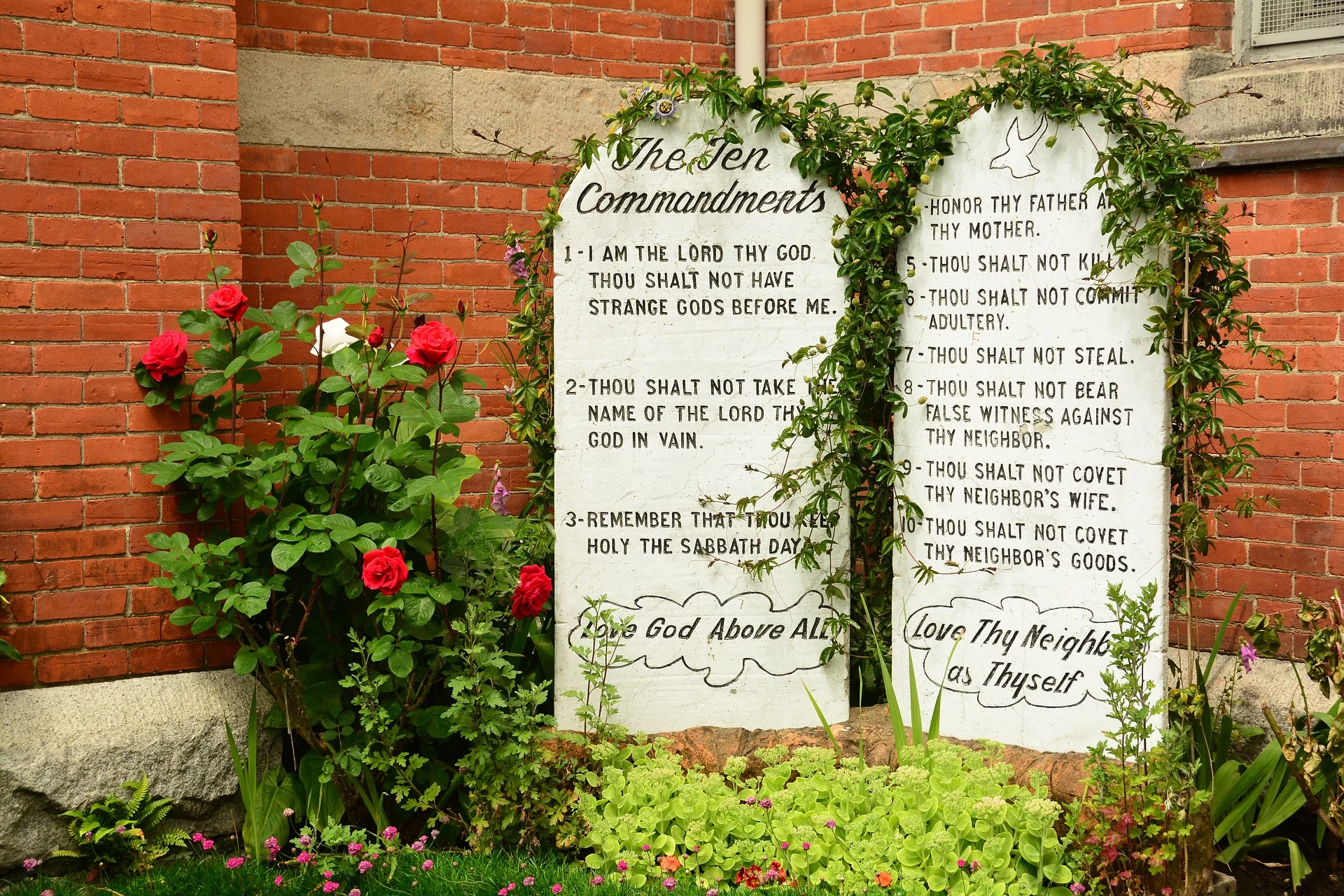
By placing ourselves under the authority and wisdom of a loving and just creator, we can easily buy into the moral code that He provided. The ten commandments were taken as truth ever since God’s finger wrote them down for Moses on Mt. Sinai. In recent years, however, attacks have been made on these commandments in a real and visceral way, from cars crashing into stone fixtures on which the commandments were inscribed, to Satanic groups protesting them, to lawsuits filed by the ACLU, this early list of moral codes has been focused upon as a religious issue, but in reality aren’t the ten commandments a moral standard that everyone, should ascribe too? From the religious right, to the liberal left, the Satan worshippers and the members of the ASLU, shouldn’t all of us live by these ideals: to not murder, to not covet, to not steal and so on.

Image by Jondolar Schnurr from Pixabay

It is hard to talk about moral excellence without broaching these ideas. That being said, let me remind my readers, I am writing to an audience made up mostly of people who believe similarly to myself. I am not trying to convert you to my belief system, though I would be thrilled to talk to you about it. I am just trying to get you to think about the whole picture. Why is the world so against the idea of a moral compass? What is wrong with wanting to have standards of right and wrong? But hey, if I take on the mentality of those who would prefer to not have a moral code, then by all means, do whatever you want, as long as it isn’t hurting anyone. But then who is going to decide what hurt really is and who is really feeling it?

Okay, I’ll step off my soap box now. Ha, ha.

Image by jussiak from Pixabay

Image by jussiak from Pixabay

So how do we, as Christ followers attain and maintain moral excellence? I have several ideas and if you have more, I’d love to hear your thoughts in the comments.

1 - Know To Whom You Belong

Know that the Lord Himself is God; It is He who has made us, and not we ourselves; We are His people and the sheep of His pasture.
— Psalm 100:3 (NASB)

If you have made a decision to believe in the work, death and resurrection of Jesus you are part of His family now. Knowing where you belong, can make a big difference in where you place your trust. The one you trust determines where you are going to place your faith and how you are going to live your life.

2 - Grow in that Knowledge

6 Therefore as you have received Christ Jesus the Lord, so walk in Him,
7 having been firmly rooted and now being built up in Him and established in your faith, just as you were instructed, and overflowing with gratitude.
— Colossians 2:6-7 (NASB)
Image by O12 from Pixabay

Image by O12 from Pixabay

A relationship with Jesus is not static. When you determine to follow Jesus, you don’t suddenly arrive and become that morally excellent person you should be. You have to learn more and learning takes place by studying His word, being around others who will encourage your growth and reading authors who studied the Bible and lived life.

3 - View it as a Relationship

I think we learn more and are more motivated if we are invested in the relationship. Being a Christian isn’t just a contract between, you, Jesus, the Father and the Spirit. It is a living, thriving, growing, loving relationship.

Jesus answered him, “If anyone loves me, he will keep my word, and my Father will love him, and we will come to him and make our home with him.
— John 14:23 (ESV)

I have always loved that verse, because it sounds so familial. God is going to come and make a home with us. it doesn’t say, He’ll meet us at the office or in the garage, but in our homes. That is so relational.

4 - Choose morally good things

It is easy to let our guard down and start watching shows and reading books or going to movies that may not be what is best for us. We all have a different standard factor, meaning some people can watch horror films and not have nightmares afterwards. When I was younger I used to love to watch scary movies. I still occasionally get fearful when I am home alone, thinking the boogie man is lurking in the shadows. I don’t watch scary movies any more. Now I am noticing that other things seen in shows are starting to bother me as well. That is only one example. You know what your standard triggers are. Just like an alcoholic has to stay completely away from alcohol and those situations, we need to make choices to head to the moral high ground, so that God’s work in us is not for naught.

Image by Free-Photos from Pixabay

Image by Free-Photos from Pixabay

4 Rejoice in the Lord always; again I will say, rejoice!
5 Let your gentle spirit be known to all men. The Lord is near.
6 Be anxious for nothing, but in everything by prayer and supplication with thanksgiving let your requests be made known to God.
7 And the peace of God, which surpasses all comprehension, will guard your hearts and your minds in Christ Jesus.
8 Finally, brethren, whatever is true, whatever is honorable, whatever is right, whatever is pure, whatever is lovely, whatever is of good repute, if there is any excellence and if anything worthy of praise, dwell on these things.
9 The things you have learned and received and heard and seen in me, practice these things, and the God of peace will be with you.
— Philippians 4:4-9 (NASB)

I love this passage and I often quote it when I am feeling anxious, but verse 8 really can up our moral excellence factor, if we allow God to bring those things to mind.

Image by Pexels from Pixabay

Image by Pexels from Pixabay

I hope this study of the traits of a Godly person is challenging your thinking and causing you to dig deeper into God’s word and into your relationship with Him. Thanks for reading.

What Do You Believe?

The word faith as defined by Webster's dictionary means, a firm belief in something for which there is no proof. We often associate the word faith with religion. The Jews believe in Yahweh, the Muslims believe in Allah, the Christians believe in Jesus and the atheists believe in nothing. Even the lack of a deity is a belief, because there is no absolute proof. You can say there is no God, but how do you know for sure? Can you take a rocket ship into the furtherest reaches of space and discover that there is no being who calls himself God? Probably not and even if you had the resources to build a rocket and go into space, the vastness of that place would make it impossible for you to ever truly discover wether or not there is a supreme being known as God. 

Jeremy Thomas on StockSnap

Jeremy Thomas on StockSnap

Faith is just that. It is the ability to believe without proof. Every day we make faith based choices. I have faith that when I get out of bed the floor I step on will hold me. I have faith that the air I breathe or the water I drink will not kill me. I have faith that when I drive to work, everyone else will obey the traffic laws, driving the speed limit, stopping at red lights and driving on the correct side of the road. A parent exercises faith when they put their child on the school bus. A patient exercises faith when they go to the doctor. Even scientists exercise faith in many of the theories and scientific laws they put forth as fact. 

At some point in your life, you might want to ask yourself, what do I believe? Maybe you are wondering what I believe. Belief comes with an aspect of trust. Whatever I believe or put my faith in, I am choosing to trust. Trust seems to be a big issue in our world today. We live in a society filled with mistrust, whether it be in the President of the United States, in our educational system or in our own spouses. In many cases a child cannot even trust his own parent where abuse is involved. So who do you trust?

So what is the big deal? Why have faith? Why bother trusting anyone, but myself? Any of you who remember Simon and Garfunkel, probably remember the song, I Am A Rock, which included lyrics like, 

I’ve built walls
A fortress, steep and mighty
That none may penetrate
I have no need of friendship
Friendship causes pain.
It’s laughter and it’s loving I disdain.
I am a rock
I am an island
— Simon and Garfunkel - I Am A Rock
Mikkel Schmidt on StockSnap

Mikkel Schmidt on StockSnap

Even though we probably have all felt like an island at some point in time, the reality is that we need people. Not only that, but we need to be able to put our trust in someone who won't let us down. 

When I was twelve, my family was faced with some difficult financial stresses. It put a strain on my parents relationship and I was old enough to know that it was creating hardship in our family. It was at that point in time that I decided I needed someone I could trust and gave my heart and life to Jesus Christ. In order to be able to fully trust, we have to be able to be fully vulnerable and know that we will not be hurt by doing so. 

Jesus has been, not only my Savior, but my closest friend. Maybe you are reading this and thinking, "I don't get it! How could you have a friendship with a being who is so far beyond what we know and understand?" That is the beauty of this faith! I believe, not in a religion. I believe in a relationship.

Jesus speaks in the Gospels of relationship. He speaks of dwelling together, like a family.

In My Father’s house are many dwelling places; if it were not so, I would have told you; for I go to prepare a place for you.
— John 14:2 (NASB)
Jesus answered and said to him, “If anyone loves Me, he will keep My word; and My Father will love him, and We will come to him and make Our abode with him.”
— John 14:23 (NASB)
“I do not ask on behalf of these alone, but for those also who believe in Me through their word; that they may all be one; even as You, Father, are in Me and I in You, that they also may be in Us, so that the world may believe that You sent Me.”
— John 17:20-21 (NASB)

These are not the words of a being who wants to keep his distance, nor one that makes demands we can never keep. These are the words of the God Man, both fully God and fully Man. His desire is that we be with Him and that we have oneness with Him and His Father. When I put my trust in someone, He was the one. 

Who are you trusting in today? The government, the law, the psychic or yourself? Why not put your trust in the one who has loved you with an everlasting love. 

King Solomon is considered to be the wisest King of all time and this is what he said, 

My son, do not forget my teaching,
But let your heart keep my commandments;
For length of days and years of life
And peace they will add to you.
Do not let kindness and truth leave you;
Bind them around your neck,
Write them on the tablet of your heart.
So you will find favor and good repute
In the sight of God and man.
Trust in the Lord with all your heart
And do not lean on your own understanding.
In all your ways acknowledge Him,
And He will make your paths straight.
Do not be wise in your own eyes;
Fear the Lord and turn away from evil.
It will be healing to your body
And refreshment to your bones.
— Proverbs 3:1-8 (NASB)