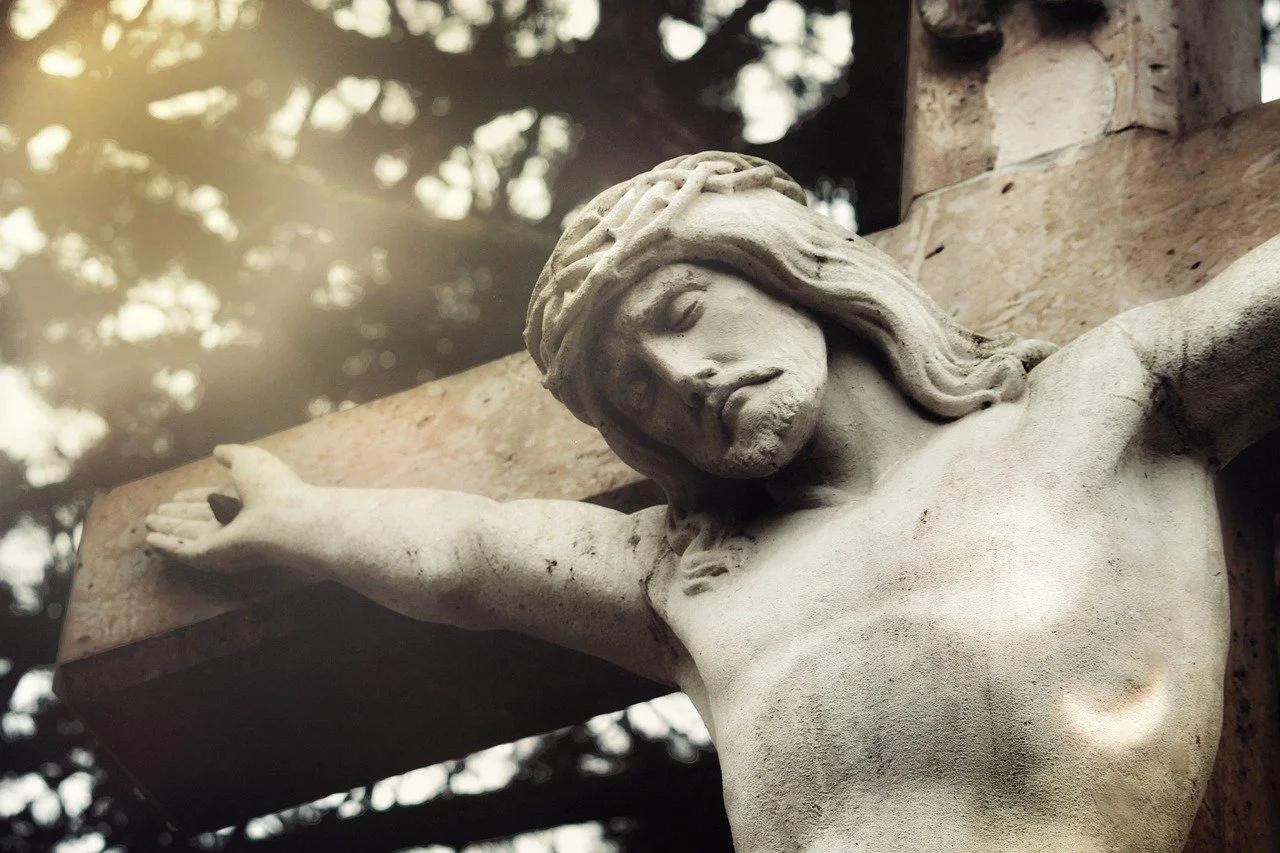
Faith Musings: Nothing to Boast About - Part 3

This second chapter of 1 Corinthians seems a perfect continuation of the verses we looked at previously in Faith Musings: Nothing to Boast About - Part 1, and Nothing to Boast About - Part 2.

Image by Joe from Pixabay

1 And when I came to you, brethren, I did not come with superiority of speech or of wisdom, proclaiming to you the testimony of God.
2 For I determined to know nothing among you except Jesus Christ, and Him crucified.
3 I was with you in weakness and in fear and in much trembling,
4 and my message and my preaching were not in persuasive words of wisdom, but in demonstration of the Spirit and of power,
5 so that your faith would not rest on the wisdom of men, but on the power of God.
6 Yet we do speak wisdom among those who are mature; a wisdom, however, not of this age nor of the rulers of this age, who are passing away;
7 but we speak God’s wisdom in a mystery, the hidden wisdom which God predestined before the ages to our glory;
8 the wisdom which none of the rulers of this age has understood; for if they had understood it they would not have crucified the Lord of glory;
9 but just as it is written,

“Things which eye has not seen and ear has not heard,
And which have not entered the heart of man,
All that God has prepared for those who love Him.”
— I Corinthians 2:1-9 (NASB 1995)

Paul continues his discourse on the wisdom of God versus the foolishness of man by stating that when he came to the church at Corinth he did not preach by his own ability, but by the ability God gave him.

“And when I came to you, brethren, I did not come with superiority of speech or of wisdom, proclaiming to you the testimony of God.”

If anyone could have boasted in his own abilities it was Paul. Born a Hebrew, he was raised in the prosperous city of Tarsus, a center for trade on the Mediterranean coast, a city which also housed a well known school.

Image by sebastiano iervolino from Pixabay

4 although I myself might have confidence even in the flesh. If anyone else has a mind to put confidence in the flesh, I far more:
5 circumcised the eighth day, of the nation of Israel, of the tribe of Benjamin, a Hebrew of Hebrews; as to the Law, a Pharisee;
6 as to zeal, a persecutor of the church; as to the righteousness which is in the Law, found blameless.
— Philippians 3:4-6 (NASB 1995)
6 But perceiving that one group were Sadducees and the other Pharisees, Paul began crying out in the Council, “Brethren, I am a Pharisee, a son of Pharisees; I am on trial for the hope and resurrection of the dead!”
— Acts 23:6 (NASB 1995)

Paul referred to his upbringing not to boast in his abilities, but to appeal to the audience he was talking to. He always made clear that his abilities to teach and preach were from God .

For I determined to know nothing among you except Jesus Christ, and Him crucified.

This stands out to me for two reasons. First, Paul determined. This word does not give us a feeling of being wishy washy. It shows us the apostle was firmly resolved. It is convicting to me, because when I ask myself what am I firmly resolved or determined about, I realize in this chaotic world we are living in I have become more uncertain, unsure and even doubtful about many things, even my relationship with Christ. Yes, there are things I am sure of: my salvation, the Bible, God’s good character and so on. Perhaps, like Paul I need to focus on the main thing.
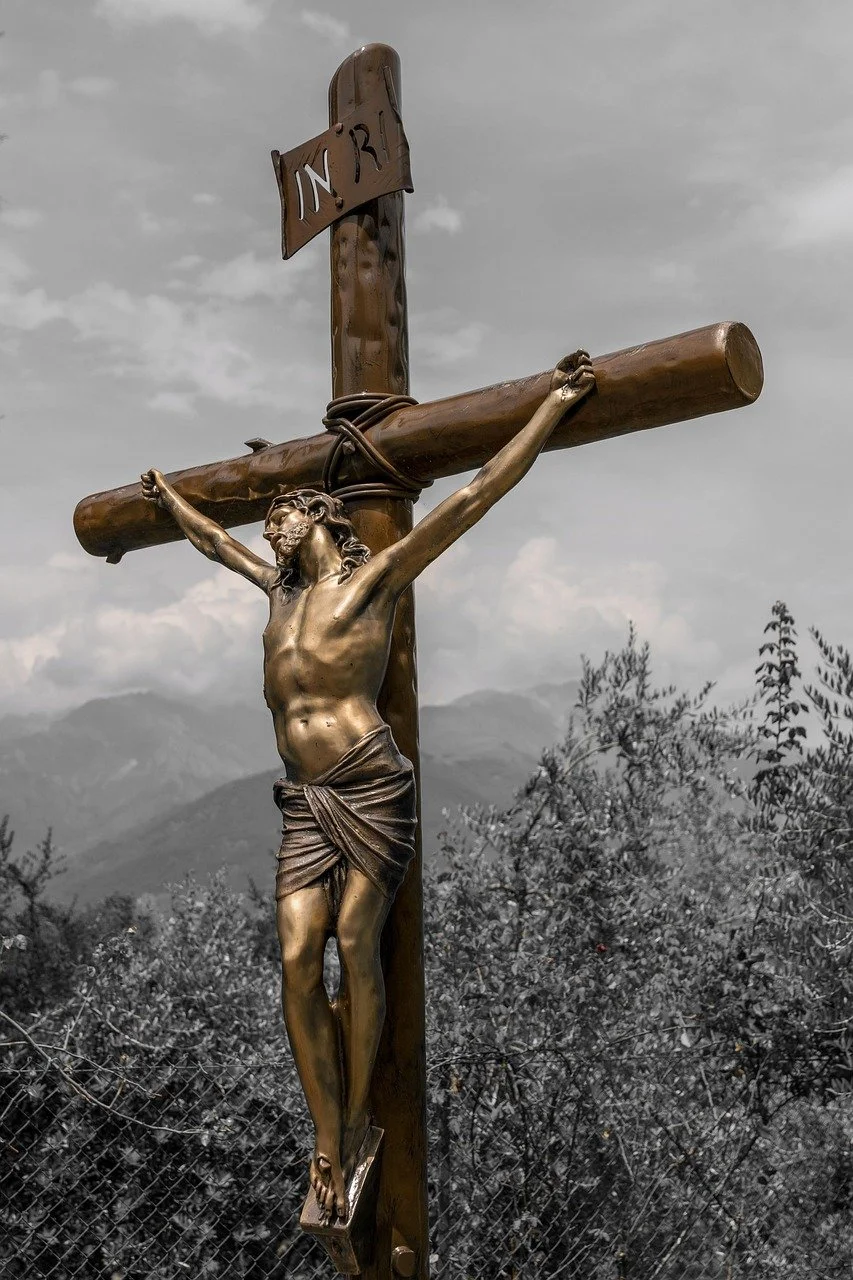
Image by DetBe from Pixabay

Second, what was Paul determined to know? Nothing…except Jesus Christ, and Him crucified. Why is this so important? Isn’t it more important to preach and teach love? After all Christ loves us and desires that we all be in heaven with Him. This is where I am beginning to see disparity in the church. If we do not preach the reason Christ came, and had to be crucified, all the love in the world will not fix all that is wrong with it. Christ came because we are sinners. Not one of us is good enough to earn our way into heaven, no matter how much love we show. And the truth is, if I only preach the love of God, then I do not really love. We have to talk about the darkness, the disobedience, and the distance between us and Him.

Remember these verses? Jesus said of Himself:

6 Jesus said to him, “I am the way, and the truth, and the life; no one comes to the Father but through Me.
— John 14:6 (NASB 1995)
5 I am the vine, you are the branches; he who abides in Me and I in him, he bears much fruit, for apart from Me you can do nothing.
6 If anyone does not abide in Me, he is thrown away as a branch and dries up; and they gather them, and cast them into the fire and they are burned.
— John 15:5-6 (NASB 1995)
23 He who hates Me hates My Father also.
24 If I had not done among them the works which no one else did, they would not have sin; but now they have both seen and hated Me and My Father as well.
25 But they have done this to fulfill the word that is written in their Law, ‘They hated Me without a cause.’
— John 15:23-25 (NASB 1995)
18 “Behold, we are going up to Jerusalem; and the Son of Man will be delivered to the chief priests and scribes, and they will condemn Him to death,
— Matthew 20:18 (NASB 1995)
31 And He began to teach them that the Son of Man must suffer many things and be rejected by the elders and the chief priests and the scribes, and be killed, and after three days rise again.
— Mark 8:31 (NASB 1995)

These are just a few of many verses in the Gospels where Christ talks about His purpose, which was to be obedient to the Father, and die on a cross for sinful humanity.

Does the Bible talk about God’s love? Of course it does. One of the most famous verses many of us memorized as youngsters in church follows:

16 “For God so loved the world, that He gave His only begotten Son, that whoever believes in Him shall not perish, but have eternal life.
— John 3:16 (NASB 1995)

Image by Engin Akyurt from Pixabay

However, even this verse talks about God’s love in the context of our need, and our sin. Why would we perish if we were perfect? Why would we need God if love was the answer to all our problems? Love is the answer, but it is God’s love; God’s pure, perfect, and holy love.

I would like to let these first two verses of this second chapter of 1 Corinthians sink in for the next week. Do you think we need to be more determined like Paul? If so, what are we to be determined about? I’d love to hear your thoughts, so leave a comment or two below.

Until next week, have a great weekend!

Mulling It Over: Romans 8:33-34 - Two Questions

I know a lot of time goes by between these Mulling It Over posts, so if you feel a little lost that is understandable. In order to bring you up to speed I am providing links to the last two posts: Romans 8:30 and Romans 8:31-32. You can always go back even further by venturing over to my Faith page and scrolling through. Today we are looking at verses 33 and 34.

Image by stempow from Pixabay

These two short verses present us with two questions:

Who will bring a charge against God’s elect, and who is the one who condemns?

33 Who will bring a charge against God’s elect? God is the one who justifies;
34 who is the one who condemns? Christ Jesus is He who died, yes, rather who was raised, who is at the right hand of God, who also intercedes for us.
— Romans 8:33-34 (NASB 1995)

There are several simple, yet profound truths in these two verses. The first question asks who will bring a charge against God’s elect. Those who have put their faith in the work of Jesus Christ are God’s elect. They are the ones that placed their trust in Him.

Truth 1 - God is the one who justifies. The word justify as it is used in this verse means to judge, regard, or treat as righteous or worthy of salvation. God, the Creator of the universe, the beginner of all time, the maker of humanity, and the author of the plan is the only one worthy to administer justice on that which He created. No one else can do this. No one else can stand in His place, because no one else judges without partiality. No one else is pure, righteous and holy. He alone can justify.

The next question begs yet another answer. Who is the one who condemns? In today’s world we often feel the weight of condemnation, whether it is our own voice that condemns us, or the voices of others around us, or the masses on social media. Condemnation seems to leak through our pores making us feel worthless, and hopeless.

The answer to the question is not a list of those who are condemning, but the second truth, which involves four clauses.

Image by Kati from Pixabay

Truth 2 - Jesus Christ is He who died…rather who was raised…who is at the right hand of God…who also intercedes for us. We see here, four things that Christ did for us so that we would not be condemned. Look again at the first verse of this chapter.

Therefore there is now no condemnation for those who are in Christ Jesus
— Romans 8:1 (NASB 1995)

This beautiful truth has to be repeated to make sure we get it. If you are in Christ Jesus you are not condemned, not by anyone! Read that again. You see Jesus died, rose, sat down at the right hand of His Father, and now intercedes for us in order that we no longer fall under condemnation. It is sin that condemns, and Jesus has washed us whiter than snow. He is our surety. He became our bail so we might get out of the jail we were trapped in by the enemy of our souls. What blessed and beautiful truth.

These verses allow us to rise in the morning without feeling the heavy weight condemnation puts us under. These truths remind us that we can move through our day without fear. They also surround us with the truth that we are His and He provided everything we need.

I hope you find His encouragement today through this reminder. Thanks for reading.

The Greatest Story - The Story Behind the Cross

We are all story tellers in one form or another. Whether you are telling a friend about your trip to the doctor’s office, your spouse about the new movie you just saw, or people on social media about the sales at Nordstrom, we are all telling a story. Your story might not be exciting, or full of action and romance, but it is your story. Story telling is a way of relaying information. At times the information might be made up for the purpose of entertainment, but more often story telling is a way to relay true accounts and facts.

Image by Ri Butov from Pixabay

We tell stories with our words, but we can also tell stories with our body language and other vocalizations. Crying tells a story of great sadness, or euphoric joy. Anger tells a story of frustration or hatred. Walking with your head raised, making eye contact tells us you are confident and most likely friendly. Sitting alone at a social even with your head down looking at your phone tells a story of relational struggle and possible low self esteem.

Story telling has been around for centuries. It is one of the oldest ways of relaying information. When God inspired the writers of the Old and New Testaments He spoke to them in a type of story form. He didn’t just give them a list of facts telling them to write them down as bullet points. He gave them people, places, events with incredible details.

The Gospels of Matthew, Mark, Luke and John are rich with details on the birth, life, death and resurrection of Christ. Indeed, they do not just include the who, what and wheres of a good story, but they are also seen as true accounts of Christ’s teaching, travels, prayers, and sufferings.

Image by congerdesign from Pixabay

To be sure, these are not made up stories, but factual accounts of the life of Christ and the lives of his followers. From His birth in a stable in Bethlehem, to His triumphal entry into Jerusalem, to His agony in the Garden, to His death on a hill with a criminal on each side, to His burial, to His walk in the garden after three days, these books give us every detail we need to know the living Christ.

What makes Christ’s story the greatest story ever told? It is unique in its message, and universal in its reach. This story is the only one inspired by the true, living God, put together by 36 different men, all with the same message over a period of 1500 years.

The focus of the Old Testament is the why. The first two chapters of Genesis relate the beautiful symphony of the triune God bringing our planet, and life into existence. Unfortunately by Chapter three, we learn of the devastating fall of that glorious creation by one choice to sin. What follows is a detailed telling of the history of the nation of Israel, God’s chosen people and the system of the law, God put into place to govern those people.

We need to remember this was all laid out to point to a future event: the coming of the fulfillment of the Law, Jesus Christ. The Old Testament is full of prophecy pointing to Christ’s coming. In order to fully understand the need and provision of the New Covenant, God gave us the detailed account of the Old Covenant. As seen in Hebrews, the Law was imperfect, but Christ was perfect.

18 For, on the one hand, there is a setting aside of a former commandment because of its weakness and uselessness
19 (for the Law made nothing perfect), and on the other hand there is a bringing in of a better hope, through which we draw near to God.
20 And inasmuch as it was not without an oath
21 (for they indeed became priests without an oath, but He with an oath through the One who said to Him,

“The Lord has sworn
And will not change His mind,
‘You are a priest forever’”);

22 so much the more also Jesus has become the guarantee of a better covenant.
— Hebrews 7:18-22 (NASB 1995)

Christ is the guarantee of a better covenant, the new covenant brought about in the New Testament. This covenant is laid out simply in a few simple verses from the New Testament.

16 “For God so loved the world, that He gave His only begotten Son, that whoever believes in Him shall not perish, but have eternal life.
— John 3:16 (NASB 1995)

The following verses are known as the Roman Road. They tell the Gospel of Christ in simplistic terms.

23 for all have sinned and fall short of the glory of God,
— Romans 3:23 (NASB 1995)
23 For the wages of sin is death, but the free gift of God is eternal life in Christ Jesus our Lord.
— Romans 6:23 (NASB 1995)
8 But God demonstrates His own love toward us, in that while we were yet sinners, Christ died for us.
— Romans 5:8 (NASB 1995)
9 that if you confess with your mouth Jesus as Lord, and believe in your heart that God raised Him from the dead, you will be saved; 10 for with the heart a person believes, resulting in righteousness, and with the mouth he confesses, resulting in salvation.
— Romans 10:9-10 (NASB 1995)

We learn all about the system of sacrifices that were part of the Old Covenant in the Old Testament. Jesus’ sacrifice on the cross did away with the need for that system. The Law given to Moses by God, was fulfilled in Christ given to us by His Father.

Image by Gerd Altmann from Pixabay

The story of the cross was centuries in the making, but the most beautiful thing about it is that it gave access to the throne of God to every single person who believes. It doesn’t matter who you are or who you have been. It doesn’t matter where you live or what sort of job you have. It doesn’t matter how low you have gone, or how great you have been. The story of the the cross is for all.

If you are struggling today with the story of your life, look to Jesus. He will make all the difference.