Faith Musings: Nothing to Boast About - Part 9

We should be drawing this study to a close this week. I hope you have enjoyed this look at 1 Corinthians 1 and 2. I can only say it was one of those Holy Spirit directed studies that I had not been intending to do. You must understand, what I put on the blog is most often things I am learning and/or struggling with. I hope I can always bring you the same clarity and understanding that the Holy Spirit gives me when revealing truth in His word.

Image by Pexels from Pixabay

10 For to us God revealed them through the Spirit; for the Spirit searches all things, even the depths of God.
11 For who among men knows the thoughts of a man except the spirit of the man which is in him? Even so the thoughts of God no one knows except the Spirit of God.
12 Now we have received, not the spirit of the world, but the Spirit who is from God, so that we may know the things freely given to us by God,
13 which things we also speak, not in words taught by human wisdom, but in those taught by the Spirit, combining spiritual thoughts with spiritual words.
14 But a natural man does not accept the things of the Spirit of God, for they are foolishness to him; and he cannot understand them, because they are spiritually appraised.
15 But he who is spiritual appraises all things, yet he himself is appraised by no one.
16 For who has known the mind of the Lord, that he will instruct Him? But we have the mind of Christ.
— I Corinthians 2:10-16 (NASB 1995)

Last week we looked specifically at verse 13 diving into the concept that it is the Holy Spirit who teaches us and who gives us God’s wisdom. Paul’s teaching came, not from human wisdom, but from the wisdom taught to him by the Spirit of God. The same is true in our own lives as we grow closer to God and learn to listen to His Spirit with open ears. We looked specifically at 1 John 2:27 which reminds us that when we have His anointing, or the Holy Spirit we have no need of other teaching or wisdom. God’s wisdom is all we need. I also made a note that we must have His discernment to make sure that what we are saying is of the Spirit actually is His Spirit and not the spirit of the world. Remember, the spirit of the world is not for God.

Let’s start looking at verses 14 - 15.

14 - But a natural man does not accept the things of the Spirit of God, for they are foolishness to him, and; and he cannot understand them, because they are spiritually appraised.

Image by Gina Janosch from Pixabay

I think this verse is pertinent to what is happening in the world as we look around at the violence, hatred, and sin that permeates all cultures. In our own country we have seen a definite uptick in violence as a way to respond to ideas, people, religion and beliefs that are not liked or agreed with. This is the response of the natural man. Our sin nature wants what it wants and it looks at the things of God as ridiculous.

Even as believers we find ourselves regularly battling against this old nature and fighting to turn to Jesus and His truth rather than give in to our baser sin nature. The difference is, we have God’s Spirit gently reminding us how much God loves us, what He did for us and why His wisdom is always better than the world’s.

Why does the natural man think God’s teaching and wisdom is foolish, after all, didn’t God create man in His image? Shouldn’t that give man His wisdom? Unfortunately, this is what Satan tempted Adam and Eve with in the Garden. See Genesis 3. There were two things going on in the Garden. The first, the Serpent, or Satan, was intent on causing God’s beautiful creation to crash and burn. The second, Adam and Eve made a choice to not trust God. If instead of listening to the Serpent they would have ran to God and asked Him what to do, they would not have made that same choice. God’s wisdom, would have given them the understanding to know what Satan was plotting.

Sin is what took away the ability to know and understand God’s wisdom. What God intended to be the norm, a regular, intimate, relationship with Him, became obscured by the veil of sin. It is only by giving our lives to Him in an intentional choice to trust Him, that we receive the Helper and the ability to know God and understand His teaching and wisdom.

12 Therefore having such a hope, we use great boldness in our speech,
13 and are not like Moses, who used to put a veil over his face so that the sons of Israel would not look intently at the end of what was fading away.
14 But their minds were hardened; for until this very day at the reading of the old covenant the same veil remains unlifted, because it is removed in Christ.
15 But to this day whenever Moses is read, a veil lies over their heart;
16 but whenever a person turns to the Lord, the veil is taken away.
17 Now the Lord is the Spirit, and where the Spirit of the Lord is, there is liberty.
18 But we all, with unveiled face, beholding as in a mirror the glory of the Lord, are being transformed into the same image from glory to glory, just as from the Lord, the Spirit.
— 2 Corinthians 3:12-18 (NASB 1995)

What we see in our country right now is the spirit of the natural man fighting against what they see as the foolishness of God, because they can’t understand it. Why does this surprise us? God has always had a better way, but He allowed mankind to make their own choices and He still does, even to the point of violence and persecution.

5 The Light shines in the darkness, and the darkness did not comprehend it.
— John 1:5 (NASB 1995)

15 - But he who is spiritual appraises all things, yet he himself is appraised by no one.

Image by Thomas from Pixabay

Seeing that our Creator is a spiritual being, and when we are in Him we are also spiritual beings, we are able to appraise, or to use a more unfavorable word, judge, all things. (I thought that chicken looked pretty judgmental to me. what do you think? Ha, ha.) What does this mean? In simple language it means that we are able to look at everything around us and discern what is actually happening. For instance, the things that are happening in our country are looked at political and idealogical differences, but one who has the Spirit of God, knows there is a spiritual element to these things. Of course if we speak that, we are seen as even more ridiculous and unaware. What is most concerning to me is the disparity in the church. We know it is okay to have differences of opinion, but when that turns into anger, and anger turns into hate, then as people with God’s Spirit we need to step back and recognize the spiritual side of things.

With regard to the second half of that verse, we are appraised by no one. In other words, people can judge us on the outside. If I commit a crime I will go to court and be sentenced, but only God judges our eternal soul. Only He knows where we are at spiritually. That, to me, is why it is important to get to know people and have dialogue with people. We may find we have a lot more in common than we do differences.

16a - For who has known the mind of the Lord, that he will instruct Him?

Image by srfparis from Pixabay

There is not one person on this planet that knows the mind of the Lord to the extent that he is able to instruct Him. God doesn’t have to be teachable. He knows everything. The theological word for this characteristic is omniscient. It is not just knowing things like 2+2=4, or that all matter is made up of atoms, and all the other billions of bytes of data in the world. Omniscience includes an awareness, understanding and insight. God doesn’t just know stuff, He knows us. Isn’t that mind bending? Read through Psalm 139. God knows our thoughts, when we lay down, when we rise, where we go, what we are going to say, and the very condition of our heart. He knows every child ever used in the sex trade. He knows every tumor rooting itself in a human’s body. He knows where your lost cat is. He knows the pain you carry deep beneath your smiling exterior.

To the natural man, this doesn’t make sense. In fact, it may be the case they don’t want it to make sense. Knowing that there is a being who knows your every thought, your every pain, your every dark sin is too much. The crazy part is, He knows all that and still He loves us. He loves you, and He wants you, every single bit…the good, the bad, and the dark ugly.

16b - But we have the mind of Christ.

Image by Chil Vera from Pixabay

Perhaps it is because I have the mind of Christ that as I have been typing this I want to fall to my knees and cry. Not only to shed tears for so many who are hurting, angry, and lost, but for my own wretched soul. He has done it all. He has provided a way when there was no way. He provided a light in the darkness, a path through rocky mountain slopes; food for my peckish soul and water for my dried up heart. He has done it all, and I have nothing to boast about, except in Him.


Faith Musings: Nothing to Boast About - Part 8

I have been doing a series that looks more in depth at the first couple of chapters of 1 Corinthians. You can see each of the previous parts in this series by clicking on the following links: Part 1, Part 2, Part 3, Part 4, Part 5, Part 6, and Part 7. Today we are going to dive deeper into the role of the Holy Spirit in our lives.

Image by Aritha from Pixabay

10 For to us God revealed them through the Spirit; for the Spirit searches all things, even the depths of God.
11 For who among men knows the thoughts of a man except the spirit of the man which is in him? Even so the thoughts of God no one knows except the Spirit of God.
12 Now we have received, not the spirit of the world, but the Spirit who is from God, so that we may know the things freely given to us by God,
13 which things we also speak, not in words taught by human wisdom, but in those taught by the Spirit, combining spiritual thoughts with spiritual words.
14 But a natural man does not accept the things of the Spirit of God, for they are foolishness to him; and he cannot understand them, because they are spiritually appraised.
15 But he who is spiritual appraises all things, yet he himself is appraised by no one.
16 For who has known the mind of the Lord, that he will instruct Him? But we have the mind of Christ.
— 1 Corinthians 2:10-16 (NASB 1995)

Let’s get a running start at the next few verses.

Now we have received, not the spirit of the world, but the Spirit who is from God, so that we may know the things freely given to us by God,

If you read through last week’s post you know that when we receive Christ as our Lord and Savior we do not receive the spirit of the world, which has to do with the mindset of the world, a mindset that is against God and all He wants us to know. We receive the Spirit who is from God, or the Holy Spirit. We are given the Holy Spirit as a help so that we might know the things of God which are freely given to us.

In other words, the Holy Spirit is the one who gives us understanding of God’s mind and ways. He gives us understanding of the Words of God in the Holy Scriptures, and He enables us to have God’s wisdom in all situations.

…which things we also speak…

Image by Naveen Goyal from Pixabay

Paul was referring to himself and the preaching, teaching and letter writing he was doing for the churches

…not in words taught by human wisdom, but in those taught by the Spirit…

Image by Raindom from Pixabay

Paul, is one of the most famous of the apostles, whose own testimony tells of him persecuting the Christian church with a fervor that included having many believers imprisoned and killed. On the road to Damascus Jesus appeared to him (at the time Saul) in a bright, blinding light and questioned, “Saul, Saul, why are you persecuting me?” (See Acts 9.) Saul became Paul and became a major contributor to the spread of the Gospel.

This same Paul was not teaching or preaching words that came from his own human wisdom, but words taught to him by the Holy Spirit. While he was alive at the time of many of the disciples, he was not one of the twelve that originally lived and walked with Jesus. His learning was not first hand, but through the work of the Holy Spirit, just as ours is.

I love this, especially when I feel utterly stupid in my Christian faith. Obviously, I know lots of things, just as Paul did, but my book learning is not what drives me to write these posts. I do it as a ministry of the Holy Spirit to encourage anyone in their Christian walk. Believe me, I have had numerous moments where I have been ready to give it all up, but it is then that I get that little prodding in the back of my mind. Even if only one person benefits there is a ripple affect with a single drop of water.

…combining spiritual thoughts with spiritual words

Image by Hans from Pixabay

27 As for you, the anointing which you received from Him abides in you, and you have no need for anyone to teach you; but as His anointing teaches you about all things, and is true and is not a lie, and just as it has taught you, you abide in Him.
— I John 2:27 (NASB 1995)

I came across this verse in 1 John some months ago and and it keeps coming back around to me. It talks about our anointing which we received from Him and abides in us. This anointing is not something special that only comes to those who are prayed over for the ministry. His anointing is the living, breathing, Holy Spirit inside of us when we accept Christ.

As we see with Paul, and I would say even someone like Charlie Kirk, they did not need a theology degree to speak, preach or teach. They got their words, responses, messages from the Holy Spirit who dwelled inside of them. This verse clearly tells us that we have no need for anyone to teach us because the Holy Spirit teaches us about all things and He is true and not a lie.

Now, do we need to be careful to not take this out of context and start spouting off anything that comes to mind? Yes! But do we need to hide the light of Christ under a bushel because we are not “educated” and might not know what to say? No!! We are meant to be the light of Christ in a dark world, and can be confident engaging people in conversations about Christ because His Holy Spirit lives in us.

I will add to this idea next time as we finish off this chapter.

Have a great week and remember you are anointed by God and have the Holy Spirit in you. Abide in Him and shine His light!

Faith Musings: Nothing to Boast About: Part 7

We have been looking at verses from I Corinthians 1 and 2. We have learned that the cross of Christ, born of God’s wisdom for a sinful world, is seen as foolishness to the very humanity it is able to save. We have also learned that God does not think as we think. He uses the very things we see as foolish and ridiculous to save the lost and confound the wisest individuals. In addition we have discovered God’s intention in choosing the foolish and weak things of the world was to remind us that without him we are nothing. We were created to be a reflection of His glory and every one of us bears His image.

Image by EmilyNumen from Pixabay

Last time, we began learning about the Holy Spirit’s part in our lives and in the work of revelation of God’s truth. Paul, himself, who determined to “know nothing…except Jesus Christ, and Him crucified,” recognized it was the Holy Spirit and His power that gave his preaching the desired outcome of people coming to know Jesus. We also learned it is God, through the Spirit, who reveals His truth to us, for it is His Spirit that searches and knows the very depths of God.

10 For to us God revealed them through the Spirit; for the Spirit searches all things, even the depths of God.
11 For who among men knows the thoughts of a man except the spirit of the man which is in him? Even so the thoughts of God no one knows except the Spirit of God.
12 Now we have received, not the spirit of the world, but the Spirit who is from God, so that we may know the things freely given to us by God,
13 which things we also speak, not in words taught by human wisdom, but in those taught by the Spirit, combining spiritual thoughts with spiritual words.
14 But a natural man does not accept the things of the Spirit of God, for they are foolishness to him; and he cannot understand them, because they are spiritually appraised.
15 But he who is spiritual appraises all things, yet he himself is appraised by no one.
16 For who has known the mind of the Lord, that he will instruct Him? But we have the mind of Christ.
— 1 Corinthians 2:10-16 (NASB 1995)

I want to take a closer look at the next two verses in this passage.

For who among men knows the thoughts of man except the spirit of the man which is in him?

Image by janrye from Pixabay

There are individuals who claim to be able to read our minds. They may have some sort of ability, but it is most likely they are extremely intuitive and can read people through their actions, words, body language and facial expressions. The point of the above question is that no one can truly know what is inside of us except our own spirit, or our own being.

Today it seems that many people do not even have that knowledge or understanding. People read books, listen to podcasts, go to psychiatrists, psychologists and others to help them understand themselves and even decipher what they are thinking. It seems to me, the further we have grown in the areas of knowledge and understanding the less we really know. Knowing these limitations is there any doubt that we cannot fully know or understand the Holy God?

Even so the thoughts of God no one knows except the Spirit of God.

Image by Joe from Pixabay

God is so far beyond our ability to truly understand, and our earthly wisdom, as we have seen already, is foolishness when it comes to knowing Him. However, God’s Spirit, the Holy Spirit, this same one who becomes part of us when we give our lives to Christ, He knows the thoughts of God.

You see, the Holy Spirit is not just the after thought of the God head when Jesus knew his ascension was soon to take place. The Holy Spirit is a living and active part of the trinity.

He was there at the beginning:

1 In the beginning God created the heavens and the earth.
2 The earth was formless and void, and darkness was over the surface of the deep, and the Spirit of God was moving over the surface of the waters.
— Genesis 1:1-2 (NASB 1995)

He was involved in human industry:

1 Now the Lord spoke to Moses, saying,
2 “See, I have called by name Bezalel, the son of Uri, the son of Hur, of the tribe of Judah.
3 I have filled him with the Spirit of God in wisdom, in understanding, in knowledge, and in all kinds of craftsmanship,
4 to make artistic designs for work in gold, in silver, and in bronze,
5 and in the cutting of stones for settings, and in the carving of wood, that he may work in all kinds of craftsmanship.
— Exodus 31:1-5 (NASB 1995)

He was involved in governance:

16 The Lord therefore said to Moses, “Gather for Me seventy men from the elders of Israel, whom you know to be the elders of the people and their officers and bring them to the tent of meeting, and let them take their stand there with you.
17 Then I will come down and speak with you there, and I will take of the Spirit who is upon you, and will put Him upon them; and they shall bear the burden of the people with you, so that you will not bear it all alone.
— Numbers 11:16-17 (NASB 1995)

See also the book of Judges as well as I Samuel 16:13.

The Holy Spirit was also regularly involved in prophecy, coming on whomever the Lord willed and speaking through them to those who needed to hear the prophetic word. This third person of the Triune God has been busy from the beginning of our world, and it is He who knows the thoughts of God.

Now we have received, not the spirit of the world, but the Spirit who is from God…

Image by StockSnap from Pixabay

Note there is a difference between the spirit of the world, and the Spirit from God. The spirit of the world is not seen as a proper noun, and it has to do with the mindset and attitude prevalent in the world. This mindset is anti-God, and moves to create a culture that is only set on serving itself.

On the other hand, the Spirit of God is completely in tune with the Father and the Son. He moves with them, agrees with them and is in complete communion with them. Jesus told us we would receive this helper. This Holy Being is the one we receive when we give our hearts and lives to Jesus. Isn’t that just mind blowing?

26 But the Helper, the Holy Spirit, whom the Father will send in My name, He will teach you all things, and bring to your remembrance all that I said to you.
— John 14:26 (NASB 1995)

Why did the the triune God head make this choice to send this helper?

…so that we may know the things freely given to us by God.

Image by Bob Dmyt from Pixabay

We would be in error to say God does not love us, care for us, or want to be intimate with us. He gave us One who knows Him. He gave us a part of Himself; a part that knows His very depths. Without this amazing helper we cannot know God. No matter how much head knowledge a person develops over time; no matter how much historical date a person can dredge up, there is only one way to truly know God, and that is by believing in the work of Jesus Christ and by receiving the Holy Spirit.

We will look a bit more at this work of the Holy Spirit in our lives next time. Until then, keep fanning the flame!

Faith Musings: Nothing to Boast About - Part 4

After a few more busy weeks we are at the end of our summer hiatus and schools are back in session. My spouse, who is a college professor, is back in the classroom next week. I wanted to return to the verses we had been looking at in 1 Corinthians. You can see the first three parts: Part 1, Part 2 and Part 3 by clicking on the links.

1 And when I came to you, brethren, I did not come with superiority of speech or of wisdom, proclaiming to you the testimony of God.
2 For I determined to know nothing among you except Jesus Christ, and Him crucified.
3 I was with you in weakness and in fear and in much trembling,
4 and my message and my preaching were not in persuasive words of wisdom, but in demonstration of the Spirit and of power,
5 so that your faith would not rest on the wisdom of men, but on the power of God.
6 Yet we do speak wisdom among those who are mature; a wisdom, however, not of this age nor of the rulers of this age, who are passing away;
7 but we speak God’s wisdom in a mystery, the hidden wisdom which God predestined before the ages to our glory; 8 the wisdom which none of the rulers of this age has understood; for if they had understood it they would not have crucified the Lord of glory;
9 but just as it is written,

“Things which eye has not seen and ear has not heard,
And which have not entered the heart of man,
All that God has prepared for those who love Him.”
— 1 Corinthians 2:1-9 (NASB 1995)

Image by Arnie Bragg from Pixabay

Last time we looked at the first two verses and we emphasized two important points: 1 - Paul determined, and 2 - to know nothing but Jesus Christ, and Him crucified. We looked at the disparity of a social gospel built only on the foundation of love and good works, and the true gospel of Christ’s death and resurrection. Make no mistake we are responsible to love and to do good works, especially to those who are less fortunate (see Matthew 25:31-46), for without the good works we are merely a clanging cymbal or a ringing bell in a symphony of humanity. Part of what makes Christianity different is the example Christ set of loving others, but not just that. The true difference lies in His death on a cross, and His ability to walk out of the grave. This is the power that gives us the ability to love the unlovely, and help the helpless.

Paul continues his letter by reminding them - I was with you in weakness, and in fear, and in much trembling. This was a reference to himself, and not to the people he was with. Paul was not an entertainer. Even though he was learned in the teachings and ways of the Torah and his own people, it is possible he felt “less than” among the intellectuals in Corinth. Orators of that time period were expected to wow the crowd, and this was not Paul’s gift. He simply preached the truth of the gospel. Paul continues this line of thought.

…and my message and my preaching were not in persuasive words of wisdom, but in demonstration of the Spirit and of power…

Image by Pexels from Pixabay

How often do we pine for the notoriety and visibility of being someone important? I grew up in an era where every young person wanted a guitar or a set of drums so they could become the next great rock and roll sensation; myself included. Now we live in a world saturated with images, and videos of people being “important” in what they say, how they dress, what they do, how they identify, and all of it being based on how many views, thumbs up or hits they get on their social media posts. We have people like Taylor Swift who started out by sharing her music on YouTube and now she is “…a cultural icon of the 21st century. She is the highest-grossing live music artist, the wealthiest female musician, and one of the best selling music- artists of all time.” (Wikipedia) How many will long to follow in her footsteps, but will never make it past the borders of the small town they grew up in?         

We now hear speakers in seminars, podcasts and talk shows discussing the art of persuasion. Being able to persuade seems to be important enough that it must be taught and discussed like ancient history or English grammar. Why are we so anxious to persuade? Because we want, not just recognition, but community in our ideologies and thoughts. We want people to agree with us, and join us in turning others to our side and our way of thinking.

Paul recognized the work of the Spirit was beyond a seminar on the art of persuasion. It was a supernatural affair. Any effect he had as an apostle he attributes to the work of the Holy Spirit. People coming to Jesus when he spoke were a demonstration of Spirit and the power. What power? God’s power?

but you will receive power when the Holy Spirit has come upon you; and you shall be My witnesses both in Jerusalem, and in all Judea and Samaria, and even to the remotest part of the earth.”
— Acts 1:8 (NASB 1995)

Image by Pexels from Pixabay

Do a quick walk through of the book of Acts and you will see numerous places where the Holy Spirit moved, and saved, and worked. His power filled the disciples and helped the fledgling churches to grow into a world wide movement that today still holds the power of God.

Once again we are reminded that we have nothing to boast about when Paul says, “so that your faith would not rest on the wisdom of men, but on the power of God.” God intended from the beginning that the foolish things would overcome the wise and the weak would overcome the strong.

Until next time, keep walking in His strength and in His Spirit!

Faith Musings: Nothing to Boast About - Part 2

Last week I started a short series revolving around a number of verses in I Corinthians 1. In the first part we looked at verses 18-25. This week I want to continue by directing our thoughts to verses 26-31.

26 For consider your calling, brethren, that there were not many wise according to the flesh, not many mighty, not many noble;
27 but God has chosen the foolish things of the world to shame the wise, and God has chosen the weak things of the world to shame the things which are strong,
28 and the base things of the world and the despised God has chosen, the things that are not, so that He may nullify the things that are,
29 so that no man may boast before God.
30 But by His doing you are in Christ Jesus, who became to us wisdom from God, and righteousness and sanctification, and redemption,
31 so that, just as it is written, “Let him who boasts, boast in the Lord.”
— I Corinthians 1:26-31 (NASB 1995)

Let’s work our way through these verses by statements.

Image by Umkreisel-App from Pixabay

For consider your calling…

Paul wants the recipients of this letter to think about their calling. Why is this important? I think we need to remember when, and how God called each of us into a personal relationship with His Son Jesus Christ. I was raised in a Bible teaching church by believing parents, but it was at age 12 that I stepped into the promised land. I recognized my sin, my inability to live life without Jesus, and gave my life to Him. God called me, not like some through a lightening bolt, but more a continuous soft whisper. Everyone’s calling is different. What was yours like? It is good to remember where we came from and what God called us out of.

This is also a challenge to those who have been called to remember, “according to the flesh” there were, “not many wise…not many mighty…not many noble….” In other words we weren’t all that. Ever since the fall of man in the Garden of Eden we have been fighting a battle against the truth. The truth of God says we are nothing without Him. The truth of God says all our righteous works are as filthy rags. The truth of God says that man’s wisdom will never rise above the wisdom of God. In fact, as we look at the next few verses we are struck, once again, it is all about Him.

Image by Couleur from Pixabay

But God has chosen…

Did you get that? God has chosen. It wasn’t our abilities, or beauty, or wisdom, or might, or power that God chose. Indeed, He is a beautiful study in contrasts. The almighty God chose the foolish things, the weak things, the base things, the despised, and the things that are not. Why did He do this? He could have chosen the best of the best; the bright and beautiful; the pure and holy; the pretty and clean; the popular and well liked, but He chose everything that was not in order to nullify the things that are. He chose the foolish to shame the wise. He chose the weak to shame the strong. He chose the things that were not shiny and perfect - SO THAT - no man may boast before God.

8 For by grace you have been saved through faith; and that not of yourselves, it is the gift of God;
9 not as a result of works, so that no one may boast.
— Ephesians 2:8-9 (NASB 1995)

Image by Paul Stachowiak from Pixabay

But by His doing…

Here’s the good news…You are in Christ Jesus! Of course, you had to make the choice to believe who God is, who God says we are and who Jesus is, but it has always been God working behind the scenes wooing, drawing, orchestrating, working, sometimes tripping you up and other times washing over you with His lavish love and undeserved mercy. It has always, is always and always will be an act of God that we come to embrace His boundless grace.

In addition, the beautiful perk to this astounding gift is Jesus becomes to us wisdom, righteousness, sanctification and redemption; all of which come from God through His Son. We do not have to worry if we are not wise. We cannot sanctify or redeem ourselves. We cannot make ourselves righteous. All of these things come to us freely when we receive Jesus as our Lord and Savior.

Why?

So That….

“Let him who boasts, boast in the Lord.”

Word for the Year: Trust - Its Connection to Belief

I decided to take my word for this year and approach it in a little different way than I did the word wait, last year. I would like to look at the word trust in the context of how it relates to other words and ideas. For instance, in order for a child to trust their parent they must feel safe. Safety is a key component in understanding how and why we trust or don’t trust.

I would like to start with the connection trust has to the idea of belief. In 2022 my word for the year was believe. You can see that post here. In order to trust we must also believe. One might even say that belief has to come before trust can be invested.

Image by HAMED ASAD from Pixabay

Take, for example, the idea of gravity. Gravity has been here since God created the world, but it was Sir Isaac Newton that came to understand how gravity worked and who developed the Law of Universal Gravitation. Gravity is a reality, whether I believe it or not. However, because I trust the Law of Universal Gravitation I am completely confident to walk outside and not fear falling off the earth into the vastness of space. Belief allows me to act.

5 Trust in the Lord with all your heart
And do not lean on your own understanding.
6 In all your ways acknowledge Him,
And He will make your paths straight.
— Proverbs 3:5-6 (NASB 1995)

In order to trust the Lord with all our hearts we must believe in Him. How can we possibly trust an entity we know nothing about? How can we trust a being we haven’t met? In order to truly know God I must believe in Him. Not in a superficial way, but in a life changing commitment. I must move from merely knowing about Him to knowing Him in an intimate way.

Image by Scottish Guy from Pixabay

The way we grow in our relationship with God is by digging deep into His word, the Bible. The Bible is His story. It is also a collection of historical accounts starting with the creation of our world, the entrance of sin into that world, the growth and history of the nation of Israel, the succession of the kings of that nation, and the birth, life, death and resurrection of Jesus.

As we learn and grow the trifecta of the divine Creator works together to reveal and open our minds to a deep and intimate understanding of His word. Not only do we realize the reality of the historical accounts, we also dive deep into the processes God uses to turn us towards Him and away from our sinful habits and ideals. We come face to face with the reality that He alone is worthy of our trust, and we are but dust blown whichever way the wind might go.

Image by Enrique from Pixabay

And those who know Your name will put their trust in You, For You, O Lord, have not forsaken those who seek You.
— Psalm 90:10 (NASB 1995)

The above verse begins with, “And those who know Your name will put their trust in You…” We have to know His name, His character and His work in order to put our trust in Him. The psalmist goes on to give us a reason, He has not forsaken those who seek Him.

Let’s think about this for a few moments. I am pretty sure all of us have felt forsaken at some point in our lives, whether it be by our family or our friends. We may have also felt forsaken by God. However, He is always with us. He alone is true to His word.

Image by falco from Pixabay

For the king trusts in the Lord, And through the lovingkindness of the Most High he will not be shaken.
— Psalm 21:17 (NASB 1995)
In You our fathers trusted; They trusted and You delivered them.
— Psalm 22:4 (NASB 1995)
To You they cried out and were delivered; In You they trusted and were not disappointed.
— Psalm 22:5 (NASB 1995)
The Lord is my strength and my shield; My heart trusts in Him, and I am helped; Therefore my heart exults, And with my song I shall thank Him.
— Psalm 28:7 (NASB 1995)
Many are the sorrows of the wicked, But he who trusts in the Lord, lovingkindness shall surround him.
— Psalm 32:10 (NASB 1995)
For our heart rejoices in Him, Because we trust in His holy name.
— Psalm 33:21 (NASB 1995)

Image by PixelAnarchy from Pixabay

There are many more verses that talk about our trust in God. I love the last one…our heart rejoices in Him, because we trust in His holy name. Perhaps we don’t experience joy, because we do not trust, and we do not trust because we do not believe, and we do not believe because we do not know. In order to truly know Him we must be in His word listening for His voice.

I hope, if you are reading this, you made a choice to commit your life to God, to believe in Him, in doing so you have taken the first step to being able to trust Him.

Faith Inspiration - Oswald Chambers - Our Great Capacity for God - Part 3: The Truth About Sin

I think most of us would agree that we are living in dark times. Yes, the light of God is still present, but if we believe God’s Word we know hard times are coming and the darkness will reach all across the world. The cause of this darkness revolves around the existence of sin in the world and the desire of Satan to destroy. There will come a time when God will pull His protective hand away from this world and Satan and his evil will reign, but only for a time.

Image by Harmony Lawrence from Pixabay

The world, since the fall, has been guilty of propagating the lies of Satan. Today the word “sin” is no longer politically correct. Children no longer learn about sin and its ramifications. Now parents are raising their children with the “benefits” of learning, not only academic, but psychological. We tell our children to embrace their emotions and teach them to “work through” those feelings and thoughts, hopefully with the end result of becoming a mature adult who embraces all people and treats everyone with kindness and respect.

I do not downplay what these parents are doing, but even with all the proper training, a child can still experience influences that will change his/her thinking and behavior that a parent has no control over. What does the Bible say about sin?

9 “The heart is more deceitful than all else
And is desperately sick;
Who can understand it?
— Jeremiah 17:9 (NASB 1995)

Image by Tumisu from Pixabay

The Bible tells us the heart is deceitful, and desperately sick. Those are pretty harsh words. It doesn’t say that only the hearts of bad people are deceitful, it is referring to all of our hearts. A heart, even a kind one, can be turned to stone by the difficult circumstances of life. Jeremiah even asks, “Who can understand it?” The Bible and its author reminds us why the heart is deceitful and sick, and we can follow the trail back to Genesis.

We know what happened there, as we reviewed a few weeks ago Sin’s Beginning. Sin entered into the world at that point and has been the bane of man’s existence ever since. Mankind turned away from the omnipotent, loving God and turned inward in an attempt to fill the hole that sin left behind. Murder, lust, envy, stealing, lying, cheating, adultery, the list is long, are all an attempt to fill that which only God can fill.

God’s Word is clear on sin. Let’s take a look.

18 For the wrath of God is revealed from heaven against all ungodliness and unrighteousness of men who suppress the truth in unrighteousness,
19 because that which is known about God is evident within them; for God made it evident to them.
20 For since the creation of the world His invisible attributes, His eternal power and divine nature, have been clearly seen, being understood through what has been made, so that they are without excuse.
21 For even though they knew God, they did not honor Him as God or give thanks, but they became futile in their speculations, and their foolish heart was darkened.
22 Professing to be wise, they became fools,
23 and exchanged the glory of the incorruptible God for an image in the form of corruptible man and of birds and four-footed animals and crawling creatures.
— Romans 1:18-23 (NASB 1995)

Image by Darpan Joshi from Pixabay

In the account of Adam and Eve’s sin we see these words fulfilled, “…their foolish heart was darkened. Professing to be wise, they became fools…” Satan is a master of deception, and we buy into it allowing our foolish hearts to be darkened. The darker we become in our understanding of God and His truth, the more foolish we become

10 As it is written, “There is none righteous, not even one;
11 There is none who understands,
There is none who seeks for God;
12 All have turned aside, together they have become useless;
There is none who does good,
There is not even one.”
13 “Their throat is an open grave,
With their tongues they keep deceiving,”
“The poison of asps is under their lips”;
14 “Whose mouth is full of cursing and bitterness”;
15 “Their feet are swift to shed blood,
16 Destruction and misery are in their paths,
17 And the path of peace they have not known.”
18 “There is no fear of God before their eyes.”
— Romans 3:10 -18 (NASB 1995)

These words are not popular. We want to believe we are good by our own merit. We also want to believe that we can work our way to God, or whatever afterlife image we believe. We don’t want to be accountable to someone else, particularly a being we are trying to run away from. However, that does not delete the reality of who God is, what sin is and what God has done for us through His son, Jesus Christ.

Image by Gerd Altmann from Pixabay

21 But now apart from the Law the righteousness of God has been manifested, being witnessed by the Law and the Prophets,
22 even the righteousness of God through faith in Jesus Christ for all those who believe; for there is no distinction;
23 for all have sinned and fall short of the glory of God,
— Romans 3:21-23 (NASB 1995)

We all fall short. End of story. We cannot measure up to the glory of this enduring, eternal, perfect God. We are exactly what the text says, sinners. We all stand condemned due to the original sin.

8 So then as through one transgression there resulted condemnation to all men, even so through one act of righteousness there resulted justification of life to all men.
19 For as through the one man’s disobedience the many were made sinners, even so through the obedience of the One the many will be made righteous.
20 The Law came in so that the transgression would increase; but where sin increased, grace abounded all the more,
21 so that, as sin reigned in death, even so grace would reign through righteousness to eternal life through Jesus Christ our Lord.
— Romans 5:18-21 (NASB 1995)
23 For the wages of sin is death, but the free gift of God is eternal life in Christ Jesus our Lord.
— Romans 6:23 (NASB 1995)

Image by Christopher Keough from Pixabay

I wonder if this is how we appear to God before being washed in the blood of Jesus…?

At this point we may be feeling rather hopeless. If we are all sinners, and the wages of sin is death, are we not all condemned to die? Read on.

9 that if you confess with your mouth Jesus as Lord, and believe in your heart that God raised Him from the dead, you will be saved;
10 for with the heart a person believes, resulting in righteousness, and with the mouth he confesses, resulting in salvation.
11 For the Scripture says, “Whoever believes in Him will not be disappointed.”
12 For there is no distinction between Jew and Greek; for the same Lord is Lord of all, abounding in riches for all who call on Him;
13 for “Whoever will call on the name of the Lord will be saved.”
— Romans 10:9-13 (NASB 1995)

There are two things from this last passage that I want to point out. The first is the if - then truth. If we confess with our mouths, Jesus as Lord, and believe in our hearts that God raised Him from the dead, (then) we will be saved. The confession is essential. It is a statement that we are placing ourselves under the Lordship of Jesus. There are many who call themselves “Christian”, but they have not confessed the Lordship of Christ.

Belief is the the next ingredient in this first if - then truth. We have to believe what happened over 2000 years ago in Jerusalem. Jesus died on a cross and then three days later God raised Him from the dead. There are many doctrinal points we can quibble over, (though I prefer to just believe what the Scriptures say), but if we do not believe He died and rose again we cannot call ourselves Christians.

The second thing I wanted to point out from this passage is the Scriptural truth stated, “Whoever believes in Him will not be disappointed.” I have heard people say they are disappointed in God, because He let them down in one way or another. We can be disappointed in people, circumstances, life, but there is no reason to be disappointed in God. He loves us without reservation, He knows us like no other, and only He is completely trustworthy.

Next month we will look at how sin keeps us from realizing our great capacity for God.

Mulling It Over: Romans 8:37-39 - Conquerors because We are Convinced

It has taken us a long time to get through this one chapter of Romans, but I believe it has been worth it to take such amazing doctrine one bite at a time. God’s Word is truth and it is life transforming, so we do ourselves an injustice when we skim quickly through its unfathomable wisdom and insights. Today we are going to finished this chapter with the last three verses.

37 But in all these things we overwhelmingly conquer through Him who loved us.
38 For I am convinced that neither death, nor life, nor angels, nor principalities, nor things present, nor things to come, nor powers,
39 nor height, nor depth, nor any other created thing, will be able to separate us from the love of God, which is in Christ Jesus our Lord.
— Romans 8:37-39 (NASB 1995)

We spent the last two years looking at Romans 8 and we have discovered amazing things. We learned that if we are in Christ Jesus we are not condemned. We also learned that the law is not able to accomplish what Christ accomplished by the shedding of His blood on the cross and His resurrection from the dead. In addition we learned our flesh is something that we will struggle with until it no longer binds us to this earth, but the good news is that even in our flesh we are loved and cherished by an amazing God who desires that we call Him Father. His Spirit prays for us at a gut wrenching level that we cannot understand.

Even still, we face obstacles as we walk this life. The enemy of mankind, Satan does everything he can to trip us up and to make us think that we are separated from our Creator. He regularly sabotages our efforts to abide, but the truth is he cannot separate us from God.

Let’s look at these last three verses phrase by phrase.

But in all these things - This grouping of five words is referring back to the list Paul gives us in verse 35: tribulation, distress, persecution, famine, nakedness, peril or sword. However, I would like to add that it can also be referring to what was previously said throughout the chapter which would include: condemnation, the flesh, suffering, corruption, and death. Indeed, in ALL these things…

We overwhelmingly conquer - We aren’t just scraping by, winning by the skin of our teeth, we are overwhelmingly conquering. If we look more closely at the word overwhelm we see that it includes the idea of overcoming, and engulfing.

I love this idea. We don’t just conquer sin and all the other things on the list, we do it by overcoming it and completely engulfing it. I had a flash back to the movie, The Blob, from 1958, where an alien entity crashes on earth and begins consuming everything in its path. Ha, ha. We crush and smother the opposition, that’s what it means for us to conquer in His name.

I know many of us don’t feel like we are conquering. I have days where I feel more like I am being consumed by that alien blob, than crushing the things that come against me. So how do we do it? Obviously, it isn’t something we do in our own strength. The next phrase gives us a clue…

Through Him who loved us - Just as Jesus said -

4 Abide in Me, and I in you. As the branch cannot bear fruit of itself unless it abides in the vine, so neither can you unless you abide in Me.
— John 15:4 (NASB 1995)

It is time we own up to the fact that without Jesus we are lost, and I don’t just mean spiritually. We just can’t do the things that Jesus does. We aren’t immortal, yet, and as long as we are in this flesh we will struggle. This was part of the reason Jesus sent the Holy Spirit.

Image by Arnie Bragg from Pixabay

5 “But now I am going to Him who sent Me; and none of you asks Me, ‘Where are You going?’
6 But because I have said these things to you, sorrow has filled your heart.
7 But I tell you the truth, it is to your advantage that I go away; for if I do not go away, the Helper will not come to you; but if I go, I will send Him to you.
8 And He, when He comes, will convict the world concerning sin and righteousness and judgment;
9 concerning sin, because they do not believe in Me;
10 and concerning righteousness, because I go to the Father and you no longer see Me;
11 and concerning judgment, because the ruler of this world has been judged.
12 “I have many more things to say to you, but you cannot bear them now.
13 But when He, the Spirit of truth, comes, He will guide you into all the truth; for He will not speak on His own initiative, but whatever He hears, He will speak; and He will disclose to you what is to come.
14 He will glorify Me, for He will take of Mine and will disclose it to you.
15 All things that the Father has are Mine; therefore I said that He takes of Mine and will disclose it to you.
— John 16:5-15 (NASB 1995)

We are able to overwhelmingly conquer because we have the Holy Spirit. Through this third person of the Triune God we don’t just learn of His love, we know His love. Through this ethereal being we are given full knowledge of who God is and how He operates in our lives. True, there are still things we don’t and won’t know until we have transferred from this earthly world to the heavenly one, but with the Holy Spirit’s life in us we are overcome and engulfed in all that is holy, beautiful and right.

For I am convinced - the author of this epistle, the Apostle Paul, is confident in who Christ says that He is, and knows the transformative power of the Spirit in his own life. The Holy God did the work of convincing him, let Him do the work of convincing you.

6 For I am confident of this very thing, that He who began a good work in you will perfect it until the day of Christ Jesus.
— Philippians 1:6 (NASB 1995)

Image by Eliane Meyer from Pixabay

That neither death, nor life - I might be stating the obvious, but we often think death is the main thing that will, in the end, separate us from God’s love, but those of us who have put our faith in Christ know this will not be the case. Death will be the thing that takes us out of this world and opens the door to our heavenly home.

It is more likely the case that we allow life to separate us from God’s love, and this is where we need to be aware and keep an eye on our walk with Him. In reality, there is nothing that can keep us from God’s love, but we can certainly do things that make us feel as though He is far away.

You regularly hear me talking about the idea of abiding in Christ. That is because it is so very important to stick close to Him. Life is hard, and our enemy is relentless. He will use any chance he can to turn our eyes away from our Savior to the crashing waves around us.

Nor angels, nor principalities - We might wonder why Paul included this in the list, but it is understood that not all created beings remained true to God. Satan was an angel and so were the demons that followed him in his attempt to usurp the throne of the King of Glory. None of these can keep us from the love of God. Let’s not forget, His seal is on us, and nothing comes into our lives that hasn’t first passed through the Father’s hands. We see this in the book of Job.

Image by Gerd Altmann from Pixabay

Nor things present, nor things to come - We know time is relentless and we cannot get away from it’s passing. In fact, its passage has a profound affect on our lives in that it makes us age, and there is nothing we can change about this fact. However, no matter what we are going through right now, or what we will face in the future, we go through it wrapped in the loving arms of Jesus.

Nor powers - We are living in uncertain times and it is pretty clear people are concerned about the powers that be, not only in our own country, but in other countries around the world. I am so thankful that God holds me and the world I live in, in His hands. Only He can and will bring about the new heavens and the new earth. No matter who is in charge, they only hold the power that God’s allows them to have.

Nor height, nor depth - It does not matter the heights we achieve in this life; not the riches, the glory, or the fame. It also doesn’t matter the depths we have fallen to; the darkest cave, the deepest ocean, none of these can separate us from the love of God. You may feel you have done something so bad, Christ will never take you back, but if you made a decision to follow Him, you cannot be separated from His love, and it is that love that can help you find your way back to Him.

Nor any other created thing - There is nothing in this world that hasn’t been created, either by the omniscient God, or by the beings He created.

Will be able to separate us from the love of God, which is in Christ Jesus - It is important to note, this love of God is only found in Christ Jesus. It is not found in Allah, Buddha, Krishna, or any of the many other beliefs and ideologies that populate our world like a patchwork quilt. Only Jesus, because He and the Father are one (John 10:30). Jesus is the One who binds us to the Father and we know this through the Holy Spirit.

Thank you so much for coming along on this journey through Romans 8. I hope you have enjoyed it and learned as much as I have.

Faith Inspiration - Oswald Chambers - Our Great Capacity for God - Part 1

Oswald Chamber’s devotional book My Utmost for His Highest has been one of my most used devotionals over a span of nearly three decades. The book, put together by his wife after his death at the young age of 43, gives 365 devotions taken from her notes of his sermons, talks and writings. Each devotion emphasizes a verse or two from the Scripture, and my personal habit is to read the entire chapter where the verse or verses are found. This has been a great exercise in learning more from God’s word and understanding the context of certain passages. Today I want to look at a quote from the devotional that struck me as profound and has stimulated a good deal of additional thought and study.

Image by congerdesign from Pixabay

We are designed with a great capacity for God, but sin, our own individuality, and wrong thinking keep us from getting to Him. God delivers us from sin——we have to deliver ourselves from our individuality. This means offering our natural life to God and sacrificing it to Him, so He may transform it into spiritual life through our obedience...We must see to it that we aid and assist God, and not stand against Him...we must discipline ourselves. God will not bring our ‘arguments...and every thought into captivity to the obedience of Christ’ (2 Corinthians 10:5)——we have to do it.”
— November 18th

There are three things, Oswald lists that keep us from God. I want to take the next few months of these Faith Inspiration posts to look at these in depth and talk about steps we can take to get closer to our amazing God. Before we take an in depth look at the first of these deterrents, sin, next month, I want to talk about what it means to be “designed with a great capacity for God.”

We learn in the very first book of the Old Testament that we are creations of God. Not only are we His artistic work, we are made with His image stamped on our beings.

26 Then God said, “Let Us make man in Our image, according to Our likeness; and let them rule over the fish of the sea and over the birds of the sky and over the cattle and over all the earth, and over every creeping thing that creeps on the earth.”
27 God created man in His own image, in the image of God He created him; male and female He created them.
— Genesis 1:26-27 (NASB 1995)

We also see evidence of this Creator/creation connection in the New Testament.

10 For we are His workmanship, created in Christ Jesus for good works, which God prepared beforehand so that we would walk in them.
— Ephesians 2:10 (NASB 1995)

Image by endri yana yana from Pixabay

Just as an artist, or a craftsman puts a bit of themselves into the things they make: the pictures they paint, the statues they mold, the beautiful furniture they carve, God put a bit of Himself in each of us. It is in this imprint where our great capacity for Him lies. This image of Him we are created in enables us to know Him intimately, and to enjoy a pure and beautiful relationship with Him. This frontier is wide open, and yet we know so little. Just as many of the Israelites stood at the edge of the Promised land, but were denied access due to their stubborn sin of pride and lack of trust in God, we too stand at the edge of our great capacity to dive into the deeper layers of God, but fear, mistrust and pride keep us from jumping off the precipice.

The Psalmist also recognized our position before God. We are not His equal. We are His possession, but not a possession to be taken advantage of or abused. We are a possession He longs to come along side and care for.

6 Come, let us worship and bow down,
Let us kneel before the Lord our Maker.
7 For He is our God,
And we are the people of His pasture and the sheep of His hand.
Today, if you would hear His voice,
— Psalm 95:6-7 (NASB 1995)
1 Shout joyfully to the Lord, all the earth.
2 Serve the Lord with gladness;
Come before Him with joyful singing.
3 Know that the Lord Himself is God;
It is He who has made us, and not we ourselves;
We are His people and the sheep of His pasture.
4 Enter His gates with thanksgiving
And His courts with praise.
Give thanks to Him, bless His name.
5 For the Lord is good;
His lovingkindness is everlasting
And His faithfulness to all generations.
— Psalm 100 (NASB 1995)

Sheep do not care for themselves. They are cared for by a shepherd and Christ described Himself as our Good Shepherd. It is not the fact that we are truly like sheep. We can certainly take care of ourselves. Our humanity demands that we pull ourselves up by our own bootstraps and do what we have to do. Unfortunately, this independent spirit limits our capacity for God, and we will talk more about that when we look at the idea of our own individuality. No, we are not sheep, but perhaps the Psalmist and our Savior are making the same point, we should be.

11 “I am the good shepherd; the good shepherd lays down His life for the sheep. 12 He who is a hired hand, and not a shepherd, who is not the owner of the sheep, sees the wolf coming, and leaves the sheep and flees, and the wolf snatches them and scatters them.
13 He flees because he is a hired hand and is not concerned about the sheep.
14 I am the good shepherd, and I know My own and My own know Me,
15 even as the Father knows Me and I know the Father; and I lay down My life for the sheep.
— John 10:11-15 (NASB 1995)

I believe to truly understand, as Oswald states, “our great capacity for God,” we must learn the ins and outs of humility and trust. We will look at these more fully next time as we delve into how sin keeps us from truly experiencing what that great capacity is. I hope you will follow along.

Mulling It Over: Romans 8:33-34 - Two Questions

I know a lot of time goes by between these Mulling It Over posts, so if you feel a little lost that is understandable. In order to bring you up to speed I am providing links to the last two posts: Romans 8:30 and Romans 8:31-32. You can always go back even further by venturing over to my Faith page and scrolling through. Today we are looking at verses 33 and 34.

Image by stempow from Pixabay

These two short verses present us with two questions:

Who will bring a charge against God’s elect, and who is the one who condemns?

33 Who will bring a charge against God’s elect? God is the one who justifies;
34 who is the one who condemns? Christ Jesus is He who died, yes, rather who was raised, who is at the right hand of God, who also intercedes for us.
— Romans 8:33-34 (NASB 1995)

There are several simple, yet profound truths in these two verses. The first question asks who will bring a charge against God’s elect. Those who have put their faith in the work of Jesus Christ are God’s elect. They are the ones that placed their trust in Him.

Truth 1 - God is the one who justifies. The word justify as it is used in this verse means to judge, regard, or treat as righteous or worthy of salvation. God, the Creator of the universe, the beginner of all time, the maker of humanity, and the author of the plan is the only one worthy to administer justice on that which He created. No one else can do this. No one else can stand in His place, because no one else judges without partiality. No one else is pure, righteous and holy. He alone can justify.

The next question begs yet another answer. Who is the one who condemns? In today’s world we often feel the weight of condemnation, whether it is our own voice that condemns us, or the voices of others around us, or the masses on social media. Condemnation seems to leak through our pores making us feel worthless, and hopeless.

The answer to the question is not a list of those who are condemning, but the second truth, which involves four clauses.

Image by Kati from Pixabay

Truth 2 - Jesus Christ is He who died…rather who was raised…who is at the right hand of God…who also intercedes for us. We see here, four things that Christ did for us so that we would not be condemned. Look again at the first verse of this chapter.

Therefore there is now no condemnation for those who are in Christ Jesus
— Romans 8:1 (NASB 1995)

This beautiful truth has to be repeated to make sure we get it. If you are in Christ Jesus you are not condemned, not by anyone! Read that again. You see Jesus died, rose, sat down at the right hand of His Father, and now intercedes for us in order that we no longer fall under condemnation. It is sin that condemns, and Jesus has washed us whiter than snow. He is our surety. He became our bail so we might get out of the jail we were trapped in by the enemy of our souls. What blessed and beautiful truth.

These verses allow us to rise in the morning without feeling the heavy weight condemnation puts us under. These truths remind us that we can move through our day without fear. They also surround us with the truth that we are His and He provided everything we need.

I hope you find His encouragement today through this reminder. Thanks for reading.

A Year of Waiting - Anticipate - Part 2: Waiting for Hope

The time between the Old Testament and the New Testament is often referred to as the intertestamental period. It is a silent period of over 400 years where there was no direct revelation from God and nothing was being written as far as future prophesies. This does not mean there weren’t plenty of events taking place with regard to the people of Israel. The last we hear from Malachi closing out the Old Testament was written during the time of Ezra and Nehemiah when the rebuilding of the wall of Jerusalem was taking place. (Info gleaned from this article from Focus on the Family - Canada - What Happened Between the Old and New Testaments by Subby Szterszky.)

Image by Myriams-Fotos from Pixabay

By the time of Christ’s birth the Jewish people were ready for a Messiah. They needed a sign. They wanted to hear God’s voice speaking to them once again as a nation. They longed for hope, but for many of them that hope did not come in the form of a babe born in a stable in Bethlehem…even though it was prophesied in their very own writings from the Old Testament. However, there were a few who faithfully waited with anticipation for what God was going to do. One of these was a man named Simeon.

25 And there was a man in Jerusalem whose name was Simeon; and this man was righteous and devout, looking for the consolation of Israel; and the Holy Spirit was upon him.
26 And it had been revealed to him by the Holy Spirit that he would not see death before he had seen the Lord’s Christ.
27 And he came in the Spirit into the temple; and when the parents brought in the child Jesus, to carry out for Him the custom of the Law,
28 then he took Him into his arms, and blessed God, and said,
29 “Now Lord, You are releasing Your bond-servant to depart in peace,
According to Your word;
30 For my eyes have seen Your salvation,
31 Which You have prepared in the presence of all peoples,
32 A Light of revelation to the Gentiles,
And the glory of Your people Israel.”
33 And His father and mother were amazed at the things which were being said about Him.
34 And Simeon blessed them and said to Mary His mother, “Behold, this Child is appointed for the fall and rise of many in Israel, and for a sign to be opposed—
35 and a sword will pierce even your own soul—to the end that thoughts from many hearts may be revealed.”
— Luke 2:25-35

I want to look more closely at this man whose story is only mentioned in the book of Luke. What was it about this Jew that made him different from many other Jewish men in his time?

1 - Like our friend Zacharias and his wife, Elizabeth in Luke 1, Simeon was righteous and devout. Some commentaries believe he was a priest in the temple, thus his ability to take Jesus from Mary and Joseph and raise him as a blessing to God. There is something to be said for being a righteous person. Zacharias and Elizabeth were described as, “walking blamelessly in all the commandments and requirements of the Lord.” (Luke 1:6) The word “devout” used to describe Simeon, would portray a similar commitment to Zacharias and Elizabeth’s walking blamelessly.

Image from Pixabay

2 - Simeon was looking. He wasn’t passively waiting, He was looking. He was looking for the consolation of Israel. The word consolation can be described as giving comfort to; being compassionate; counseling; and giving relief to. Simeon was waiting for God. He was waiting to see how God would provide His compassion to Israel, and what sort of relief it would bring to them. In my own opinion, I think Simeon believed, and what I mean by that is He trusted God.

3 - The Holy Spirit was upon Simeon. We do not know by this short character sketch in the Scripture whether Simeon had the Holy Spirit upon him for his whole life, or if the Spirit came on Him just for this particular incident. We do know the Holy Spirit revealed to Simeon that He would not die before he had seen the “Lord’s Christ.” The name Christ meant the chosen or anointed one. Simeon was meant to see Jesus, the Messiah.

4 - Simeon moved with the Spirit. The Holy Sprit led the man into the temple at the exact moment Mary, Joseph and baby Jesus came into the temple to register their first born. This was done according to the law.

5 - He took the baby Jesus into his arms.

6 - He blesses God by stating what God had done for him, which was to let him see the salvation of Israel before he died. We do not know if Simeon was a young, middle aged or old man and we do not need to know. God was faithful in allowing him to see the Messiah as He had promised him.

Simeon was familiar with the Old Testament prophesies. He knew that the baby Jesus was the One that God had promised. He also knew that this salvation was not just for the Jews, but for the Gentiles as well. This child would be a light of salvation to the Gentiles and the glory of Israel.

7 - He speaks a prophecy to Mary. This was a difficult prophecy for it told of Jesus’ controversial ministry; that it would cause many to rise and fall and that He would be opposed to the extent that Mary’s own heart would be pierced with the outcome.

We learn these things about Simeon by reading the passage. There are many things we do not know about this man, but we can learn a lot from studying his example in these eleven verses by asking ourselves the following questions:

Am I an upright person? Am I, like Simeon, righteous and devout? With so many ideas and terms being redefined these days I think it is important to remember being righteous looks much different to God that it does to fallen humans. However, if I am seeking Him, reading His word, and listening to His Holy Spirit’s voice in my life I have a much better chance of being righteous in God’s eyes.

Image by andreas N from Pixabay

The term devout is rarely heard in our current society, but it simply means devoted. Am I devoted to God’s truth? Am I devoted to obeying His truth to the best of my ability? Amy I devoted to my spouse? Am I devoted to keeping my heart and mind pure, whether married or not? Am I devoted to shining the light of Christ in this dark world?

Am I looking? Am I like Simeon in that I am looking for Jesus? Am I looking to see where He is at work? This one has been hard for me. I get so caught up in life and in the overwhelm that I neglect to see all He is doing, and all the ways He is still actively involved in my life and in the world. I believe this is where the act of thanksgiving is important.

Image by CJ from Pixabay

In addition, am I passively looking or am I anticipating? Am I anticipating where God is going to intervene, or where He is going to perform a miracle, or where He is going to bring about something I never thought possible. He is God, and He is trustworthy.

Am I familiar with the Holy Spirit, His work and His leading? For some reason it seems many in the Christian community have forgotten how to wait on the Holy Spirit, and have moved away from the truth of His revelation in our lives. He is just as much an active part of the triune God head as the Father and the Son. Indeed, in our lives He is our closest companion. He knows our hearts, our desires and our unspoken prayers. He is the One who works out Christ’s salvation, and sanctification in our lives. Perhaps it is time to reacquaint ourselves with this ever present part of God’s person.

Have I taken the baby Jesus into my arms? Have I honestly made a choice to believe that Jesus, the Son of God, came as a vulnerable baby, born to a virgin, in a tiny town called Bethlehem? Do I believe that He grew into a man, lived among and taught a rag tag band of disciples, that He is the Way, the Truth and the Life? Have I embraced the fact that we are all sinners, and because of that sin Jesus, in obedience to His father, died on a cross as the perfect, once for all sacrifice? Do I cradle the reality to my breast that He rose from the dead and walked out of the grave, and that whoever calls on His name and believes will be saved?

Image from Pixabay.

Do I bless God? If you have ever thought about this idea of blessing God, then you have probably asked the question, how do I do that? It is simple, offer praise and thanksgiving to Him for all that He is and all He has done. Even if you are struggling in a dark place right now, you can bless God. You can identify His character by looking at scripture: He is good, just, faithful, compassionate, righteous, all knowing, forgiving, merciful, full of grace, creative, glorious….the list is endless. Even when things are chaotic we can bless God by taking time to thank Him, even for the smallest pleasures like a hot shower, food, blankets, clean air to breath….

Do I speak truth into other people’s lives? Simeon prophesied, but not all of us have the gift of prophecy. but we all have the choice to speak into other people’s lives the truth of God’s word in the form of encouragement, admonition, and even rebuke when it is called for. I think we can speak encouragement much more regularly than we do. Admonition and rebuke need to be done with love and it is best to think it through and really pray about the situation before proceeding. However, this is an important part of being in the body of Christ and probably isn’t done as often as it should be.

As I finish this post, we are winding down to Christmas. Tomorrow is the day. All the waiting and preparing and anticipating will be past tense in a matter of hours and some of us will be feeling a bit blue that it is over. As we age, we also begin to think about the what ifs. What if we don’t make it to next Christmas? Will everyone still be here? What will the world look like by the end of next year? But God…

To anticipate is to look forward to, and that means I have hope. I am choosing to look forward with trust in the Holy God for all that He will do!

Merry Christmas, and Happy New Year. See you in 2025!

Mulling it Over - Romans 8:30

Last month we looked at Romans 8:29, and had a short discussion on the theological points of predestination and free will. We also looked at what followed this idea of predestination, that we are being conformed to the image of Christ.

Today we are going to look at verse 30. Once again, we are proceeding slowly, so that we might truly understand and let the Spirit drive home the truths revealed in these Scriptures.

30 and these whom He predestined, He also called; and these whom He called, He also justified; and these whom He justified, He also glorified.
— Romans 8:30 (NASB 1995)

and these whom He predestined,

We discussed this in last month’s post. The end result is God is able to both predestine and give us a free will. We tend to limit God, because we think if it is beyond our understanding then it must not be the case. We need to recognize God’s wisdom is a mystery and is not always completely known to us.

6 Yet we do speak wisdom among those who are mature; a wisdom, however, not of this age nor of the rulers of this age, who are passing away;
7 but we speak God’s wisdom in a mystery, the hidden wisdom which God predestined before the ages to our glory;
8 the wisdom which none of the rulers of this age has understood; for if they had understood it they would not have crucified the Lord of glory;
— I Corinthians 2:6-8 (NASB 1995)

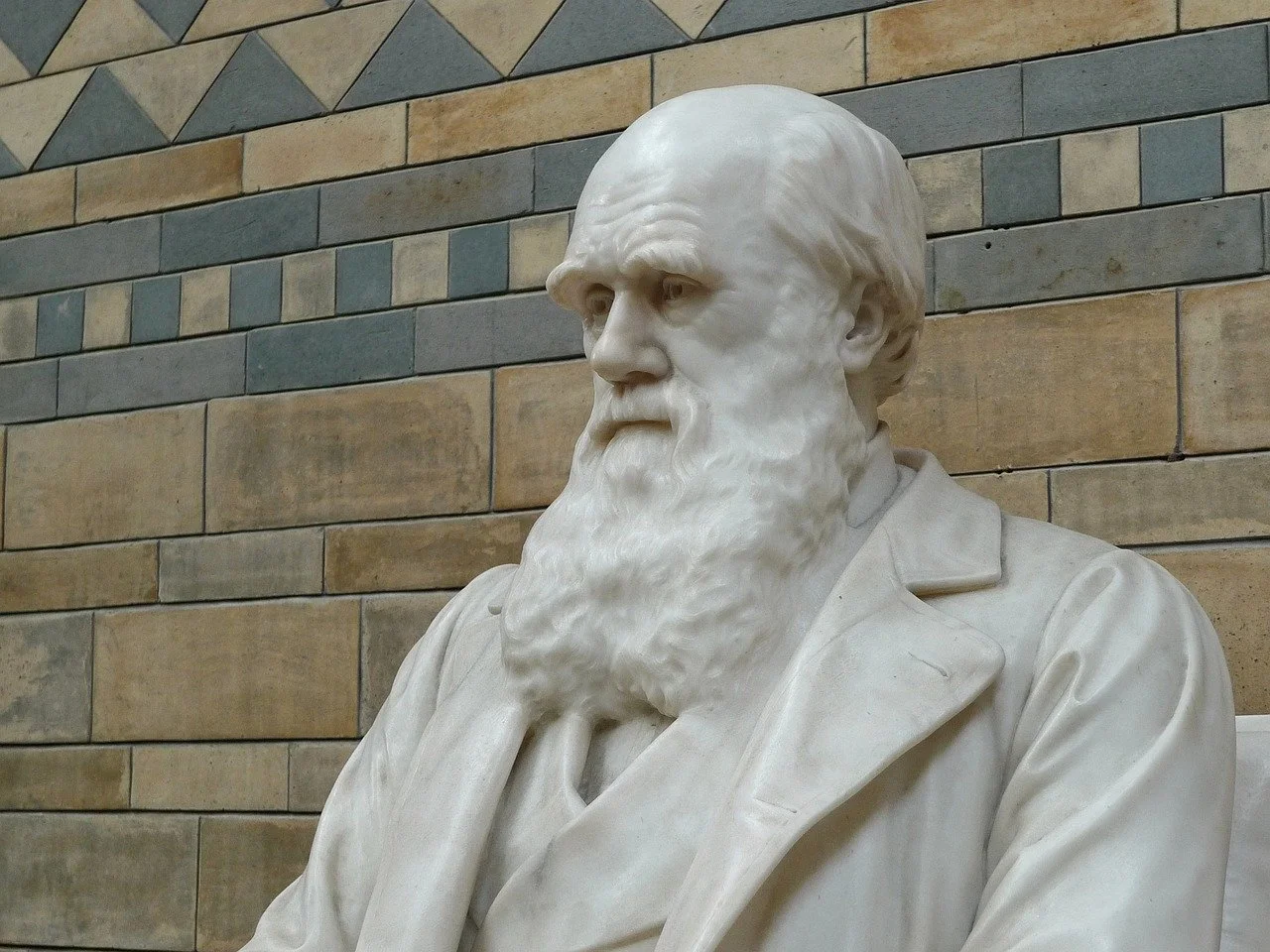
For instance, a 7 day, literal creation has stumped many a Christian over the decades. This is not a problem for me. As my husband always says, “Seven days? What took Him so long?” Ha, ha. Unfortunately, rather than taking God at His word, and according to His word, man has come up with alternative theories to better coincide with the evolutionary theory touted by Darwin. The Day Age Theory, and The Gap Theory are two of the most popular.

Image by Andrew Martin from Pixabay

I just wanted to reiterate, we are the Creation, not the Creator, and we are limited in our understanding of the many layers of God. With that said, lets move on.

He also called;

This idea of calling has also had its day on the debate floor. Questions that have been around for years include: Is everyone called? Is calling just for special people at certain times? Is calling only for people going into full time Christian service, like a missionary or a pastor, etc?

Image by Steve Buissinne from Pixabay

I see calling as a general term, much like predestination. We are all predestined, meaning God wants all of us to become His children by belief in Christ. In the same way we are all called. The difference lay in the fact that we must respond to His calling. We must choose to believe. Of course that presupposes you believe in free will. :)

God is faithful, through whom you were called into fellowship with His Son, Jesus Christ our Lord..
— I Corinthians 1:9 (NASB 1995)

Let me reiterate, I am not a theologian. I had three years of Bible school, but that doesn’t mean I have exhaustively studied every topic. However, I do believe God gives us His wisdom, understanding and knowledge as we delve into His deeper layers through His Holy Spirit. That being said, if you ever think I am in error in the ideas I bring to you, I welcome your thoughts.

and these whom He called, He also justified;

The word justify is defined in several ways: to judge, regard or treat as worthy of salvation; to prove or show to be just, right, or reasonable. Justification is the process by which Christ takes on our sin through His death on the cross enabling us to be worthy of God’s calling. In essence Christ’s blood covered us so that we might be made right before God.

Image by Sang Hyun Cho from Pixabay

24 being justified as a gift by His grace through the redemption which is in Christ Jesus;
— Romans 3:24 (NASB 1995)

…and these whom He justified, He also glorified.

The predestination, calling and justification all lead to the perfect end result, our glorification. The older I get, the more I look forward to this glorification process. At 60 I am experiencing all the things that age brings with it. I have become acquainted with chronic illness, my hair is thinning, my joints ache, and my brain is almost always in the phase of post menopausal fog.

Image by kapokia from Pixabay

Jesus told us we would have trouble in this world.

33 These things I have spoken to you, so that in Me you may have peace. In the world you have tribulation, but take courage; I have overcome the world.
— John 16:33 (NASB 1995)

We don’t have to look very far to see trouble. The southeast part of the U.S. has see two large hurricanes in the last two weeks. Out west there continue to be wildfires consuming thousands of acres of trees. We are entering in to flu and Corona season, in addition to that allergens are ever present and driving many of our sinus cavities wonky. We have political and societal unrest in the United States and there is still a war going on in Ukraine and the Middle East.

Jesus told us we would have trouble, but He didn’t want us to stay in that mindset. He told us He would give us peace, and He has overcome the world.

This mentality of looking towards glory is not a bad thing. Yes, we still need to be present. We need to live our lives as the brightest lights of Christ that we can be so others might come to know Him. How much easier it is to do this when we know that we are called, justified and one day will be glorified.

Just like the Morning Glory flower we need to turn our faces towards the light of God and His truth and open ourselves up completely to what He is trying to do in our lives. Only in doing that will we become the beautiful reflection of Him that we are meant to be.

A Year of Waiting - Tarry

The word tarry as defined in Webster’s Online Dictionary means: to delay or be tardy in action or doing; to linger in expectation; wait; to abide or stay in or at a place; stay, or sojourn. Tarry is an older word used in the first few senses in the 14th century. Ask yourself, how often do I use the word tarry today? We don’t usually say, “I tarried at the train station.” “I’m going to tarry at the seashore.” “I’m sure to tarry in line at the concert.” It sounds rather archaic.

Image by Thomas from Pixabay

When it comes to this word journey I have been on for the year 2024, I like the way tarry opens up other doors and windows to this idea of waiting. As I have noted previously, waiting can be a complete drag, and most of us would not sign up for an adventure in waiting, but our lives are full of lines, traffic jams, delays, and prospects of a future that require we wait.

When I hear the word tarry, I do not think of a long term situation. However, if we look at the King James Version of scripture, which uses a synonym, sojourn we see that the span of time could be quite lengthy.

Now the sojourning of the children of Israel, who dwelt in Egypt, was four hundred and thirty years.
— Exodus 12:40 (KJV)

Still we get the sense that it was not intended to be forever. When God speaks of a long term living situation He often uses the word dwell, or abide. We took a closer look at the word abide in February. You can see that post here.

1 Behold, how good and how pleasant it is
For brothers to dwell together in unity!
2 It is like the precious oil upon the head,
Coming down upon the beard,
Even Aaron’s beard,
Coming down upon the edge of his robes.
3 It is like the dew of Hermon
Coming down upon the mountains of Zion;
For there the Lord commanded the blessing—life forever.
— Psalm 133 (NASB 1995)

Psalm 133 has a tone I would associate with a long term living situation. God intended that we dwell together in unity in a place where we experience the blessing of life forever. In this psalm it is a reference to Zion, which we can also look at as eternity with God. With the state many of our current churches are in it can be hard to imagine being able to dwell with those same brothers or sisters together forever in unity. Ha, ha. However, God said it will be true. We won’t just be tarrying, but putting down roots and dwelling.

Image by Filip Loczek from Pixabay

Since we already looked at the idea of abide, I wanted to spend some time thinking about what it means to tarry with God. I have learned, it is essential that we tarry with God as much as we can, especially when our lives are pulling us in so many directions. You might feel on any given day, “I don’t have time to abide. I am too busy.” However, if we don’t find the time, God will give us the time, and that is not always preferable as it usually comes with some sort of difficulty. God is not mean hearted, He loves you purely with everlasting love, and He knows exactly what you need, and that is directly linked to the time you spend with Him.

Let me give you a personal example. I was really struggling for several weeks this past month. I was exhausted, discouraged and my heart felt so heavy. Grief was a blanket I was regularly wrapping up in. Grief over my mom being in a nursing home and not being able to be there to help with her care. Grief over my children who have walked away from the truth of the scripture and the love of Jesus. Grief over the state of our country and the fear of the looming downward spiral. Grief over relationships. Grief over loved ones with cancer and other illnesses. Grief over other people’s kids who were struggling with addictions and various other issues. Grief over my own health. The list goes on.

Image by Tern70 from Pixabay

I am learning the importance of acknowledging these feelings and allowing myself to feel them. They are real, after all, and are felt on the deepest levels. However, we all know we can’t live in those dark places. We always need to return to the light, otherwise the darkness will become an all too comfortable place to abide and dwell.

I felt God pulling me. Whispering to me, “Amy, come to Me. Spend time with Me. Only I can meet every need and help you bear every burden.” I know this to be true, but as you know our flesh wars against us every chance it gets. Finally, one sunny afternoon, I took my Bible and my prayer journal out on the patio and began a search through the scriptures. I was looking for Psalm 34:18

The Lord is near to the brokenhearted And saves those who are crushed in spirit.
— Psalm 34:18 (NASB 1995)

I knew it was in the psalms, but I couldn’t remember where, so I just started leafing through. God brought me two different passages.

8 Depart from me, all you who do iniquity,
For the Lord has heard the voice of my weeping.
9 The Lord has heard my supplication,
The Lord receives my prayer.
— Psalm 6:8-9 (NASB 1995)

Image by wal_172619 from Pixabay

1 “I love You, O Lord, my strength.”
2 The Lord is my rock and my fortress and my deliverer,
My God, my rock, in whom I take refuge;
My shield and the horn of my salvation, my stronghold.
3 I call upon the Lord, who is worthy to be praised,
And I am saved from my enemies.
— Psalm 18:1-3 (NASB 1995)

Image by Enrique from Pixabay

When we tarry with God we can find peace and joy, even in the midst of our grief and pain. When we tarry we spend time, even just a small amount of time, doing the following:

1 - Remembering God’s character - He hears our weeping, our supplication and He receives our prayers. Don’t you love that? God isn’t ashamed of our emotions. He wants us to come and ask. He is our Abba, Father and He loves us. He wants to hear our prayers. He doesn’t just hear them, He receives them. He takes them on as His own. Remember The Bee Keeper? If you don’t, buzz on over to that post for a refresher.

2 - Acknowledging His abilities - He is our strength. He is our rock, our fortress, and our deliverer. He is our shield. He is our salvation. He is our stronghold. He is our refuge. All of these things are His abilities, and He gives them to us without reserve. He can protect, give strength, and get us through anything that comes our way.

7 Then the earth shook and quaked;
And the foundations of the mountains were trembling
And were shaken, because He was angry.
8 Smoke went up out of His nostrils,
And fire from His mouth devoured;
Coals were kindled by it.
9 He bowed the heavens also, and came down
With thick darkness under His feet.
10 He rode upon a cherub and flew;
And He sped upon the wings of the wind.
11 He made darkness His hiding place, His canopy around Him,
Darkness of waters, thick clouds of the skies.
12 From the brightness before Him passed His thick clouds,
Hailstones and coals of fire.
13 The Lord also thundered in the heavens,
And the Most High uttered His voice,
Hailstones and coals of fire.
14 He sent out His arrows, and scattered them,
And lightning flashes in abundance, and routed them.
15 Then the channels of water appeared,
And the foundations of the world were laid bare
At Your rebuke, O Lord,
At the blast of the breath of Your nostrils.
— Psalm 18:7-15 (NASB 1995)

3 - Renewing our understanding of Him - I have read Psalm 18 numerous times, but the Scripture, being that it is living and active, spoke to me anew. The above verses floored me. He is not just a gentle and loving God; He is a powerful, mighty force able to move mountains with a thought. He has, can and will display holy anger when the time is right for His wrath and will to be accomplished. It sets my heart to quaking, but also fills me with hope. He will have the final word, and all that is dark, and ugly, and painful will be burned away in His purest, most holy light.

16 He sent from on high, He took me;
He drew me out of many waters.
17 He delivered me from my strong enemy,
And from those who hated me, for they were too mighty for me.
18 They confronted me in the day of my calamity,
But the Lord was my stay.
19 He brought me forth also into a broad place;
He rescued me, because He delighted in me.
— Psalm 18:16-19 (NASB 1995)
49 Therefore I will give thanks to You among the nations, O Lord,
And I will sing praises to Your name.
— Psalm 18:49 (NASB 1995)

4 - Thanking Him for all He has done - If you can only tarry for a few minutes, I think this is the best bench to sit on. Gratitude is known to change hearts, minds, health, and perspective. When we sit for a few minutes on God’s goodness and provision to us it gives us the ability to keep going because we come away with hope. With God there is always hope.

Take it from me, if you are struggling with grief, pain, bitterness or other unresolved feelings and situations it certainly is helpful to talk it out with a trusted friend or counselor, but also don’t forget to tarry for a little while with Jesus. He makes all the difference.

A Year of Waiting - Enduring

When it comes to waiting, it can be a time of anticipation and expectation, or it can be a time of grueling, determination to not give up. Usually, our waiting times fall somewhere in between these two extremes.

The last time I posted about my word for the year: waiting, it was a look from above as I compared our waiting time to a plane in a holding pattern doing laps around the airport as it waited for a runway to come down on. (See that post here.) A holding pattern is frequently what our lives look like as we wait for answers, wait for jobs, wait for love, and the list goes on. We keep circling the airport, waiting for the chance to finally land, and hoping when we do it will be on the right runway.

Image by Jens from Pixabay

Since that last post on waiting, I have encountered an up close and personal look, once again, at the word endure. Endure was not on my list of similar waiting words, but I was struck this morning by the thought that enduring is a very real, gut level, type of waiting. Let’s look at a few definitions of the word endure.

Intransitive Verb

1 - to continue in the same state

2 - to remain firm under suffering and misfortune without yielding

Transitive Verb

1 - to undergo especially without giving in

2 - to regard with acceptance and tolerance

When we look at the thesaurus we see additional words such as: undergo, experience, go through, encounter, sustain, digest, accept, assimilate, handle, taste, stand for, tough it out, and others. Looking at these words we do not see a passive waiting, but an active, working it out, type of waiting. Like the gentleman above, just hanging around by one arm, waiting, looking as though he has not a care in the world; you can bet he is waiting with endurance as he hangs on for his very life.

Image by wal_172619 from Pixabay

This is the unseen torment of endurance. It is often when others are enduring that no one else knows what they are dealing with. The inner struggles are unseen. The agonizing dark nights are unnoticed. The passage of days grow long, where all that is wanted is for something to change; for something to get better; for someone to come along and give support in the waiting. I do not know why God delays in bringing about relief in these time of enduring, but I do know that He is good, and He is allowing our long travail through the valley of darkness for a purpose.

As Christ followers, most of us are familiar with the following verse.

And we know that God causes all things to work together for good to those who love God, to those who are called according to His purpose.
— Romans 8:28 (NASB 1995)

I covered this one verse more fully in my Mulling It Over post, where I have been going through the eighth chapter of Romans. Today, I just wanted to reiterate the goodness of our God. We may be waiting in the most dire of circumstances, but He is worthy of our continued allegiance and trust.

We are called to endure. The Bible encourages us repeatedly to not lose hope, the keep up the good fight, to run the race and more.

Image by Harut Movsisyan from Pixabay

2 Count it all joy, my brothers, when you meet trials of various kinds,
3 for you know that the testing of your faith produces steadfastness.
4 And let steadfastness have its full effect, that you may be perfect and complete, lacking in nothing.
— James 1:2-4 (ESV)

The testing of our faith can produce endurance, or as this version says, steadfastness. Why is steadfastness so important? If we let it have God’s desired effect it makes us perfect and complete, lacking nothing. That’s pretty amazing. Of course we don’t want to go through struggles, but if we can realize the importance of this weighty waiting, we can endure, knowing God will perfect us through it.

A little further along in James we see this reiterated.

12 Blessed is the man who remains steadfast under trial, for when he has stood the test he will receive the crown of life, which God has promised to those who love him.
— James 1:12 (ESV)

Image by jbundgaa from Pixabay

Girlfriends, we aren’t just going to be made perfect, lacking nothing, we are going to receive a crown of life. That is a promise from God to those who love Him. Whoo, hoo! I don’t know about you, but I am looking forward to wearing that crown right up to His heavenly throne, where I will cast it with tears of gratitude at his nail pierced feet.

Let’s look at one more passage on endurance.

Image by chengchi123 from Pixabay

1 Therefore, since we are surrounded by so great a cloud of witnesses, let us also lay aside every weight, and sin which clings so closely, and let us run with endurance the race that is set before us,
2 looking to Jesus, the founder and perfecter of our faith, who for the joy that was set before him endured the cross, despising the shame, and is seated at the right hand of the throne of God.
— Hebrews 12:1-2 (ESV)

These two verses remind us we are not alone in the long wait of endurance. Jesus, the founder and perfecter of our faith, endured the cross. He did it in obedience to the Father, but also for joy. Wait! What? Yes, He did it for joy, the joy of having us with Him; the joy of bringing us into glory with Him; the joy of knowing the fulfillment of everything the Father had put into motion at the beginning of time.

The long wait of endurance is difficult, but in it we are always seen and known by the One who completely gets it.

Faith Inspiration: Psalm 139:1-3

This column is meant to inspire our faith; to move us to action or even to contemplation. Scripture has become more and more my source of inspiration. After all, these are the words of God; His thoughts given to men and written down. All of them were spoken, or God breathed by His Spirit to the men who wrote. I believe, though this is becoming a less popular opinion, that God’s word is without error. I believe that it is alive and transforms us as we read and meditate on it.

Image by Pexels from Pixabay

Today’s source of inspiration comes from one of my favorite Psalms. Psalm 139 is a psalm of David. I recently decided to reread this Psalm taking it three verses at a time. Often, if we want to learn more we need to take a deep dive into just a few verses at a time, thus my Mulling it Over series. I am finding more and more that a brief look at God’s word is never enough. He has so much more to say to us in between the lines, through the voice of His Spirit speaking to our spirit. This is the beauty of an intimate relationship with God.

1 O Lord, you have searched me and known me!
2 You know when I sit down and when I rise up;
you discern my thoughts from afar.
3 You search out my path and my lying down
and are acquainted with all my ways.
— Psalm 139:1-3 (ESV)

I have long looked at this passage as a way to understand my standing before God. Indeed, it reminds us that we are worthy and needful of His love and compassion, and it has been so since the beginning of time. As I read through these verses again, I was suddenly struck by the fact that the psalm is not just telling us details about ourselves, but it it telling us great secrets about the Almighty God.

What do we learn about God from these three verses?

1 - He desires to know His creation. God didn’t just set the world into motion and walk away, though some like to believe that is the case. God interacted and wanted to have a relationship with his artistry. Let’s look back at Genesis. First of all we see God actively involved in the making process. He didn’t just make primordial ooze and let it evolve, he spoke, molded, shaped, and breathed everything into existence. The more telling statement is this, “And God saw that it was good.” God actually took time, not only to create, but to enjoy what He had created.

Image by Pexels from Pixabay

Further on we see God’s personal involvement to make sure His work was taken care of by creating Adam. (See Genesis 2:5.) After this He also attended to Adam’s need to not be alone by making a companion completely suited to him. (See Genesis 2:18-24.) In addition we are told that God walked in the Garden. He was part of their community, and though we don’t know exactly what this was like we can use our imaginations. (See Genesis 3:8.)

Maybe this seems scary or off putting to some, but to me it gives such comfort and reassurance that can only be described as complete trust. If a being as powerful and righteous as our God wants to know us He is doing it with complete, pure love.

2 - He has know His creation from the foundation of the world. This is obvious from the same verses I pointed out from above. In addition, the first line of the psalm says, “…you have searched me and known me.” Both these words are past tense.

Image by info254 from Pixabay

As a writer I do like words to make sense; to choose the correct word for the correct sentence, and have the appropriate grammar, tense and so on. However, when it comes to God, I do recognize He is outside the bounds of time. The Bible is written for our understanding, so that we might comprehend what is being said. Since God is eternal He not only knew us from when He set the world into orbit, but He knows us in the present and in the future.

3 - He desires intimacy with us. It isn’t enough for God to know His creation. He wants to be intimate with us. Intimacy basically means familiarity. We often use it with regards to a sexual relationship, but today many sexual encounters require no intimacy at all. True intimacy is a feeling of closeness, belonging and trust.

The friendship of the Lord is for those who fear him,
and he makes known to them his covenant.
— Psalm 25:14 (ESV)

Image by Dim Hou from Pixabay

The psalmist says, “You know when I sit down, and when I rise up; you discern my thoughts from afar.” God must be up close and personal if He knows when I am sitting, and when I am getting up. He also knows my personality and what makes me tick. He can take one look at my face and know exactly what I am thinking. My husband is good at reading me, but not that good. He also knows where I am most of the time, but not every single minute of every day.

4 - God is aware at all times. For the same reasons stated above, God is fully aware of where we are, what we are doing, and what we are thinking. (See Psalm 139:7-8.) I know there are varying thoughts on the omnipresence of God. Some say that while He is everywhere present, He doesn’t necessarily know everything that is going on at every moment. Others say God can be everywhere present, but also chooses to not be at all times. My belief is that God is big enough to know all of us, at all times, in every place, and in all circumstances. This is what makes Him a personal God. It is not for us to understand this mystery, merely believe.

9 Have I not commanded you? Be strong and courageous. Do not be frightened, and do not be dismayed, for the Lord your God is with you wherever you go.”
— Joshua 1:9 (ESV)
4 Even though I walk through the valley of the shadow of death,
I will fear no evil,
for you are with me;
your rod and your staff,
they comfort me.
— Psalm 23:4 (ESV)
God is our refuge and strength,
a very present help in trouble.
— Psalm 46:1 (ESV)

5 - God is actively involved. Verse 3 states that God searches out our path, and our lying down. He is acquainted with all our ways. How can you be acquainted with all of someone’s ways without being a part of their life? God is our Good Shepherd. He knows the lamb who has the loud, obnoxious baaa; the one who hides in the corner of the fold; the one who bullies the others, and the one who tends to wander away. Make no mistake, God quietly observes, but He is actively orchestrating our lives to bring us into intimacy with Him.

Image by Gerd Altmann from Pixabay

He will tend his flock like a shepherd;
he will gather the lambs in his arms;
he will carry them in his bosom,
and gently lead those that are with young.
— Isaiah 40:11 (ESV)

This gives me great comfort. Life is hard, and having loved ones who don’t walk with Him makes it even harder, but these revelations about God, through His word inspires my faith to trust, be still and lean on His timing and compassion to bring them back to Him.

I hope this has inspired you to worship, praise and thank Him for the amazing God He is.

Until next time.


Mulling it Over - Romans 8:28

This week we are only going to focus on one verse from Roman’s 8. Last month we looked at verses 26 and 27. We learned more about all the Holy Spirit does for us in helping us to live the Christian life in this flesh. We were also reminded of His work to help our weaknesses by praying for us with depth and clarity, as He always prays the Father’s will for us.

Today’s verse brings the last two verses into sharp focus.

28 And we know that God causes all things to work together for good to those who love God, to those who are called according to His purpose.
— Romans 8:28 (NASB 1995)

Let’s dissect this verse phrase by phrase.

And we know….

Image by Gerd Altmann from Pixabay

This is an interesting way to start this verse. How do we know? What is it we know? How is it that we know it? How does the author know that we know? Does the author know and we don’t know?

We will find out what we know in the next phrase, but let’s just sit here for a minute. How do we know? We know because of the work of the Holy Spirit. Remember last week we had a list of things the Holy Spirit does for us. Two of these stand out: the Spirit dwells in us if Christ is in us (vs. 9), and the Spirit testifies with our spirit we are children of God.

Jesus Christ, the Son, knows the mind of the Father.

14 I am the good shepherd, and I know My own and My own know Me,
15 even as the Father knows Me and I know the Father; and I lay down My life for the sheep.
— John 10:14-15 (NASB 1995)
30 I and the Father are one.”
— John 10:30 (NASB 1995)

If Christ knows the Father, then when we receive Him, we also receive the Father, our Abba, Father. So too, the Holy Spirit dwells in us. He testifies with our spirit that we are sons and daughters of God and so we know. We know whatever it is He, the triune God wants us to know.

…that God…

Make no mistake, God is in this. He is continuously at work in our world, even during those “dark nights of the soul.”

‘O Lord God, You have begun to show Your servant Your greatness and Your strong hand; for what god is there in heaven or on earth who can do such works and mighty acts as Yours?
— Deuteronomy 3:24 (NASB 1995)
There are varieties of effects, but the same God who works all things in all persons.
— 1 Corinthians 12:6 (NASB 1995)
for it is God who is at work in you, both to will and to work for His good pleasure.
— Philippians 2:13 (NASB 1995)

…causes….

Image by falco from Pixabay

Sovereignty is something we must address when it comes to God causing things to take place. The word sovereign means one possessing supreme power. We typically refer to a king or queen as a sovereign as within their kingdom they possess supreme power, and ascendency.

Those of us who live in democratic societies might cringe at the idea of being beneath one who is sovereign. We have become so brain washed to the idea of independence and rights that we tend to forget we still live in community and need a system of checks and balances to keep anyone from having too much power.

However, when it comes to a supreme God; an all loving and completely good God it can be an easier pill to swallow, that He is ultimately in control. He allows and he prevents. He protects, and He holds back protection. He provides and He withholds.

What is it that this mighty being is causing, and for what purpose is He allowing it to happen.

….all things to work together for good…

It doesn’t say that God is causing only the good things to work together for good. He is causing ALL things to work together for good. The good, the bad, and the ugly; the light and the darkness; the times of prosperity and the times of poverty; the times of strength and the times of weakness. In His sovereign ability to see it all, He alone can work it all out for good.

…to those who love God…

Image by Ylanite Koppens from Pixabay

There is a descriptor here. He doesn’t work everything out for good for everyone on the planet. He only does this for those who love Him, and…

…to those who are called according to His purpose.

We might be asking ourselves the question, “What is His purpose?” Believe me the last three and a half years for me have been a questioning time. I don’t question His character, but I once in a while I do question His purposes. The question, “What are you doing, God,” often comes to my mind. It is okay to question, but we don’t want our questioning to become doubt that leads to frustration and bitterness.

19 And He said, “I Myself will make all My goodness pass before you, and will proclaim the name of the Lord before you; and I will be gracious to whom I will be gracious, and will show compassion on whom I will show compassion.”
— Exodus 33:19 (NASB 1995)

When Moses asked God if he could see His glory, God agreed. God says of Himself, He is good, as we can see in the above verse. The fact that a good God can make all things work together for good makes sense. However, we can also see in that verse that He will be gracious to whom He will be gracious and He will show compassion on whom He will show compassion. I don’t think this is God’s way of flipping off people who are struggling. I believe it is a confirmation of His sovereignty and we are being reminded that it is He who is ultimately in control.

Image by Gerd Altmann from Pixabay

God doesn’t change. The God of the Old Testament is still the same God, but there is now a new covenant through Jesus Christ. Jesus really does make all the difference. It is because of Jesus, and the Holy Spirit that God works all things together for good.

Being called according to His purpose, is quite simply living day to day in His presence. This isn’t a call to some grandiose life, or a suddenly acquisition of a super hero cap and ability to fly. We are simply called to live according to God’s purpose: to obey Him and glorify Him in everything we do. This we can do no matter where we find ourselves on life’s journey. No matter if you are homeless, employed, divorced, married, single, young, old, in perfect health or struggling with chronic illness, you are called according to His purpose.

I hope you find His words encouraging. Life is hard, but our God is good, all the time.

Have a great week.

Mulling It Over - Romans 8: 26-27

The month of May flew by with my younger daughter’s graduation from the Master of Nursing program, our meandering trip across the states of Wisconsin and Michigan, and the last week spent helping to take care of our two year old grandson while his mom and dad were on their anniversary trip in Cancun, Mexico.

June started off with a literal bang as the roof on our house and garage got completely torn off and redone. The roof was followed a few days later by the gutters, and then about a week after that a few guys came out to finish off a few trim pieces that had been missed. In the midst of all of that I got slammed by a sinus infection. As I write this I am once again on an antibiotic, steroids and I’ve been working with my pulmonologist on switching up inhalers. Eye, yie, yie. Welcome to Amy’s “new normal.”

I know I am not alone in this journey we call life, and as Jesus said before and I will say again, “…you will have trouble in this world.” Trouble with a capital “T” is often lurking around every corner. I know numerous people struggling with the respiratory gunk, have cancer, or are struggling with relentless burdens. That is precisely why this 8th chapter of Romans is so fitting to our lives today. Remember we, along with creation, are longing, and groaning for that future glorification of our bodies and an eternity with our God.

La Crosse, WI

In this Mulling It Over column, I have been looking at the 8th chapter of Romans. Romans is packed full of theology and doctrine that is pertinent to our faith as Christ believers. Chapter 8 reminds us who we are in Christ and why his death on the cross was necessary to set all things right and fulfill what the law could not do. This week we are going to look at two more verses, and only two because there is a lot to mull over.

26 In the same way the Spirit also helps our weakness; for we do not know how to pray as we should, but the Spirit Himself intercedes for us with groanings too deep for words;
27 and He who searches the hearts knows what the mind of the Spirit is, because He intercedes for the saints according to the will of God.
— Romans 8:26-27 (NASB 1995)

Let’s take these verses a phrase at a time.

Image by Andrea Don from Pixabay

In the same way the Spirit - When we see the phrase, “in the same way” it typically refers back to the verses or passage that came before. In this case it is referring to the work of the Spirit in the previous verses. Let’s review what that work is.

1 - The Spirit of life in Christ sets us free from the law of sin and death (vs. 2)

2 - The Spirit gives life and peace to those whose minds are set on Him (vs. 5)

3 - The Spirit dwells in us if Christ is in us (vs. 9-10)

4 - The Spirit of Him (God the Father) who raised Jesus from the dead will also give life to our mortal bodies (eternal) (vs. 11)

5 - The Spirit helps us put to death the deeds of the body (flesh) (vs. 13)

6 - The Spirit testifies with our spirit that we are children of God (vs. 16)

7 - The Spirit gives us first fruits (referring to the gifts of salvation, reconciliation, forgiveness and so on that we receive when we believe) (vs. 23)

As we can see from looking at this list, the Holy Spirit has an equally important place in the Christian’s walk, and now we come to the next, gloriously wonderful thing He does for us.

Also helps our weaknesses -

The Spirit helps our weaknesses. Having a chronic health problem has put me fully in contact with my weakness. The reality is we are all weak. It doesn’t matter how physically, mentally, or emotionally strong we are, life can take us out in a heartbeat. It is here, in this realization of our weakness, the full beauty of the Spirit’s work in a believer’s life takes place. Could it be, our weaknesses are the result of one very important point?

…for we do not know how to pray as we should…

Image by Malachi Cowie from Pixabay

Imagine a world where, when anything goes wrong, we drop to our knees in prayer? We don’t just throw up a rote prayer, or one we’ve learned by heart as a child, we come into full combat mode aligning our desires, interests, struggles, thoughts, and heart with the One who truly knows what is best for each and every one of us. We would pray according to the Spirit. We would pray as Jesus taught us with a “…gentle and humble heart.” It is only in learning to pray this way that we will truly find rest for our souls.

As we study God’s living word we are reminded again and again we do not do this alone. He is with us. He is making it possible. He is instilling us with Spirit filled, death-defying, almighty power through the blood of the one we gave our lives to, Jesus Christ.

Once again, I am stunned by this beautiful Savior who made it all possible. He gave us a choice. He gave us a hope. He gave us grace that is unbound. He extended mercy where none is deserved. He knew how we would struggle in this life, fettered by the chains of flesh, constantly struggling to keep our eyes on Him, but fiercely aware of the multitudes of unseen that desire to take us down.

Once again He provided a way.

….but the Spirit Himself intercedes with groanings to deep for words…

Image by Richard Reid from Pixabay

This phrase is rich with images. Imagine the Spirit doing this work of intercession. This is not an easy work. Ask yourself how easy it is to pray, and you begin to understand how amazing our Holy Spirit is. He doesn’t just speak, He groans; so deep and heavy is the need for each of His Father’s creation whom He indwells. Words cannot do this intercession justice. These prayers fall to the language of lament and mourning. For a being, not restricted by language, how very telling it is that His mighty prayers are lifted up as groans. (If you get a chance read my allegory, The Bee Keeper. This gives life to the above words.)

…and He who searches the hearts knows what the mind of the Spirit is…

Image by Ben Kerckx from Pixabay

Who is He who searches the hearts? It is God, our Abba, Father. The God who is everywhere present and all knowing, is also the God who is one in three. The trinity works from the same mind. While we know that not all things have been revealed to the Son, or the Spirit, such as the time of His return, we do know that the three work with the same goal in mind; that of our salvation, sanctification and future glorification. The Father is confident in the Spirit’s intercession and rightfully so…

…because He intercedes for the saints according to the will of God.

The Spirit cannot do anything other than the will of the Father, so His intercession for us is according to what God’s will is for us. The possibility of a simple, child-like trust arises from this knowledge. If we truly believe that God is good, and we know that He is working out good in our lives, then we can lean back in His mighty arms as the same Spirit who lives within us intercedes for us in complete alignment with the Father’s will.

13 for it is God who is at work in you, both to will and to work for His good pleasure.
— Philippians 2:13 (NASB 1995)

These two verses are the basis for what comes in the next session as we narrow in on one verse, Romans 8:28. I hope this has been an encouragement to you today, just as it has been to me.

Until next time.

A Year of Waiting - Holding Pattern

When the idea of doing a deep dive into this concept of waiting tickled my brain, I wrote down a list of different words and phrases that revolve around the concept of waiting. So far I have looked at wait, abide, and pause. Today I want to look at a term used by the airlines.

When we are flying from one city to another, we often experience delays due to busyness, weather, or other problems, and often the pilot will be told to go into a holding pattern. When in a holding pattern, the pilot will fly an oval course over the airport as they are waiting their turn to land.

This phrase came to my mind as I grew up in a home where airplanes and flying were a pretty regular occurrence. My father was an airplane mechanic, and also had his pilot’s license for a number of years. He ran a small airport where he serviced single engine planes flown mostly for recreation. It was rare to have to enter a holding pattern at that small airport, but the idea still holds true, because great care is taken to not have an accident while flying in the sky.

I wondered, how do I bring the Bible into this idea of a holding pattern and the people of Israel came to my mind. These chosen ones of God were often in a holding pattern. They spent over 400 years in the arms of captivity to the Egyptians. I am sure during that time they were often heard murmuring, “When? When is our deliverer going to come?”

Image by wal_172619 from Pixabay

We know God brought Moses along as that deliverer, and we also know their time of enslavement to the Egyptians was drawing to a close. However, this wasn’t the only time they found themselves in a holding pattern. Some time after they left Egypt they found themselves at the mountain of God: Sinai. It was here Moses received the Ten Commandments, and all the many laws associated with living life.

1 In the third month after the sons of Israel had gone out of the land of Egypt, on that very day they came into the wilderness of Sinai.
2 When they set out from Rephidim, they came to the wilderness of Sinai and camped in the wilderness; and there Israel camped in front of the mountain.
— Exodus 19:1-2 (NASB 1995)

Due to movies like Charlton Heston’s Ten Commandments, we often think their time at Mount Sinai was a mere few days, but in reality it was close to a year. In fact they held a holding pattern in the Wilderness of Sinai for approximately two years. During this time, God not only gave them the Law, but He instructed them on the building of the Tabernacle.

If we spend a little time thinking about these holding patterns the Children of Israel had to endure we can recognize God’s wisdom in the waiting. Their time in Egypt was actually a time of great growth. There was a population explosion among the Israelites. That was precisely why Pharaoh became persistent in keeping them under his thumb.

8 Now a new king arose over Egypt, who did not know Joseph.
9 He said to his people, “Behold, the people of the sons of Israel are more and mightier than we.
10 Come, let us deal wisely with them, or else they will multiply and in the event of war, they will also join themselves to those who hate us, and fight against us and depart from the land.”
11 So they appointed taskmasters over them to afflict them with hard labor. And they built for Pharaoh storage cities, Pithom and Raamses.
12 But the more they afflicted them, the more they multiplied and the more they spread out, so that they were in dread of the sons of Israel.
13 The Egyptians compelled the sons of Israel to labor rigorously;
14 and they made their lives bitter with hard labor in mortar and bricks and at all kinds of labor in the field, all their labors which they rigorously imposed on them.
— Exodus 1:8-14 (NASB 1995)

Their holding pattern in the Wilderness of Sinai was meant to teach the people the necessity of the Law and the Tabernacle as a space for worshipping God. While we now recognize the Law and the Tabernacle as a shadow of God’s future intent, salvation through the perfect lamb of His Son Jesus, it was necessary to remind humanity of the holiness and righteousness of God.

Image by Sasin Tipchai from Pixabay

Are you experiencing a holding pattern in your life right now? Do you feel like an airplane circling over the airport waiting for the go ahead to land? I am right there with you, girlfriends! While this time is difficult, I am trying to remember God’s purposes are beyond what I can comprehend. He knows exactly what other planes (circumstances) are circling around, and how to bring everything safely onto His runway, in His time. While we are waiting, I recommend talking to the co-pilot (Jesus). Get to know Him better. After all, His Father owns the airport!

Have a great weekend, everyone, and fly safe! :)

Faith Inspiration - Solar Eclipse

I just love when God uses His beautiful and amazing creation to teach us something He wants us to know about Him. Just a few days ago we got to witness an event that only happens once every so many years: a total solar eclipse. We got to witness a partial eclipse back in 2017, but that definitely dims in comparison to the total eclipse we just saw.

Image by sandid from Pixabay

It is a fantastic phenomenon, and those of us who follow Christ, know that it is all brought about by God’s mighty hand. He is the One that set all of these heavenly bodies into motion, and He is the one who keeps those bodies just exactly where they should be.

We see in the 1st chapter of Genesis the creation account. These heavenly bodies came into existence on the fourth day.

14 Then God said, “Let there be lights in the expanse of the heavens to separate the day from the night, and let them be for signs and for seasons and for days and years;
15 and let them be for lights in the expanse of the heavens to give light on the earth”; and it was so.
16 God made the two great lights, the greater light to govern the day, and the lesser light to govern the night; He made the stars also.
17 God placed them in the expanse of the heavens to give light on the earth,
18 and to govern the day and the night, and to separate the light from the darkness; and God saw that it was good.
19 There was evening and there was morning, a fourth day.
— Genesis 1:14-19 (NASB 1995)

We see here God made the greater light to rule the day, and the lesser light to rule the night. It is interesting to mull over, now that we know more through telescopes and men going into space, that the moon does not generate its own light, but is a body that reflects the light of the sun. The sun, the greater light that rules over the day, does not just give us light, but it does so much to give our planet life. Along with the moon, the rotation of the earth on its axis, and the revolution of our solar system around it, the sun provides the basis for the water cycles, the ebbs and flows of the oceans, and the regenerative cycle of oxygen and carbon dioxide. Plants would not grow without the warming light of this immense celestial star; for that matter all life would cease to exist without it.

So why did God give us this greater light to rule the day, and this lesser light to rule the night? “…to separate the day from the night, and let them be for signs and for seasons and for days and years…He placed them in the expanse of the heavens to give light on the earth, and to govern the day and the night, and to separate the light from the darkness…” All of this He did for our benefit.

Image by Patou Ricard from Pixabay

Seeing the solar eclipse was an inspiration to how wonderful our God is, and how He established this place to be our home. It’s not a place of drab shadows and dim understanding, but a planet alive with His creative power and amazing, lavish love. He made all of this, even the moon passing in front of the sun so that we might remember what a beautiful, enchanted Being breathed life into this dust, and how very fortunate we are that even when darkness entered the world in the form of sin, He had a plan. He made a way. This leads to my second thought.

You know I have written about light and darkness on various occasions. See Light Beyond the Darkness, When Darkness Comes - Part 1: The Light, When Darkness Comes - Part 2: The Dark. There are several more parts to that series, which you can find on my Faith page under June and July of 2021. Darkness and light have always fascinated me. Though, I love winter, I need my sunshine. Being a Seasonal Affective Disorder sufferer, the shorter, gray days of winter are a detriment to my mental, emotional and physical well being.

When the eclipse moved into full totality, I couldn’t help but imaginine what the world would be like in permanent dusk; never to feel the heat of the sun, or to know the glory of it shining full bore in a pristine blue sky. It would be horrible. As we know from that first chapter in Genesis God gave us the sun for our benefit. We would not last long without its beautiful light.

However, there was something even more telling that began to illuminate my spiritual mind. At the point the moon fully covered the sun we were able to remove our eclipse glasses and look at it. It was awe inspiring to know all at once this would not happen again for a very long time, at least in our area, and to realize how apropos this celestial phenomenon was in reminding us that the light of Christ cannot be dimmed.

Image by bdabney from Pixabay

We can be in the throes of darkness, being beaten down on every side, but Christ in us shines like that sun as it glowed fiercely all around that orb until it began to pass and the light burst forth exploding onto the landscape below chasing the darkness back into the deep corners. This is who our Savior is in our lives, if we let Him be. He is the Son, the bright light of salvation, deliverer from the kingdom of darkness to the Kingdom of Light.

13 For He rescued us from the domain of darkness, and transferred us to the kingdom of His beloved Son,
14 in whom we have redemption, the forgiveness of sins.
— Colossians 1:13-14 (NASB 1995)

I hope that you are inspired by this post, but even more so I hope you are daily inspired by God’s amazing creation, and His steadfast love.

Have a great weekend!

Mulling It Over - Romans 8:18-25 - Part 2: The Groaning and the Hope

It has been months since I did a Mulling it Over post on this Faith page. When last we came together here, I was studying the 8th chapter of Romans. We learned from the very first verse that in Christ Jesus we are not condemned. He came, not to condemn, but to save that which was lost. We were lost in our sin, but when we gave our hearts to Him we became something different.

We learned that the law of the Old Testament was weak and only a shadow of what God truly wanted. Because of this weakness, God sent His only Son, Jesus, to do what the Law could not. Having just celebrated another Easter reminds us of the wonderful, awful, necessity for this sacrifice of Christ’s own body on the the cross. The perfect lamb of God opened the gateway to the throne room of His Father.

Now, as we live on this earth, entombed in our flesh, we struggle day after day to walk in the spirit, not the flesh, but it is only by setting our minds on the Spirit, and feeding the Spirit that we are able to put aside that flesh and regularly abide in Christ. We are not under obligation to the flesh, and if we have that same Spirit who raised Jesus from the dead we can put to death the deeds of the flesh.

When we put our faith in Christ we have been adopted as the sons and daughters of God. This gives us the right to cry out to God and call Him, Abba! Father! This sonship enables us to be heirs to the Kingdom of God and all the rights and privileges therein. (To see all the previous posts click on the links: Romans 8:1-2, Romans 8:3-4, Romans 8:5-8, Romans 8:9-11, Romans 8:12-13, Romans 8:14-17, Romans 8:18-25 - Part 1 )

Today we are looking back at a few things we already covered in Part 1, but with this chunk there is a lot to cover, so we are going to look at it in pieces, rather than phrase by phrase.

18 For I consider that the sufferings of this present time are not worthy to be compared with the glory that is to be revealed to us.
19 For the anxious longing of the creation waits eagerly for the revealing of the sons of God.
20 For the creation was subjected to futility, not willingly, but because of Him who subjected it, in hope
21 that the creation itself also will be set free from its slavery to corruption into the freedom of the glory of the children of God.
22 For we know that the whole creation groans and suffers the pains of childbirth together until now.
23 And not only this, but also we ourselves, having the first fruits of the Spirit, even we ourselves groan within ourselves, waiting eagerly for our adoption as sons, the redemption of our body.
24 For in hope we have been saved, but hope that is seen is not hope; for who hopes for what he already sees?
25 But if we hope for what we do not see, with perseverance we wait eagerly for it.
— Quote Source

I would like to look at these verses as a comparison of place, not only physical locale, but spiritual position.

Physical:

Image by munki from Pixabay

When sin came into our world with the first choice of disobedience, corruption came with it. Life which was meant to be eternal, gradually shortened. Living things grew old. Not only that, but disease began to ravage humanity and all other created things. Plants contracted blights, animals became infested with parasites, and humans knew pain in both childbirth and aging.

Spiritual:

Image by Gerd Altmann from Pixabay

Sin distanced us from the Creator. Not only were we driven from the Garden, but we lost the personal relationship with our God. We became the naughty sheep that needed to be tended across the wilderness, and God our keeper. He created boundaries with the Law, a shadow of that which He originally intended, but a necessity to tie a Holy, Pure God, to a stiff necked and sinful people.

When we compare these two areas we can divide the above verses into a compare and contrast of sorts.

Physical/Suffering - Spiritual/Glory -

  • Anxious longing (vs. 19) - Glory revealed (vs. 18)

  • Waiting (vs. 19 & 23 & 25) - Sons of God revealed (vs. 19)

  • Subjected to futility (vs. 20) - Creation set free (vs. 21)

  • Not self-determined (vs. 20) - Children of God set free and glorified (vs. 21)

  • Enslaved to corruption (vs. 21) - Adoption as sons (& daughters) (vs. 23

  • Groaning (vs. 22 & 23) - Redemption of our bodies (vs. 23)

  • Pain in childbirth (vs. 22) - Fulfillment of hope (vs. 24 & 25)

  • First fruits of the Spirit (vs. 23)

  • Persevering (vs. 25)

This entire section of Romans 8 is about what is and what will be. What is plays out in this physical realm, and includes suffering. We suffer all throughout life on this fallen planet. Some suffer far more than others, but we all suffer. For the Christ follower this doesn’t just include the same trials and struggles as others, but has the added component of a waiting and longing for what will be: our life in glory with our Lord.

Paul includes the suffering of creation, which I find interesting, but it makes sense. God’s plan was for a beautiful place full of life and energy. It was a place of freedom. Man lived in concert with his Creator and his creation. The world, and all that was in it was for man’s pleasure and care.

Image by 12019 from Pixabay

Creation groans and longs for its former glory. Storms, hurricanes, typhoons, earthquakes, forest fires; these are all signs of a creation yearning to be what it was originally intended to be. It wasn’t given the choice of suffering, as the Creator subjected it to futility, so that we would have hope.

Let’s just pause there a minute. God allowed this amazing thing He had created to become less than so that you and I would have hope. I don’t know about you, but being able to go outside, touch a fuzzy kitten, see the trees changing in the fall, hear the ocean waves crashing, or a stream gurgling, and smelling the seasons as they change always gives me hope and reminds me that my God is near even when the world is in chaos.

Image by Fabien from Pixabay

Not only does Creation feel this yearning and goes through the pains of childbirth, waiting for its return to glory, we do too. I know as I age I identify more closely with this groaning and suffering. I know that one day I will be in a glorified body with nor more coughing, sinus issues, achy knees and wrists, and no more desire for things that are not good for me. I will know fully, just as I am fully known! (I Corinthians 13:12) Our hope will be full, and we will stand before our Abba, Father. What glory that will be.

Finally, the last verse in this section is pertinent to where we are right now. We must wait for hope to be fulfilled, and wait for it eagerly with perseverance. Remember, my word for the year is Wait? God in His rich and lavish love is reminding us that we are in a waiting time, but glory is coming. Creation knows this to be true, and we can do.

Dear friends, with perseverance wait eagerly for hope.