Word for the Year: Trust - Its Connection to Belief

I decided to take my word for this year and approach it in a little different way than I did the word wait, last year. I would like to look at the word trust in the context of how it relates to other words and ideas. For instance, in order for a child to trust their parent they must feel safe. Safety is a key component in understanding how and why we trust or don’t trust.

I would like to start with the connection trust has to the idea of belief. In 2022 my word for the year was believe. You can see that post here. In order to trust we must also believe. One might even say that belief has to come before trust can be invested.

Image by HAMED ASAD from Pixabay

Take, for example, the idea of gravity. Gravity has been here since God created the world, but it was Sir Isaac Newton that came to understand how gravity worked and who developed the Law of Universal Gravitation. Gravity is a reality, whether I believe it or not. However, because I trust the Law of Universal Gravitation I am completely confident to walk outside and not fear falling off the earth into the vastness of space. Belief allows me to act.

5 Trust in the Lord with all your heart
And do not lean on your own understanding.
6 In all your ways acknowledge Him,
And He will make your paths straight.
— Proverbs 3:5-6 (NASB 1995)

In order to trust the Lord with all our hearts we must believe in Him. How can we possibly trust an entity we know nothing about? How can we trust a being we haven’t met? In order to truly know God I must believe in Him. Not in a superficial way, but in a life changing commitment. I must move from merely knowing about Him to knowing Him in an intimate way.

Image by Scottish Guy from Pixabay

The way we grow in our relationship with God is by digging deep into His word, the Bible. The Bible is His story. It is also a collection of historical accounts starting with the creation of our world, the entrance of sin into that world, the growth and history of the nation of Israel, the succession of the kings of that nation, and the birth, life, death and resurrection of Jesus.

As we learn and grow the trifecta of the divine Creator works together to reveal and open our minds to a deep and intimate understanding of His word. Not only do we realize the reality of the historical accounts, we also dive deep into the processes God uses to turn us towards Him and away from our sinful habits and ideals. We come face to face with the reality that He alone is worthy of our trust, and we are but dust blown whichever way the wind might go.

Image by Enrique from Pixabay

And those who know Your name will put their trust in You, For You, O Lord, have not forsaken those who seek You.
— Psalm 90:10 (NASB 1995)

The above verse begins with, “And those who know Your name will put their trust in You…” We have to know His name, His character and His work in order to put our trust in Him. The psalmist goes on to give us a reason, He has not forsaken those who seek Him.

Let’s think about this for a few moments. I am pretty sure all of us have felt forsaken at some point in our lives, whether it be by our family or our friends. We may have also felt forsaken by God. However, He is always with us. He alone is true to His word.
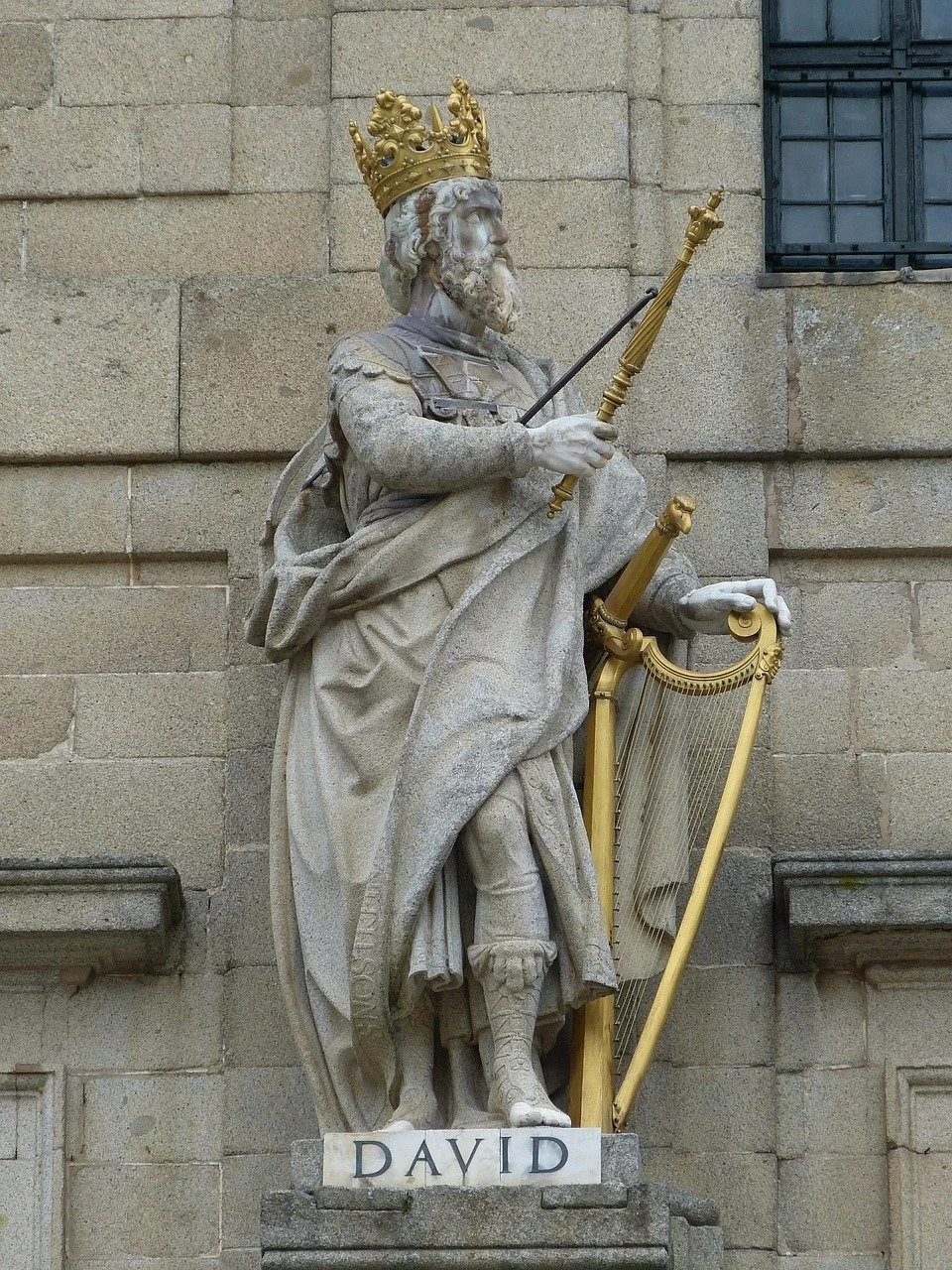
Image by falco from Pixabay

For the king trusts in the Lord, And through the lovingkindness of the Most High he will not be shaken.
— Psalm 21:17 (NASB 1995)
In You our fathers trusted; They trusted and You delivered them.
— Psalm 22:4 (NASB 1995)
To You they cried out and were delivered; In You they trusted and were not disappointed.
— Psalm 22:5 (NASB 1995)
The Lord is my strength and my shield; My heart trusts in Him, and I am helped; Therefore my heart exults, And with my song I shall thank Him.
— Psalm 28:7 (NASB 1995)
Many are the sorrows of the wicked, But he who trusts in the Lord, lovingkindness shall surround him.
— Psalm 32:10 (NASB 1995)
For our heart rejoices in Him, Because we trust in His holy name.
— Psalm 33:21 (NASB 1995)

Image by PixelAnarchy from Pixabay

There are many more verses that talk about our trust in God. I love the last one…our heart rejoices in Him, because we trust in His holy name. Perhaps we don’t experience joy, because we do not trust, and we do not trust because we do not believe, and we do not believe because we do not know. In order to truly know Him we must be in His word listening for His voice.

I hope, if you are reading this, you made a choice to commit your life to God, to believe in Him, in doing so you have taken the first step to being able to trust Him.

Word for the Year: Trust

Here we are, barreling through another January. A new year has begun and time continues to fly. As I was mulling over the idea of doing another Word of the Year, I had several in mind including a return to believe, or a look at hope. As a friend and I were discussing after our Saturday morning Zoom Bible study the words believe and trust came up. Both words are rich and full of meaning and depth, especially when taken in the context of the Holy Scriptures and our relationship with Christ.

Image by Lisa Caroselli from Pixabay

The word believe is defined: to accept something as true, genuine or real; to have a firm, wholehearted religious conviction or persuasion that the existence of God is true; to have a firm conviction as to the goodness, efficacy or ability of something.

The word trust is defined: the assured reliance on the character, ability, strength or truth of someone or something; dependence on something future or contingent - hope; to rely on the truthfulness or accuracy of - believe; to place confidence in - rely; to hope or expect confidently.

Both of these words have similar tones and you honestly can’t have trust without belief, nor can you experience true, life changing belief without trust. We can see this idea in the the story of the man who brings his demon possessed son to Jesus for healing. I did a more in depth look at this passage in 2022 when I chose believe as my word for the year.

20 They brought the boy to Him. When he saw Him, immediately the spirit threw him into a convulsion, and falling to the ground, he began rolling around and foaming at the mouth.
21 And He asked his father, “How long has this been happening to him?” And he said, “From childhood.
22 It has often thrown him both into the fire and into the water to destroy him. But if You can do anything, take pity on us and help us!”
23 And Jesus said to him, “‘If You can?’ All things are possible to him who believes.”
24 Immediately the boy’s father cried out and said, “I do believe; help my unbelief.”
— Mark 9:20-24 (NASB 1995)

Image by Artur Skoniecki from Pixabay

This man took an actionable step from belief to trust. He recognized he did not have enough belief to go from “…if you can do anything…” to “Of course you can heal him! You are the Son of God.” (My own idea of what he might have said if he already placed his complete trust in Jesus.) He placed his trust in Christ when he exposed his vulnerability by saying, “help my unbelief."

This idea of trust is not easy. It is a step that takes us from a place of alleged safety to a place of exposure. Take for instance an individual going to a counselor seeking help for a mental health problem. Perhaps they are struggling with depression or anxiety. In order to take this action step they first need to see they have a problem that requires help. After they make that discovery they must call a therapist or psychiatrist. It might be that they ask friends and co-workers for the name of someone these people deem trustworthy. They make the call, setting up the appointment, then with some additional amount of fear they go to their first appointment.

When they are sitting in the therapist’s office they must answer this question: “Am I going to trust this person enough to really open up to them? Am I going to expose my inner most fears and struggles? Am I going to let them peek into my inner closet where all the skeletons and, perhaps demons, hang?” It is only by choosing to trust the professional with their struggles that the individual is going to make progress towards being mentally healthy and whole.

The same idea is true in our relationship with Christ. We come to Him by believing, but what makes our belief different than that of the fallen angels?

18 But someone may well say, “You have faith and I have works; show me your faith without the works, and I will show you my faith by my works.”
19 You believe that God is one. You do well; the demons also believe, and shudder.
20 But are you willing to recognize, you foolish fellow, that faith without works is useless?
— James 2:18-20 (NASB 1995)

Our belief is a choice to open up to a mighty God and the first thing we must do is admit we have a problem. We are sinners. We are of the lineage of Adam and Eve and their sin became our sin. The only healing for this problem is to place ourselves in the hands of a pure and holy God. We come to Him hoping for His mercy, love and forgiveness and He freely gives it to us. This is the beginning of a life of trust.

Over the next twelve months we will look at the word trust and how a lack of it leads to a life of worry and fear, whereas a life of abandoning all to Him will free us up to know joy unspeakable. I hope you will join me.