The Work of Suffering - Part 3: Three Areas to Explore

I have been working through a series on the work of suffering. I was inspired by Oswald Chamber’s devotional My Utmost for His Highest and you can see the original post here. Part 2 looked at the necessity of leaning into the truth of God’s word, our foundation, during difficult times. This week I want to look at three areas where the work of suffering becomes essential.

Image by Malachi Witt from Pixabay

Belief.

Suffering has a way of honing our belief systems. I have looked at the word belief before on this blog, but let’s review. (You can see that original post here. ) The word belief is defined by Webster’s Online Dictionary as a NOUN: a state or habit of mind in which trust or confidence is placed in some person or thing; something believed or held as true; conviction of the truth of some statement or reality of some being or phenomenon especially when based on examination of evidence. The VERB state of belief would be believe which is define as: Transitive - to consider as true or honest; to accept the word or evidence of; to hold as an opinion; Intransitive - to accept something as true, genuine or real; to have a firm or wholehearted religious conviction or persuasion; to have a firm conviction as to the goodness, efficacy, or ability of someone or something.

Image by Christian Calhoun from Pixabay

We know the Bible talks a lot about belief. It is essential in our faith that we believe in a God we do not see based on what we know from His Holy word, and on the revelation of the Spirit, the third person of the trinity. We also have the words of Jesus, His son, in the four Gospels.

For instance, reading through another of Oswald Chamber’s devotionals recently he used the following two verses, two days in a row.

...for He Himself has said, “I will never desert you, nor will I ever forsake you,”
6 so that we confidently say,
“The Lord is my helper, I will not be afraid.
What will man do to me?”
— Hebrews 13:5b-6 (NASB 1995)

When I am going through difficulty and I approach Scripture, I need to ask myself, “Do I believe what God is saying in these verses? We will talk about trust in a moment, but for now, just think about this idea of belief. Do I believe…what? Do I believe God is real? Do I believe He created the universe? Do I believe the Bible is His holy words written down by men moved by His Spirit? Do I believe what those words say? Do I believe in the person and work of Jesus? Do I believe He was born to a virgin, walked as a man on this earth, gathered a group of disciples who became the foundation of the church, died on a cross and rose again? Do I believe that when I accept Jesus as my Lord and savior that I receive the third person of the Trinity, the Holy Spirit, and through Him I am able to learn, and grow and find all that I need for life and godliness?

1 Simon Peter, a bond-servant and apostle of Jesus Christ,
To those who have received a faith of the same kind as ours, by the righteousness of our God and Savior, Jesus Christ:
2 Grace and peace be multiplied to you in the knowledge of God and of Jesus our Lord;
3 seeing that His divine power has granted to us everything pertaining to life and godliness, through the true knowledge of Him who called us by His own glory and excellence.
— 2 Peter 1:1-3 (NASB 1995)

Trust.

It may seem that the words trust and believe are the same thing, but this is where we get into the nuances of words. To me, the word belief is a stance. I am placing my feet on the solid foundation of God’s word and its truth. The word trust belies something more relational. Websters Online Dictionary defines trust as: assured reliance on the character, ability, strength, or truth of someone or something. If I trust someone I am choosing to rely on them. This is where I believe many Christians struggle. We can be standing on the edge of the Promised land, but never step into it. I can believe God’s word, plan and purpose for this world and for me. I can know scripture, attend numerous services at my church, and spend my weekends serving those less fortunate, but if I don’t trust God, all of it becomes merely works that I am hoping to stack in my favor. Trust moves us from merely standing on the foundation, to opening the door to God’s movement and work in our lives and the lives of others around us.
Image by vivienviv0 from Pixabay

38 Now as they were traveling along, He entered a village; and a woman named Martha welcomed Him into her home.
39 She had a sister called Mary, who was seated at the Lord’s feet, listening to His word.
40 But Martha was distracted with [q]all her preparations; and she came up to Him and said, “Lord, do You not care that my sister has left me to do all the serving alone? Then tell her to help me.”
41 But the Lord answered and said to her, “Martha, Martha, you are worried and bothered about so many things;
42 but only one thing is necessary, for Mary has chosen the good part, which shall not be taken away from her.”
— Luke 10:38-42 (NASB 1995)

If you have been a Christian for a while, and have been in a Bible study, or heard a sermon preached on the above passage, you probably know this piece of scripture is not without controversy. I do not mean controversy pertaining to whether it is true or not, but as to whether Martha was really out of line for questioning the Lord and wanting Jesus to reprimand her sister for not helping her with the meal. However, what does Jesus say?

“Martha, Martha, you are worried and bothered about so many things; but only one thing is necessary, for Mary has chose the good part, which shall not be taken away from her.”

The point I want to make is Mary had trusted Jesus. She wasn’t worried about the meal, or the work, she was leaning in to the relationship with her Lord and teacher, and eventually savior, Jesus. This is such an important point, and I am sorry this is so long, but I feel it is important to understand; without the movement from belief to trust we will never become the sons and daughters we are meant to be.

Read this article form the Billy Graham Evangelistic Association (UK), The Tree Stump Prayer: When Billy Graham Overcame Doubt. I learned of this prayer years ago when I was attending Moody Bible Institute and the story still impresses me. Billy Graham, the greatest evangelist of the 20th century had doubts? Wow! He did, until he took the step from belief to trust.

Peace.

The last area I want to look at having to do with the work of suffering has to do with peace. Suffering easily leads to anxiety and fear. It is completely understandable. It doesn’t matter what sort of suffering you are going through: chronic illness, newly diagnosed cancer, impending divorce or job loss, losing a loved one, a home, or being in the throes of trying to maneuver government websites to sign up for Social Security and Medicare; all of these can produce stress, anxiety and fear. If we do not believe and entrust ourselves to God and his truth we will not have peace.

I talked about peace back in February in my Peace in the Chaos series. You can see those pieces here: Part 1, Part 2a, Part 2b, and Part 2c. Being able to have peace during difficult and chaotic times is essential in the growth and stability of our faith. The only true way to attain this peace is to abide, abide, abide in Christ.
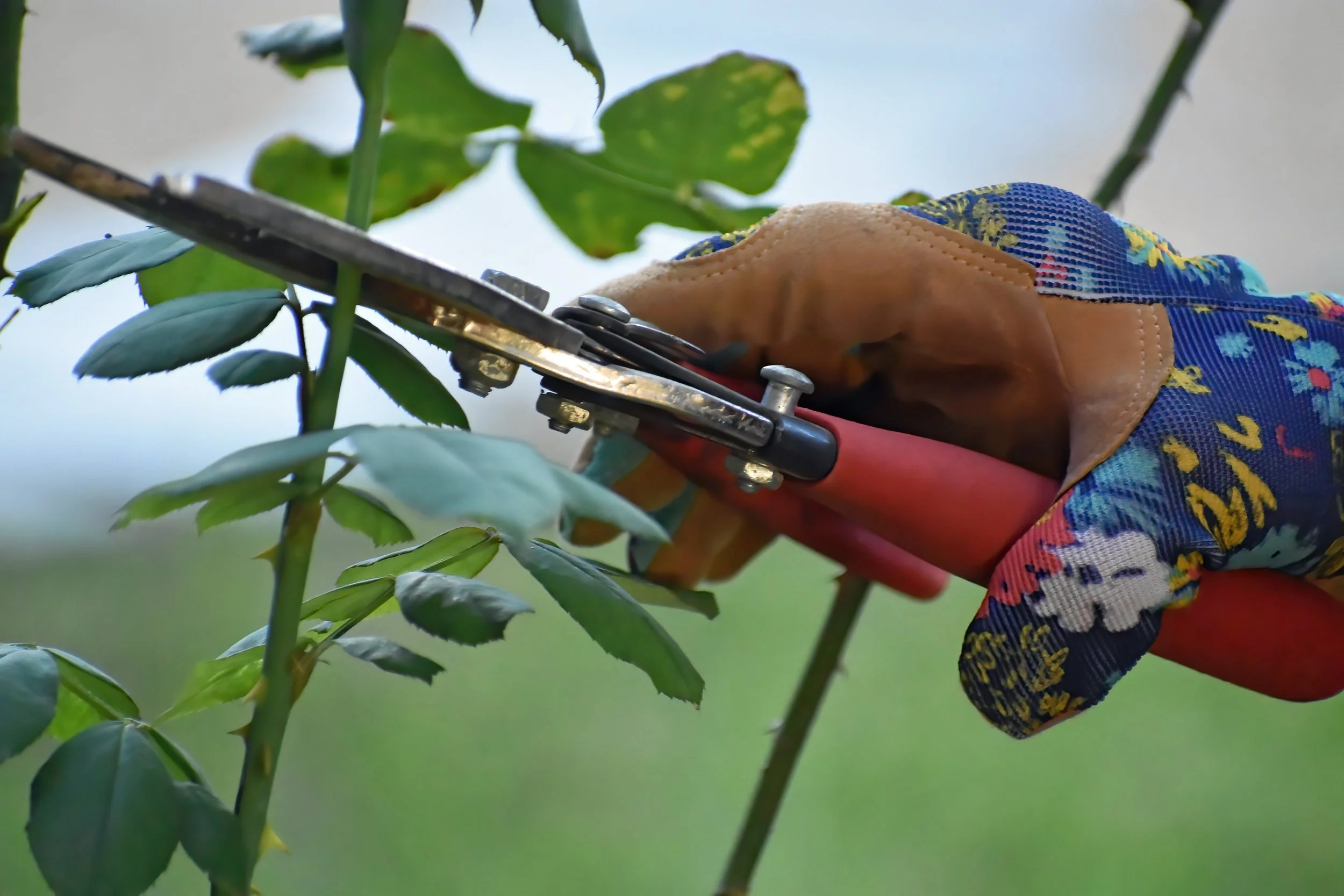
Image by Ray_Shrewsberry from Pixabay

1 “I am the true vine, and My Father is the vinedresser.
2 Every branch in Me that does not bear fruit, He takes away; and every branch that bears fruit, He prunes it so that it may bear more fruit.
3 You are already clean because of the word which I have spoken to you.
4 Abide in Me, and I in you. As the branch cannot bear fruit of itself unless it abides in the vine, so neither can you unless you abide in Me.
5 I am the vine, you are the branches; he who abides in Me and I in him, he bears much fruit, for apart from Me you can do nothing.
6 If anyone does not abide in Me, he is thrown away as a branch and dries up; and they gather them, and cast them into the fire and they are burned.
7 If you abide in Me, and My words abide in you, ask whatever you wish, and it will be done for you.
8 My Father is glorified by this, that you bear much fruit, and so prove to be My disciples.
9 Just as the Father has loved Me, I have also loved you; abide in My love.
10 If you keep My commandments, you will abide in My love; just as I have kept My Father’s commandments and abide in His love.
11 These things I have spoken to you so that My joy may be in you, and that your joy may be made full.”
— John 15:1-11 (NASB 1995)

This passage really lays it all out. If we abide in Christ we will be standing firm on the beliefs that are foundational to our faith; we will be entrusting ourselves to the vine dresser, which is God the Father; we will have His peace, and the most amazing thing is that even in the difficulty of pruning and cutting us back we will bear fruit. I would like to do a further study on this passage at a later time, but we can certainly see the benefit to our lives during suffering when we abide in Him.

Sorry, this series has taken so long, and I hope that it has benefited you. My spouse and I have been going through some struggles, but I am thankful that I have a loving Father who keeps turning me back to Him.

Have a great week.

Word for the Year: Trust

Here we are, barreling through another January. A new year has begun and time continues to fly. As I was mulling over the idea of doing another Word of the Year, I had several in mind including a return to believe, or a look at hope. As a friend and I were discussing after our Saturday morning Zoom Bible study the words believe and trust came up. Both words are rich and full of meaning and depth, especially when taken in the context of the Holy Scriptures and our relationship with Christ.

Image by Lisa Caroselli from Pixabay

The word believe is defined: to accept something as true, genuine or real; to have a firm, wholehearted religious conviction or persuasion that the existence of God is true; to have a firm conviction as to the goodness, efficacy or ability of something.

The word trust is defined: the assured reliance on the character, ability, strength or truth of someone or something; dependence on something future or contingent - hope; to rely on the truthfulness or accuracy of - believe; to place confidence in - rely; to hope or expect confidently.

Both of these words have similar tones and you honestly can’t have trust without belief, nor can you experience true, life changing belief without trust. We can see this idea in the the story of the man who brings his demon possessed son to Jesus for healing. I did a more in depth look at this passage in 2022 when I chose believe as my word for the year.

20 They brought the boy to Him. When he saw Him, immediately the spirit threw him into a convulsion, and falling to the ground, he began rolling around and foaming at the mouth.
21 And He asked his father, “How long has this been happening to him?” And he said, “From childhood.
22 It has often thrown him both into the fire and into the water to destroy him. But if You can do anything, take pity on us and help us!”
23 And Jesus said to him, “‘If You can?’ All things are possible to him who believes.”
24 Immediately the boy’s father cried out and said, “I do believe; help my unbelief.”
— Mark 9:20-24 (NASB 1995)

Image by Artur Skoniecki from Pixabay

This man took an actionable step from belief to trust. He recognized he did not have enough belief to go from “…if you can do anything…” to “Of course you can heal him! You are the Son of God.” (My own idea of what he might have said if he already placed his complete trust in Jesus.) He placed his trust in Christ when he exposed his vulnerability by saying, “help my unbelief."

This idea of trust is not easy. It is a step that takes us from a place of alleged safety to a place of exposure. Take for instance an individual going to a counselor seeking help for a mental health problem. Perhaps they are struggling with depression or anxiety. In order to take this action step they first need to see they have a problem that requires help. After they make that discovery they must call a therapist or psychiatrist. It might be that they ask friends and co-workers for the name of someone these people deem trustworthy. They make the call, setting up the appointment, then with some additional amount of fear they go to their first appointment.

When they are sitting in the therapist’s office they must answer this question: “Am I going to trust this person enough to really open up to them? Am I going to expose my inner most fears and struggles? Am I going to let them peek into my inner closet where all the skeletons and, perhaps demons, hang?” It is only by choosing to trust the professional with their struggles that the individual is going to make progress towards being mentally healthy and whole.

The same idea is true in our relationship with Christ. We come to Him by believing, but what makes our belief different than that of the fallen angels?

18 But someone may well say, “You have faith and I have works; show me your faith without the works, and I will show you my faith by my works.”
19 You believe that God is one. You do well; the demons also believe, and shudder.
20 But are you willing to recognize, you foolish fellow, that faith without works is useless?
— James 2:18-20 (NASB 1995)

Our belief is a choice to open up to a mighty God and the first thing we must do is admit we have a problem. We are sinners. We are of the lineage of Adam and Eve and their sin became our sin. The only healing for this problem is to place ourselves in the hands of a pure and holy God. We come to Him hoping for His mercy, love and forgiveness and He freely gives it to us. This is the beginning of a life of trust.

Over the next twelve months we will look at the word trust and how a lack of it leads to a life of worry and fear, whereas a life of abandoning all to Him will free us up to know joy unspeakable. I hope you will join me.

Faith Inspiration - Information or Transformation: How We View the Bible

Today’s post is going to be divided into two parts with the next part falling next week under my Wonderful Words of Life post.

Dwight Lyman Moody was an American evangelist who founded Moody Church, Moody Bible Institute and Moody Publishing company, all based in Chicago, IL. Moody gave up his shoe and boot business to invest himself in the revivalist movement. His dynamic and fiery speaking style drew large crowds in both the United State and the British Isles.

Rather than try to dissect an entire sermon, I want to talk about the inspiration we can draw from just one of Moody’s quotes.

The Bible was not given for our information but for our transformation.
— D. L. Moody

Image by simardfrancois from Pixabay

Most of us are familiar with the transformation butterflies and moths go through. Starting out as a caterpillar, the little beastie will eat him or herself plump, then build a cocoon around themselves. Over a period of time the caterpillar will slowly change or transform into an entirely different bug with legs, antennae, and wings.

When we allow the Bible to transform us, God is changing us from one being into another. Where once we lived in the flesh, we begin to live in the Spirit. Where once we were in darkness, we are now in the light. Where once we were enslaved, now we are free.

And do not be conformed to this world, but be transformed by the renewing of your mind, so that you may prove what the will of God is, that which is good and acceptable and perfect.
— Romans 12:2 (NASB 1995)
15 But to this day whenever Moses is read, a veil lies over their heart;
16 but whenever a person turns to the Lord, the veil is taken away.
17 Now the Lord is the Spirit, and where the Spirit of the Lord is, there is liberty.
18 But we all, with unveiled face, beholding as in a mirror the glory of the Lord, are being transformed into the same image from glory to glory, just as from the Lord, the Spirit.
— 2 Corinthians 3:15-18 (NASB 1995)
20 For our citizenship is in heaven, from which also we eagerly wait for a Savior, the Lord Jesus Christ;
21 who will transform the body of our humble state into conformity with the body of His glory, by the exertion of the power that He has even to subject all things to Himself.
— Philippians 3:20-21 (NASB 1995)

Image by Kei Rothblack from Pixabay

From these three sets of verses we witness two types of transformation: the kind that we have control over and the kind that God has control over. This week we will look at transformation we control.

1 - Transformation we Control

Romans 12:2 tells us to be transformed by the renewing of our minds.How do we achieve this sort of transformation? We achieve it by allowing God’s word to permeate and change the way that we think. How can this be? I can read all sorts of books, magazines, and articles but they don’t necessarily change the way I think; or if they do it is a temporary fix until the next fad comes along. Biblical transformation has to do not only with the author and the reader, but with the vitality of the words themselves.

For the word of God is living and active and sharper than any two-edged sword, and piercing as far as the division of soul and spirit, of both joints and marrow, and able to judge the thoughts and intentions of the heart.
— Hebrews 4:12 (NASB 1995)

The Bible states of itself that it is living and active. Obviously, this is not some magical spell, it is the natural outpouring of the Holy Spirit through the words of the Almighty God. We come into an understanding of this outpouring of living words when we give our hearts to Christ. That is why the Bible seems like stuff and nonsense to those who read it without the pulling and pouring of God’s Spirit.

However, this kind of transformation only takes place as we allow God’s word to change us. We can liken it to being a caterpillar in a cocoon. Just as the butterfly must push its way out of its flossy sleep we too must wrestle, and meditate, and study to wake ourselves from our sleep of mediocrity. If we approach God’s word with an open heart and an inquiring mind, really wanting to know what God is try to teach us, then we will see ourselves being transformed from the old beast into an enchanted creature meant to fly.

Next week we will continue our look at how we view the Bible and learn about the beauty of the ever transforming God. I hope you’ll join me.

Have a wonderful weekend.

My Word for 2022: Believe

According to Webster’s Online dictionary the word believe means:

- to accept or regard as true

- to accept the truth of what is said by someone

- to have a specified opinion

Pixabay

I have signs all over my house with the word believe written on them. The idea of belief is not new to me. I was raised in a Bible believing church and understood the concept of belief in God at a very young age. Belief is not strange to me, in fact, it is a word that has impacted most of the decisions I have made in my life. My belief, not only in a divine being, but in His perfect plan for our world and my life, has become the foundation from which everything else has been built.

You might be wondering at this point, why I have made it my word for 2022 if I have such a familiarity with it. I chose this word, because I know there is so much more to God and His will for my life I have yet to delve into. There are boundary lines He wants me to cross over, to walk in the promised land, and yet I hesitate. What is it about this wilderness that I so desperately cling to?

Pixabay

The wilderness is familiar. I am comfortable with it, even if it is arid, dry and rather dull. It is a dryness I am not afraid of. Going into the promised land means I need to be willing to confront some giants. I might even need to fight a battle or two. What if I can’t do it? What if I fail? It is scary over there. Yes! It looks amazing; all green, luscious, and ready for the taking, BUT WHAT IF….?

17 And one person from the crowd answered Him, “Teacher, I brought You my son, because he has a spirit that makes him unable to speak; 18 and whenever it seizes him, it slams him to the ground, and he foams at the mouth and grinds his teeth and becomes stiff. And I told Your disciples so that they would cast it out, but they could not do it.” 19 And He answered them and *said, “O unbelieving generation, how long shall I be with you? How long shall I put up with you? Bring him to Me!” 20 And they brought [m]the boy to Him. When he saw Him, the spirit immediately threw him into convulsions, and falling to the ground, he began rolling around and foaming at the mouth. 21 And He asked his father, “How long has this been happening to him?” And he said, “From childhood. 22 It has often thrown him both into the fire and into the water to kill him. But if You can do anything, take pity on us and help us!” 23 But Jesus said to him, “‘If You can?’ All things are possible for the one who believes.” 24 Immediately the boy’s father cried out and said, “I do believe; help my unbelief!” 25 When Jesus saw that a crowd was rapidly gathering, He rebuked the unclean spirit, saying to it, “You mute and deaf spirit, I command you, come out of him and do not enter him again!” 26 And after crying out and throwing him into terrible convulsions, it came out; and the boy became so much like a corpse that most of them said, “He is dead!” 27 But Jesus took him by the hand and raised him, and he got up. 28 When He came into the house, His disciples began asking Him privately, “Why is it that we could not cast it out?” 29 And He said to them, “This kind cannot come out by anything except prayer.”
— Mark 9:17-29 (NASB)

The boy’s father said, “I do believe; help my unbelief.” All of us who have made a profession of faith can identify with this man’s statement and plea. We do have faith. We do believe, but still we lack, we struggle, we know our belief is not complete. This process of growing in our faith and maturing in our belief is called sanctification. It is a work of Christ and the Holy Spirit in us, but we must accept the teaching with humility without doubting the end result of the Godhead.

Pixabay

How do we get out of this blistering wilderness we are in and cross into the promised land flowing with milk and honey, and what does it have to do with belief? I think the problems comes down to two actions: abide and trust. To keep this post from getting too long, I want to look at these two things just briefly.

Abide

Pixabay

I have talked about this idea of Abiding in Christ on the blog before, or at least referred to it. Andrew Murray’s work, Abide in Christ, goes into specific depth with regards to all of the ways we abide in Him. The original reference is as follows.

4 Abide in Me, and I in you. As the branch cannot bear fruit of itself, unless it abides in the vine, neither can you, unless you abide in Me.

5 “I am the vine, you are the branches. He who abides in Me, and I in him, bears much fruit; for without Me you can do nothing.
— John 15:4-5 (NKJV)

Abiding is not a passive action, though it might seem to be. When we abide with our spouse, our children or other significant people in our lives, we are living with them and they are living with us. Living is not a passive thing. I don’t just sit around, waiting for things to get done, or events to take place. I do things. As we abide with Christ we are expected to bear fruit, not just the fruit of sharing our faith with others, but the fruit of His Spirit. See this article at Christianity.com for a more detailed rendering of what Christ meant when He said to abide in him.

Trust

Pixabay

I looked at this word last week, and this is really where our belief must take the next step. In God’s commission to Joshua He told Joshua to enter the promised land (see Joshua 1). He didn’t tell Joshua it was okay to wander around in the wilderness for another 40 years. He expected him to move forward, to take the land and possess it. Joshua was commissioned to act. Joshua did, because he trusted God. Before he took action, God reassured Joshua.

9 Have I not commanded you? Be strong and courageous! Do not be terrified nor dismayed, for the Lord your God is with you wherever you go.”
— Joshua 1:9 (NASB)

Pixabay

If we ever want to get out of our wilderness, we need to trust God. We need to believe what He says in His word. We need to trust in the work that Christ did on the cross. We need to trust in the all the many promises we are given, and we need to spend time with Him; living with Him.

For me the word believe is a reminder to abide and to trust in the God I have given my heart to. Now it is time to cross over into the promised land.