Faith Musings: Nothing to Boast About - Part 9

We should be drawing this study to a close this week. I hope you have enjoyed this look at 1 Corinthians 1 and 2. I can only say it was one of those Holy Spirit directed studies that I had not been intending to do. You must understand, what I put on the blog is most often things I am learning and/or struggling with. I hope I can always bring you the same clarity and understanding that the Holy Spirit gives me when revealing truth in His word.

Image by Pexels from Pixabay

10 For to us God revealed them through the Spirit; for the Spirit searches all things, even the depths of God.
11 For who among men knows the thoughts of a man except the spirit of the man which is in him? Even so the thoughts of God no one knows except the Spirit of God.
12 Now we have received, not the spirit of the world, but the Spirit who is from God, so that we may know the things freely given to us by God,
13 which things we also speak, not in words taught by human wisdom, but in those taught by the Spirit, combining spiritual thoughts with spiritual words.
14 But a natural man does not accept the things of the Spirit of God, for they are foolishness to him; and he cannot understand them, because they are spiritually appraised.
15 But he who is spiritual appraises all things, yet he himself is appraised by no one.
16 For who has known the mind of the Lord, that he will instruct Him? But we have the mind of Christ.
— I Corinthians 2:10-16 (NASB 1995)

Last week we looked specifically at verse 13 diving into the concept that it is the Holy Spirit who teaches us and who gives us God’s wisdom. Paul’s teaching came, not from human wisdom, but from the wisdom taught to him by the Spirit of God. The same is true in our own lives as we grow closer to God and learn to listen to His Spirit with open ears. We looked specifically at 1 John 2:27 which reminds us that when we have His anointing, or the Holy Spirit we have no need of other teaching or wisdom. God’s wisdom is all we need. I also made a note that we must have His discernment to make sure that what we are saying is of the Spirit actually is His Spirit and not the spirit of the world. Remember, the spirit of the world is not for God.

Let’s start looking at verses 14 - 15.

14 - But a natural man does not accept the things of the Spirit of God, for they are foolishness to him, and; and he cannot understand them, because they are spiritually appraised.

Image by Gina Janosch from Pixabay

I think this verse is pertinent to what is happening in the world as we look around at the violence, hatred, and sin that permeates all cultures. In our own country we have seen a definite uptick in violence as a way to respond to ideas, people, religion and beliefs that are not liked or agreed with. This is the response of the natural man. Our sin nature wants what it wants and it looks at the things of God as ridiculous.

Even as believers we find ourselves regularly battling against this old nature and fighting to turn to Jesus and His truth rather than give in to our baser sin nature. The difference is, we have God’s Spirit gently reminding us how much God loves us, what He did for us and why His wisdom is always better than the world’s.

Why does the natural man think God’s teaching and wisdom is foolish, after all, didn’t God create man in His image? Shouldn’t that give man His wisdom? Unfortunately, this is what Satan tempted Adam and Eve with in the Garden. See Genesis 3. There were two things going on in the Garden. The first, the Serpent, or Satan, was intent on causing God’s beautiful creation to crash and burn. The second, Adam and Eve made a choice to not trust God. If instead of listening to the Serpent they would have ran to God and asked Him what to do, they would not have made that same choice. God’s wisdom, would have given them the understanding to know what Satan was plotting.

Sin is what took away the ability to know and understand God’s wisdom. What God intended to be the norm, a regular, intimate, relationship with Him, became obscured by the veil of sin. It is only by giving our lives to Him in an intentional choice to trust Him, that we receive the Helper and the ability to know God and understand His teaching and wisdom.

12 Therefore having such a hope, we use great boldness in our speech,
13 and are not like Moses, who used to put a veil over his face so that the sons of Israel would not look intently at the end of what was fading away.
14 But their minds were hardened; for until this very day at the reading of the old covenant the same veil remains unlifted, because it is removed in Christ.
15 But to this day whenever Moses is read, a veil lies over their heart;
16 but whenever a person turns to the Lord, the veil is taken away.
17 Now the Lord is the Spirit, and where the Spirit of the Lord is, there is liberty.
18 But we all, with unveiled face, beholding as in a mirror the glory of the Lord, are being transformed into the same image from glory to glory, just as from the Lord, the Spirit.
— 2 Corinthians 3:12-18 (NASB 1995)

What we see in our country right now is the spirit of the natural man fighting against what they see as the foolishness of God, because they can’t understand it. Why does this surprise us? God has always had a better way, but He allowed mankind to make their own choices and He still does, even to the point of violence and persecution.

5 The Light shines in the darkness, and the darkness did not comprehend it.
— John 1:5 (NASB 1995)

15 - But he who is spiritual appraises all things, yet he himself is appraised by no one.

Image by Thomas from Pixabay

Seeing that our Creator is a spiritual being, and when we are in Him we are also spiritual beings, we are able to appraise, or to use a more unfavorable word, judge, all things. (I thought that chicken looked pretty judgmental to me. what do you think? Ha, ha.) What does this mean? In simple language it means that we are able to look at everything around us and discern what is actually happening. For instance, the things that are happening in our country are looked at political and idealogical differences, but one who has the Spirit of God, knows there is a spiritual element to these things. Of course if we speak that, we are seen as even more ridiculous and unaware. What is most concerning to me is the disparity in the church. We know it is okay to have differences of opinion, but when that turns into anger, and anger turns into hate, then as people with God’s Spirit we need to step back and recognize the spiritual side of things.

With regard to the second half of that verse, we are appraised by no one. In other words, people can judge us on the outside. If I commit a crime I will go to court and be sentenced, but only God judges our eternal soul. Only He knows where we are at spiritually. That, to me, is why it is important to get to know people and have dialogue with people. We may find we have a lot more in common than we do differences.

16a - For who has known the mind of the Lord, that he will instruct Him?

Image by srfparis from Pixabay

There is not one person on this planet that knows the mind of the Lord to the extent that he is able to instruct Him. God doesn’t have to be teachable. He knows everything. The theological word for this characteristic is omniscient. It is not just knowing things like 2+2=4, or that all matter is made up of atoms, and all the other billions of bytes of data in the world. Omniscience includes an awareness, understanding and insight. God doesn’t just know stuff, He knows us. Isn’t that mind bending? Read through Psalm 139. God knows our thoughts, when we lay down, when we rise, where we go, what we are going to say, and the very condition of our heart. He knows every child ever used in the sex trade. He knows every tumor rooting itself in a human’s body. He knows where your lost cat is. He knows the pain you carry deep beneath your smiling exterior.

To the natural man, this doesn’t make sense. In fact, it may be the case they don’t want it to make sense. Knowing that there is a being who knows your every thought, your every pain, your every dark sin is too much. The crazy part is, He knows all that and still He loves us. He loves you, and He wants you, every single bit…the good, the bad, and the dark ugly.

16b - But we have the mind of Christ.
Image by Chil Vera from Pixabay

Perhaps it is because I have the mind of Christ that as I have been typing this I want to fall to my knees and cry. Not only to shed tears for so many who are hurting, angry, and lost, but for my own wretched soul. He has done it all. He has provided a way when there was no way. He provided a light in the darkness, a path through rocky mountain slopes; food for my peckish soul and water for my dried up heart. He has done it all, and I have nothing to boast about, except in Him.


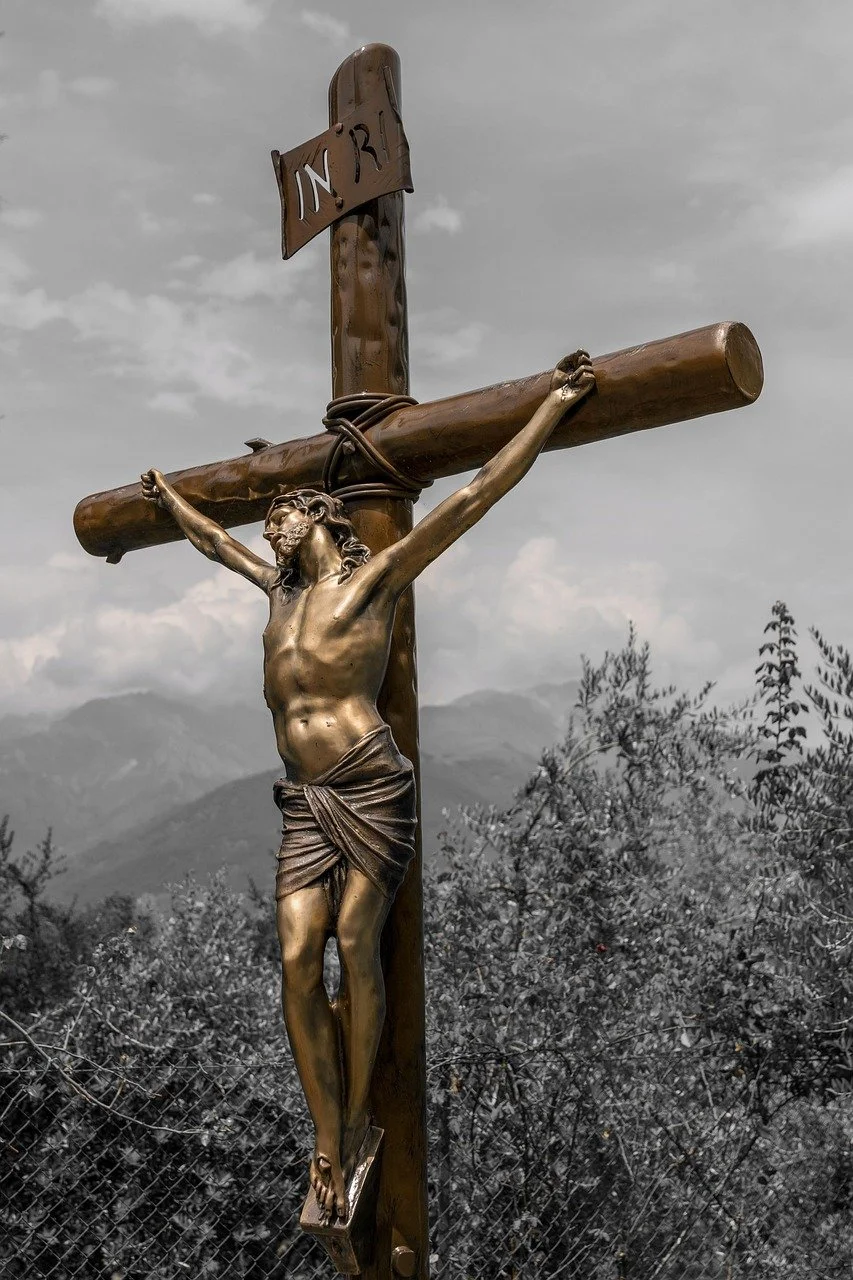
Faith Musings: Nothing to Boast About - Part 3

This second chapter of 1 Corinthians seems a perfect continuation of the verses we looked at previously in Faith Musings: Nothing to Boast About - Part 1, and Nothing to Boast About - Part 2.

Image by Joe from Pixabay

1 And when I came to you, brethren, I did not come with superiority of speech or of wisdom, proclaiming to you the testimony of God.
2 For I determined to know nothing among you except Jesus Christ, and Him crucified.
3 I was with you in weakness and in fear and in much trembling,
4 and my message and my preaching were not in persuasive words of wisdom, but in demonstration of the Spirit and of power,
5 so that your faith would not rest on the wisdom of men, but on the power of God.
6 Yet we do speak wisdom among those who are mature; a wisdom, however, not of this age nor of the rulers of this age, who are passing away;
7 but we speak God’s wisdom in a mystery, the hidden wisdom which God predestined before the ages to our glory;
8 the wisdom which none of the rulers of this age has understood; for if they had understood it they would not have crucified the Lord of glory;
9 but just as it is written,

“Things which eye has not seen and ear has not heard,
And which have not entered the heart of man,
All that God has prepared for those who love Him.”
— I Corinthians 2:1-9 (NASB 1995)

Paul continues his discourse on the wisdom of God versus the foolishness of man by stating that when he came to the church at Corinth he did not preach by his own ability, but by the ability God gave him.

“And when I came to you, brethren, I did not come with superiority of speech or of wisdom, proclaiming to you the testimony of God.”

If anyone could have boasted in his own abilities it was Paul. Born a Hebrew, he was raised in the prosperous city of Tarsus, a center for trade on the Mediterranean coast, a city which also housed a well known school.

Image by sebastiano iervolino from Pixabay

4 although I myself might have confidence even in the flesh. If anyone else has a mind to put confidence in the flesh, I far more:
5 circumcised the eighth day, of the nation of Israel, of the tribe of Benjamin, a Hebrew of Hebrews; as to the Law, a Pharisee;
6 as to zeal, a persecutor of the church; as to the righteousness which is in the Law, found blameless.
— Philippians 3:4-6 (NASB 1995)
6 But perceiving that one group were Sadducees and the other Pharisees, Paul began crying out in the Council, “Brethren, I am a Pharisee, a son of Pharisees; I am on trial for the hope and resurrection of the dead!”
— Acts 23:6 (NASB 1995)

Paul referred to his upbringing not to boast in his abilities, but to appeal to the audience he was talking to. He always made clear that his abilities to teach and preach were from God .

For I determined to know nothing among you except Jesus Christ, and Him crucified.

This stands out to me for two reasons. First, Paul determined. This word does not give us a feeling of being wishy washy. It shows us the apostle was firmly resolved. It is convicting to me, because when I ask myself what am I firmly resolved or determined about, I realize in this chaotic world we are living in I have become more uncertain, unsure and even doubtful about many things, even my relationship with Christ. Yes, there are things I am sure of: my salvation, the Bible, God’s good character and so on. Perhaps, like Paul I need to focus on the main thing.

Image by DetBe from Pixabay

Second, what was Paul determined to know? Nothing…except Jesus Christ, and Him crucified. Why is this so important? Isn’t it more important to preach and teach love? After all Christ loves us and desires that we all be in heaven with Him. This is where I am beginning to see disparity in the church. If we do not preach the reason Christ came, and had to be crucified, all the love in the world will not fix all that is wrong with it. Christ came because we are sinners. Not one of us is good enough to earn our way into heaven, no matter how much love we show. And the truth is, if I only preach the love of God, then I do not really love. We have to talk about the darkness, the disobedience, and the distance between us and Him.

Remember these verses? Jesus said of Himself:

6 Jesus said to him, “I am the way, and the truth, and the life; no one comes to the Father but through Me.
— John 14:6 (NASB 1995)
5 I am the vine, you are the branches; he who abides in Me and I in him, he bears much fruit, for apart from Me you can do nothing.
6 If anyone does not abide in Me, he is thrown away as a branch and dries up; and they gather them, and cast them into the fire and they are burned.
— John 15:5-6 (NASB 1995)
23 He who hates Me hates My Father also.
24 If I had not done among them the works which no one else did, they would not have sin; but now they have both seen and hated Me and My Father as well.
25 But they have done this to fulfill the word that is written in their Law, ‘They hated Me without a cause.’
— John 15:23-25 (NASB 1995)
18 “Behold, we are going up to Jerusalem; and the Son of Man will be delivered to the chief priests and scribes, and they will condemn Him to death,
— Matthew 20:18 (NASB 1995)
31 And He began to teach them that the Son of Man must suffer many things and be rejected by the elders and the chief priests and the scribes, and be killed, and after three days rise again.
— Mark 8:31 (NASB 1995)

These are just a few of many verses in the Gospels where Christ talks about His purpose, which was to be obedient to the Father, and die on a cross for sinful humanity.

Does the Bible talk about God’s love? Of course it does. One of the most famous verses many of us memorized as youngsters in church follows:

16 “For God so loved the world, that He gave His only begotten Son, that whoever believes in Him shall not perish, but have eternal life.
— John 3:16 (NASB 1995)

Image by Engin Akyurt from Pixabay

However, even this verse talks about God’s love in the context of our need, and our sin. Why would we perish if we were perfect? Why would we need God if love was the answer to all our problems? Love is the answer, but it is God’s love; God’s pure, perfect, and holy love.

I would like to let these first two verses of this second chapter of 1 Corinthians sink in for the next week. Do you think we need to be more determined like Paul? If so, what are we to be determined about? I’d love to hear your thoughts, so leave a comment or two below.

Until next week, have a great weekend!

Faith Musings: Nothing to Boast About - Part 2

Last week I started a short series revolving around a number of verses in I Corinthians 1. In the first part we looked at verses 18-25. This week I want to continue by directing our thoughts to verses 26-31.

26 For consider your calling, brethren, that there were not many wise according to the flesh, not many mighty, not many noble;
27 but God has chosen the foolish things of the world to shame the wise, and God has chosen the weak things of the world to shame the things which are strong,
28 and the base things of the world and the despised God has chosen, the things that are not, so that He may nullify the things that are,
29 so that no man may boast before God.
30 But by His doing you are in Christ Jesus, who became to us wisdom from God, and righteousness and sanctification, and redemption,
31 so that, just as it is written, “Let him who boasts, boast in the Lord.”
— I Corinthians 1:26-31 (NASB 1995)

Let’s work our way through these verses by statements.

Image by Umkreisel-App from Pixabay

For consider your calling…

Paul wants the recipients of this letter to think about their calling. Why is this important? I think we need to remember when, and how God called each of us into a personal relationship with His Son Jesus Christ. I was raised in a Bible teaching church by believing parents, but it was at age 12 that I stepped into the promised land. I recognized my sin, my inability to live life without Jesus, and gave my life to Him. God called me, not like some through a lightening bolt, but more a continuous soft whisper. Everyone’s calling is different. What was yours like? It is good to remember where we came from and what God called us out of.

This is also a challenge to those who have been called to remember, “according to the flesh” there were, “not many wise…not many mighty…not many noble….” In other words we weren’t all that. Ever since the fall of man in the Garden of Eden we have been fighting a battle against the truth. The truth of God says we are nothing without Him. The truth of God says all our righteous works are as filthy rags. The truth of God says that man’s wisdom will never rise above the wisdom of God. In fact, as we look at the next few verses we are struck, once again, it is all about Him.

Image by Couleur from Pixabay

But God has chosen…

Did you get that? God has chosen. It wasn’t our abilities, or beauty, or wisdom, or might, or power that God chose. Indeed, He is a beautiful study in contrasts. The almighty God chose the foolish things, the weak things, the base things, the despised, and the things that are not. Why did He do this? He could have chosen the best of the best; the bright and beautiful; the pure and holy; the pretty and clean; the popular and well liked, but He chose everything that was not in order to nullify the things that are. He chose the foolish to shame the wise. He chose the weak to shame the strong. He chose the things that were not shiny and perfect - SO THAT - no man may boast before God.

8 For by grace you have been saved through faith; and that not of yourselves, it is the gift of God;
9 not as a result of works, so that no one may boast.
— Ephesians 2:8-9 (NASB 1995)

Image by Paul Stachowiak from Pixabay

But by His doing…

Here’s the good news…You are in Christ Jesus! Of course, you had to make the choice to believe who God is, who God says we are and who Jesus is, but it has always been God working behind the scenes wooing, drawing, orchestrating, working, sometimes tripping you up and other times washing over you with His lavish love and undeserved mercy. It has always, is always and always will be an act of God that we come to embrace His boundless grace.

In addition, the beautiful perk to this astounding gift is Jesus becomes to us wisdom, righteousness, sanctification and redemption; all of which come from God through His Son. We do not have to worry if we are not wise. We cannot sanctify or redeem ourselves. We cannot make ourselves righteous. All of these things come to us freely when we receive Jesus as our Lord and Savior.

Why?

So That….

“Let him who boasts, boast in the Lord.”

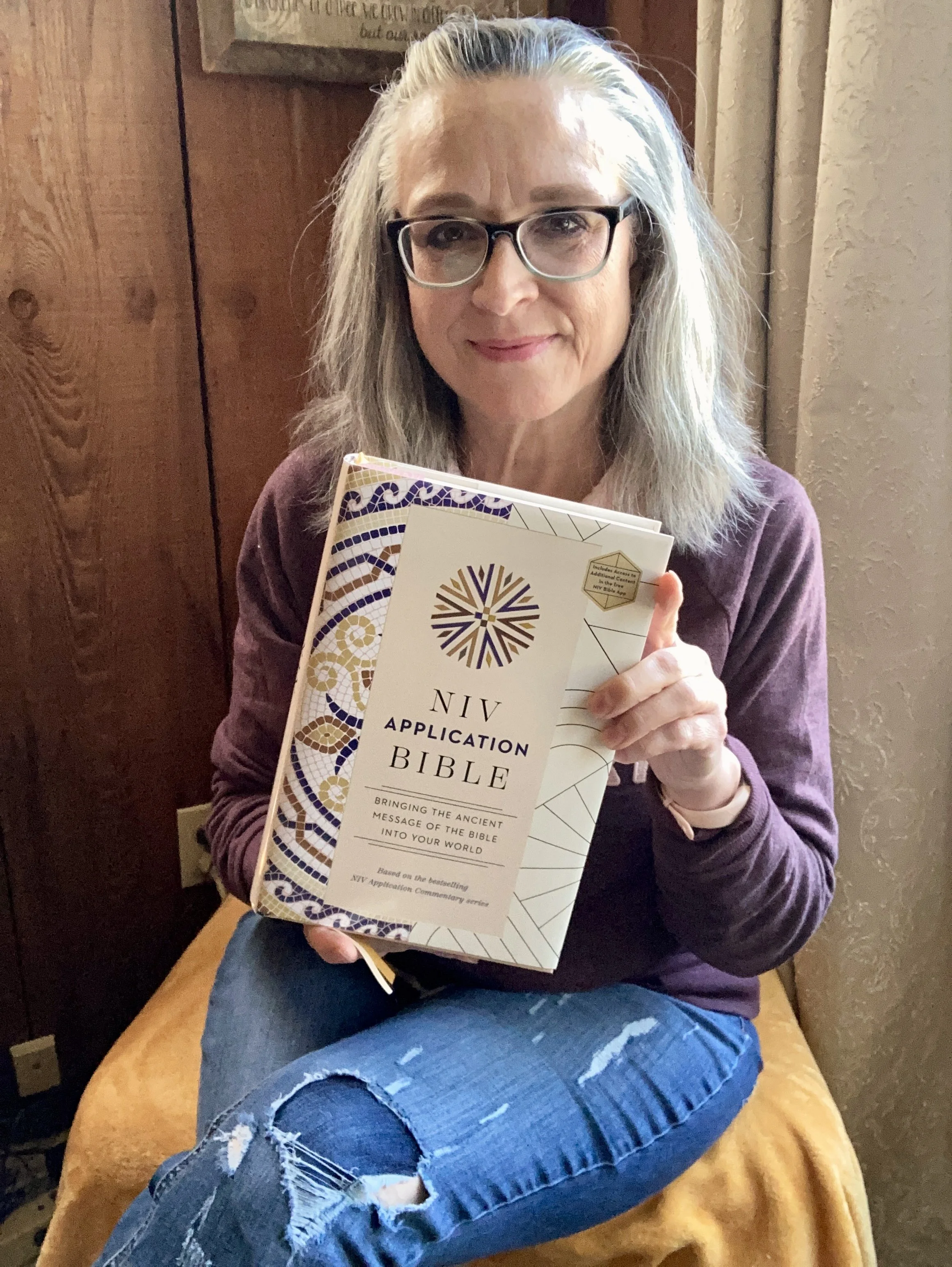
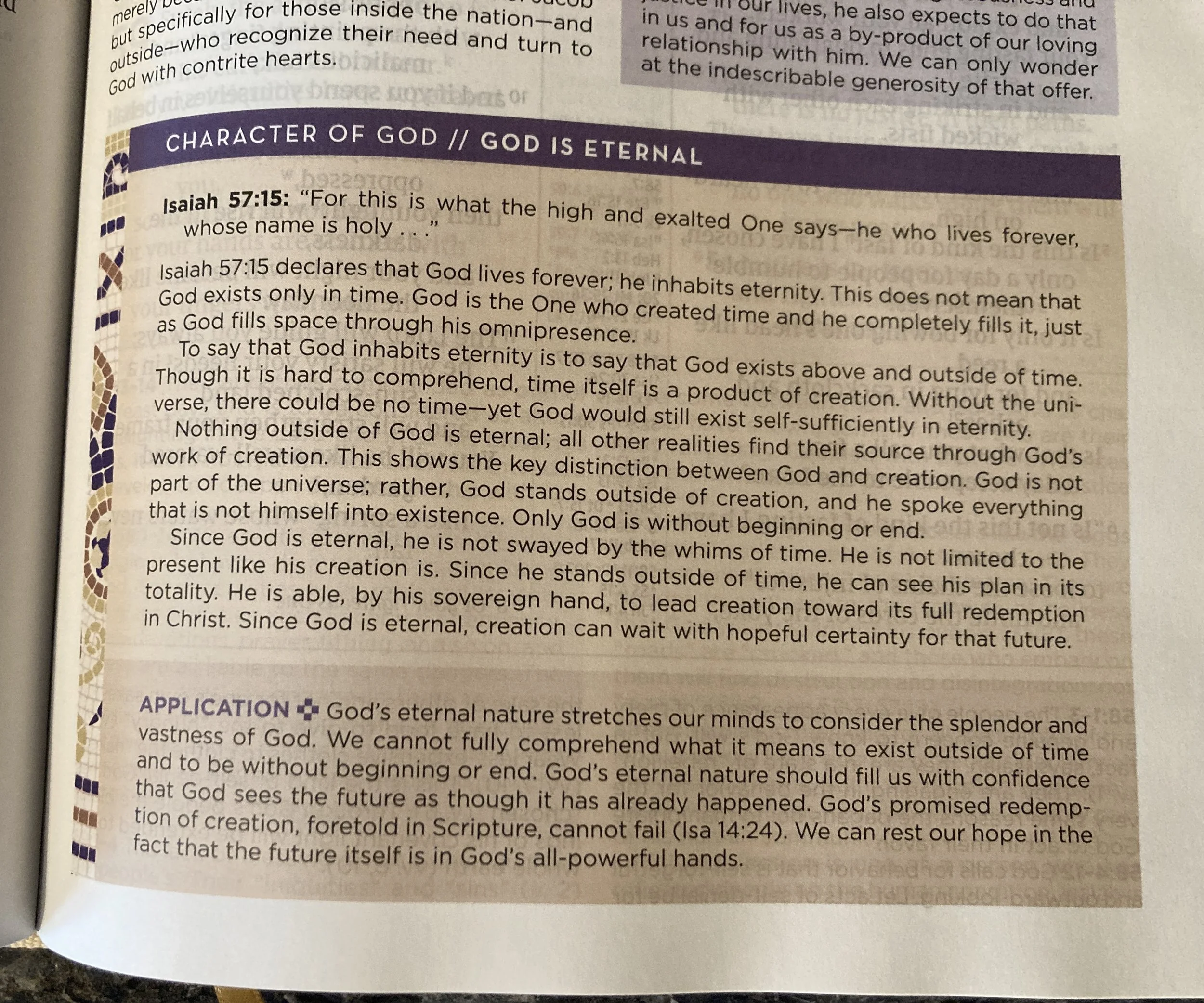
Book Review: The NIV Application Bible

(This Bible was given to me for an honest review on my blog and social media platforms. This is a paid review. All opinions are my own.)

There are a number of Bible translations which are commonly used today including the NIV, or New International Version. I personally grew up with the King James Version, but as a teen was introduced to the New American Standard Version (1995), which I still have a fondness for. Recently I started using the English Standard Version, so when the opportunity came to review an NIV translation, I thought it would be nice to add it to my collection. Not only that, but it is a study Bible, which often gives a wealth of additional information. This is the NIV Application Bible.

This Bible is an amazing resource and I am looking forward to using it on a regular basis when I want to delve deeper. Let’s explore a few of the features of this helpful study tool.

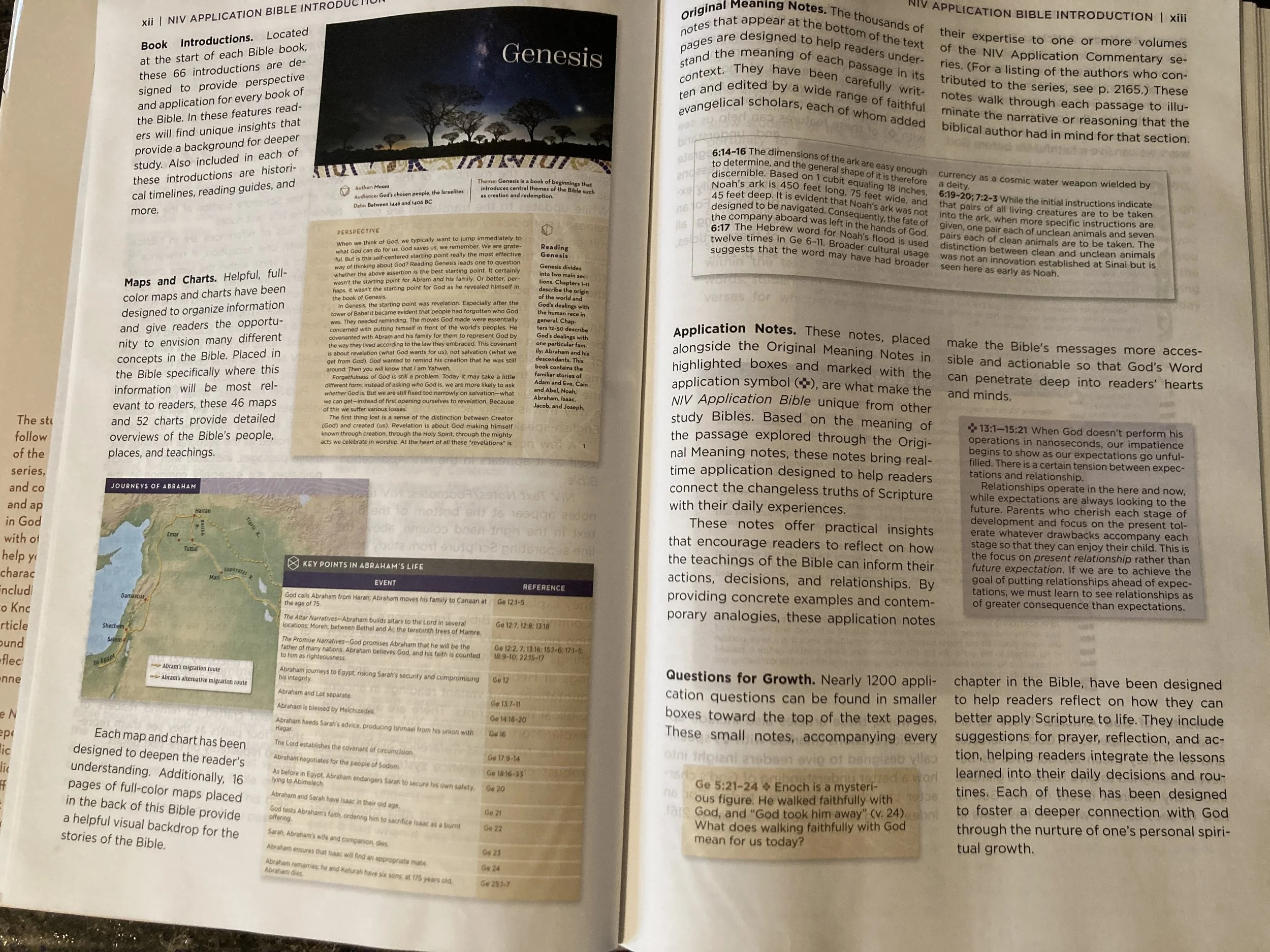
Introduction:

The introduction does a nice job of telling you how the NIV Application Bible came about and highlights all the special features which we will look at one by one.

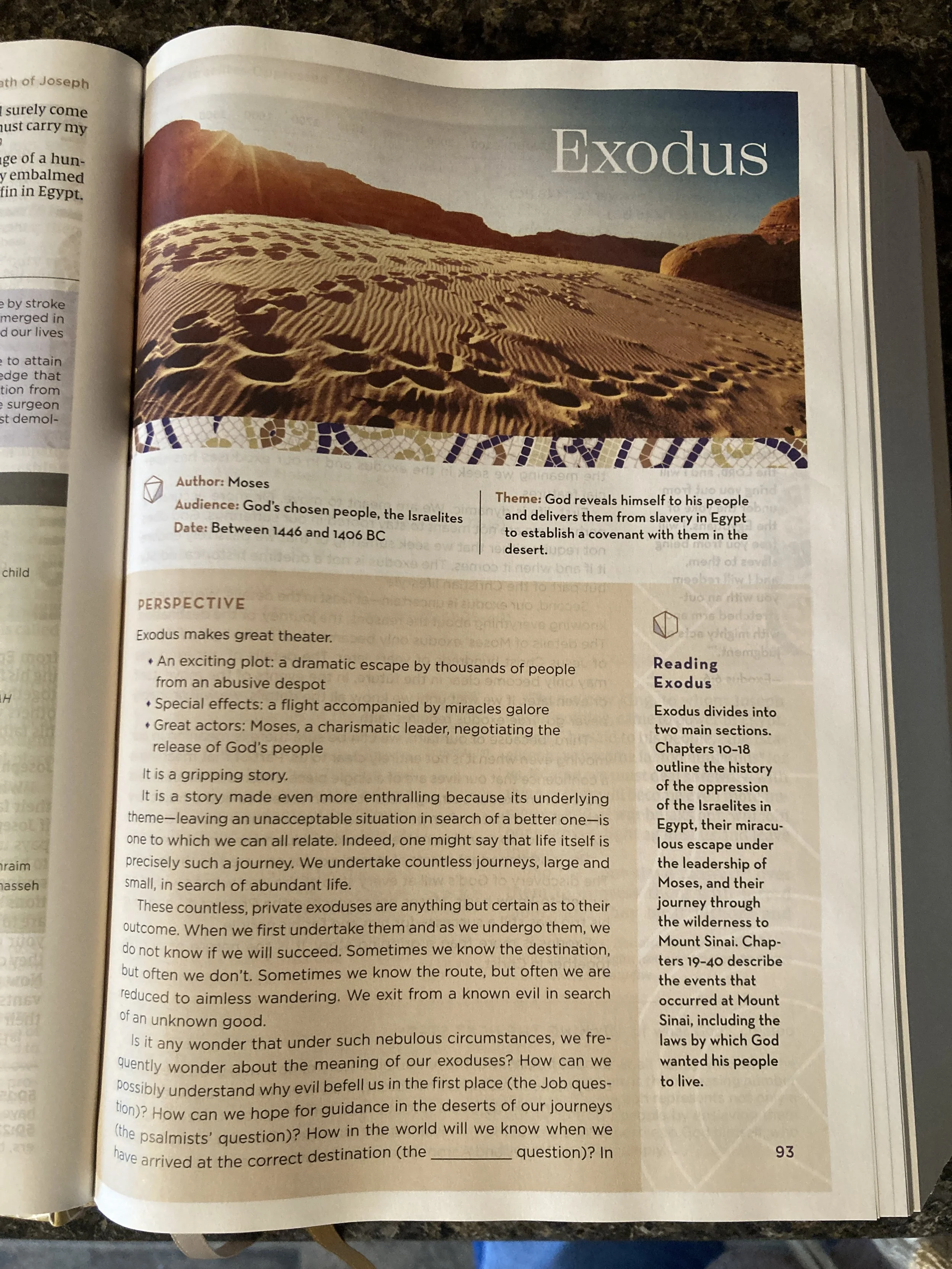
Book Introduction:

I love that each book is separated with a beautiful photograph, and a full page that includes information like the author, the audience, the time frame and a short theme focusing on what the book is about. It also gives a perspective, which allows for additional thought, and how the book is divided up.

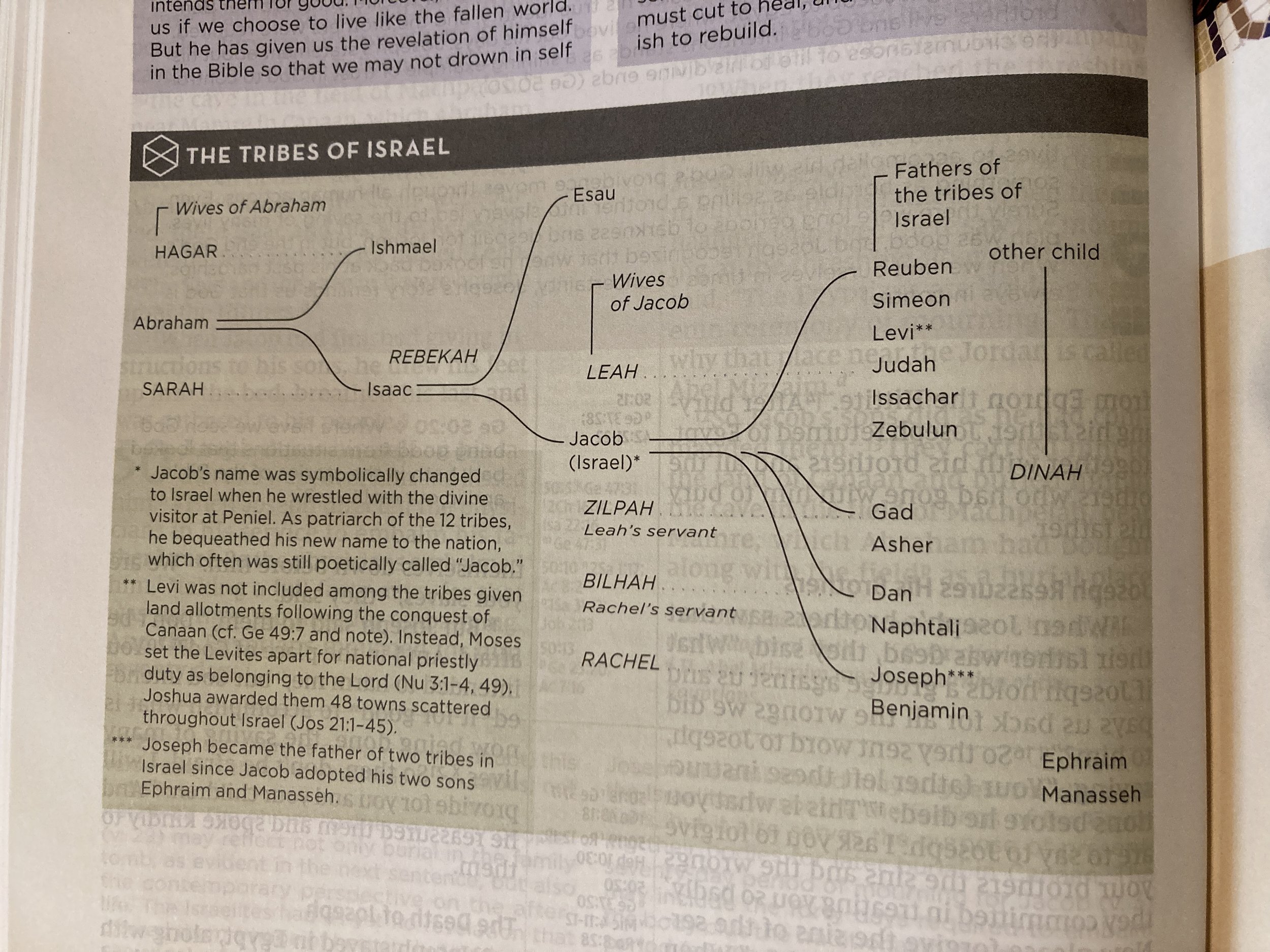
Maps and Charts:

Like many Bible translations this Bible has a number of map pages at the back, but what I really like about this NIV Application Bible is that the maps are interspersed throughout the Old and New Testament giving us a look at where the events occurred as we are reading them.

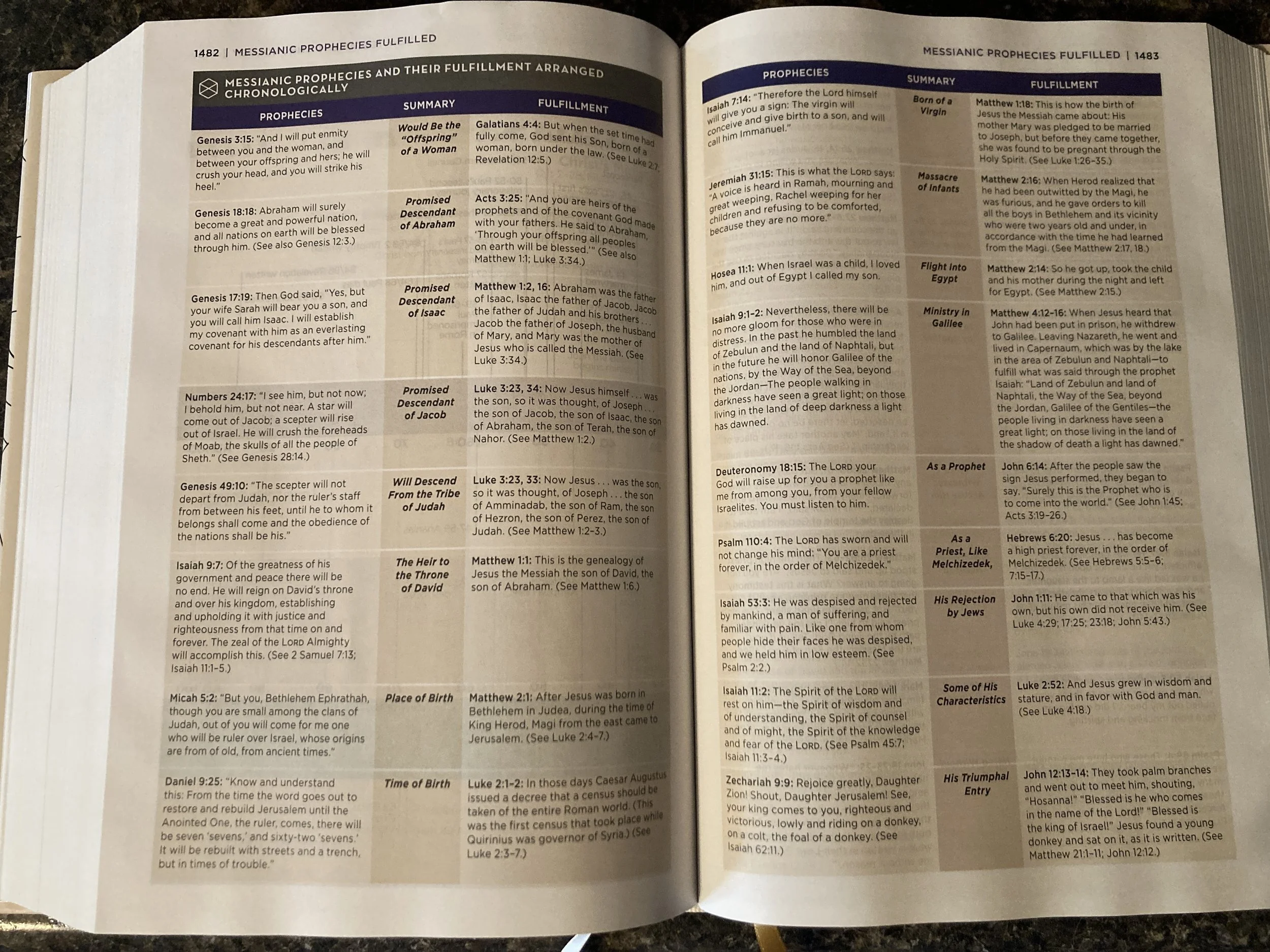
There are numerous charts which add to the study aspect of this Bible. The two shown here give an overview of the tribes of Israel and a chronological look at the Messianic Prophecies and their fulfillment.

Original Meaning Notes and Application Notes

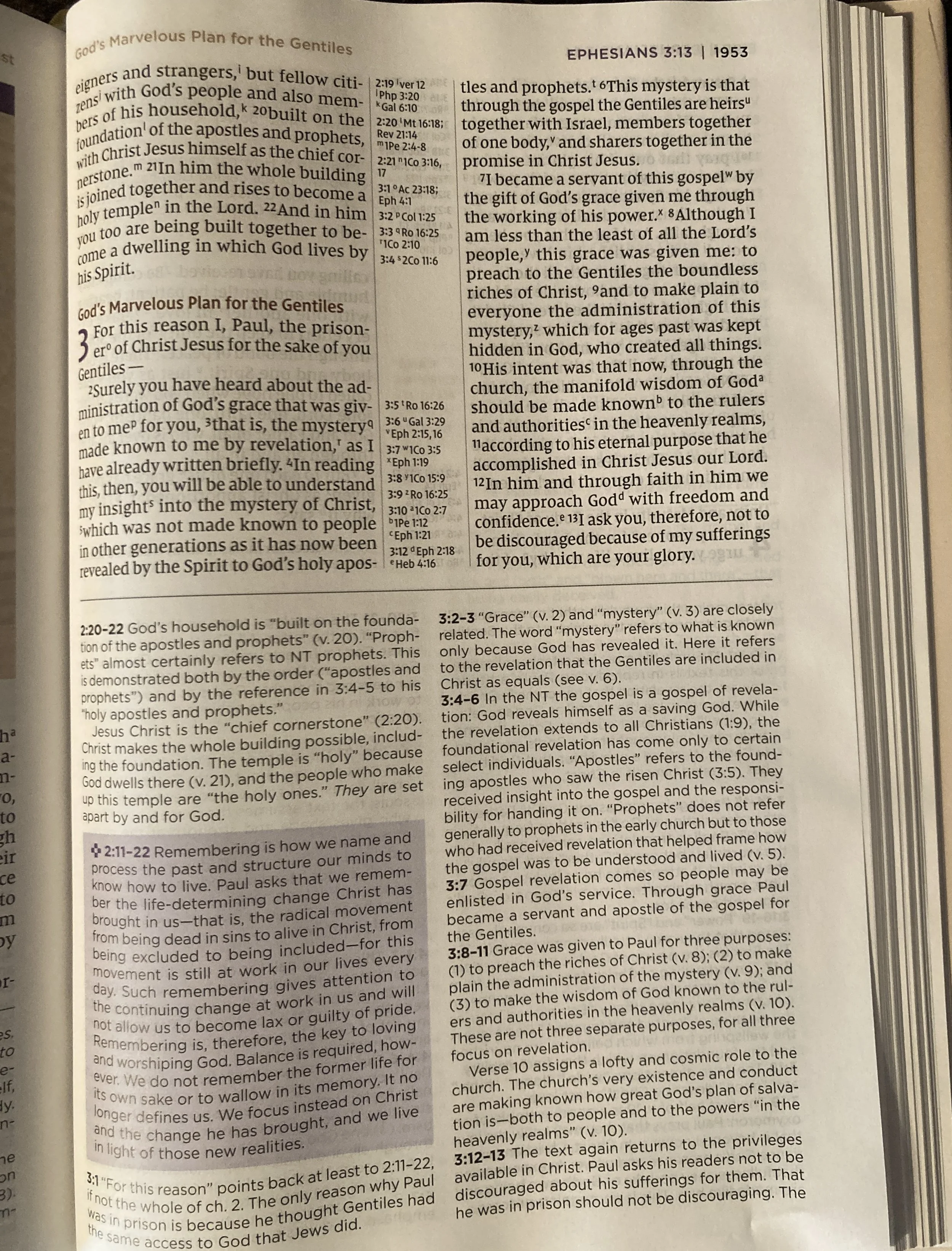
These are easily seen at the bottom of each page of Biblical text. The Original Meaning Notes are in regular type, and the Application Notes are highlighted in a blue box. Both sets of notes add to the understanding of the meaning of the text and have been “written and edited by a wide range of faithful evangelical scholars, each of whom added their expertise to one or more volumes of the NIV Application Commentary series.” (NIV Application Bible, Introduction p. xiii.)

Questions for Growth

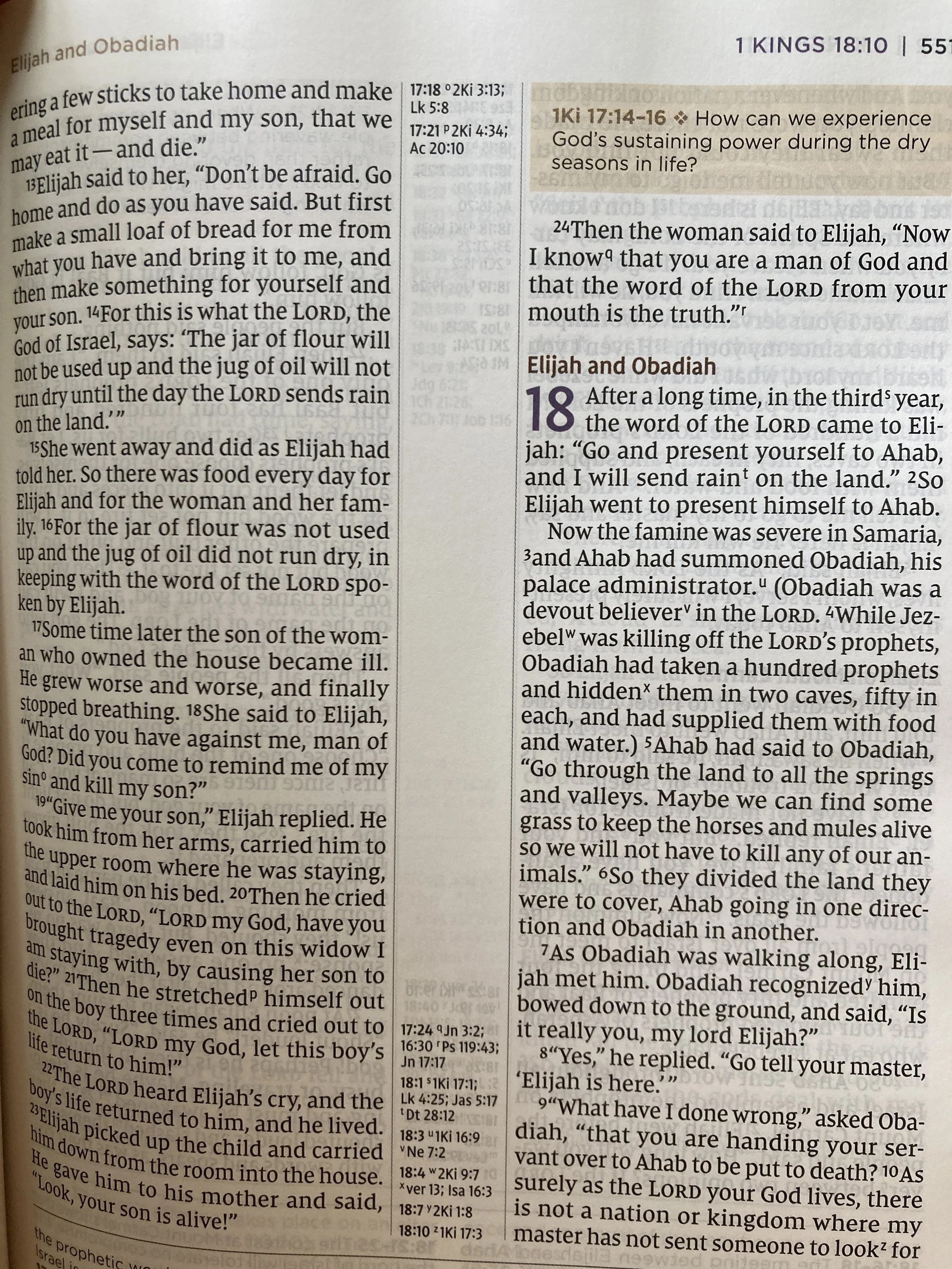
Throughout the NIV Application Bible you will also find small tan boxes that contain questions pertaining to the scriptures where they are found. These are meant to be used for personal reflection and include thoughts on how to incorporate what has been read into our prayers and actions for a closer, more personal walk with God.

People to Know Articles and Character of God Articles

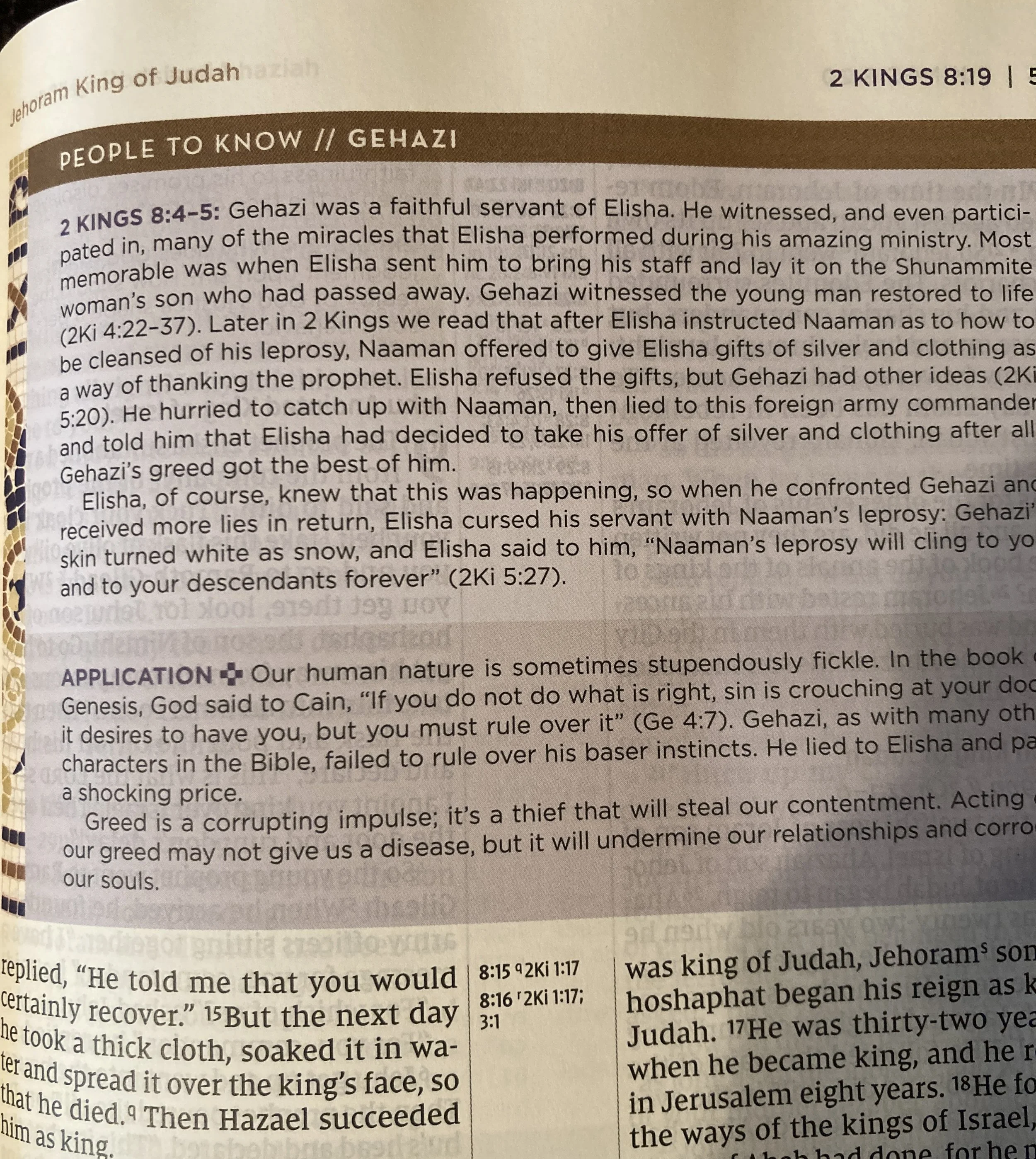
These two features give the reader an added resource for additional study and understanding. The People to Know Articles give insight into the people involved in the events in Scripture, showing how God used them and also providing application ideas for our own lives.

The Character of God Articles give insights into many of God’s characteristics exploring further who He is and how these characteristics affect our lives. These also have an application section.

If you are looking for a great study tool to add to your Biblical study resources I definitely recommend the NIV Application Bible. It offers easy to read text, understandable translation from the original texts, and many added details that will make it a Bible you turn to again and again.

Mulling It Over: Romans 8:35-36

This month we are going to look at Romans 8:35-36. Last time we looked at two questions that needed to be answered. Here we find one more question written in two ways, that begs a response.

35 Who will separate us from the love of Christ? Will tribulation, or distress, or persecution, or famine, or nakedness, or peril, or sword?

36 Just as it is written,

’For Your sake we are being put to death all day long;
We were considered as sheep to be slaughtered.’”
— Romans 8:35-36 (NASB 1995)

As we learned in the last installment we are God’s elect, and as such there is no one who can bring a charge against us. Only God has the right to judge, because he is the only one who can do it with purity and without prejudice.

We also learned that while the world condemns, for those who are in Christ Jesus there is no condemnation. He is the one who died, who was raised from the dead, who sits at God’s right hand and who intercedes for us.

Image by Alexa from Pixabay

With this knowledge we are now faced with the most important questions of all: Who will separate us from Christ? Will tribulation, distress, persecution, famine, nakedness, peril or sword? This list Paul gives is meant to be inclusive of whatever trial or tribulation a Christian might find themselves in. Many of us have never known persecution, famine, nakedness, peril or sword, but that doesn’t mean we never will. The world is becoming more under the influence of our shadowed enemy and he regularly does all that he can to make us feel separated from our precious Savior’s love and care. However, that is all he can do.

These questions are followed by a description from Psalm 44:22. What does this mean, and why does it follow these questions? Our knowledge and understanding of the Old Testament remind us that as God’s people we will suffer. Christ, Himself, said, “…in this world you will have tribulation, but take heart I have overcome the world.” (John 16:33)

The phrase, “For Your sake we are being put to death all day long…” was part of a Maskil written by the Sons of Korah. A Maskil was a contemplative, didactic (meant to teach), and skillful psalm. In other words it was not written off the cuff, or in response to a difficulty being experienced. Many of David’s psalms are wholehearted emotional songs both of praise and thanksgiving or of discouragement and despair. This psalm was thought through and had the purpose of teaching us, not only about God, but about our struggle to find Him when we are suffering.

Let’s look a little more closely at this psalm.

O God, we have heard with our ears,
Our fathers have told us
The work that You did in their days,
In the days of old.
— Psalm 44:1 (NASB 1995)

Image by Robin Higgins from Pixabay

As the psalm begins the author(s) remember what they have learned from their forefathers. They understand how God moved and was involved in the lives of His people.

4 You are my King, O God;
Command victories for Jacob.
5 Through You we will push back our adversaries;
Through Your name we will trample down those who rise up against us.
6 For I will not trust in my bow,
Nor will my sword save me.
7 But You have saved us from our adversaries,
And You have put to shame those who hate us.
8 In God we have boasted all day long,
And we will give thanks to Your name forever. Selah.
— Psalm 44:4-8 (NASB 1995)

They recognize God as King. They know that it is not their own efforts that will save them, but God will give them the victory. However, in the next set of phrases we see that this same God who had given them victories and fought for them, allowed them to be brought low.

9 Yet You have rejected us and brought us to dishonor,
And do not go out with our armies.
10 You cause us to turn back from the adversary;
And those who hate us have taken spoil for themselves.
11 You give us as sheep to be eaten
And have scattered us among the nations.
— Psalm 44:9-11 (NASB 1995)

Image by M W from Pixabay

The psalmist is left questioning. He even goes on to suggest the unwritten question: Why?

17 All this has come upon us, but we have not forgotten You,
And we have not dealt falsely with Your covenant.
18 Our heart has not turned back,
And our steps have not deviated from Your way,
19 Yet You have crushed us in a place of jackals
And covered us with the shadow of death.
— Psalm 44:17-19 (NASB 1995)

Image by nadia Clarence from Pixabay

The author allows himself to question to the very end of the psalm, but he also makes that statement in verst 22. He knows it is for God’s purpose that God is silent. He knows it is for God’s glory that we suffer.

20 If we had forgotten the name of our God
Or extended our hands to a strange god,
21 Would not God find this out?
For He knows the secrets of the heart.
22 But for Your sake we are killed all day long;
We are considered as sheep to be slaughtered.
23 Arouse Yourself, why do You sleep, O Lord?
Awake, do not reject us forever.
24 Why do You hide Your face
And forget our affliction and our oppression?
25 For our soul has sunk down into the dust;
Our body cleaves to the earth.
26 Rise up, be our help,
And redeem us for the sake of Your lovingkindness.
— Psalm 44:20-26 (NASB 1995)

Image by Ara_a from Pixabay

I think it is important to end this post focusing on the very last phrase of the psalm, “….redeem us for the sake of Your lovingkindness.” For those of us who have been studying the Word, and maturing in our Christian walk we have wrestled with the very same thoughts that the author of this psalm did. “Why did you leave us? Where did you go? Why have you let us be cast down? We have been faithful, but still we suffer?”

We can certainly look at our own circumstances or those of the people around us that we love and care about and see the suffering. But, we can always appeal to His lovingkindness. God does not have to save us, or rescue us or give us comfort, but He does. Our struggles and feelings will come and go, but when we place our focus on Him and remain in Him (John 15), He will always be found faithful.

Nothing can separate us from the love of Christ, no matter how we feel; no matter how far away we might think He is, He is always with us.

9 Just as the Father has loved Me, I have also loved you; abide in My love.
— John 15:9 (NASB 1995)

Mulling It Over: Romans 8:31-32 - What Shall We Say?

We are looking once again at Romans 8. I have been going through different chapters of the book of Romans in the New Testament on my own in recent months. I have started the practice of writing out several verses at a time, word for word as they are written in my English Standard Version of the Bible. After I write the verses out, I ask the question what do these verses tell me about God. It has been a wonderful practice to not only hand write, and yes I am doing it in cursive, but also to dwell on who God is and what He has done for us that has given us the ability to come into His presence as one of His children.

Image by Amanda Truscott from Pixabay

I have not written out Romans 8 as of yet, but it has been eye opening to go through this chapter over the last year and a half with all of you who read this little blog. Today we take a closer look at a few very familiar verses that I am sure many of you can quote.

31 What then shall we say to these things? If God is for us, who is against us?
32 He who did not spare His own Son, but delivered Him over for us all, how will He not also with Him freely give us all things?
— Romans 8:31-32 (NASB 1995)

Let’s do our usual and look at these verses a phrase at a time.

What then shall we say to these things? This question is a referring back to the previous verses. Verses 1 - 25 remind us of our deliverance from bondage, and the awaiting transformation to glory. Verses 26 - 30 remind us of our position in Him. What can we possibly say to all of that? Can we condemn God, saying He is a malevolent being who does not care for us; that he has not provided a way for us to have peace with Him; that He cares not for our well being? How could we say such untruths when it is clear that He provided the way, and He gives us all we need, and even in our weakest moments His own Spirit is praying for us; interceding according to the Father’s will.

If God is for us, who is against us? I can hear the voices accusing, “If God is really for us then why are there all these problems? Why is our world is such a state of chaos? Why is there so much hate? Why is there so much pain?”

I do not want to throw out pat answers or give a couple of other verses to support this idea and send you on your way. This is tough. Once again, however, I must remind all of us of our Savior’s very own words.

33 I have said these things to you, that in me you may have peace. In the world you will have tribulation. But take heart; I have overcome the world.
— John 16:33 (ESV)

Once again, we have to refer back to Genesis 3 when the serpent, Satan, tempted Eve. He didn’t just tempt her flesh, he tempted her ability to trust in her Creator. Isn’t that true of the world ever since? Why did Adam and Eve sin? Because they did not believe that God really loved them and wanted the best for them. They believed, with the help of Satan’s manipulation of God’s words, that they would be better off making their own choices and decisions.

Image by Briam Cute from Pixabay

We still live in that shadow of mistrust. We begin to doubt God’s Word, we stop going to church, we start reading and listening to philosophies and voices that tear apart Christian thoughts and beliefs, and we start focusing on what is going to make us happy. We become rights based. No matter how much faith we put in our founding fathers, the reality is they were fallen men, and only God and His truth can be fully trusted. The only true rights we have are those given to us by the Creator of life. Without Him we are nothing.

Why do we have trouble, problems, struggles and trials; because sin entered a perfect world, but the beautiful thing is God provided a way. It doesn’t require my work, my money, my time, my identity it only requires my faith. It isn’t just faith in a verse here or there, but in the whole inspired Word of God. When we start throwing scripture out the window we tear down the foundation He laid for our redemption, justification and glorification. We open the door to racism, fascism, humanism and communism. We make up justifications for our behaviors saying like Madonna sang, “I was born this way.” We descend into mind numbing chaos revolving around a continuous search for peace, identity and value.

But God….

It is God who is for us. It is God who created this little blue and green gem we live on. It is God who gave us the law as a foreshadow of a more perfect way, and then gave us His son Jesus Christ who died on a cross for our sin so that we might be made right with the Father.

Image by Pexels from Pixabay

15 For you have not received a spirit of slavery leading to fear again, but you have received a spirit of adoption as sons by which we cry out, “Abba! Father!”
— Romans 8:15 (NASB 1995)

It is God who imprinted His very own image on us and no matter how hard we try to run from that imprint we are distinctly God’s because of that image. God is not against us. He is the only one who is truly, purely for us, because He loves us and recognizes each one of us as His handiwork.

He who did not spare His own son, but delivered Him over for us all… This needs little explanation. God sent Jesus as a baby to Mary. He was born, and lived a human life for approximately 33 years. The last three of those years he ministered and taught His disciples doing miracles and teaching about His Father and the Kingdom of God. Most of the Jews in His time did not believe what he said, even accusing him of having a demon (see John 8:48). Eventually, it was His own people, the Jews, who condemned Him to death via Pilate. He died an agonizing death on a cross, but it was what He did after that made all the difference. If Jesus hadn’t risen from the dead, we would still be slaves to sin. It was God’s power displayed in this act of resurrection that gives us the ability to leave the world of shadow and emerge into His light.

…how will He not also with Him freely give us all things? So what does this mean? We know the triune God isn’t Santa Clause. We don’t just ask Him for anything we want like He is our very own Genie in a Bottle. When you grow in your relationship with Christ you come to realize He provides everything you need: peace, love, joy, strength, rest, hope, thanksgiving…these are not physical things, but He is also providing our physical needs as well. Things like jobs to buy food and pay our bills; family and friends to provide a space of security and joy; a home to live in, blankets on our beds…the list is pretty much endless. He will always come through and give you exactly what you need when you need it. I have found, the more I rely on Him for every single thing, the more He provides when I haven’t even asked.

Image by Pete Linforth from Pixabay

“For every beast of the forest is Mine, The cattle on a thousand hills.
— Psalm 50:10 (NASB 1995)

I hope these verses were a pertinent reminder of how very secure you are in Christ, and I hope that helps you to walk with peace, joy and confidence in Him.

Have a great weekend!

Mulling it Over - Romans 8:30

Last month we looked at Romans 8:29, and had a short discussion on the theological points of predestination and free will. We also looked at what followed this idea of predestination, that we are being conformed to the image of Christ.

Today we are going to look at verse 30. Once again, we are proceeding slowly, so that we might truly understand and let the Spirit drive home the truths revealed in these Scriptures.

30 and these whom He predestined, He also called; and these whom He called, He also justified; and these whom He justified, He also glorified.
— Romans 8:30 (NASB 1995)

and these whom He predestined,

We discussed this in last month’s post. The end result is God is able to both predestine and give us a free will. We tend to limit God, because we think if it is beyond our understanding then it must not be the case. We need to recognize God’s wisdom is a mystery and is not always completely known to us.

6 Yet we do speak wisdom among those who are mature; a wisdom, however, not of this age nor of the rulers of this age, who are passing away;
7 but we speak God’s wisdom in a mystery, the hidden wisdom which God predestined before the ages to our glory;
8 the wisdom which none of the rulers of this age has understood; for if they had understood it they would not have crucified the Lord of glory;
— I Corinthians 2:6-8 (NASB 1995)

For instance, a 7 day, literal creation has stumped many a Christian over the decades. This is not a problem for me. As my husband always says, “Seven days? What took Him so long?” Ha, ha. Unfortunately, rather than taking God at His word, and according to His word, man has come up with alternative theories to better coincide with the evolutionary theory touted by Darwin. The Day Age Theory, and The Gap Theory are two of the most popular.

Image by Andrew Martin from Pixabay

I just wanted to reiterate, we are the Creation, not the Creator, and we are limited in our understanding of the many layers of God. With that said, lets move on.

He also called;

This idea of calling has also had its day on the debate floor. Questions that have been around for years include: Is everyone called? Is calling just for special people at certain times? Is calling only for people going into full time Christian service, like a missionary or a pastor, etc?

Image by Steve Buissinne from Pixabay

I see calling as a general term, much like predestination. We are all predestined, meaning God wants all of us to become His children by belief in Christ. In the same way we are all called. The difference lay in the fact that we must respond to His calling. We must choose to believe. Of course that presupposes you believe in free will. :)

God is faithful, through whom you were called into fellowship with His Son, Jesus Christ our Lord..
— I Corinthians 1:9 (NASB 1995)

Let me reiterate, I am not a theologian. I had three years of Bible school, but that doesn’t mean I have exhaustively studied every topic. However, I do believe God gives us His wisdom, understanding and knowledge as we delve into His deeper layers through His Holy Spirit. That being said, if you ever think I am in error in the ideas I bring to you, I welcome your thoughts.

and these whom He called, He also justified;

The word justify is defined in several ways: to judge, regard or treat as worthy of salvation; to prove or show to be just, right, or reasonable. Justification is the process by which Christ takes on our sin through His death on the cross enabling us to be worthy of God’s calling. In essence Christ’s blood covered us so that we might be made right before God.

Image by Sang Hyun Cho from Pixabay

24 being justified as a gift by His grace through the redemption which is in Christ Jesus;
— Romans 3:24 (NASB 1995)

…and these whom He justified, He also glorified.

The predestination, calling and justification all lead to the perfect end result, our glorification. The older I get, the more I look forward to this glorification process. At 60 I am experiencing all the things that age brings with it. I have become acquainted with chronic illness, my hair is thinning, my joints ache, and my brain is almost always in the phase of post menopausal fog.

Image by kapokia from Pixabay

Jesus told us we would have trouble in this world.

33 These things I have spoken to you, so that in Me you may have peace. In the world you have tribulation, but take courage; I have overcome the world.
— John 16:33 (NASB 1995)

We don’t have to look very far to see trouble. The southeast part of the U.S. has see two large hurricanes in the last two weeks. Out west there continue to be wildfires consuming thousands of acres of trees. We are entering in to flu and Corona season, in addition to that allergens are ever present and driving many of our sinus cavities wonky. We have political and societal unrest in the United States and there is still a war going on in Ukraine and the Middle East.

Jesus told us we would have trouble, but He didn’t want us to stay in that mindset. He told us He would give us peace, and He has overcome the world.

This mentality of looking towards glory is not a bad thing. Yes, we still need to be present. We need to live our lives as the brightest lights of Christ that we can be so others might come to know Him. How much easier it is to do this when we know that we are called, justified and one day will be glorified.
Just like the Morning Glory flower we need to turn our faces towards the light of God and His truth and open ourselves up completely to what He is trying to do in our lives. Only in doing that will we become the beautiful reflection of Him that we are meant to be.

Creative Christianity - The Widow's Quest: Part 1

The following piece begins a series based on the passage found in Luke 18:1-8. It presents a fictional account with allegorical aspects which coincide with the parable told by Jesus in those Scriptures. This is a fictional story with a world, and characters built by me. I hope you enjoy it.

Constance made her way through the narrow, muddy streets, thankful it was raining. A constant downpour washed away some of the surface filth making her feel there was a modicum of cleanliness here in the Rift. She kept her head down, the hood of her coat concealing her face. She didn’t want anyone to know where she was going. If they found out she was on her way to the Manor of Minward they would beat her until she was no longer recognizable. The Black Needles didn’t appreciate the people of their ward asking for help. They didn’t need help. They could make it on their own.

Constance smirked beneath her hood. Neoplo “The Builder” De Caro wasn’t just known for building the run down, decaying ruins the people of the Rift had to live in, but for raising up the crime syndicate that preyed on the very people it was supposed to protect. She had seen enough; enough suffering; enough struggle; enough darkness. If the Lord of Minward was truly just, as she had often heard through her fourty-three years, why didn’t anything change? She was going to find out.

She was going to have to get past a few of De Caro’s check points. He wasn’t fond of people leaving his barony. He had an intricate web of knowledge woven together by his army of groveling lackeys. Constance learned from the time she was very young to blend in. She didn’t want to stand out. Being noticed by Neopolo, meant you became one of his, either that, or you conveniently disappeared. She felt bad for the younger people. De Caro’s appetite wasn’t just reserved for food and drink.

Constance felt bile rise in her throat, but she swallowed it, and clenched her fists. She wasn’t going to become just another of De Caro’s appetizers. She had to have hope; hope that the Lord of Minward would be able to make a change. Maybe he just wasn’t aware of how bad it was in the Rift. As the Lord of an entire city, he must be very busy, and maybe information wasn’t getting through due to De Caro’s influence.

The first check point loomed ahead. Her training in boiler maintenance should be able to get her through this one. She felt the tool bag by her side, then slid her hand into her coat pocket where the forged work papers printed on union stationary, and folded neatly, stayed dry from the down pour.

Image by Anna Veronika from Pixabay

Constance wasn’t alone in this quest. There were a few others who wanted a better life, and knew De Caro’s empire building wasn’t going to benefit them. She and Amos had formed a small group of other “believers”, which now was up to twenty members. They rarely all met together, but stayed in touch using messages sent via trusted couriers. Since the steam movement, and its subsequent advancements in communications, things like sending handwritten messages on foot had become obsolete. Now things were moved along through vast tubular networks both above and below ground pushed along by the compressed power of steam.

Amos had been like a little boy, completely enamored with the advent of the new Steam Era. He loved the machines, the gears, the noise and the power behind something so simple as heated water. She missed him terribly. It was coming up on five years since his death, but grief was relentless where darkness bred, and the Rift was a breeding ground for all that was dank, and miserable.

Image by Peter H from Pixabay

Constance took a deep breath and moved confidently to the first check point. Each check point held a small booth barely big enough for one person, but often occupied by several of Neoplo’s goons. There were three of them in this one. They were chatting and laughing. There were several other people in line.

When her turn came, Constance pulled the papers out of her pocket and quickly shoved them through the small opening in the window.

The man looked down on her, from where he sat in the dry, heated booth.

“You in a hurry there, lass?”

Constance wanted to quip back she was old enough to be his mother, but didn’t reply, just shrugged. She found the best thing to do was not engage. Once you started talking, they became interested. She waited, turning to look at the line that was forming behind her. That was a good thing. The more people waiting, the less time they would take to push you through.

The man stamped her papers and passed them back through the window. As she reached to take them, he wouldn’t let go. She looked up at his scruffy face.

Image by Sammy-Sander from Pixabay

“Smile, Sunshine. Life ain’t so bad. Doesn’t old De Caro take good care of his people?”

Constance swallowed the retort brewing in her gut, gave a shy smile and nodded her head.

“There we go! You have a good night now, lass!”

Constance placed the papers back in her coat pocket. As she walked away she let out a deep breath. One more check point to go.

Maintaining the Presence of Peace

If you have been following along, you know I have been talking about the last name of Jesus mentioned in Isaiah 9:6, Prince of Peace. Even though we often refer to that scripture at Christmas, I believe it is one that we should look at again and again. We need to be reminded who this One is that we call Lord and Savior.

Image by Benjamin Balazs from Pixabay

While it is true that we always have the Prince of Peace with us, as I explain last week, we don’t always feel His peace. We all to often allow life and all of its difficulties and distractions to take the place of peace in our hearts.

Many of you are probably familiar with the “love bank” idea created by Dr. Willard F. Harley, clinical psychologist and author of a variety of relationship and marriage books, including His Needs, Her Needs. The sum up is that the more we put into someone else’s love bank, the more they will feel loved. When we criticize, demand, or do unkind things we make withdrawals from the their love bank, thus causing damage to the relationship.

Image by Gerd Altmann from Pixabay

I believe we can use a similar analogy when it comes to peace in our lives. When we read God’s word, pray, have fellowship with others, and abide in Him we add to our “peace bank”. When we neglect those activities, or do things that go against God and His truth, we make withdrawals from the bank. It is easy to suddenly find ourselves lacking funds in our bank account when we have been living life in our own strength and might.

For this final post on the Prince of Peace, I would like to look at some of the tools we can use to ensure our peace banks never run low. I want to look at a few specific ideas. As I said earlier, prayer, God’s word, etc. help us maintain peace, but I want to look at specific thoughts in this regard.

1 - Prayer

Image by Pexels from Pixabay

a - Prayers of confession and repentance. There is nothing faster at removing our peace than unconfessed sin. I like the idea of keeping “short accounts”. Did I hurt someone’s feelings at work today? Did I gossip when I was with my lady friends at lunch? Did I speak harshly towards my spouse? We must be ever vigilant to keep our minds and hearts clean before our Prince of Peace.

If we confess our sins, He is faithful and righteous to forgive us our sins and to cleanse us from all unrighteousness.
— 1 John 1:9 (NASB 1995)

b - Prayers of release. As a parent, and grandparent, this is one of the hardest things to do. You might wonder, if I let it go, how is that going to give me peace? Don’t I have to do something about it? Actually, the most important thing we can do is to lay our fears, doubts and desires at the foot of the cross. We need to find our Lord to be the most trustworthy friend we will ever have. Let go of those things that are troubling you and let Him be God.

Be anxious for nothing, but in everything by prayer and supplication with thanksgiving let your requests be made known to God.
— Philippians 4:6

2 - Scripture

Image by peachknee from Pixabay

a - Using God’s Word for meditation. When we are having difficulty with peace going back to God’s word and mulling it over helps to bring back our connection to the Prince of Peace. I always have a journal and at least a pen when I read passages from the Word. The Holy Spirit is always able to give us new insights, even from passages we have read over and over. I am not afraid to underline and write notes in my Bible either. Being centered on His holy Word will always reconnect us to our wonderful Prince of Peace.

And I shall lift up my hands to Your commandments, Which I love; And I will meditate on Your statutes.
— Psalm 119:48 (NASB 1995)

b - Using God’s Word for battle. I have discussed my walkabouts on here before, but as a refresher, a walkabout is when I pace around my house praying out loud for the purpose of spiritual warfare. I do this often when I am praying for my children, grandsons and my spouse, although, many people end up on my walkabout list, because so many are struggling. During these times of intense communication with God, I take the Words He has inspired in the Bible and I pray them back to Him.

And take the helmet of salvation, and the sword of the Spirit, which is the word of God.
— Ephesians 6:17 (NASB 1995)

The Word of God is not passive. According to Hebrews 4:12 it is, “living and active.”

For the word of God is living and active and sharper than any two-edged sword, and piercing as far as the division of soul and spirit, of both joints and marrow, and able to judge the thoughts and intentions of the heart.
— Hebrews 4:12 (NASB 1995)

3 - Changing our thought life.

Image by Engin Akyurt from Pixabay

This might seem obvious, and certainly spending more time in prayer and the Word of God will help. However, I thought it important to give this a little more emphasis since we can change our thoughts by doing other things as well. The mind is not the only part of our bodies affected by a lack of peace. Anxiety, anger, lust, bitterness, and lack of forgiveness can affect our digestive systems, cause aches and pains and can rev up the inflammation triggers all over our bodies. One of the main areas we can control is our thoughts.

a - Scriptures to help our thoughts:

Finally, brethren, whatever is true, whatever is honorable, whatever is right, whatever is pure, whatever is lovely, whatever is of good repute, if there is any excellence and if anything worthy of praise, dwell on these things.
— Philippians 4:8 (NASB 1995)
You will keep him in perfect peace,
Whose mind is stayed on You,
Because he trusts in You..
— Isaiah 26:6 (NKJV)
The Lord will give strength to His people; The Lord will bless His people with peace.
— Psalm 29:11 (NASB 1995)
Those who love Your Law have great peace, And nothing causes them to stumble.
— Psalm 119:165 (NASB 1995)
The steadfast of mind You will keep in perfect peace, Because he trusts in You.
— Isaiah 26:3 (NASB 1995)
And the peace of God, which surpasses all comprehension, will guard your hearts and minds in Christ Jesus.
— Philippians 4:7 (NASB 1995)

I am particularly fond of this last verse. The word guard in this verse evokes the idea of a battalion of soldiers standing guard over our hearts and minds in Christ Jesus. This is what God’s word says about His peace. His peace is beyond our comprehension, meaning we can have it, even when it doesn’t make any sense, and it will be like a company of warriors watching over our hearts and minds.

Image by Amber Clay from Pixabay

c - Other ways to maintain our peace:

There are plenty of secular things people do to give them peace of mind from meditation, and medication, to music, to exercise and getting outside. All of these are good, but don’t forget, as a Christ follower your peace ultimately comes from the Prince of Peace. Nothing else will give you true, deep, lasting peace like Jesus.

I hope you have enjoyed this look at the word peace, and our Prince of Peace, Jesus Christ. Please let me know in the comments how our Prince has given His peace to you.

A Look at Isaiah 9:6 - Part 3

I know Christmas is over, but I wanted to finish my little study of Isaiah 9:6. I thought it would be especially appropriate with all the unrest and war going on in the Middle East, and the Ukraine to pause on the last name named, the Prince of Peace.

For a child will be born to us, a son will be given to us;
And the government will rest on His shoulders;
And His name will be called Wonderful Counselor, Mighty God,
Eternal Father, Prince of Peace..
— Isaiah 9:6 (NASB 1995)

Looking at the word prince we get these definitions from Webster’s Online Dictionary: the ruler of a principality or state; male member of a royal family, especially the son of a sovereign. We can see by a few different scriptures that God is the King of Kings. God the Father and Jesus His son, while different are one in the same. What the Father owns, the Son has. The King and the Prince are head, rule and authority over all.

Image by Victoria from Pixabay

16 On his robe and on his thigh he has a name written, King of kings and Lord of lords.
— Revelation 19:16 (ESV)
9 And the Lord will be king over all the earth. On that day the Lord will be one and his name one.
— Zachariah 14:9 (ESV)
13 I charge you in the presence of God, who gives life to all things, and of Christ Jesus, who in his testimony before Pontius Pilate made the good confession,
14 to keep the commandment unstained and free from reproach until the appearing of our Lord Jesus Christ,
15 which he will display at the proper time—he who is the blessed and only Sovereign, the King of kings and Lord of lords,
16 who alone has immortality, who dwells in unapproachable light, whom no one has ever seen or can see. To him be honor and eternal dominion. Amen.
— 1 Timothy 6:13-16 (NASB 1995)

When we refer to Jesus as the Prince of Peace we are speaking about His authority over all things peaceful. This not only includes written treaties between nations that can’t see eye to eye, but peace within each of us in our chaotic, and fluctuating circumstances. But what does the word peace mean?

Webster’s defines peace in these ways: a state of tranquility or quiet such as: freedom from civil disturbance, or a state of security and order within a community provided for by law or custom; freedom from disquieting or oppressive thoughts or emotions; harmony in personal relations; a state or period of mutual concord between governments; a pact or agreement to end hostilities between those who have been at war or in a state of enmity; used as a greeting or farewell.

Image by Gordon Johnson from Pixabay

The 1960’s and 70’s often used this symbol as a greeting or farewell. It was a way of wishing one another a life of peace and serenity. During those decades, there was unrest in the world and in our country. People did not believe we should be fighting in other people’s wars and protests were plentiful especially on university campuses. The problem that arose is those protests, meant to be peaceful and serene, often became violent, the exact opposite of what the protesters wanted.

We live in a world of unrest. As long as there is sin and darkness in our world there will be war, violence and tragedy. People can work for peace, preach for peace, make laws for peace, fly banners for peace, and have calm, dignified protests for peace, but there will be no peace without Jesus.

In John 16, Jesus is talking to His disciples. He is telling them that He is going to be going away. He explains, if He doesn’t go away, the Helper will not come. The Helper Jesus is referring to is the Holy Spirit. He goes on to say this Holy Spirit will convict the world concerning sin, righteousness and judgment. Without the guiding of the Holy Spirit, we will continue to live in our sin and selfishness and we will not know peace.

33 These things I have spoken to you, so that in Me you may have peace. In the world you have tribulation, but take courage; I have overcome the world.”
— John 16:33 (NASB 1995)

The wonderful words that Jesus shares with us are these, “I have overcome the world.” Jesus, our Prince of Peace has overcome this dark, and violent world. He has given us all that we need to have peace.

I want to share more on this truth of our Prince of Peace, so I am going to extend this to next week when I will share with you some of my favorite verses on peace.

Thanks so much for stopping by the blog. Have a great weekend!

Faith Inspiration: Creation in the Fall

There are so many things that can inspire our faith, from music and sermons, to podcasts and movies, but nothing inspires my faith and my relationship with God more than His beautiful creation. I love living in an area that has all four seasons because each one comes dressed in natural finery that no fashion diva could ever mimic. Whether it be the sun and surf of the summer time, the changing leaves of the fall, the pristine white of a first winter snowfall or the greening of spring, God’s creation boasts of a mighty, loving and artistic Creator.

Here in the midwest, the leaves are beginning their yearly change, turning from all manner of green to pale yellow, fiery red, blazing orange, soft peach, and even alluring burgundy. This year, the colors don’t seem quite as vibrant as they did last year in 2022, but the leaves still change and eventually fall; a truth that is as real and solid as the truths in God’s word.

1 The heavens declare the glory of God;
the skies proclaim the work of his hands.
2 Day after day they pour forth speech;
night after night they reveal knowledge.
3 They have no speech, they use no words;
no sound is heard from them.
4 Yet their voice goes out into all the earth,
their words to the ends of the world.
In the heavens God has pitched a tent for the sun.
5 It is like a bridegroom coming out of his chamber,
like a champion rejoicing to run his course.
6 It rises at one end of the heavens
and makes its circuit to the other;
nothing is deprived of its warmth.
— Psalm 19:1-6 (NIV)

Psalm 19 has always been one of my favorite passages and I find myself often quoting the first two verses when I am out in the woods, or watching a fabulous sunset. The psalmist knew God. He had a personal knowledge of Him and he could see that in God’s creation.

If we look closely at these verses we see that God gave His creation the ability to communicate, not only with their Creator, but with humanity. Even though they do not have voices like we do, the flowers of the field, the majestic mountains, the running rivers all have the ability to proclaim, speak, and reveal knowledge. In fact, their voice goes into all the earth, and their words to the end of the world. Think about that. My words reach a few people. Government leaders might reach a broader audience, and those who are known in many countries an even larger population, but when God’s creation speaks it can be heard by anyone, anywhere who will listen.

To help understand this idea let me give you an example from my own life. My husband and I have a place about an hour and fifteen minutes from where we live that we like to go to for a hike. It’s actually a wildlife area with hunting year round, and fishing during the summer months. There is a great trail that goes around the main lake and is about 2.5 miles long. Perfect for a leisurely stroll. Sometimes we take a picnic lunch along, and find a log to sit on by the lake as we eat. That is where the first picture above was taken.

We went for a hike about two weeks ago and the leaves were just beginning to change, but as usual, I took my phone and snapped a few pictures because I always enjoy capturing the beautiful colors.

As I began to think about the leaves in all their different stages and hues of color change, I began to think about humanity. We are all so very different, but we are all God’s creation. All of us are going through the process of change.

Some of us may change gracefully, easily allowing God to work and bring the change about. These remain soft and pliable to the will of God.

Others change in small spurts, often stubbornly bending to God’s desire in their lives. A little rough around the edges they learn to love Jesus without abandon.

Still others, go through great difficulty as God allows change to color them differently than others. Sometimes these leathery individuals have the deepest knowledge and understanding of who God is.

This is just one way creation can inspire an individual. Has your faith been inspired by God’s creation? I would love to hear your thoughts and stories in the comments below. Please share, so others can hear how God has worked in your life.

I hope you have a great weekend!

Mulling it Over - Romans 8:14-17

We have been working our way through the 8th chapter of the book of Romans in the New Testament. Paul’s letter to the Jewish Christians at Rome is full of doctrine relevant to the Christian faith including the infamous “Roman Road”, a miniature gospel in just a few verses (Romans 3:23, 5:8, 6:23, 10:9-10, and 10:13). It also gives plenty of teaching on how to conduct ourselves with relation to others.

Image by pascal OHLMANN from Pixabay

Today we are looking at the following verses:

14 For all who are being led by the Spirit of God, these are sons of God.
15 For you have not received a spirit of slavery leading to fear again, but you have received a spirit of adoption as sons by which we cry out, “Abba! Father!”
16 The Spirit Himself testifies with our spirit that we are children of God,
17 and if children, heirs also, heirs of God and fellow heirs with Christ, if indeed we suffer with Him so that we may also be glorified
— Romans 8:14-17 (NASB 1995)

These verses are essential to understanding our position in God’s kingdom. When we receive Jesus as our Lord and Savior, we are instantly received into God’s family. What does this really mean, especially in light of the dysfunction of so many families in the world around us. Today it seems we know more broken families than whole ones; blended families than original families; families filled with struggles and heartbreak. Why would I want to be part of that? As we dissect these verses we will gain a better understanding of the beauty of being part of the family of God.

Image by Jeff Jacobs from Pixabay

For all who are being led by the Spirit of God…

These verses are meant to describe those who are believers in Christ. Not just belief that He existed, and was a great teacher, but that His purpose was to live, die and rise again so that we might be able to be part of His family. If we are part of this family we are led by His Spirit. Yes, we can quench and grieve the Holy Spirit, but if we are growing in our relationship with Him and becoming more Christ like, we will respond to His leading.

…these are the sons of God.

Right away in this first verse we receive our positional attribute. We are “the sons (and daughters, of course), of God.” Paul will spend the next few verses putting an exclamation point on this position.

Image by Redleaf_Lodi from Pixabay

For you have not receive a spirit of slavery, leading to fear again…

This is an important sentence, so read it again! If you are a child of God, a daughter of God, you are not enslaved, no matter how you might feel; no matter your struggles, fears, addictions, bad habits, failures, or worries. When you begin feeling enslaved, know right away, that spirit is not from God. God does not want us to be fearful. Everything He has done for us was to raise us out of the valley of fear, so that we might wander freely on the mountaintops of peace.

The reason Paul wrote these words, by the inspiration and leading of the Holy Spirit, was in part to confirm to the Christians in the church at Rome that they were not enslaved to anyone or anything. Rome may be the governing entity, a believer might even by a slave in their socioeconomic standing, but they were not to be enslaved to any teaching or doctrine that tried to add to the gospel. Christ, and Christ alone.

Any time we add to the gospel of Jesus Christ we bring ourselves under the enslavement of ideas, thoughts and teachings that are not accurate. In turn this thinking leads to enslavement and that leads to fear. We will never be good enough. We will never do enough. Our purpose, worth and standing is given to us by God through our relationship with Jesus. To do anything else will find us never able to be that person, or attain that level of “goodness”. We will be enslaved, and that will leave us always feeling fearful.

Image by Joel McGInley from Pixabay

…but you have received a spirit of adoption as sons, by which we cry out, “Abba! Father!”

Again, Paul reminds us we have been received into the family of God. He makes it legal by using the term, adoption. God didn’t just invite us to come dwell with Him, eating His food, using His resources, and in turn benefiting from His limitless wealth and love. He went so far as to actually adopt us. That adoption is both a binding legal act, and a practice is interesting. Not only do we legally belong to the family of God, but we can take on the characteristic of children belonging to their biological parent by calling God in the familial and familiar sense, “Abba! Father!” Calling God Abba is an intimate term and acknowledges Him as the one who knows us best.

But how can we be sure of all of this?

The Spirit Himself testifies with our spirit, that we are children of God…

The Holy Spirit who dwells in you when you call upon the name of Jesus; when you believe in what He did on the cross and that He rose again; that Spirit testifies with our own spirit that we are children of God. There is a deep, solid confirmation within us when we turn off the noise and really allow God to speak to us that we are one with Him. We are His kin, His children, His daughters and sons.

…and if children, heirs also, heirs of God and fellow heirs of Christ…

If the last few verses didn’t convince you, then this should. Adoption means we are not only children of God, but children of the King. We are fellow heirs with our brother, Christ. We will inherit, as He will inherit the glory and riches of His Father’s heavenly kingdom. This inheritance is not without cost.


…if indeed we suffer with Him so that we may also be glorified.

Living life as a Christ follower in this fallen world means we suffer. But our suffering is not in vain. We suffer, as Christ suffered, for a great a mighty purpose, the glorification of our God and King, our Abba, Father. The beauty is found in the last phrase, “…that we may also be glorified.” You see, just as God the Father will glorify His Son, Jesus, He will also glorify us. What a glorious day that will be!

Faith Inspiration - Be Thou My Vision

This hymn has been inspiring Christ followers for over one thousand years. Originally an Old Irish hymn, the song was translated into English by Mary E. Byrne in 1905, and put into verses by Eleanor H. Hull. (Information take from Hymnary.org).

1 Be Thou my Vision, O Lord of my heart;
be all else but naught to me, save that Thou art;
be Thou my best thought in the day and the night,
both waking and sleeping, Thy presence my light.

2 Be Thou my Wisdom, be Thou my true Word;
be Thou ever with me and I with Thee, Lord;
be Thou my great Father, and I Thy true son,
be Thou in me dwelling, and I with Thee one.

3 Be Thou my Breastplate, my Sword for the fight;
be Thou my whole Armor, be Thou my true Might;
be Thou my soul’s Shelter, be Thou my strong Tow’r,
O raise Thou me heav’nward, great Pow’r of my pow’r.

4 Riches I heed not, nor man’s empty praise,
be Thou mine inheritance, now and always;
be Thou and Thou only the first in my heart,
O High King of heaven, my Treasure Thou art.

5 High King of heaven, Thou heaven’s bright Sun,
O grant me its joys, after vict’ry is won;
Great Heart of my own heart, whatever befall,
still be Thou my Vision, O Ruler of all.
— Be Thou My Vision - Psalms and Hymns to the Living God (From Hymnary.org)

I think this is a beautiful hymn, and one that is rarely sung. Some may say it sounds like a dirge, but I like the lilting, Celtic style music. Let’s take a look at it verse by verse.

Image by Joe from Pixabay

Verse 1 - The writer of the hymn pleads with God to be his vision. He wants God to consume him. He recognizes his own struggle with the flesh and realizes that God’s thoughts are his best thoughts in the day and the night. He desires God be his light.

As we saw last week, our struggle with the flesh is ongoing, but if God is our vision, we can and will have victory, and we will continually be in His light.

But seek first His kingdom and His righteousness, and all these things will be added to you.
— Matthew 6:33 (NASB 1995)

Image by Thomas Wolter from Pixabay

Verse 2 - The author not only wants God to be his Vision, but to be His true word and to dwell in him, and he in Him, always. He recognizes that God is his Father, and he is His son.

If I go and prepare a place for you, I will come again and receive you to Myself, that where I am, there you may be also.
— John 14:3 (NASB 1995)
Jesus answered and said to him, “If anyone loves Me, he will keep My word; and My Father will love him, and We will come to him and make Our abode with him.
— John 14:23 (NASB 1995)
15 For you have not received a spirit of slavery leading to fear again, but you have received a spirit of adoption as sons by which we cry out, “Abba! Father!”
16 The Spirit Himself testifies with our spirit that we are children of God,
17 and if children, heirs also, heirs of God and fellow heirs with Christ, if indeed we suffer with Him so that we may also be glorified with Him.

— Romans 8:15-17 (NASB 1995)

God dwells with us if we love Him and keep His word. He is our heavenly Father, and we are His children. Being His children means we are heirs with Christ. We are children of the King!

Image by Donna Kirby from Pixabay

Verse 3 - He knows God is his breastplate, his sword, his FULL armor, his might, his shelter, his tower and his power. His desire is to be raised “heavenward”. This may have had two connotations. It may have referred to his mindset, his thoughts and desires, but it also may have been the longing for finally being home with his Savior.

13 Therefore, take up the full armor of God, so that you will be able to resist in the evil day, and having done everything, to stand firm.
14 Stand firm therefore, having girded your loins with truth, and having put on the breastplate of righteousness,
15 and having shod your feet with the preparation of the gospel of peace;
16 in addition to all, taking up the shield of faith with which you will be able to extinguish all the flaming arrows of the evil one.
17 And take the helmet of salvation, and the sword of the Spirit, which is the word of God.
— Ephesians 6:13-17 (NASB 1995)
The name of the Lord is a strong tower; The righteous runs into it and is safe.
— Psalm 18:10 (NASB 1995)
4 But God, being rich in mercy, because of His great love with which He loved us,
5 even when we were dead in our transgressions, made us alive together with Christ (by grace you have been saved),
6 and raised us up with Him, and seated us with Him in the heavenly places in Christ Jesus,
— Ephesians 2:4-6 (NASB 1995)

Image by NikolayF.com from Pixabay

Verse 4 - In this verse the author recognizes God is all he needs. He doesn’t run after riches. He doesn't seek the praise of men. He knows the “High King of Heaven” is the only treasure he needs.

But store up for yourselves treasures in heaven, where neither moth nor rust destroys, and where thieves do not break in or steal;
— Matthew 6:20 (NASB 1995)

Image by Tim Hill from Pixabay

Verse 5 - The last verse is a final stand on the foundation of all that is God:

High King of Heaven

Heaven’s bright Sun

Great Heart of my own heart

Ruler of all

God is all these things and more that we cannot comprehend with our finite minds. The author knows that all his joy and all his victory our found in Christ. He also desires that no matter what happens he would keep God as his Vision.

O sing to the Lord a new song, For He has done wonderful things, His right hand and His holy arm have gained the victory for Him.
— Psalm 98:1 (NASB 1995)
...but thanks be to God, who gives us the victory through our Lord Jesus Christ.
— I Corinthians 15:57 (NASB 1995)

On a personal note, I have always loved this hymn. When I gave my life to Jesus at the age of 12, I knew I wanted it to be for keeps. I wanted Him to be foremost and forever my vision. Unfortunately, ever since that age I have struggled in that desire. My vision is often clouded by doubts, fears, and failures. My eyes often wander to things that might satisfy my flesh such as food, clothes, or fictional worlds.

The counselor I am currently going to said it is absolutely normal to have set backs in life. The difference comes in how long I choose to stay in the setback mindset. The phrase “begin again”, is a mantra we all can put into play. As long as I have breathe I will begin again. I will place my eyes back on His face and know His amazing grace. I will say again, “Be Thou my Vision.”

Mulling it Over - Romans 8:12-13

This week’s Mulling it Over passage is going to continue to look at Romans chapter 8. The book of Romans is full of doctrine that relates specifically to our standing before God without Christ and with Christ. It deals, in detail, with the flesh versus the Spirit and how that plays out in our lives culminating either in the devastation and destruction of the one (flesh), or the fullness and life of the other (Spirit).

Image by Jeff Jacobs from Pixabay

Today I am only going to look at two verses.

12 So then, brethren, we are under obligation, not to the flesh, to live according to the flesh—
13 for if you are living according to the flesh, you must die; but if by the Spirit you are putting to death the deeds of the body, you will live.
— Romans 8:12-13 (NASB 1995)

Verse 12 tells us, “…we are under obligation…” What does it mean to be under obligation? Being obligated means I have a duty or responsibility to someone or something. In this case Paul is telling us we have a responsibility “…not to the flesh, to live according to the flesh.” We are duty bound to not be living according to the flesh. That sounds pretty serious, doesn’t it? The next verse tells us why.

Verse 13 begins with a devastating statement. “For if you are living according to the flesh, you must die…” Whoa! Now wait a minute. How can we not be living according to the flesh? We are, after all, walking in our skin, or flesh. In a manner of speaking we are always living in the flesh.

Image by Andrew Martin from Pixabay

The idea of “living according to the flesh” isn’t speaking just of the physical, fleshly body we are stuck in while on this earth. Living according to the flesh, means that we are letting our flesh rule our lives. We are living for our desires, our passions, our lusts and our self. We want what we want, when we want it. If you are a Christ follower and think you no longer live according to the flesh, don’t fool yourself. We are in a constant state of dying at all times. Look at the rest of verse 13.

“…But if, by the Spirit you are putting to death the deeds of the the body, you will live.” The tense of the word “putting” means we are doing it on a regular basis. If it had been in the past, it would have said, “…if, by the Spirit you put to death…” This would have changed the meaning making it that we only had to put our flesh to death once.

Image by Gerd Altmann from Pixabay

Before you get discouraged let’s remember what Christ did on the cross. Verse 3 of Roman’s 8 reminds us that God sent his own Son to condemn sin in the flesh. Jesus was made flesh for us and then put to death for us. The moment we align ourselves with Christ we have His blood covering us and giving us the ability to die to sin, and flesh. We are dead, because of what sin has done, but alive because of what Christ has done.

How do we put this flesh to death on a regular basis? If you are like me, you might find yourself easily sliding into old habits like feeling sorry for yourself, thinking you are not enough, turning to food or purchasing items to make you feel better. These are all “fleshly” rather than “Spiritual” forms of coping. I am learning, to battle and put to death the flesh there are several things I need to do.

Image by Firmbee from Pixabay

1 - Keep short accounts. Checking in with God regularly helps me to keep my mind and heart where it needs to be and keeps me from focusing on the flesh.

Image by StockSnap from Pixabay

2 - Find some accountability. I have a good friend that I know I can text any time and she will pray for and with me. I also have a group of women I meet with virtually once a week for a Bible study, that I know I could check in with any one of them if I am struggling with my flesh.

Image by Pexels from Pixabay

3 - Memorize God’s word. This is one I don’t do nearly enough, in fact hardly at all, and of that I am ashamed. God’s word is our sword, and if you want a quick way to put your flesh to death, the sword of the Spirit is it.

Image by Himsan from Pixabay

4 - Pray without ceasing. You all know this from 1 Thessalonians 5:17, but we need to make it a reality in our lives. Praying doesn’t have to be an on your knees posture. It isn’t about physical posture, but heart posture, although, getting on my knees or even flat on my face on the floor does wonders for my prayer life and for my dying to the flesh.

Image by bangindsoft from Pixabay

5 - My sister-in-law gave me some great advice, which she had gotten from a book she was reading, take life 24 hours at a time. When you wake up in the morning, before you even get out of bed, dedicate the next 24 hour period to God, submitting to His divine appointments. Sometimes, life just doesn’t go as planned, but when we begin to see that each 24 hour day is a gift from Him, even the bad stuff can be used for our growth and His glory. This is Spirit living, not flesh living.

Believe me ladies when I say, I am struggling right now to live in the Spirit rather than the flesh, but even taking the time to mull over these two verses has brought me back to His center, and that is the only way we can really live.

Next month we will delve deeper into Romans 8.

Mulling it Over - Romans 8:9-11

In this series we are looking at the eighth chapter of Romans. It is commonly believed that Paul’s letter to the church at Rome was written from Corinth and was written to provide guidance and encouragement. The church in Rome was probably rather large and had been established early on after Pentecost. Today we are going to unpack Romans 8:9-11, only 3 verses, but a lot of information.

Image by Abstract Vibe from Pixabay

9 However, you are not in the flesh but in the Spirit, if indeed the Spirit of God dwells in you. But if anyone does not have the Spirit of Christ, he does not belong to Him.

10 If Christ is in you, though the body is dead because of sin, yet the spirit is alive because of righteousness.
11 But if the Spirit of Him who raised Jesus from the dead dwells in you, He who raised Christ Jesus from the dead will also give life to your mortal bodies through His Spirit who dwells in you.
— Quote Source

Let’s take this a verse at a time.

Verse 9 - The emphasis here is that the individuals being written to are believers. They already have the Spirit of Christ. Paul reminds them they are not in the flesh, but in the spirit, if indeed the Spirit of God dwells in you. From reading other writings of Paul and even in this letter, we know there were plenty of false teachers around, and in turn false believers.

How can someone be a false believer in Christ? For an answer to that we have to look at the Parable of the Sower and the Seeds.

3 And He spoke many things to them in parables, saying, “Behold, the sower went out to sow;
4 and as he sowed, some seeds fell beside the road, and the birds came and ate them up.
5 Others fell on the rocky places, where they did not have much soil; and immediately they sprang up, because they had no depth of soil.
6 But when the sun had risen, they were scorched; and because they had no root, they withered away.
7 Others fell among the thorns, and the thorns came up and choked them out.
8 And others fell on the good soil and yielded a crop, some a hundredfold, some sixty, and some thirty.
9 He who has ears, let him hear.”
— Matthew 13:3-9 (NASB 1995)

Image by Florian Pircher from Pixabay

From this parable we learn that the seed, which represents the Word of God, can have four outcomes after it is sown:

1 - It can be eaten up by birds, meaning those who hear it have no interest at all.

2 - It can fall on rocky soil, where it takes root, but because it has no depth it withers away, meaning those who heard it, took it to heart, but in never took deep root, and as soon as the camp high is over they forget about it.

3 - It can fall among thorns, and the thorns take over and choke it out. I am unsure with this one whether the seed actually developed at all, or if it never has a chance, because the thorns, or the cares of life, difficulties and struggles overpower its development.

4 - It can fall on good soil where it takes root and grows and yields a crop one hundred fold. These seeds take root in a person’s heart who is truly searching for the truth and here they grow, and grow, and eventually they deliver the word to others, and so on.

Which of these would you say is the person in whom God’s Spirit dwells? Remember the word dwell means to abide or take up residence. Are you a person in whom God’s Spirit dwells?

Going back to verse 9 of our Roman’s passage. Pauls continues, “…if anyone does not have the Spirit of Christ, he does not belong to Him.” It is important to know whose spirit we have allowed to take up residence in us. If it isn’t God’s spirit, then it is Satan’s, there is no middle ground.

Image by StockSnap from Pixabay

Verse 10 - In this verse the emphasis is on Christ’s part. “If Christ is in you…” Once again, Paul is reiterating the importance of knowing Christ and of inviting Him in to dwell with you. It is Jesus Christ who took us from death to life. It is only through Him that we are able to be righteous.

You can be a good person doling out kindness, love, generosity, and helps, but still be dead in your sins. Remember:

For by grace you have been saved through faith; and that not of yourselves, it is the gift of God; not as a result of works, so that no one may boast.
— Ephesians 2:8-9 (NASB 1995)

Image by D. from Pixabay

Verse 11 - The truth is driven home once again, if God’s Spirit is in us, the same Spirit that raised Jesus from the dead, then He will give life to our mortal bodies. This work is done in the afterlife, through His Spirit, but it is also done in this life. There is never one more alive, than the one who is in complete communion with his/her God.

Speaking from my own experience, I know the days that I give to Him, and the days I spend time with Him are the days I have focus, energy and joy. Unfortunately, so often I don’t do this. I roll out of bed feeling fatigued, and I think about doing some exercise, and spending time with God in His word, but it doesn’t happen. I get distracted by my phone, or my spouse, or the dishes that are still sitting in the sink, or my grocery list and on and on it goes.

Image by Alexa from Pixabay

If there is only one thing in life I need to do better, it is this: living in His Spirit. I need to allow Him to consume me and give me the gift of His presence every single moment of every single day.

Faith Inspiration: Psalm 23

The following are my own musings on Psalm 23. It is a prayer. It is a testament. It is a poem of praise. It is the work of a writer following the inspiration of one of David’s most famous psalms.

The Lord is my shepherd - You are the one who cares for me. You tend my every wound. You collect my every tear. You always know where I am at every moment of every day.

I shall not want - How could I want anything when You have given me everything? Yet, even in that knowledge, I yearn. Help me to be satisfied with You alone.

Image by Peter H from Pixabay

You make me lie down in green pastures - Pastures of peace, lush with your provision, and goodness. Pastures of rest. Help me to lie down and know I can rest, because You have provided a place of peace.

You lead me beside quiet waters - These waters are not tumultuous, they are quiet. They flow along with only a rippling, gurgling whisper. These waters are meant to drink from. You are this living water.


You restore my soul - It is beside the quiet waters that you fill me, quenching my innermost thirst and refreshing me to my very core. Only you can restore on this soul level. You make all things new again.

Image by Silvia from Pixabay

You guide me in the paths (tracks) of righteousness, for Your name’s sake - These paths are worn. These tracks are easy to follow, because of all who have gone before. Let me be like those who have walked these trails before. Help me to follow hard after your righteousness, so that you are lifted up and glorified, forever; so your name is elevated above all others.

Image by Thomas Ulrich from Pixabay

Even though I walk through the valley of deep darkness (the valley of the shadow…of death) - It is inevitable, I will, I am walking through this dark valley. The darkness is - I can’t see my hand in front of my face - darkness. Yet I am upright. I am walking. I have not given up. I have not fainted from the shadowed ones all around me.

I fear no evil, for you are with me - My good shepherd You are here, with me. You are here in this darkness.

Your rod and your staff, they comfort me - Your rod is not there to beat me into submission. It is there to guide me, to comfort me. The feeling of your rod at my head, by my side, on my back, remind me You will never leave me. You are the good shepherd and You love Your sheep…You love me. What comfort!

Image by Julie Rothe from Pixabay

You prepare a table before me in the presence of my enemies - What a bountiful table this is, full of every good thing. This table is always available for me. All I need to do is come. Why would I not come? My enemies are on every side. Most, I cannot see, but they are doing the will of their master, to bring me grief and turn my eyes away from you. I must come to Your table to refresh and restore.

You have anointed my head with oil - You have lavished me with your riches by anointing my head with oil. You show me that I am set apart for your purposes and my life matters.

Image by Bernd Müller from Pixabay

My cup overflows - Again, You show your riches in grace and mercy as you refill my cup over and over again. You remind me, that I am not just a welcomed guest at your table, but your daughter.

Surely goodness and lovingkindness will follow me all the days of my life - Just because circumstances are difficult, doesn’t mean you have withdrawn your goodness and love. Indeed, that goodness and lovingkindness are even more pronounced during that valley of darkness. Your character does not change and never will as you journey with me for as long as I live.

Image by StockSnap from Pixabay

And I will dwell in the House of the Lord forever - Dwell, live together, abide, with You, the three in one - Father, Son, Holy Spirit, forever. Amen!

Mulling It Over - Romans 8:5-8

I wanted to get back to our Romans 8 passage that I started in my Mulling It Over series. Due to a busy week last week, I did not get to this post, so I am going to forego the Faith Inspiration post for this month, so we can get back to the Scriptures. There is so much in this passage, that it is like going to a buffet and being overwhelmed by all the choices. The best way to approach it is a bite at a time. Today we are going to look at verses 5 through 8.

Image by Gundula Vogel from Pixabay

The first two sections we covered reminded us of our position in Christ Jesus and showed us, in Him, we are no longer condemned. Paul reiterates the weakness of the law and flesh, and the need for Jesus’ perfect sacrifice, which brought about a new covenant. Today’s verses go deeper.

5 For those who are according to the flesh set their minds on the things of the flesh, but those who are according to the Spirit, the things of the Spirit.
6 For the mind set on the flesh is death, but the mind set on the Spirit is life and peace,
7 because the mind set on the flesh is hostile toward God; for it does not subject itself to the law of God, for it is not even able to do so,
8 and those who are in the flesh cannot please God.
— Romans 8:5-8 (NASB 1995)

Let’s do a compare and contrast chart:

Flesh

Image by Stefan Keller from Pixabay

  • Death

  • Hostile towards God

  • Not willing to subject itself to the law of God

  • Not able to subject itself to the law of God

  • Cannot please God

Spirit

Image by Pexels from Pixabay

  • Life

  • Peace

  • Not hostile towards God

  • Willing AND able to subject itself to the law of God

  • Can please God

Besides the obvious differences between the Flesh and the Spirit, there is an underlying current; the current of the will. The one who is living according to the flesh sets his/her mind on the things of the flesh. The one who is living according to the Spirit sets his/her mind on the things of the Spirit. What does this mean? How do we know what things are of the flesh and what things are of the Spirit? Let’s start by looking at simple definitions.

Flesh - the physical nature of human beings; human nature (other definitions include the soft parts of the body, the skin, the edible parts of an animal.)

Spirit - an animating or vital principle held to give life to physical organisms; a supernatural being - as in Holy Spirit; the activating or essential principle influencing a person; a person having a character or disposition of a specified nature.

For the purpose of this post the flesh represents anything having to do with living in this physical world: feelings, desires, needs, and the skin we are in. The spirit, on the other hand represents anything in a spiritual realm or in correlation to knowing and living for God.

Image by JamesDeMers from Pixabay

What, then, does it mean to live according to the flesh by setting our minds on the flesh? Simply put, living according to the flesh is a living a life only for the fulfillment of the flesh. That doesn’t necessarily mean a hedonistic lifestyle of orgies and self gratification. Living for the fulfillment of the flesh can look as innocent as having that six figure salary so you can buy the big house, get the cool car in the color you want, or have the walk in closet of you dreams. Living for the flesh can be seeking greater worldly knowledge through higher education, not for the purpose of knowing things, but because knowing things makes us worthwhile. You see, living according to the flesh makes “ME” and what I want the highest priority.

We can be a born again believer and still be walking in the flesh. Remember it says, “…set their minds on…” What am I setting my mind on? How often do you wake up in the wee hours of the morning and start to worry and fret? How many times during the day do I find myself listening to secular music, or watching shows that might be somewhat questionable? How many pills, classes, diets, and advice columns do I regularly ingest just so I don’t have to feel pain, or sadness, or anxiety, or have to be reminded that I am not enough?

Image by StockSnap from Pixabay

On the other hand, living according to the spirit and having our minds set on the spirit is to seek the fulfillment of God’s desires. It is a striping away of the fleshly, worldly concerns so that they may be replaced with the knowledge and wisdom that comes from an Almighty and loving God. This does not mean that we don’t take care of ourselves or that we cannot enjoy so many wonderful things that life has to offer. In contrast it means that we carry those things loosely, and with gratitude, because we know they could be gone in a moment and from whom they come.

God’s Word is clear, if we set our minds on the flesh it will result in death and in outright or eventual hostility towards God. Can you hear Satan’s voice in your ear, just like it was in Eve’s ear, "Surely, you won’t die…I mean everyone dies, but why not enjoy life while you can, after all, you deserve it! You work hard. You try to be good, and you are redeemed right? You can’t do anything that God hasn’t already forgiven you for….” On, and on the manipulation goes.

God’s Word is also clear, if we set our minds on the Spirit it means life and peace. Isn’t that what we are all craving? A life of abundant peace? Sure it’s great to have things, and to experience life to the fullest, but within the gentle constraints of His Spirit. When we start pushing against those constraints to fulfill the desires of our flesh, and start regularly setting our minds on the flesh, our peace will disappear like the morning dew as the heat of day intensifies.

The desire of our hearts should be to please God. The best way to do that is to set our minds on the things of the Spirit.

Faith Inspiration - Information or Transformation: How We View the Bible

Today’s post is going to be divided into two parts with the next part falling next week under my Wonderful Words of Life post.

Dwight Lyman Moody was an American evangelist who founded Moody Church, Moody Bible Institute and Moody Publishing company, all based in Chicago, IL. Moody gave up his shoe and boot business to invest himself in the revivalist movement. His dynamic and fiery speaking style drew large crowds in both the United State and the British Isles.

Rather than try to dissect an entire sermon, I want to talk about the inspiration we can draw from just one of Moody’s quotes.

The Bible was not given for our information but for our transformation.
— D. L. Moody

Image by simardfrancois from Pixabay

Most of us are familiar with the transformation butterflies and moths go through. Starting out as a caterpillar, the little beastie will eat him or herself plump, then build a cocoon around themselves. Over a period of time the caterpillar will slowly change or transform into an entirely different bug with legs, antennae, and wings.

When we allow the Bible to transform us, God is changing us from one being into another. Where once we lived in the flesh, we begin to live in the Spirit. Where once we were in darkness, we are now in the light. Where once we were enslaved, now we are free.

And do not be conformed to this world, but be transformed by the renewing of your mind, so that you may prove what the will of God is, that which is good and acceptable and perfect.
— Romans 12:2 (NASB 1995)
15 But to this day whenever Moses is read, a veil lies over their heart;
16 but whenever a person turns to the Lord, the veil is taken away.
17 Now the Lord is the Spirit, and where the Spirit of the Lord is, there is liberty.
18 But we all, with unveiled face, beholding as in a mirror the glory of the Lord, are being transformed into the same image from glory to glory, just as from the Lord, the Spirit.
— 2 Corinthians 3:15-18 (NASB 1995)
20 For our citizenship is in heaven, from which also we eagerly wait for a Savior, the Lord Jesus Christ;
21 who will transform the body of our humble state into conformity with the body of His glory, by the exertion of the power that He has even to subject all things to Himself.
— Philippians 3:20-21 (NASB 1995)

Image by Kei Rothblack from Pixabay

From these three sets of verses we witness two types of transformation: the kind that we have control over and the kind that God has control over. This week we will look at transformation we control.

1 - Transformation we Control

Romans 12:2 tells us to be transformed by the renewing of our minds.How do we achieve this sort of transformation? We achieve it by allowing God’s word to permeate and change the way that we think. How can this be? I can read all sorts of books, magazines, and articles but they don’t necessarily change the way I think; or if they do it is a temporary fix until the next fad comes along. Biblical transformation has to do not only with the author and the reader, but with the vitality of the words themselves.

For the word of God is living and active and sharper than any two-edged sword, and piercing as far as the division of soul and spirit, of both joints and marrow, and able to judge the thoughts and intentions of the heart.
— Hebrews 4:12 (NASB 1995)

The Bible states of itself that it is living and active. Obviously, this is not some magical spell, it is the natural outpouring of the Holy Spirit through the words of the Almighty God. We come into an understanding of this outpouring of living words when we give our hearts to Christ. That is why the Bible seems like stuff and nonsense to those who read it without the pulling and pouring of God’s Spirit.

However, this kind of transformation only takes place as we allow God’s word to change us. We can liken it to being a caterpillar in a cocoon. Just as the butterfly must push its way out of its flossy sleep we too must wrestle, and meditate, and study to wake ourselves from our sleep of mediocrity. If we approach God’s word with an open heart and an inquiring mind, really wanting to know what God is try to teach us, then we will see ourselves being transformed from the old beast into an enchanted creature meant to fly.

Next week we will continue our look at how we view the Bible and learn about the beauty of the ever transforming God. I hope you’ll join me.

Have a wonderful weekend.

Mulling it Over - Romans 8:3-4 - Easter Thoughts

When I study scripture, one of the first things I do is exactly what I do here with you, I take the verses I am studying apart. Words are important. How those words are used is important. Obviously, we are looking at English words, not the original language of Hebrew or Greek, so the words have already been translated into a form for us. It would definitely be advantageous if we could read the Bible in it’s original language to truly understand the nuances and meanings of some of the words, but I trust God. I know that the book that He allowed to be translated into our language is just as true and powerful as the original documents that were penned so many, many years ago.

Image by Robert C from Pixabay

Last month we looked at the first two verses of Romans 8, which reminded us that we do not stand condemned if we are in Christ Jesus, and the law of the Spirit of Life in Christ Jesus has set us free from the Law of sin and death. Let’s continue our study by looking at verses 3 and 4.

3 For what the Law could not do, weak as it was through the flesh, God did: sending His own Son in the likeness of sinful flesh and as an offering for sin, He condemned sin in the flesh,
4 so that the requirement of the Law might be fulfilled in us, who do not walk according to the flesh but according to the Spirit.
— Romans 8:3-4 (NASB 1995)

As we move into Easter weekend and contemplate what our Lord Jesus did for us, it is apropos that we look over these two verses.

Let’s change it up just a little bit this week and instead of going through this phrase by phrase, let’s look at what we can learn about the Law in these two verses.

1 - The Law was weak - The Law, given in the Old Testament to Moses on the mountain, was given as both a mirror and a shadow. It was given as a mirror to reflect sin. The whole point of the Law was to point out and remind people they are sinners, separated from a Holy God.

Image by Med Ahabchane from Pixabay

The Law was also a shadow of the spiritual reality. The reality is that we cannot save ourselves. No matter how much we try to obey the law, we still fall short of God’s holy identity. Romans 3:23 says, “All have sinned and fall short of the glory of God.” There is only one way to have right standing with this Almighty being and that is through the sacrifice of blood. That sacrifice came through His son, Jesus.

2 - The Law was flesh - Everything that the law encompassed in the Old Testament had to do with deeds of the flesh. The sacrifices, the portions, the building, the lineage, the priesthood, the garments, the tabernacle and temple furniture and ornamental pieces, the commandments…all of it had to do with this life, in this flesh. Even today, we are all about doing, or what can be done or accomplished in our flesh.

Don’t get me wrong, doing is good and it absolutely should be a part of our lives as human beings and as Christians. However, the ability to save ourselves has nothing to do with our flesh. Even Paul in the book of Galatians reprimands the Jews who are trying to add to the gospel by telling new converts to Christ they have to be circumcised. (See Galatians 3 and 4.)

3 - The Law and the Flesh are associated with sin - God created Adam and Eve with fleshly bodies, but in the Garden of Eden that flesh was meant to be enjoyed, and used to take care of the animals and all the things that God had created. Sin came about when Eve, tempted by Satan in his serpent form, wanted to taste the fruit that was forbidden. It was the desire of the flesh that caused her and her husband to fall. If they would have immediately ran to their loving Father with their fleshly desire, not only would they have remained pure, but then sin wouldn’t have been given reign in the flesh. As it was, they were cast out of the Garden and became painfully aware of now frail and sinful their flesh was.

Image by Jeff Jacobs from Pixabay

From that first connection of flesh to sin, came about the need for the Law, a shadow of what was to come in the fleshly form of Jesus Christ who would take away the sins of the world.

4 - The Law was fulfilled in the person of Jesus Christ - God in His great goodness and fathomless love provided! Isn’t it amazing that the very God with whom we in our flesh, broke covenant, was prepared from before the foundation of the world to provide the needed, perfect and unblemished lamb to be a sacrifice for our darkened hearts. Not only did he provide the perfect sacrifice, but it came in the person of His own son, Jesus Christ. In this, He and the Father were one. The son did what the Father wanted, because the Son loved the Father and loved us.

Image by Raheel Shakeel from Pixabay

Christ was made flesh and dwelt among us…it is important that we understand He had to take on flesh for His sacrifice to fulfill the requirement of the Law. The Law required a fleshly sacrifice particularly for the atonement of sin. What was a shadow in the Old Testament became a reality in the New Testament. The Old Covenant was set aside for the New Covenant.

What a blessing is ours, for we were born in the time of the New Covenant, or the New Testament. We are not dependent on our own flesh to be one with God. The requirement of the law is fulfilled in our flesh because Jesus became flesh, and was the perfect sacrifice for all. Now we live, not according to the law of the flesh, but the law of the Spirit.

I hope you enjoyed this week’s post. Have a beautiful Easter weekend! Until next time, keep seeking Him.