Embracing Sadness and Finding Joy: A Study of Our Life in Christ During the Holidays - Part 3: Bending our Knees Like the Shepherds

Merry Christmas, everyone! If you have been following along, you know I have been doing a series on embracing the emotion of sadness during the holidays as it pertains to our life in Christ. In Part 1, we looked at why it is okay to be sad, that God is the author of emotions, and tips for maneuvering grief during the holidays. In Part 2, we looked back at God’s faithfulness and how that pertains to dealing with sadness, and mulled over why remembering His faithfulness is like a wall of defense for our minds.

Today we are going to go directly to the Christmas story and look at what we can learn from the Shepherds and how that enables us to have joy, even in the midst of heartache and grief.
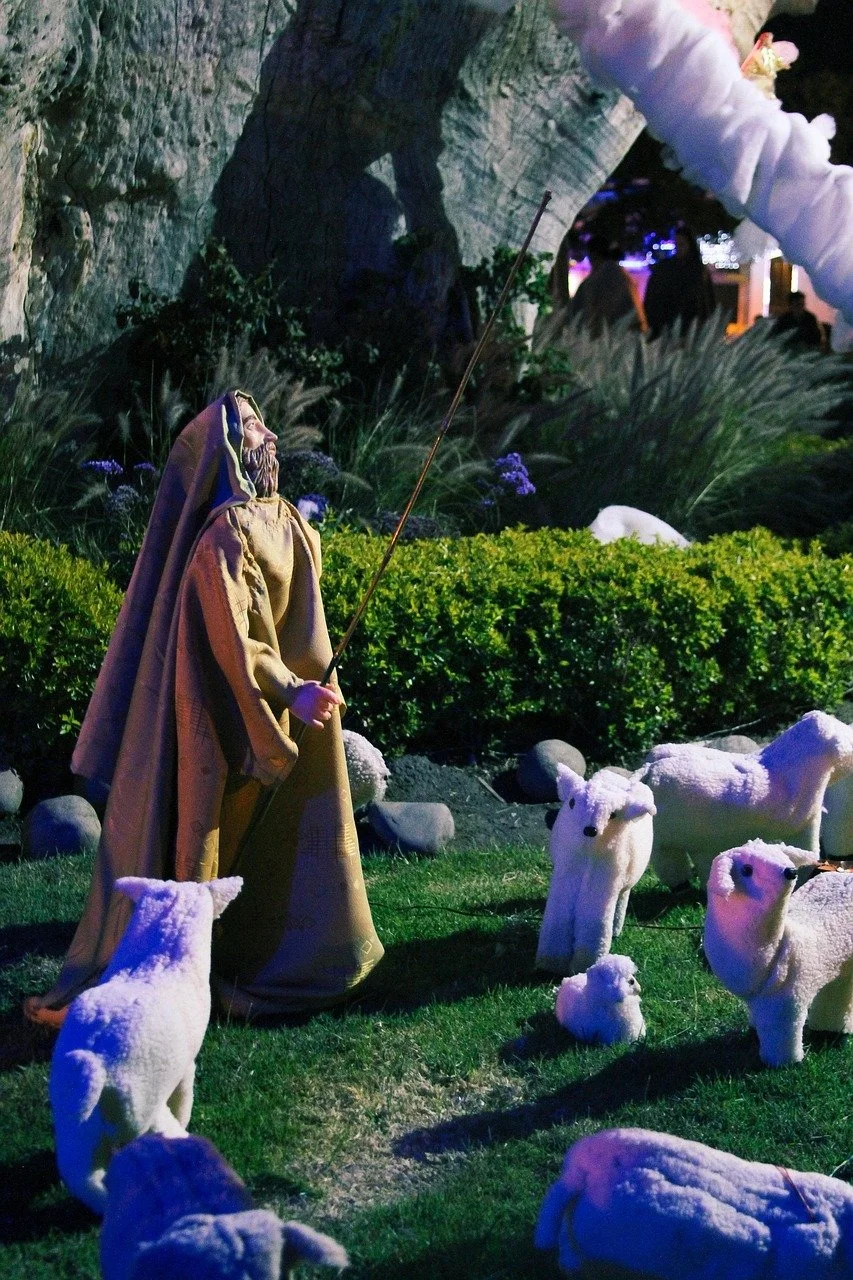
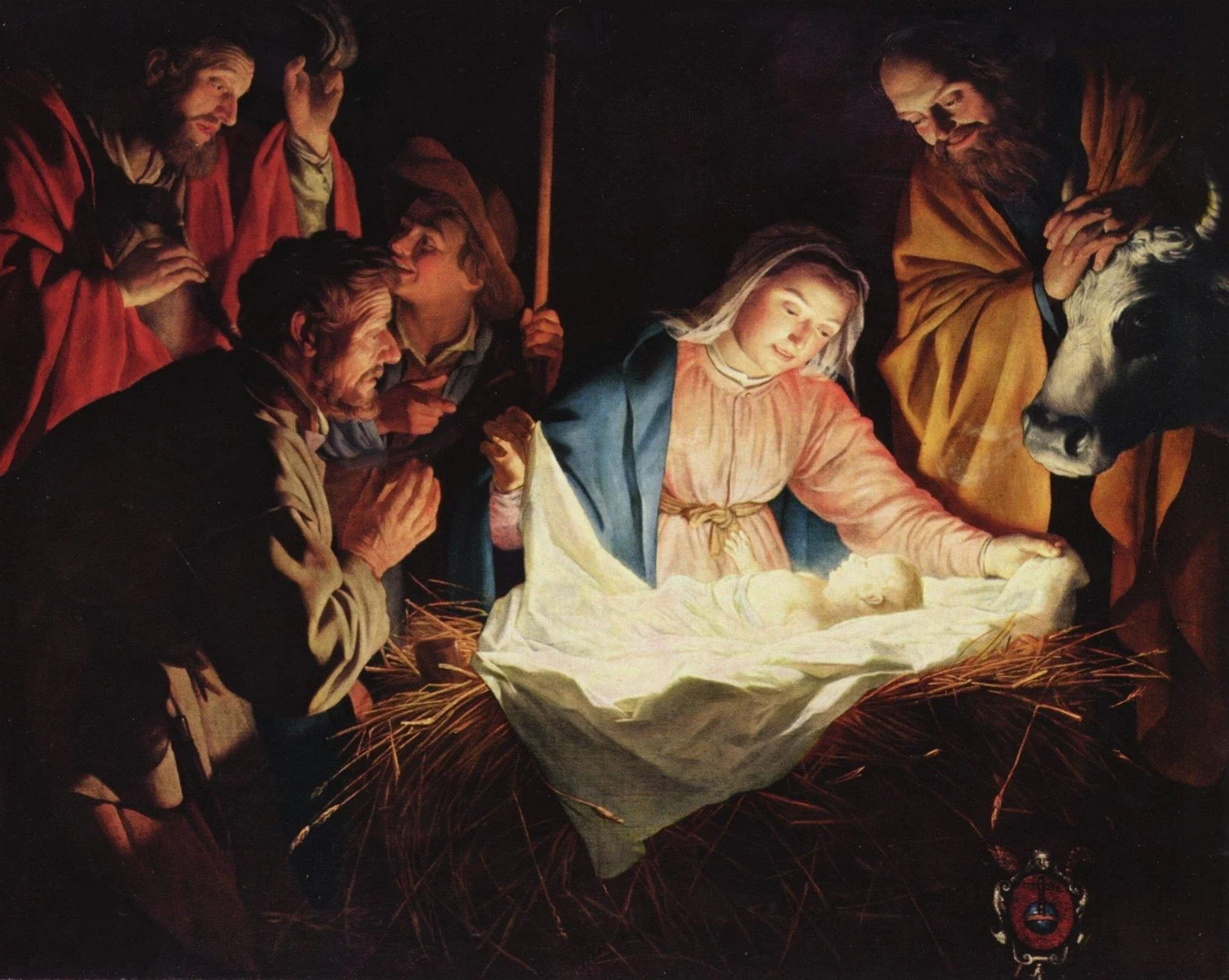
Image by Eduin Escobar from Pixabay

8 In the same region there were some shepherds staying out in the fields and keeping watch over their flock by night.
9 And an angel of the Lord suddenly stood before them, and the glory of the Lord shone around them; and they were terribly frightened.
10 But the angel said to them, “Do not be afraid; for behold, I bring you good news of great joy which will be for all the people;
11 for today in the city of David there has been born for you a Savior, who is Christ the Lord.
12 This will be a sign for you: you will find a baby wrapped in cloths and lying in a manger.”
13 And suddenly there appeared with the angel a multitude of the heavenly host praising God and saying,
14 “Glory to God in the highest,
And on earth peace among men with whom He is pleased.”
15 When the angels had gone away from them into heaven, the shepherds began saying to one another, “Let us go straight to Bethlehem then, and see this thing that has happened which the Lord has made known to us.”
16 So they came in a hurry and found their way to Mary and Joseph, and the baby as He lay in the manger.
17 When they had seen this, they made known the statement which had been told them about this Child.
18 And all who heard it wondered at the things which were told them by the shepherds.
19 But Mary treasured all these things, pondering them in her heart.
20 The shepherds went back, glorifying and praising God for all that they had heard and seen, just as had been told them.
— Luke 2:8-20 (NASB 1995)

Shepherding was a vital industry all throughout the Old Testament with numerous “big names” in Biblical history doing this difficult, outdoor, sometimes life threatening job. Abel, Abraham, Issac, Moses and David were all shepherds. Though the socioeconomic status of a shepherd had declined by the time of Jesus’ birth, the commitment of shepherds to care for their flocks still stood strong. They regularly faced predators that included wolves, lions, bears, hyenas, and leopards. They walked many miles to find feeding areas, as well as water. Shepherds were always vigilant. Even after the sheep were led into the fold for the night, a shepherd would place his body across the doorway to keep out unwanted predators. Apparently there were occasions where shepherds would mix their herds together for the evening to split the guarding shifts. In the morning they were easily able to sort the sheep by the sound of each shepherd’s voice.

It might be, on the night the angel came to these shepherds that was the case. Perhaps four or five shepherds had come together, and while a few of them slept the others kept watch over the sheep. I am pretty sure they were all wide awake when that angel showed up!

Image by Jeff Jacobs from Pixabay

There are many things we can learn from the shepherds that can help us in our season of sadness around the holidays. Let’s take a look.

1 - Shepherds were living life. These shepherds were doing their work. They were guarding their sheep: leading, guiding, feeding, watching, giving aid, tending to wounds, and certainly searching for any lambs that may have wandered away. Any one of those shepherds or shepherdesses (yes, women were shepherds too…talk about bad a**) could have been feeling sad. They could have been grieving the loss of a family member, the loss of a sheep (they were required to pay for any sheep lost or killed); they could have been struggling with illness, or blisters on their feet, or maybe they were discouraged because they really wanted to be a singer in the temple choir, but here they are tending sheep.

When we are dealing with sadness or grief, one of the best things to do, is keep living life. Go to work, meet with friends, get groceries, work on a closet, clean a bathroom; even the most mundane tasks that contribute to living life help us to process and get through. Listen to this quick snippet that reminds us why even making the bed can help.

2. Shepherds were brave and intelligent. Frankly I find it fascinating that shepherds were not seen as super heroes. I mean, beating off wolves, bears, an occasional lion or two had to be a tough job. These people were not weak, nor were they soft. They were weathered, strong, and probably wiry. They also had to have job intelligence, meaning they knew where to go to feed the sheep, where to find water, which in itself was a challenge in an arid climate. Sheep being what they are don’t like to drink from moving water, as it spooks them. They needed still water that wasn’t tainted with bacteria or other things that would make the sheep sick.
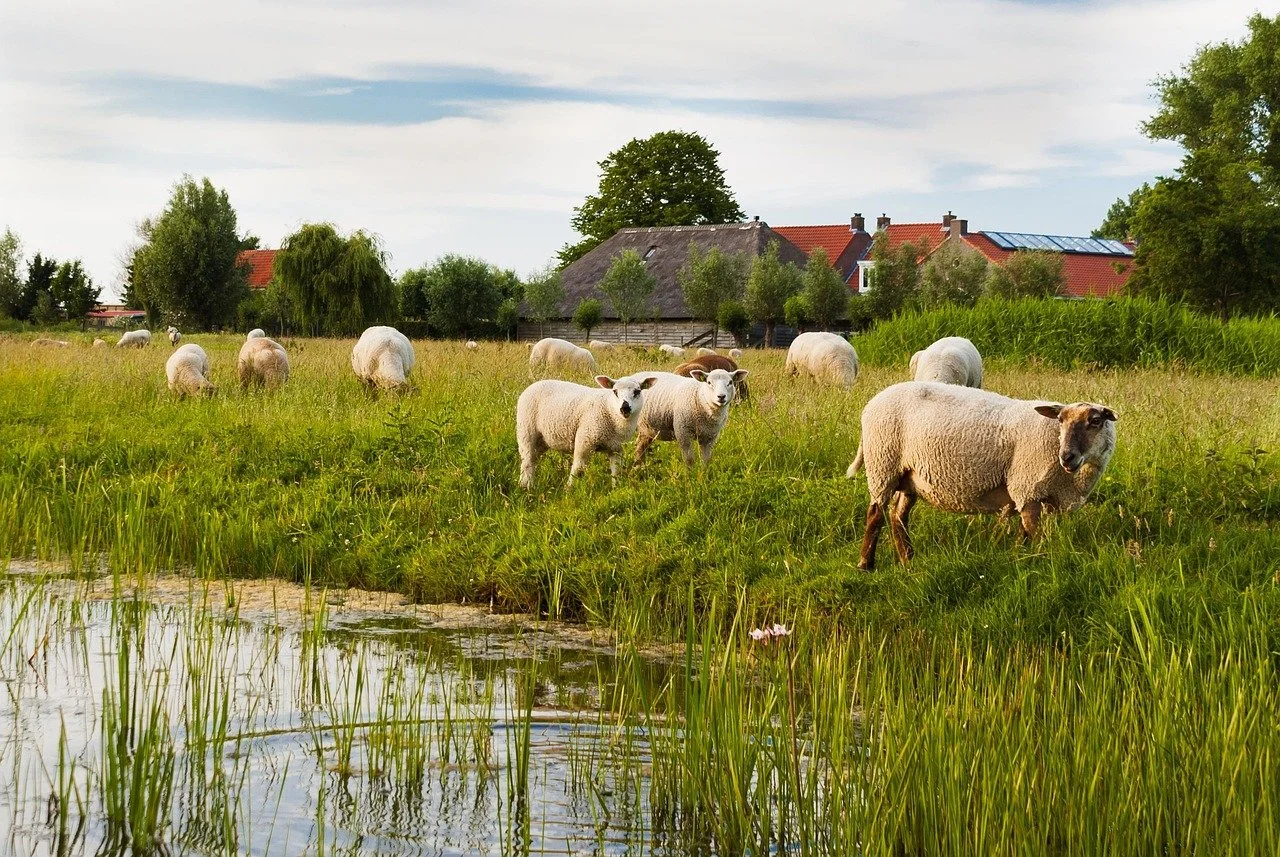
Image by Richard Haddeman from Pixabay

If you are working through a time of grief, learn what works for you to not only process that grief, but also the things that help you to continue living life. That will look different for every person. I personally like the “grief blanket” idea. I can allow myself to feel sadness for a time, and then get up and do other things. Maybe for you dealing with sadness is easier when you keep busy while also allowing your mind to remember why you are sad. Know what things will cause you to give in to the sickness of despair and depression, and find “safe water” to drink - like the water of God’s truth in His word.

3 - The shepherds were curious. After they got over the initial shock of seeing angelic beings, the shepherds high tailed it for Bethlehem to see the child of which they were told. In your sadness, be curious. Ask God what He wants you to learn about His character, yourself, or someone else. Be curious about Biblical accounts of people who dealt with grief and sadness. Read about Sarah, Hannah, Naomi, David, Nehemiah, Job (read the whole book to not only understand his grief, but know better the God who deals, reveals and restores,) and even Jesus as he is moved with compassion, and yes grief in the Gospel accounts.
Image by Ag Ku from Pixabay

4 - The shepherds were humble. I will acknowledge I am making an assumption about the shepherds’ humility. However, seeing the type of job they had and the lifestyle they lived I do not think they were the type of people who would put on airs and act as though they knew everything or had it all together. They really strike me as just regular, hard working people, that maybe were a bit smelly. Ha, ha. But they were real. The thing I love about this Biblical account is their unbridled enthusiasm. Why does that make them humble? Because they didn’t care about what people would think, they didn’t care that they were the best dressed, or clean, or had lots of money. They just wanted Jesus, and isn’t wanting Jesus all about humility?

Wanting the true Jesus of the Bible is about choosing to give up ourselves: our preconceived ideas, our knowledge base, our education, our upbringing, our trauma, our grief, our discouragement, our wealth, our status, our identity, and letting it all go to embrace the baby in the manger - the Wonderful Counselor, the Mighty God, the Everlasting Father, and the Prince of Peace.

For a child will be born to us, a son will be given to us;
And the government will rest on His shoulders;
And His name will be called Wonderful Counselor, Mighty God,
Eternal Father, Prince of Peace.
— Isaiah 9:6 (NASB 1995)


Embracing Sadness and Finding Joy: A Study of our Life in Jesus during the Holidays - Part 2: Remembering God's Faithfulness

If you are following along this December, I am doing a short series on the emotion of sadness during the holidays. Holidays for many are not the bright, merry celebrations we tend to hear about. Instead, they are filled with pain, hurt, anger, sadness and despair. The reasons are many, from the death of a spouse or child, to divorce, to the loss of a job or health, to the state of our country. Many people are struggling with feeling depressed and overwhelmed.

Image by Armando Orozco from Pixabay

The reason I decided to broach this topic was in part to share what I have learned about carrying sadness on a regular basis, but still being able to function and live a full and productive life. Sadness isn’t something that we necessarily need to be free of, but rather something we need to embrace and learn how to accept and manage.

Last week we looked at what embracing sadness looks like and explored a few thoughts on how we can manage our own sadness, or how we can help others who are feeling more down than usual at this time of year. Tips included: having a grieving blanket, physical activity, artistic pursuits, and allowing others to help carry the burden. Another suggestion was to remember the faithfulness of God, and that is what we are going to look at this week.

The Old and New Testaments of the Bible are full of examples of God’s faithfulness. If we are in a particular dark state of mind we might read some of the Biblical accounts and only see God’s wrath, judgment and impatience, but as with all things if we look only for the darkness, we will only encounter darkness. True freedom lies in following and embracing the light of Christ.

Image by Daniel Reche from Pixabay

1 In the beginning was the Word, and the Word was with God, and the Word was God.
2 He was in the beginning with God.
3 All things were made through him, and without him was not any thing made that was made.
4 In him was life, and the life was the light of men.
5 The light shines in the darkness, and the darkness has not overcome it.
6 There was a man sent from God, whose name was John.
7 He came as a witness, to bear witness about the light, that all might believe through him.
8 He was not the light, but came to bear witness about the light.
9 The true light, which gives light to everyone, was coming into the world.
10 He was in the world, and the world was made through him, yet the world did not know him.
11 He came to his own, and his own people did not receive him.
12 But to all who did receive him, who believed in his name, he gave the right to become children of God,
13 who were born, not of blood nor of the will of the flesh nor of the will of man, but of God.
14 And the Word became flesh and dwelt among us, and we have seen his glory, glory as of the only Son from the Father, full of grace and truth.
15 (John bore witness about him, and cried out, “This was he of whom I said, ‘He who comes after me ranks before me, because he was before me.’”)
16 For from his fullness we have all received, grace upon grace.
17 For the law was given through Moses; grace and truth came through Jesus Christ.
18 No one has ever seen God; God the only Son, who is at the Father’s side, he has made him known.
— John 1:1-18 (ESV)

God provides everything that we need to live life in this dark world, but the most important thing He provided was the Light, the life of His Son Jesus Christ. Try to imagine living in a world with no light. How would you be able to live life? There is the rather comedic aspect of running into walls, crashing into cars, and stepping on Legos in the living room, but it goes much deeper than that. Light is essential for plants to grow, which in turn produce oxygen, which gives us the ability to breath. Light is essential for our mental health. Take it from a sufferer of Seasonal Affective Disorder, sunlight is absolutely necessary for me to feel human. Light is also an important element in the deterrence of crime, otherwise, why would so many business owners leave lights on around their property?

Probably the most important aspect to light is that it lets us see. There is the physical aspect of sight which keeps us from running into things and helps us to recognize things and people. It also allows us to learn and study. Similarly, spiritual sight, given to us through the Holy Spirit, allows us to know God and His Word better. Abiding in the light enables to turn from the darkness and recognize God’s constant faithfulness.

“The Rock! His work is perfect, For all His ways are just; A God of faithfulness and without injustice, Righteous and upright is He.
— Deuteronomy 32:4 (NASB 1995)
Your lovingkindness, O Lord, extends to the heavens, Your faithfulness reaches to the skies.
— Psalm 36:5 (NASB 1995)
He will cover you with His pinions, And under His wings you may seek refuge; His faithfulness is a shield and bulwark.
— Psalm 91:4 (NASB 1995)

I find this last verse interesting. “His faithfulness is a shield and bulwark.” We all know what a shield is, but what is a bulwark? Websters online dictionary defines bulwark as: a solid wall-like structure raised for defense; a seawall; a strong support or protection. If God’s faithfulness is a shield and bulwark, then that means His faithfulness is supporting and protecting us. Might it also mean, that when we choose to remember His faithfulness, it helps protect our minds from spending too much time in the darkness? Perhaps recalling God’s faithfulness is the best way to protect ourselves from the unbridled pain and despair we can feel when we are grieving.

In other versions of the Bible instead of the word, bulwark, or rampart the word is buckler. A buckler is a small shield and to my understanding it was a shield that was used during hand to hand combat. It was a shield that was held close to the body, and could also be maneuvered to block the enemy’s strikes. Whether you like the idea of a strong wall of defense or a small shield used in daily battle with the enemy, the reality is both are true. God is our defense, and His faithfulness allows us to extinguish the flaming arrows of despair, bitterness and hatred that Satan sends our way.

As I said in my first post, sadness is an emotion God gave us and by embracing it we allow ourselves to process those strong feelings in a healthy way, but if we allow ourselves to only see the sadness, and not remember the joy, or the laughter, we risk becoming shrouded in a darkness that might lead to a place of no return.

So, how do we remember God’s faithfulness when we are feeling overwhelmed by the sad? Let’s look at a few ideas.

1 - Pray. Ask God to help you to remember His faithfulness. Perhaps you prayed for something specific and that prayer was answered. Maybe you needed direction regarding a decision and He gave it to you. Remember God is not just faithful in the big things, He’s also faithful in the tiny details. Ask Him to help you remember those times and write those things down.

I did this recently, and God brought to my mind His faithfulness to me as a child. Growing up in a Bible believing church, I was fortunate to be surrounded by Biblical teaching, but hearing God’s word, does not necessarily mean we will follow Him. When I was very young, perhaps in kindergarten or 1st grade I had a Sunday School teacher named Miss Draper. An older, single woman, she was all vim and vinegar, but she genuinely cared about her students. I remember she took a trip to Europe. When she came back she had gifts for each of the children in her class. When I opened mine it was a little chalet of sorts. The roof opened and from within came the most beautiful music. Her gesture of kindness set me on a road of wanting to know Jesus. Oh what the love of a person living in obedience to Christ can do to change the world.

Image by Steve Haselden from Pixabay

2 - Read Scripture. I know these suggestions are not anything new, but how much more we need to be seeking our precious Lord, when we are in the throes of sadness and heartbreak. Scripture is full of examples of God’s faithfulness. Think of His provision for Adam and Eve’s nakedness after the fall (Genesis 3:21); or what about His faithfulness to Noah and His family during a catastrophic, world wide flood (Genesis 7:23); and don’t forget the restoration He gave to Job after allowing Satan to take everything away (Job 42:10-17); and one of my favorite accounts of His lovingkindness was to Ruth, a woman not even a Jew, given a place in the lineage of Jesus our King of Kings (Ruth 4). Start to finish, the Bible is a ribbon of God’s faithfulness, provision, love and intervention on the behalf of humanity, the greatest of these being Christ’s entry into our world as a baby.

mage by Ingela Skullman from Pixabay

3 - Look for God’s faithfulness and provision in the day to day. All may seem bleak until we start exercising the eyes of our hearts. Our physical eyes might only see the darkness; the pain, the despair, the unknown, but our spiritual eyes can see things beyond this physical world.

15 For this reason I too, having heard of the faith in the Lord Jesus which exists among you and your love for all the saints,
16 do not cease giving thanks for you, while making mention of you in my prayers;
17 that the God of our Lord Jesus Christ, the Father of glory, may give to you a spirit of wisdom and of revelation in the knowledge of Him.
18 I pray that the eyes of your heart may be enlightened, so that you will know what is the hope of His calling, what are the riches of the glory of His inheritance in the saints,
19 and what is the surpassing greatness of His power toward us who believe. These are in accordance with the working of the strength of His might
20 which He brought about in Christ, when He raised Him from the dead and seated Him at His right hand in the heavenly places,
21 far above all rule and authority and power and dominion, and every name that is named, not only in this age but also in the one to come.
22 And He put all things in subjection under His feet, and gave Him as head over all things to the church,
23 which is His body, the fullness of Him who fills all in all.
— Ephesians 1:15-23 (NASB 1995)

Paul’s prayer pertains to us when we are grieving. He prays that we would see with the eyes of our hearts so that: we would know the hope of His calling, the riches of the glory of His inheritance in the saints, and what is the surpassing greatness of His power toward us who believe. Look and see.

Image by Adrian from Pixabay

4 - Treasure thanksgiving. Having just celebrated Thanksgiving a few weeks ago here in the U.S. it is good to take this idea into the Christmas holidays, especially when we are sad. Giving thanks is not only a mood lifter, but it forces us to refocus our mind from the darkness to the light. Start small if that is all you can manage. Thank God for a warm bed, a hot shower, food, clean water, and a place to live. Even if all of these were striped away from us, we could still be thankful for Him; for His presence; for His character; for the fact that He does not change. Is it always easy to give thanks? No. But it is desired by our Creator.

in everything give thanks; for this is God’s will for you in Christ Jesus.
— 1 Thessalonians 5:18 (NASB 1995)

I hope this week you will find many moments to remember God’s faithfulness.

A Year of Waiting - Anticipate - Part 2: Waiting for Hope

The time between the Old Testament and the New Testament is often referred to as the intertestamental period. It is a silent period of over 400 years where there was no direct revelation from God and nothing was being written as far as future prophesies. This does not mean there weren’t plenty of events taking place with regard to the people of Israel. The last we hear from Malachi closing out the Old Testament was written during the time of Ezra and Nehemiah when the rebuilding of the wall of Jerusalem was taking place. (Info gleaned from this article from Focus on the Family - Canada - What Happened Between the Old and New Testaments by Subby Szterszky.)

Image by Myriams-Fotos from Pixabay

By the time of Christ’s birth the Jewish people were ready for a Messiah. They needed a sign. They wanted to hear God’s voice speaking to them once again as a nation. They longed for hope, but for many of them that hope did not come in the form of a babe born in a stable in Bethlehem…even though it was prophesied in their very own writings from the Old Testament. However, there were a few who faithfully waited with anticipation for what God was going to do. One of these was a man named Simeon.

25 And there was a man in Jerusalem whose name was Simeon; and this man was righteous and devout, looking for the consolation of Israel; and the Holy Spirit was upon him.
26 And it had been revealed to him by the Holy Spirit that he would not see death before he had seen the Lord’s Christ.
27 And he came in the Spirit into the temple; and when the parents brought in the child Jesus, to carry out for Him the custom of the Law,
28 then he took Him into his arms, and blessed God, and said,
29 “Now Lord, You are releasing Your bond-servant to depart in peace,
According to Your word;
30 For my eyes have seen Your salvation,
31 Which You have prepared in the presence of all peoples,
32 A Light of revelation to the Gentiles,
And the glory of Your people Israel.”
33 And His father and mother were amazed at the things which were being said about Him.
34 And Simeon blessed them and said to Mary His mother, “Behold, this Child is appointed for the fall and rise of many in Israel, and for a sign to be opposed—
35 and a sword will pierce even your own soul—to the end that thoughts from many hearts may be revealed.”
— Luke 2:25-35

I want to look more closely at this man whose story is only mentioned in the book of Luke. What was it about this Jew that made him different from many other Jewish men in his time?

1 - Like our friend Zacharias and his wife, Elizabeth in Luke 1, Simeon was righteous and devout. Some commentaries believe he was a priest in the temple, thus his ability to take Jesus from Mary and Joseph and raise him as a blessing to God. There is something to be said for being a righteous person. Zacharias and Elizabeth were described as, “walking blamelessly in all the commandments and requirements of the Lord.” (Luke 1:6) The word “devout” used to describe Simeon, would portray a similar commitment to Zacharias and Elizabeth’s walking blamelessly.

Image from Pixabay

2 - Simeon was looking. He wasn’t passively waiting, He was looking. He was looking for the consolation of Israel. The word consolation can be described as giving comfort to; being compassionate; counseling; and giving relief to. Simeon was waiting for God. He was waiting to see how God would provide His compassion to Israel, and what sort of relief it would bring to them. In my own opinion, I think Simeon believed, and what I mean by that is He trusted God.

3 - The Holy Spirit was upon Simeon. We do not know by this short character sketch in the Scripture whether Simeon had the Holy Spirit upon him for his whole life, or if the Spirit came on Him just for this particular incident. We do know the Holy Spirit revealed to Simeon that He would not die before he had seen the “Lord’s Christ.” The name Christ meant the chosen or anointed one. Simeon was meant to see Jesus, the Messiah.

4 - Simeon moved with the Spirit. The Holy Sprit led the man into the temple at the exact moment Mary, Joseph and baby Jesus came into the temple to register their first born. This was done according to the law.

5 - He took the baby Jesus into his arms.

6 - He blesses God by stating what God had done for him, which was to let him see the salvation of Israel before he died. We do not know if Simeon was a young, middle aged or old man and we do not need to know. God was faithful in allowing him to see the Messiah as He had promised him.

Simeon was familiar with the Old Testament prophesies. He knew that the baby Jesus was the One that God had promised. He also knew that this salvation was not just for the Jews, but for the Gentiles as well. This child would be a light of salvation to the Gentiles and the glory of Israel.

7 - He speaks a prophecy to Mary. This was a difficult prophecy for it told of Jesus’ controversial ministry; that it would cause many to rise and fall and that He would be opposed to the extent that Mary’s own heart would be pierced with the outcome.

We learn these things about Simeon by reading the passage. There are many things we do not know about this man, but we can learn a lot from studying his example in these eleven verses by asking ourselves the following questions:

Am I an upright person? Am I, like Simeon, righteous and devout? With so many ideas and terms being redefined these days I think it is important to remember being righteous looks much different to God that it does to fallen humans. However, if I am seeking Him, reading His word, and listening to His Holy Spirit’s voice in my life I have a much better chance of being righteous in God’s eyes.

Image by andreas N from Pixabay

The term devout is rarely heard in our current society, but it simply means devoted. Am I devoted to God’s truth? Am I devoted to obeying His truth to the best of my ability? Amy I devoted to my spouse? Am I devoted to keeping my heart and mind pure, whether married or not? Am I devoted to shining the light of Christ in this dark world?

Am I looking? Am I like Simeon in that I am looking for Jesus? Am I looking to see where He is at work? This one has been hard for me. I get so caught up in life and in the overwhelm that I neglect to see all He is doing, and all the ways He is still actively involved in my life and in the world. I believe this is where the act of thanksgiving is important.

Image by CJ from Pixabay

In addition, am I passively looking or am I anticipating? Am I anticipating where God is going to intervene, or where He is going to perform a miracle, or where He is going to bring about something I never thought possible. He is God, and He is trustworthy.

Am I familiar with the Holy Spirit, His work and His leading? For some reason it seems many in the Christian community have forgotten how to wait on the Holy Spirit, and have moved away from the truth of His revelation in our lives. He is just as much an active part of the triune God head as the Father and the Son. Indeed, in our lives He is our closest companion. He knows our hearts, our desires and our unspoken prayers. He is the One who works out Christ’s salvation, and sanctification in our lives. Perhaps it is time to reacquaint ourselves with this ever present part of God’s person.

Have I taken the baby Jesus into my arms? Have I honestly made a choice to believe that Jesus, the Son of God, came as a vulnerable baby, born to a virgin, in a tiny town called Bethlehem? Do I believe that He grew into a man, lived among and taught a rag tag band of disciples, that He is the Way, the Truth and the Life? Have I embraced the fact that we are all sinners, and because of that sin Jesus, in obedience to His father, died on a cross as the perfect, once for all sacrifice? Do I cradle the reality to my breast that He rose from the dead and walked out of the grave, and that whoever calls on His name and believes will be saved?

Image from Pixabay.

Do I bless God? If you have ever thought about this idea of blessing God, then you have probably asked the question, how do I do that? It is simple, offer praise and thanksgiving to Him for all that He is and all He has done. Even if you are struggling in a dark place right now, you can bless God. You can identify His character by looking at scripture: He is good, just, faithful, compassionate, righteous, all knowing, forgiving, merciful, full of grace, creative, glorious….the list is endless. Even when things are chaotic we can bless God by taking time to thank Him, even for the smallest pleasures like a hot shower, food, blankets, clean air to breath….

Do I speak truth into other people’s lives? Simeon prophesied, but not all of us have the gift of prophecy. but we all have the choice to speak into other people’s lives the truth of God’s word in the form of encouragement, admonition, and even rebuke when it is called for. I think we can speak encouragement much more regularly than we do. Admonition and rebuke need to be done with love and it is best to think it through and really pray about the situation before proceeding. However, this is an important part of being in the body of Christ and probably isn’t done as often as it should be.

As I finish this post, we are winding down to Christmas. Tomorrow is the day. All the waiting and preparing and anticipating will be past tense in a matter of hours and some of us will be feeling a bit blue that it is over. As we age, we also begin to think about the what ifs. What if we don’t make it to next Christmas? Will everyone still be here? What will the world look like by the end of next year? But God…

To anticipate is to look forward to, and that means I have hope. I am choosing to look forward with trust in the Holy God for all that He will do!

Merry Christmas, and Happy New Year. See you in 2025!

Thinking About Christmas - A Closer Look at Scripture: Part 3

I had a bit of a busy week last week and was unable to get this faith post written. I apologize for my lack of consistency. The holidays are always busier and even in the midst of a pandemic, that is still true. This week is going to go by in a flash and I really can’t believe Christmas is on Friday. Where does the time go?

Image by anncapictures from Pixabay

Image by anncapictures from Pixabay

This speedy passage of time can be overwhelming and it can be very hard to find the time to take a breath and truly think about or dwell on the real meaning of Christmas. It is easy to lose Jesus in the midst of buying presents, baking cookies, decorating and planning family gatherings. I know they are saying to not gather, but I think most of us are going to still have at least a small get together. My daughter’s and I are already very regularly around each other, so it will be the six of us on Christmas morning for brunch.

Let’s take a final look at Isaiah 9:6-7.

6 For to us a child is born,
to us a son is given;
and the government shall be upon his shoulder,
and his name shall be called
Wonderful Counselor, Mighty God,
Everlasting Father, Prince of Peace.
7 Of the increase of his government and of peace
there will be no end,
on the throne of David and over his kingdom,
to establish it and to uphold it
with justice and with righteousness
from this time forth and forevermore.
The zeal of the Lord of hosts will do this.
— Isaiah 9:6-7 (ESV)

Today we are going to look at the final two names for this Child who is born to us; this Son who is given to us.

If you don’t remember we had been looking at how each of these names reveals the fully God, fully man characteristics of Jesus. We looked at Wonderful Counselor and Mighty God last time. If you need a refresher you can go back to that post here.

Image by 4144132 from Pixabay

Image by 4144132 from Pixabay

“…Everlasting Father…”

The word everlasting is fairly easy to define. It means, lasting forever. Webster’s Online Dictionary defines it as, “…lasting or enduring through all time.” Other words that mean the same thing include, ceaseless, eternal, dateless, deathless, immortal, timeless and imperishable.

The word father is also fairly self explanatory; it means, “…a man who has begotten a child, one who originates or institutes, or to care or look after…”

We probably can easily understand the God aspect of Jesus as everlasting, since He Himself is part of the Godhead and the triune God has no beginning or end. The Father, Son and Holy Spirit are timeless and eternal. The thing that might stump us a little bit is the human concept of fatherhood, when it comes to our Savior. Jesus never married, or had relations that would have produced a physical offspring. How, then, can we call Him father?

Jesus exemplifies the concept of fatherhood in three ways:

1 - He has begotten children through His work, death and resurrection. Those of us who believe in His person and what He did are spiritually His children. We are called the sons of God and since Jesus is God, we are His sons and daughters.

For all who are led by the Spirit of God are sons of God.
— Romans 8:14 (ESV)

2 - Jesus instituted the way of salvation. He originated our rebirth. Once we become a Christ follower we are part of the family of Christ followers.

18 So then, as through one offense the result was condemnation to all mankind, so also through one act of righteousness the result was justification of life to all mankind. 19 For as through the one man’s disobedience the many were made sinners, so also through the obedience of the One the many will be made righteous.
— Romans 5:18-19 (NASB)

3 - Jesus cares for us, just as a father cares for his child. Obviously, earthly fathers can fall far short of what a father should be. Earthly fathers can be neglectful, removed, uncaring and abusive. How good to know, our Lord Jesus is not that kind of parent. Our Everlasting Father is one that cares for our good and desires only what is best for us. He makes the tough calls to sometimes let us wander in our own selfishness for the purpose of directing us back to Him. He protects and He offers guidance, and it is only our choice that keeps us from His gentle and loving arms.

16 Now may our Lord Jesus Christ Himself and God our Father, who has loved us and given us eternal comfort and good hope by grace, 17 comfort and strengthen your hearts in every good work and word.
— 2 Thessalonians 2:16-17 (NASB)
Image by RÜŞTÜ BOZKUŞ from Pixabay

“…Prince of Peace…”

In a world divided by hatred and marred by sin, it is good to know that Jesus is the Prince of Peace. The word prince is a title given to one of royal blood. Webster’s defines the word as, “…monarch, king, ruler of a principality or state, member of a royal family - especially the son of a sovereign…” Jesus is all this and more. He is the King of Kings and the Lord of Lords. He is the ruler over all creation. He is the Son of God.

The word peace is defined by Webster’s as, “…a state of tranquility or quiet; a state of security; freedom from disquieting thoughts or oppressive emotions; harmony in personal relations…” Are you living in a state of tranquility? Are you hounded by oppressive thoughts and emotions? Are you experiencing harmony in your relationships?

The phrase says that Jesus is the Prince of Peace. He is the ruler of peace. He is the one who is able to bring about complete harmony, quiet and tranquility, even in the midst of the most turbulent storms of life.

These things I have spoken to you so that in Me you may have peace. In the world you have tribulation, but take courage; I have overcome the world.”
— John 16:33 (NASB)


Jesus knew we would have tribulation. He knew this life would be hard. When sin entered the world it completely changed the relationship we were supposed to have with our creator. It changed our relationship with creation itself. That is why Jesus came. To reunite us to the Almighty and right our relationship with what He created. Only Jesus can give us this peace. Only the prince of peace can calm the torrential storms of life.

Looking quickly at verse 7 of Isaiah 9, we can see that this Child; this Son’s kingdom will never end. He will rule over all, and His kingdom will be one of peace. While this kingdom is not established yet on this earth, we know a day is coming, when all will come under the headship of the Lord Jesus Christ. It will be established and it will be upheld forever, because of the zeal of the Lord. This is something God is excited about, and we can be too.

The baby child that we celebrate on Christmas day is this King. The Wonderful Counselor. The Mighty God. The Everlasting Father. The Prince of Peace.

Merry Christmas and God bless us, everyone!


Thinking About Christmas - A Closer Look at Scripture: Part 2

Last week I started looking at an Old Testament passage that is considered part of the Messianic prophecy. Scripture passages in the Old Testament that point to the coming Messiah are not unusual and Isaiah 9;6-7 is one of the more famous pieces.

For to us a child is born,
to us a son is given;
and the government shall be upon[d] his shoulder,
and his name shall be called
Wonderful Counselor, Mighty God,
Everlasting Father, Prince of Peace.
7 Of the increase of his government and of peace
there will be no end,
on the throne of David and over his kingdom,
to establish it and to uphold it
with justice and with righteousness
from this time forth and forevermore.
The zeal of the Lord of hosts will do this.
— Isaiah 9:6-7 (ESV)

Last week I focused on the first three lines of verse 6 talking about the Child of Mary and the Son of God. I also mentioned how the phrase, “…and the government shall be upon His shoulder…” referred to the authority Jesus was given by the Father and how, when at last, all others have come under that authority, Christ Himself will then subject Himself to the Father, so that God can be all in all.

This week i want to continue by looking at the rest of verse 6. When it comes to the names of God, we could easily spend a long time, looking at what each one means and how those names apply to us as His created beings. For today, I just want to look at two of the four mentioned in this verse.

“…and His name shall be called…”

Image by Gerd Altmann from Pixabay

Image by Gerd Altmann from Pixabay

The thing that struck me about this phrase is that it has a forward look to it. Isn’t Christ already called these names? Since Christ has been with the Father from the beginning of our time and most likely from times time before that, wouldn’t all of these names already apply to Him? I think the answer lies in understanding what becoming human did to Christ.

Taking on human form, was a choice to limit Christ’s Godly abilities. Think about his very birth. This God-Man, became embryonic cells inside His mother’s womb. He spent nine months in the darkness of that womb and at the end of His life He spend three days in the darkness of a tomb. During His earthly life He knew hunger, fatigue, sadness and pain. He felt the hurt of betrayal and the stab of thorns and nails. When He was with His Father in the Heavenly realm He was perfect, powerful and a present part of the triune God. When he became a man he suddenly felt dirty and distant from His holy family.

This dichotomy of being fully God and fully man leads us right into the list of names given in the passage. I want to look at two of these this week and two next week.

“…Wonderful Counselor…”

Image by Tiyo Prasetyo from Pixabay

Image by Tiyo Prasetyo from Pixabay

The word wonderful is an adjective. It describes something, such as when I say, “That was a wonderful performance.” According to Webster’s dictionary wonderful means, “…marvelous, astonishing, staggering, stunning, unusually good..” How perfect are these words to describe our God. There is no one as marvelous or good as the Creator. There is no beauty on this earth that can compare to the staggering and stunning beauty of a Holy, Perfect being like Jehovah.

When we use the word counselor, it brings two ideas to mind. The first, is that of a mental health professional who helps people work through their emotional and relational issues. The second image is a lawyer, or a person who gives legal advice and aid. These both convey human professions, yet they fully apply to the God-Man.

Jesus is one we can turn to when life is beating on us. He always listens with an attentive ear and sound advice. He truly understands the human condition and knows that all things are meant to bring us back to center…His center. He is the marvelous counselor.

Jesus is also the perfect lawyer. He knows exactly what our sentence is and He also knows how to totally abolish our punishment. He knows when we are standing before that jury of demonic beings, he need only say, “She is washed in my blood,” and the judgment is done. There is no prosecutor who will be able to argue against us, when we have Jesus in our corner. He is the astonishing counselor.

The summary then is this; Jesus is wonderful, because He is fully God. He is a counselor, because He is fully man.

“…Mighty God…”

Image by Stefan Keller from Pixabay

Image by Stefan Keller from Pixabay

Here again we have two words. One is a descriptor and the other is the object being described, or in this case the who. Mighty, according to Webster’s means, “…possessing might, powerful, accomplished or characterized by might, imposing in extent or extraordinary.” While it is true that men and women can be described as mighty, it is more likely the word would be used in tandem with a being beyond our infinite human understanding.

The word God is described in the dictionary as, “…a Being perfect in power, wisdom, and goodness who is worshipped as creator and ruler of the universe.”

Turn to Me and be saved, all the ends of the earth;
For I am God, and there is no other.
— Isaiah 45:22 (NASB)

We can see how the name, Mighty God, fully reveals Christ’s Godliness, but how does it describe His humanity? I believe the revelation lies in the contrast. Only a being who is mighty, could transform Himself into that which is not. It is only a Mighty God, who could change into a fully human man and still be fully God.

This may seem a bit confusing, but it is in the mystery of those things we do not understand, that the beauty of faith and belief truly reveals itself.

Next week we will look at the names, Everlasting Father and Prince of Peace. Until then, I hope that this will help to remind you of our blessed Savior’s birth and why it is so important to keep that focus not just at Christmas, but all year long.

Have a great weekend!


Thinking About Christmas - A Closer Look at Scripture

Happy Sunday, everyone. I don’t usually post on Sundays, but my schedule has been all over the place, so I figured I would post, when I get something out there for you to read.

I was going to keep plodding through my series on Our Unseen Enemy, but then I began to feel that we needed to take a break from that, to put our minds, and focus on the beauty surrounding the birth of Christ in the Scriptures. I know that many people celebrate Christmas without any regard for the birth of Christ. In fact, there are some movements to do away with the greeting of “Merry Christmas”, because we are a nation of mixed religions and belief systems. I would hope that those who desire to do away with the Christ in Christmas would at least take a moment to think about what they are asking. It is the case, in fact, that if I must tolerate and have respect for the many religions and thoughts systems that do not honor Christ, then ought not the same be done towards those of us who still choose to believe in the Christ of Christmas? I am not going to spend any more time on that, but I am going to encourage everyone who takes the time to read my blog, to extend the kindness, goodness and gentleness of our Lord Jesus to everyone you come into contact with at this time of year. Many are suffering and dealing with tragedies and brokenness and we are to be the light of the world.

Image by congerdesign from Pixabay

Image by congerdesign from Pixabay

I came across a challenge on Instagram put out by Lauren Ash Lambert, a Faith, Fashion and Lifestyle influencer, who also does videos which are posted on Instagram. The challenge was called, Writing my Way to Christmas and is basically a list of scriptures in both the Old and New Testaments covering the prophecies and actual story of the birth of Christ. I thought it would be a great thing to do. My only problem, I haven’t gotten past the first day. I got so wrapped up in the first scripture and have just been spending time each day savoring that, that I have not gone any further. That’s when it came to me, to do a few blog posts on these beautiful Words of God.

The passage I want to look at first is Isaiah 9:6-7. Just like we do in my Mulling It Over series, I want to delve into these verses and take them apart piece by piece.

For to us a child is born,
to us a son is given;
and the government shall be upon his shoulder,
and his name shall be called
Wonderful Counselor, Mighty God,
Everlasting Father, Prince of Peace.
7 Of the increase of his government and of peace
there will be no end,
on the throne of David and over his kingdom,
to establish it and to uphold it
with justice and with righteousness
from this time forth and forevermore.
The zeal of the Lord of hosts will do this.
— Isaiah 9:6-7 (ESV)

You may recognize this passage from Handel’s Messiah. Turn up your speakers if you listen to it and imagine the angles in heaven singing this on the night of His birth.

For to us…

This announcement was made to us. To every single individual on this little, blue and green gem of a planet. Why is this important? Because if this announcement was made to the angels, or to some other entities that might be out there some where, it would be meaningless. We are God’s created beings. It is us, He chose to have a relationship with and place His image upon. This three word phrase is mentioned twice. I believe something twice mentioned is worth listening to twice as close.

…a Child is born…

Image by Gerad Noble from Pixabay

Image by Gerad Noble from Pixabay

I chose to use the English Standard Version in this post, but I want to point out, in the New American Standard translation, there are several words that are capitalized. I will be showing those as capitals in the subtitles. I think it is important to look at several translations of the Bible when you are doing a more in depth study to see the different nuances of each.

The capital letter on Child causes me to believe this child is one of great importance. All of us, when referred to by our proper names, receive a capital letter at the beginning of our names. We all were taught that proper nouns, names of people, places, days of the week, months and so on, all begin with a capital letter. I am not sure why these details vary from one translation to the next, but this passage has long been looked at by theologians as a Messianic prophecy.

…a Son is given…

Once again, we see that Son is a proper noun. The belief is, both Child and Son, are referring to Jesus. Jesus, the Child of Mary; Jesus, the Son of God. He is fully God, but also fully man. The blessing in this phrase is that the Son is given. If it is the case that the Son is given, we need to ask ourselves, why was He given? Revisiting a familiar verse, will remind us of the why.

16 “For God so loved the world, that He gave His only Son, so that everyone who believes in Him will not perish, but have eternal life.
— John 3:16 (NASB)

…and the government shall be upon His shoulder…

My NASB version gives several cross references for this phrase. What does it mean, exactly, that the government will be on His shoulder?

18 And Jesus came up and spoke to them, saying, “All authority in heaven and on earth has been given to Me.
— Matthew 28:18 (NASB)

First of all, it means that Jesus was and is, the complete authority. This authority was placed upon Him by His heavenly Father. The Father did this, so His Son would have the final say.

25 For He must reign until He has put all His enemies under His feet.
26 The last enemy that will be abolished is death.
27 For He has put all things in subjection under His feet. But when He says, “All things are put in subjection,” it is clear that this excludes the Father who put all things in subjection to Him.
28 When all things are subjected to Him, then the Son Himself will also be subjected to the One who subjected all things to Him, so that God may be all in all.
— 1 Corinthians 15:25-28 (NASB)

Second, this phrase, “…and the government shall be upon his shoulder…” reveals that he alone will have the ultimate power over his enemies, who will all be subject to Him; even the most final enemy of all, death.

Take a look at verses 27 and 28 of the 1 Corinthians passage. The Son, who was given the authority and responsibility by His heavenly Father, recognizes His place and subjects Himself, “..so that God (the Father), may be all in all.”

You have probably heard the quote, “With great power, comes great responsibility.” Truly that applies to our Savior. He took on this responsibility to save us.

There is so much in these verses, and I don’t want this post to get too long, so I am going to stop there and pick it up again in a few days. It is my hope that taking a look at these verses will remind you of the hope that you have, no matter what your current circumstances are.

Have a great day!


The Light of Joy

One of the things about the Christmas season that I get very excited about is lights. I love the look of houses outlined in tiny specks of shimmering light, whether they are white, green, red or blue, I love them all. I enjoy driving home from somewhere and seeing how many houses are embellished with twinkling splendor. Now don’t judge me, but I also enjoy seeing Christmas trees inside people’s homes. It’s not that I am being nosy. After all, don’t we put our trees in windows for that purpose, so the outside world can see our beautiful displays of light?

Pixabay

Pixabay

What is it about light that we so enjoy? I know that most of us would rather be out and about when it is day time. We enjoy when morning comes and feel loss at the slipping away of light as night time takes over. I personally have to convince myself that darkness is good and God allows the darkness so that we may rest. What I find fascinating about this God of ours is that He didn’t leave us in total darkness. He provided, even before sin became a reality, He provided the moon and the stars to rule the night, so even in darkness the light is still meant to preside.

Pixabay

Pixabay

There is a lesson here for us, if we are willing to see it. Light is always present even in the darkness. Darkness is, for lack of a better definition, the absence of light. But even in the deepest and darkest dark, somewhere there is still light. If we lost all electricity, the sun would still rule the sky by day and the moon and stars by night. As long as God allows the planets, stars, moons and sun to hang in space, there will always be light. What if those things disappear, or burn out? What if there is nothing left, but darkness? That will never be the case, because God is light and in Him there is no darkness.

Pixabay

Pixabay

When we think of Christmas we often have images of children playing, laughing and looking with awe and wonder at the lights and decorations. Can you even imagine a Christmas without the idea of child like joy being a part of it? I realize, not everyone grew up with wonder filled Christmases like many of us did. Some of you may not even celebrate Christmas or may think of it as merely an overly commercialized holiday meant to line the pockets of corporate America. Whether you celebrate Christmas or not, I think most of us can relate to the idea of joy.

Pixabay

Pixabay

Joy is often misunderstood. It is regularly mistaken for happiness, but joy is eternal, whereas happiness is temporary. Let me see if I can explain this in a way that makes sense. Joy is light. Joy comes out in dazzling displays like fireworks and rocket launches, but it also twinkles like Christmas lights and candle flames. The difference is that when the fireworks and rockets are burned out and the Christmas lights break and the flame smokes, joy still shines. The reason for this came in the form of a bundled baby boy, born in a stable over two thousand years ago.

Pixabay

Pixabay

No matter how deep the darkness is, joy still shines. There is no darkness or evil thorough enough to overcome joy. You might not feel like you have joy right now. Maybe you feel like you have never had joy, but you know those moments that bring tears to your eyes; those moments are shimmers of joy. You experience them when a movie has a happy ending or a musical movement runs together into a river of sound so beautiful it sweeps you along with it. You experience it when you come upon a breathtaking view or stand at the water’s edge when the sun begins its descent into a cloudless sea. This is joy.

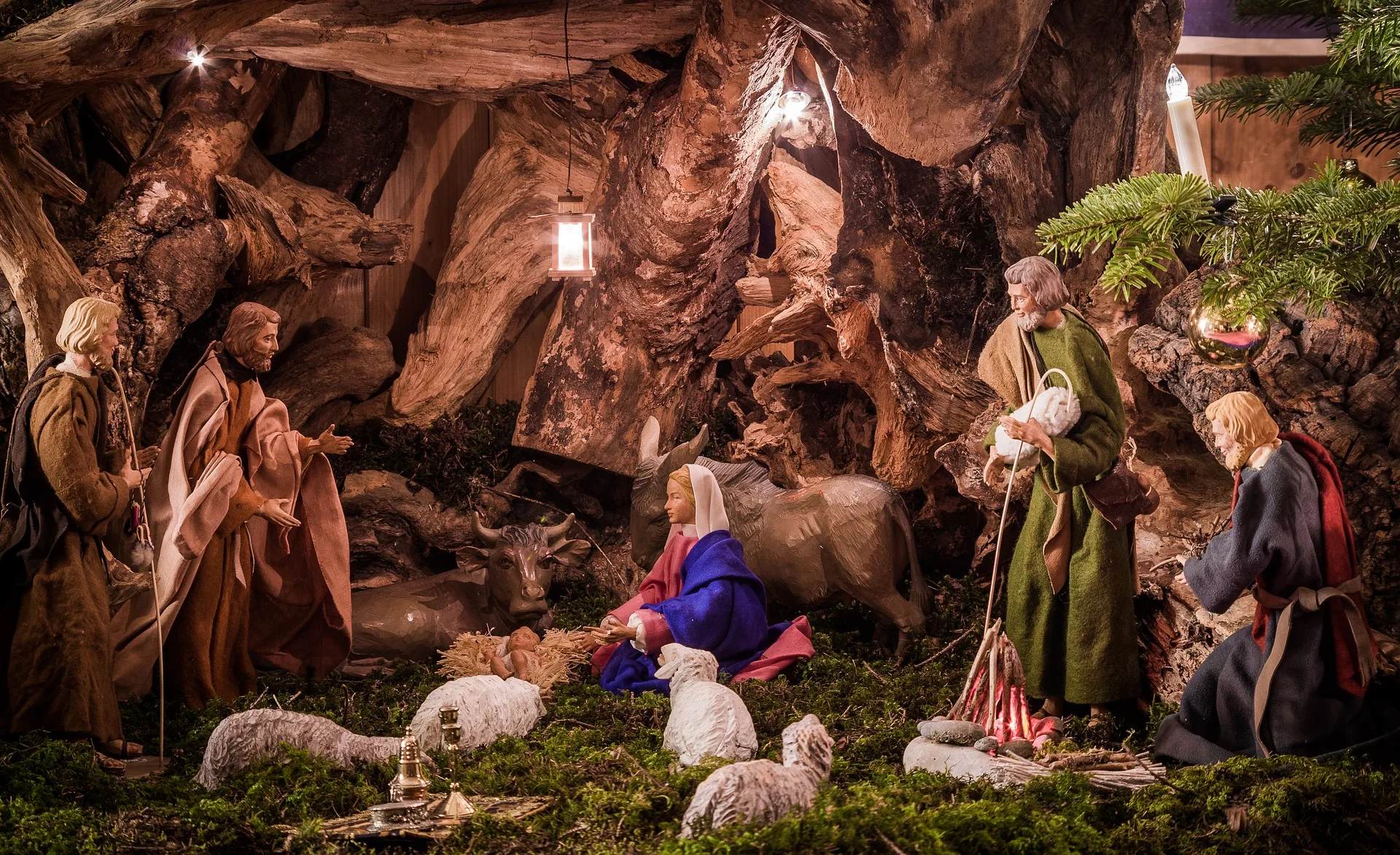
Pixabay - nativity

Then when life tries to break you and you cannot hear the music or see the sunset, that is when you must reach back and in, deeper and deeper, to the event where joy first burst onto the scene of humanity. A virgin birth. Shepherds watching their flocks. Animals in the stable. A straw filled manger. This event was and is and evermore shall be the birth of joy. At that moment joy moved from happiness to an eternal possibility. Joy became the essence of bliss.

If you believe in that light, then even when all is dark, all you have to do is call his name. Jesus. And that light of joy will explode, once again in your soul and the darkness will scatter.

How to Keep Christ in Christmas

Last week I discussed Getting Through the Holidays Without Losing Your Mind. You can read that post by clicking on the link. In that article I gave four areas to look at to take care of yourself during the busy holiday season. Those areas I referred to included, figuring out what you can let go of, setting boundaries, taking care of yourself and practicing gratitude. These things are applicable to all who experience stress during the Christmas season. This week I would like to specifically speak to those who celebrate Christmas as a religious holiday.

Pixabay

Pixabay

For those of us who follow Christ, Christmas is equal in importance to the celebration of Easter. If Jesus had never been born, we wouldn’t have access to the Almighty God, who created us for His good pleasure. Christmas is the epitome of strength becoming weakness; that almighty power coming into acute focus as the baby born to Mary. He was fully God and became fully man. Imagine, a being who is so huge in our incomprehension, being made into a tiny, fertilized seed, growing for nine months in the womb and making the pressurized journey down the birth canal to explode into the light of a sin filled world. To me it is incomprehensible! Yet, I know it to be true. I also know that it was not just love for us, but love for His Father, that drove Jesus to choose obedience to that vulnerable birth and obedience to an even more vulnerable cross. It is this mentality that needs to drive us as we immerse ourselves in the festivities of the Christmas season.

Pixabay

Pixabay

We all know how easy it is to get caught up in the busyness of this season. There’s shopping and decorating, baking and cleaning, wrapping and gathering, all good things, but so often as we focus on getting our to do list checked off, we lose sight of the true meaning of this holiday. I know I do. I can easily become overwhelmed with all of the things I need to get done and fret that I don’t have more time to do them. We also, all know that fretting does not lead to peace and isn’t peace, part of what makes this season so beautiful? At least it should. So, just how can we keep the true meaning part of our focus? Here are several ideas.

Keep Jesus Close - As you shop, wrap, bake and decorate meditate on Him. Remind yourself of His birth and remember that He is with you wherever you go. You might think it is silly, but I often imagine Jesus sitting next to me in the car or standing next to me as I wash dishes. Hey, He endowed all of us with an imagination, so I have no shame in using it. Envisioning Him as a person with me, helps me to focus on the fact that He really is there even though I cannot physically see Him. It helps me to remember why I love Christmas, because it is all about Him.

Listen to Music - There is nothing better, in my mind, to help me get in the true Christmas spirit, than listening to Christmas music. It doesn’t just have to be traditional carols like The First Noel, It Came Upon a Midnight Clear, or Oh Holy Night, but songs that really speak to the message of why we celebrate this season bring the truth back into focus. It is also good to listen to different versions of these Christ-focused carols. For instance my husband and I both agree that Josh Groban’s version of O Holy Night sings as if he was actually there, feeling the peace and beauty of the birth of Jesus. On the other hand, What Child is This, as portrayed by Andrea Bocelli and Mary J. Blige is the most amazing and powerful version of this song I have ever heard. The culmination of their voices is almost angelic as they usher us into the powerful glory of our Lord’s vulnerability.

Having music playing while you are in the car going to the mall, or to a party, or when you are wrapping presents or baking cookies can help to keep your mind in a state of peace and joy throughout the season, even if circumstances around you are difficult.

Watch Christmas Movies - I know a lot of people don’t like to watch the same movies over and over. My husband is one of them, but he tolerates my love for seeing these classic movies every year and occasionally watches them with me. There are fun movies like White Christmas and Jingle All the Way, but there are also movies with a message that transcends this particular holiday. Take for instance A Christmas Carol. A book originally written by Charles Dickens, it was first made into a movie in 1910. Hollywood has come a long way since then, but my two favorite versions are the 1984 version with George C. Scott and the 1992 version with the Muppets. I just finished watching the George C. Scott version the other day and these two scenes really stood out to me.

Obviously, Marely is miserable and it is his knowledge that everything he did in life was meaningless. “….mankind was my business….” Wow! If that doesn’t remind us to take a look at our priorities, I don’t know what will.

I love this scene of transformation. Scrooge was a changed man. Oh, that we would be so changed by the spirit of our Lord Jesus Christ who dwells within us and gives us the ability to be new, each and every day!

Do Something to Serve - I know this seems a bit counter intuitive, when we are so busy, why do something that makes us even busier? The point is to love and worship Jesus by showing love to others. It might be something as simple as baking cookies for your co-workers or leaving a card for your mail carrier, thanking him/her for her hard work. It can be something more complex like visiting shut ins or serving at your local soup kitchen. Often these places are inundated at the holidays, because people are thinking about serving others. Why not schedule your service for February or March, when many of these people are forgotten?

Set Up Some Sort of Memorial - This might be your nativity. Letting your children be involved in getting the pieces out and setting them up helps them to remember Christmas is about Jesus. If you don’t have a nativity and don’t want to make that purchase, decorate a jar with Christmas colors. Every day have you and your family members write down on small slips of paper things they love about Christmas, the Christmas story or things they are thankful for, then on Christmas eve or Christmas morning go through your jar, reading these things out loud. You could then spend a few minutes in prayer, praising and thanking Jesus for all He has done for you.

However you celebrate Christmas and no matter how busy you are, I hope that you will take the time, even if only for a few moments to really think about what the reason for this season really is.

Have a great day!