
Book Review: Christ in You by Gary York, PhD

(This book was given to me along with a small compensation for an honest review.)

I was raised in a small Bible church in Western, New York. Nondenominational in nature, it was a place of learning and growth in my Christian life. As a young girl I was blessed to have Sunday School teachers who, not only taught the truth of God’s word, but showed a care and concern for the lives of their young students. These early relationships and the lives of my own parents led me to make the decision to accept Christ into my life at the age of 12. I attended that church until I was eventually married there to my spouse and we moved away to Ohio
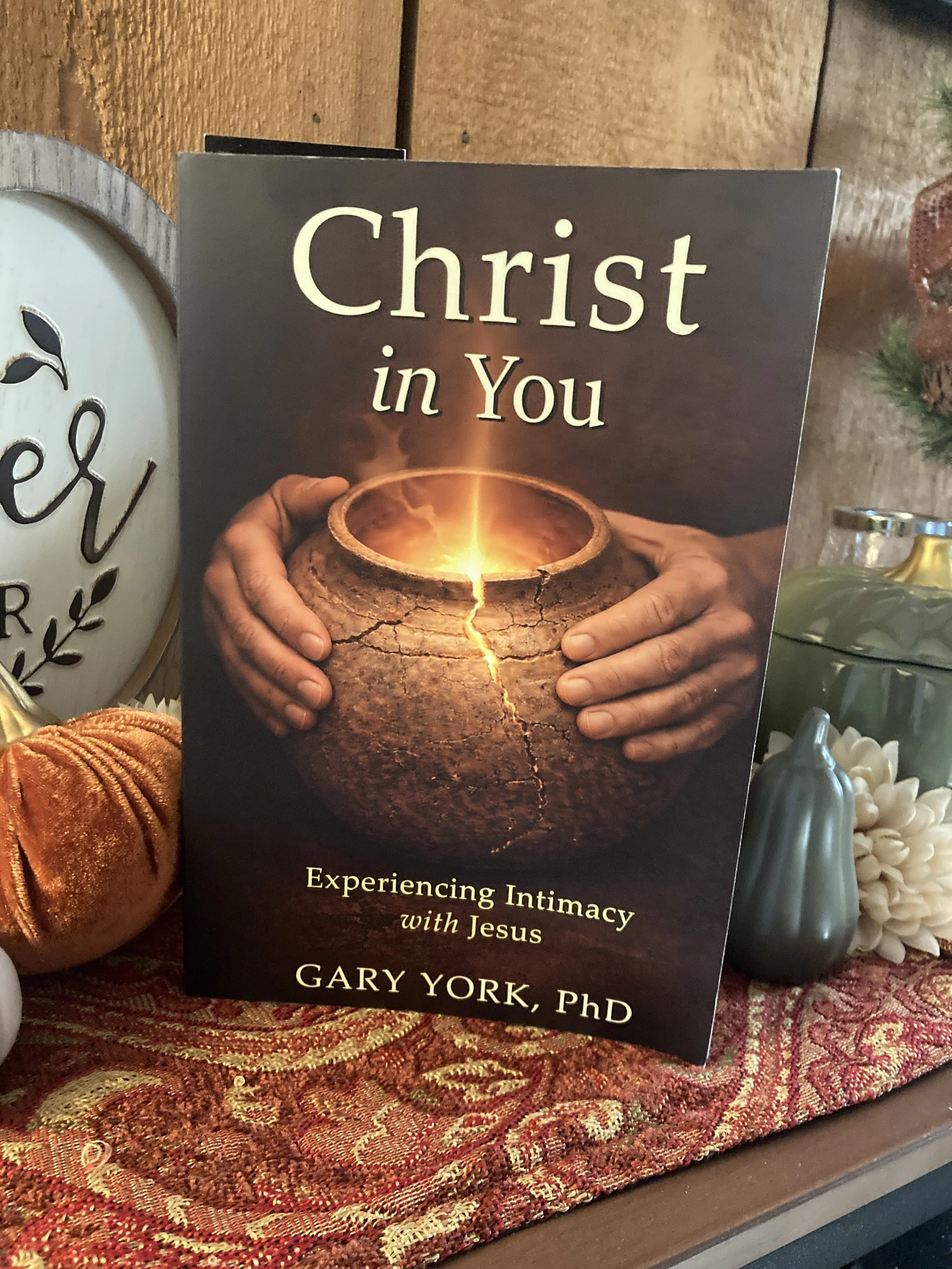
Gary York begins his book, Christ in You, with his own personal journey of faith. He shares how his Sunday School teacher told him he could have a personal relationship with Christ. He wanted that, as many of us did when we made that decision to follow him, but as Gary says on the very first page, “…wanting and knowing how to living in that relationship turned out to be very different things.”

“...there was a gap in my life. I believed in Jesus, but I didn’t really know Him. I lived for Him, but I didn’t live with Him. I rarely sensed His presence or heard His voice. My faith was sincere, but mostly intellectual, built on information and behavior. I wasn’t taught how to experience an actual life of intimacy with Jesus in my ordinary days....”
— Christ in You p. 1

For me, the concept of Christ in You makes perfect sense. We were taught that when we believed in Christ as our Savior, he came into our hearts. I guess the concept always stuck with me and gradually evolved over time into the deeply personal relationship I have with Jesus today. When I saw this book was available to review, I knew I wanted to take a closer look.
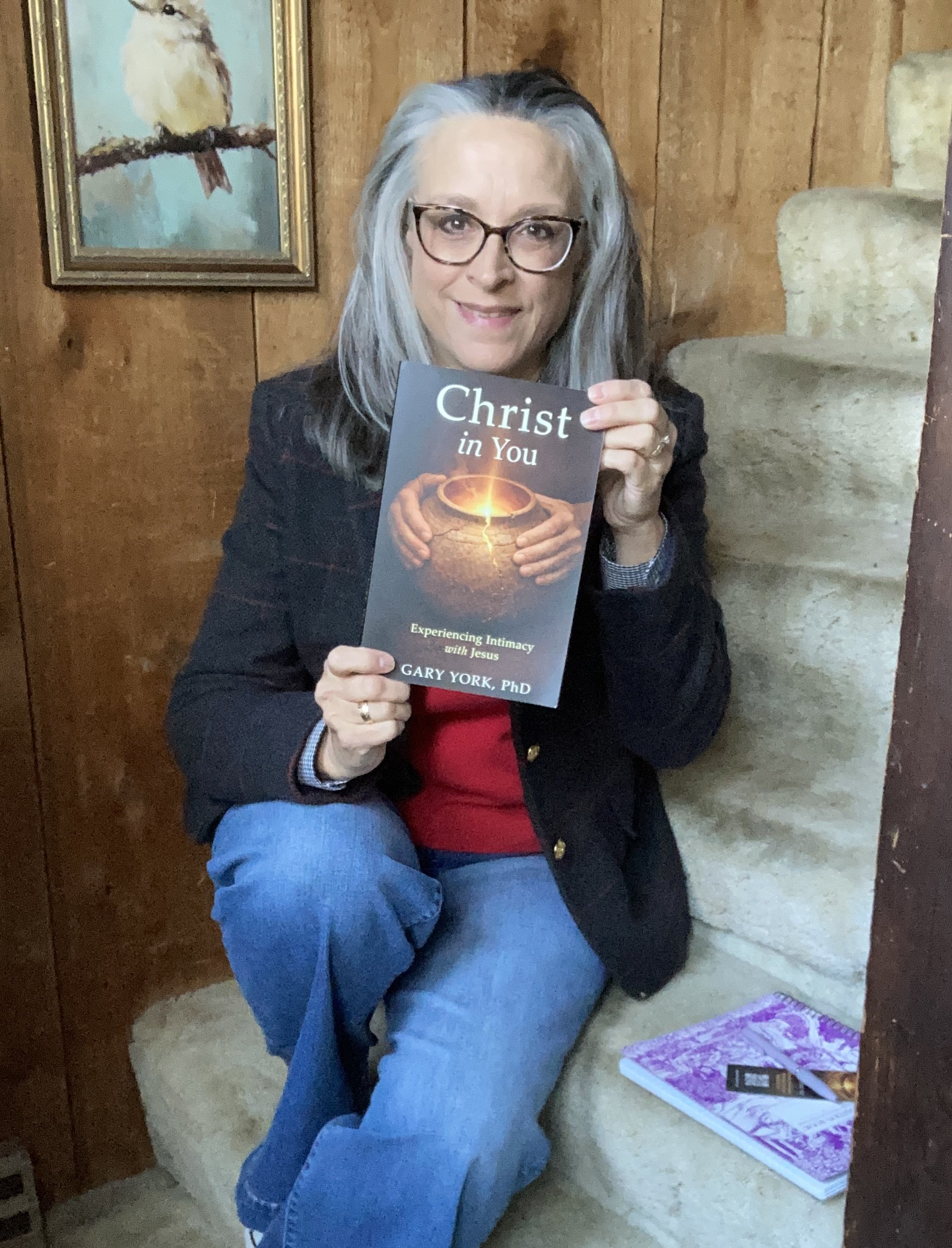
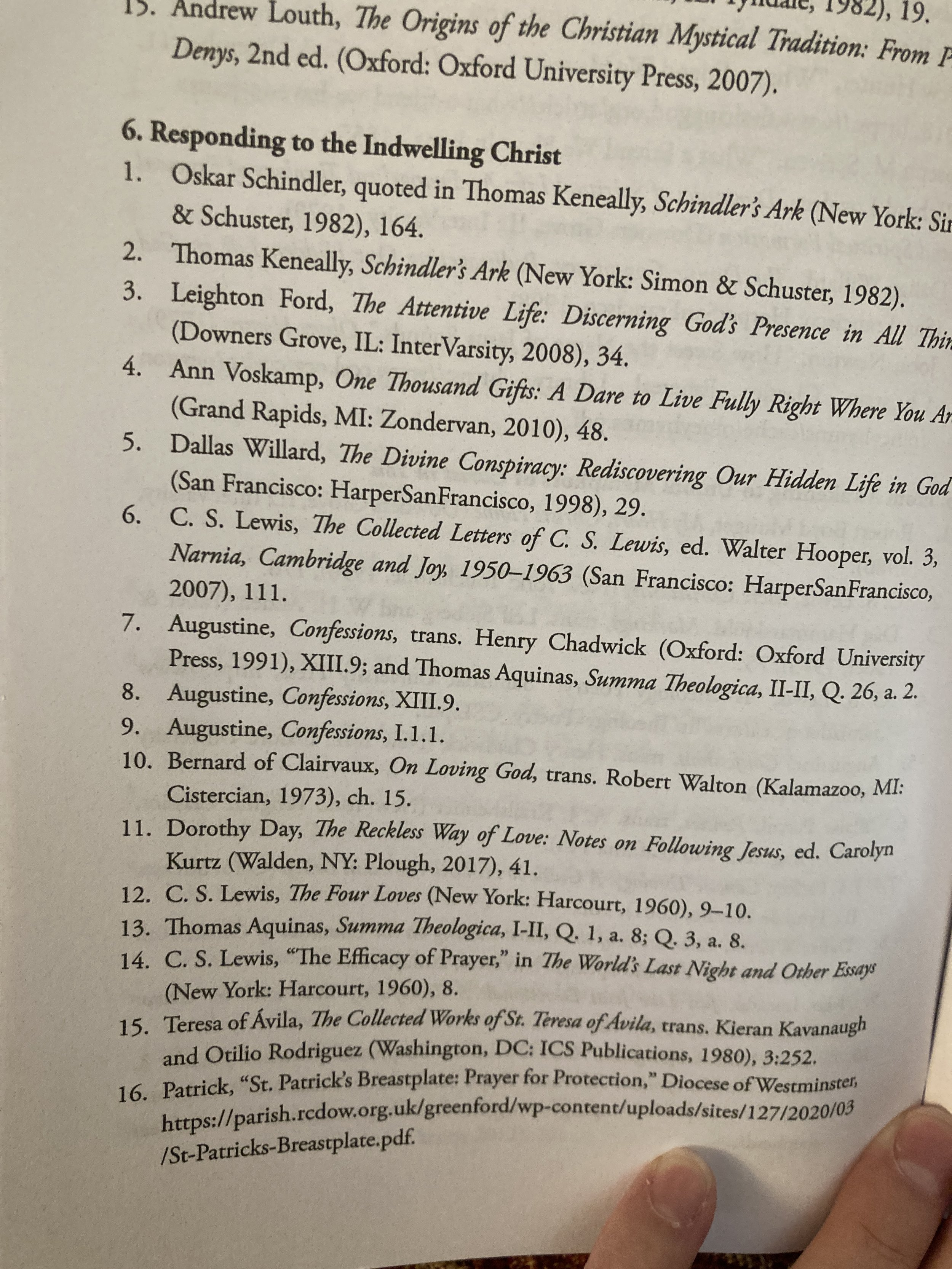
The first thing I want to say about this book is be prepared to underline and take notes. There is so much good information in these pages; information that has the capacity to take your walk with Christ from “meh” to “wow”. For me, much of this drove home ideas and concepts I already knew and lived, but Gary is so thorough in his research, Biblical references and his writing I found myself continuously looking back at the end notes to find the books he was referring to. I now have a whole new book list; another reason to have a notebook handy when you read.
Gary begins his book with a look at what he titles, The Greatest Truth. Simply put this truth revolves around the idea that God desires a personal relationship with us and we have the capacity for relationship when we are unified with Christ. He discusses the failure of our western culture and the church to teach, not just book knowledge or experience, but relational knowledge.

“Our Western culture does not emphasize this type of relational knowing. I attended school for twenty years to acquire knowledge and skills. None of my test was related to becoming a good friend, developing a loving character or knowing an intimate, loving God...The Western church has not filled the gap. Spiritual maturity in the church has too often assumed that pouring more knowledge into people will result in Christian character. We frequently end up with people who know facts but don’t know the Author of the Truth.”
— Christ in You p. 7

Gary goes on to explain that all through the Bible we are given examples of God’s relentless pursuit of us referring to Old Testament events: Creation before the fall, Moses rescue of Israel, David, a man after God’s own heart, and Isaiah who prophesied the coming of Jesus. He also points out the union with Christ in the New Testament through the Gospels and the Epistles.

Christ in You is much more than a history lesson as we see as we continue to read through what Christ In You means, how we grow in understanding of this truth through imagery in the Scriptures, our response to the indwelling Christ and learning to see the world and ourselves through the better lens of God’s understanding.

There were too many quotes for me to include in this short book review, but the following came from the chapter titled: The Journey. This chapter speaks to how God speaks and we respond, and how this relationship with Him is personal and made for each of us individually.

“In the beloved children’s story The Velveteen Rabbit, the wise old Skin Horse explains that becoming real ‘doesn’t happen all at once. You become. It takes a long time.’ The rabbit becomes real not by staying polished and perfect, but by being loved until the seams show. The longer we walk with Him, the more love rewrites out story until the old self fades away. We are being reshaped by love itself, stripped of what is not eternal, until what remains in true, holy, and wholly His.”
— Christ in You p. 143

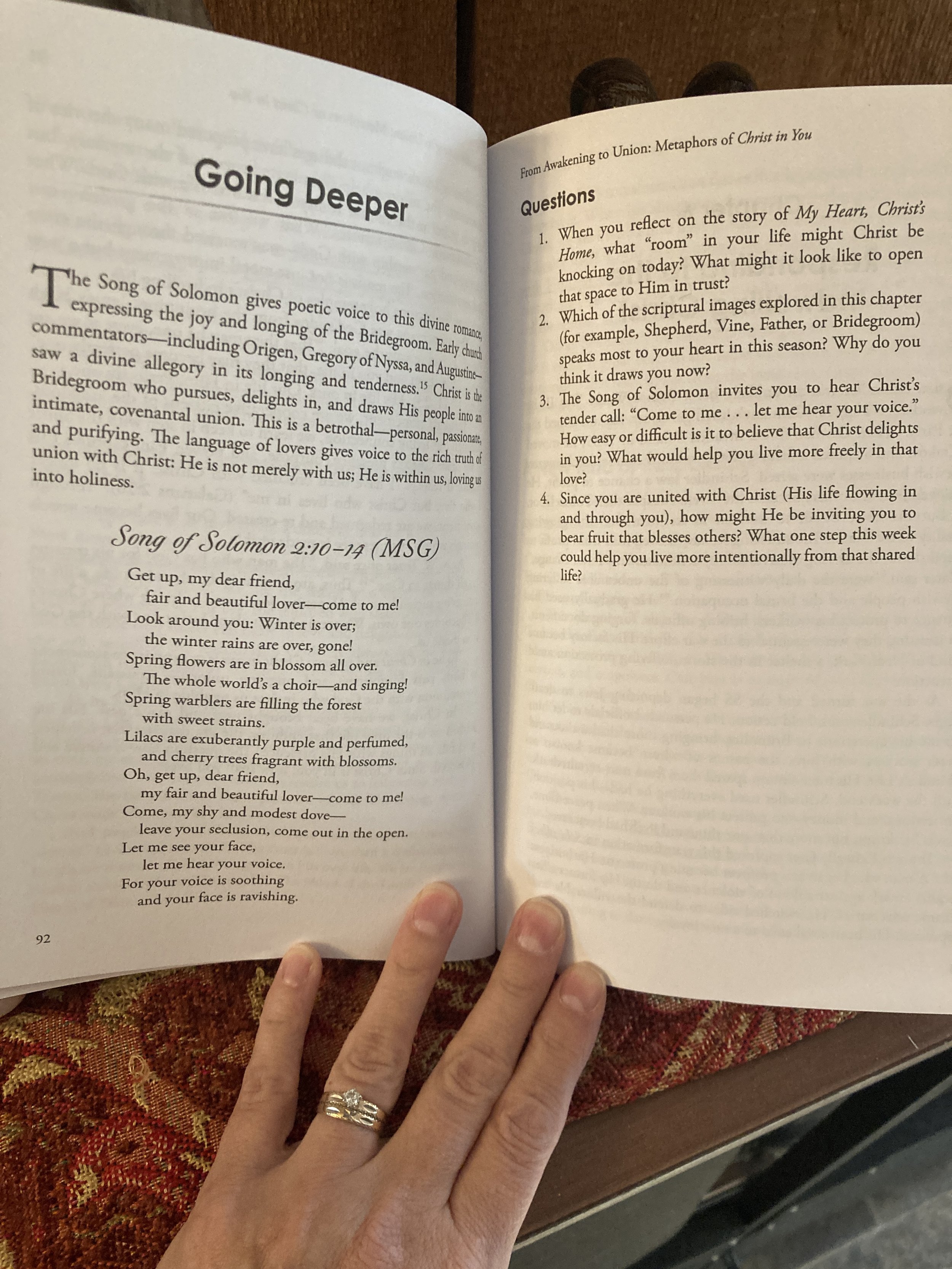
Besides the prolific end notes, I liked the way this book was set up and felt that it was well thought out, and organized. York moves through his thoughts and ideas in a logical fashion making it easy to read and to understand. I also like the Going Deeper sections at the end of each chapter giving us a hymn or writing from another source adding more depth to what we are learning. He follows this with a few questions to get us thinking more about what we have just read.
I wish I had this book when I was a young adult. It really would have helped me as I became a wife and mother in grounding myself in the One who was always with me all along. I also think this would have helped me teach my daughters the beautiful truth of a relationship with our amazing God.

I think Christ in You is a must for all Christians who want to grow in their relationship with God. I also think it would be a great book for a book club, a small group or a Sunday School class. I think York’s understanding and presentation of this spiritual reality could be revolutionary in changing the course of Christian leadership and teaching in the world.


Embracing Sadness and Finding Joy: A Study of our Life in Jesus during the Holidays - Part 2: Remembering God's Faithfulness

If you are following along this December, I am doing a short series on the emotion of sadness during the holidays. Holidays for many are not the bright, merry celebrations we tend to hear about. Instead, they are filled with pain, hurt, anger, sadness and despair. The reasons are many, from the death of a spouse or child, to divorce, to the loss of a job or health, to the state of our country. Many people are struggling with feeling depressed and overwhelmed.

Image by Armando Orozco from Pixabay

The reason I decided to broach this topic was in part to share what I have learned about carrying sadness on a regular basis, but still being able to function and live a full and productive life. Sadness isn’t something that we necessarily need to be free of, but rather something we need to embrace and learn how to accept and manage.

Last week we looked at what embracing sadness looks like and explored a few thoughts on how we can manage our own sadness, or how we can help others who are feeling more down than usual at this time of year. Tips included: having a grieving blanket, physical activity, artistic pursuits, and allowing others to help carry the burden. Another suggestion was to remember the faithfulness of God, and that is what we are going to look at this week.

The Old and New Testaments of the Bible are full of examples of God’s faithfulness. If we are in a particular dark state of mind we might read some of the Biblical accounts and only see God’s wrath, judgment and impatience, but as with all things if we look only for the darkness, we will only encounter darkness. True freedom lies in following and embracing the light of Christ.

Image by Daniel Reche from Pixabay

“1 In the beginning was the Word, and the Word was with God, and the Word was God.
2 He was in the beginning with God.
3 All things were made through him, and without him was not any thing made that was made.
4 In him was life, and the life was the light of men.
5 The light shines in the darkness, and the darkness has not overcome it.
6 There was a man sent from God, whose name was John.
7 He came as a witness, to bear witness about the light, that all might believe through him.
8 He was not the light, but came to bear witness about the light.
9 The true light, which gives light to everyone, was coming into the world.
10 He was in the world, and the world was made through him, yet the world did not know him.
11 He came to his own, and his own people did not receive him.
12 But to all who did receive him, who believed in his name, he gave the right to become children of God,
13 who were born, not of blood nor of the will of the flesh nor of the will of man, but of God.
14 And the Word became flesh and dwelt among us, and we have seen his glory, glory as of the only Son from the Father, full of grace and truth.
15 (John bore witness about him, and cried out, “This was he of whom I said, ‘He who comes after me ranks before me, because he was before me.’”)
16 For from his fullness we have all received, grace upon grace.
17 For the law was given through Moses; grace and truth came through Jesus Christ.
18 No one has ever seen God; God the only Son, who is at the Father’s side, he has made him known.”
— John 1:1-18 (ESV)

God provides everything that we need to live life in this dark world, but the most important thing He provided was the Light, the life of His Son Jesus Christ. Try to imagine living in a world with no light. How would you be able to live life? There is the rather comedic aspect of running into walls, crashing into cars, and stepping on Legos in the living room, but it goes much deeper than that. Light is essential for plants to grow, which in turn produce oxygen, which gives us the ability to breath. Light is essential for our mental health. Take it from a sufferer of Seasonal Affective Disorder, sunlight is absolutely necessary for me to feel human. Light is also an important element in the deterrence of crime, otherwise, why would so many business owners leave lights on around their property?

Probably the most important aspect to light is that it lets us see. There is the physical aspect of sight which keeps us from running into things and helps us to recognize things and people. It also allows us to learn and study. Similarly, spiritual sight, given to us through the Holy Spirit, allows us to know God and His Word better. Abiding in the light enables to turn from the darkness and recognize God’s constant faithfulness.

““The Rock! His work is perfect, For all His ways are just; A God of faithfulness and without injustice, Righteous and upright is He.”
— Deuteronomy 32:4 (NASB 1995)
“Your lovingkindness, O Lord, extends to the heavens, Your faithfulness reaches to the skies.”
— Psalm 36:5 (NASB 1995)
“He will cover you with His pinions, And under His wings you may seek refuge; His faithfulness is a shield and bulwark.”
— Psalm 91:4 (NASB 1995)

I find this last verse interesting. “His faithfulness is a shield and bulwark.” We all know what a shield is, but what is a bulwark? Websters online dictionary defines bulwark as: a solid wall-like structure raised for defense; a seawall; a strong support or protection. If God’s faithfulness is a shield and bulwark, then that means His faithfulness is supporting and protecting us. Might it also mean, that when we choose to remember His faithfulness, it helps protect our minds from spending too much time in the darkness? Perhaps recalling God’s faithfulness is the best way to protect ourselves from the unbridled pain and despair we can feel when we are grieving.

In other versions of the Bible instead of the word, bulwark, or rampart the word is buckler. A buckler is a small shield and to my understanding it was a shield that was used during hand to hand combat. It was a shield that was held close to the body, and could also be maneuvered to block the enemy’s strikes. Whether you like the idea of a strong wall of defense or a small shield used in daily battle with the enemy, the reality is both are true. God is our defense, and His faithfulness allows us to extinguish the flaming arrows of despair, bitterness and hatred that Satan sends our way.

As I said in my first post, sadness is an emotion God gave us and by embracing it we allow ourselves to process those strong feelings in a healthy way, but if we allow ourselves to only see the sadness, and not remember the joy, or the laughter, we risk becoming shrouded in a darkness that might lead to a place of no return.

So, how do we remember God’s faithfulness when we are feeling overwhelmed by the sad? Let’s look at a few ideas.

1 - Pray. Ask God to help you to remember His faithfulness. Perhaps you prayed for something specific and that prayer was answered. Maybe you needed direction regarding a decision and He gave it to you. Remember God is not just faithful in the big things, He’s also faithful in the tiny details. Ask Him to help you remember those times and write those things down.

I did this recently, and God brought to my mind His faithfulness to me as a child. Growing up in a Bible believing church, I was fortunate to be surrounded by Biblical teaching, but hearing God’s word, does not necessarily mean we will follow Him. When I was very young, perhaps in kindergarten or 1st grade I had a Sunday School teacher named Miss Draper. An older, single woman, she was all vim and vinegar, but she genuinely cared about her students. I remember she took a trip to Europe. When she came back she had gifts for each of the children in her class. When I opened mine it was a little chalet of sorts. The roof opened and from within came the most beautiful music. Her gesture of kindness set me on a road of wanting to know Jesus. Oh what the love of a person living in obedience to Christ can do to change the world.

Image by Steve Haselden from Pixabay

2 - Read Scripture. I know these suggestions are not anything new, but how much more we need to be seeking our precious Lord, when we are in the throes of sadness and heartbreak. Scripture is full of examples of God’s faithfulness. Think of His provision for Adam and Eve’s nakedness after the fall (Genesis 3:21); or what about His faithfulness to Noah and His family during a catastrophic, world wide flood (Genesis 7:23); and don’t forget the restoration He gave to Job after allowing Satan to take everything away (Job 42:10-17); and one of my favorite accounts of His lovingkindness was to Ruth, a woman not even a Jew, given a place in the lineage of Jesus our King of Kings (Ruth 4). Start to finish, the Bible is a ribbon of God’s faithfulness, provision, love and intervention on the behalf of humanity, the greatest of these being Christ’s entry into our world as a baby.

mage by Ingela Skullman from Pixabay

3 - Look for God’s faithfulness and provision in the day to day. All may seem bleak until we start exercising the eyes of our hearts. Our physical eyes might only see the darkness; the pain, the despair, the unknown, but our spiritual eyes can see things beyond this physical world.

“15 For this reason I too, having heard of the faith in the Lord Jesus which exists among you and your love for all the saints,
16 do not cease giving thanks for you, while making mention of you in my prayers;
17 that the God of our Lord Jesus Christ, the Father of glory, may give to you a spirit of wisdom and of revelation in the knowledge of Him.
18 I pray that the eyes of your heart may be enlightened, so that you will know what is the hope of His calling, what are the riches of the glory of His inheritance in the saints,
19 and what is the surpassing greatness of His power toward us who believe. These are in accordance with the working of the strength of His might
20 which He brought about in Christ, when He raised Him from the dead and seated Him at His right hand in the heavenly places,
21 far above all rule and authority and power and dominion, and every name that is named, not only in this age but also in the one to come.
22 And He put all things in subjection under His feet, and gave Him as head over all things to the church,
23 which is His body, the fullness of Him who fills all in all.”
— Ephesians 1:15-23 (NASB 1995)

Paul’s prayer pertains to us when we are grieving. He prays that we would see with the eyes of our hearts so that: we would know the hope of His calling, the riches of the glory of His inheritance in the saints, and what is the surpassing greatness of His power toward us who believe. Look and see.

Image by Adrian from Pixabay

4 - Treasure thanksgiving. Having just celebrated Thanksgiving a few weeks ago here in the U.S. it is good to take this idea into the Christmas holidays, especially when we are sad. Giving thanks is not only a mood lifter, but it forces us to refocus our mind from the darkness to the light. Start small if that is all you can manage. Thank God for a warm bed, a hot shower, food, clean water, and a place to live. Even if all of these were striped away from us, we could still be thankful for Him; for His presence; for His character; for the fact that He does not change. Is it always easy to give thanks? No. But it is desired by our Creator.

“in everything give thanks; for this is God’s will for you in Christ Jesus.”
— 1 Thessalonians 5:18 (NASB 1995)

I hope this week you will find many moments to remember God’s faithfulness.