
Book Review: Christ in You by Gary York, PhD

(This book was given to me along with a small compensation for an honest review.)

I was raised in a small Bible church in Western, New York. Nondenominational in nature, it was a place of learning and growth in my Christian life. As a young girl I was blessed to have Sunday School teachers who, not only taught the truth of God’s word, but showed a care and concern for the lives of their young students. These early relationships and the lives of my own parents led me to make the decision to accept Christ into my life at the age of 12. I attended that church until I was eventually married there to my spouse and we moved away to Ohio
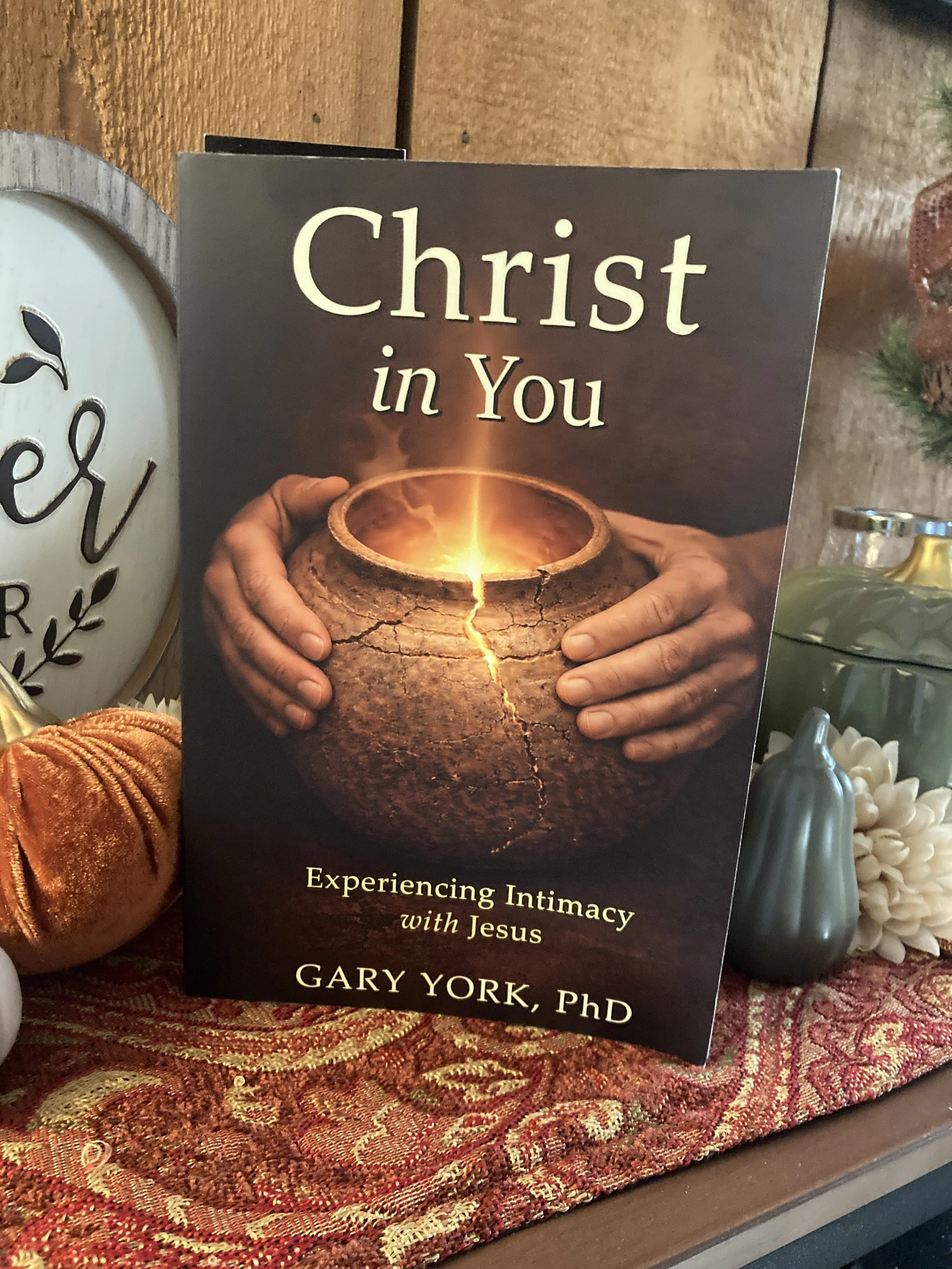
Gary York begins his book, Christ in You, with his own personal journey of faith. He shares how his Sunday School teacher told him he could have a personal relationship with Christ. He wanted that, as many of us did when we made that decision to follow him, but as Gary says on the very first page, “…wanting and knowing how to living in that relationship turned out to be very different things.”

“...there was a gap in my life. I believed in Jesus, but I didn’t really know Him. I lived for Him, but I didn’t live with Him. I rarely sensed His presence or heard His voice. My faith was sincere, but mostly intellectual, built on information and behavior. I wasn’t taught how to experience an actual life of intimacy with Jesus in my ordinary days....”
— Christ in You p. 1

For me, the concept of Christ in You makes perfect sense. We were taught that when we believed in Christ as our Savior, he came into our hearts. I guess the concept always stuck with me and gradually evolved over time into the deeply personal relationship I have with Jesus today. When I saw this book was available to review, I knew I wanted to take a closer look.

The first thing I want to say about this book is be prepared to underline and take notes. There is so much good information in these pages; information that has the capacity to take your walk with Christ from “meh” to “wow”. For me, much of this drove home ideas and concepts I already knew and lived, but Gary is so thorough in his research, Biblical references and his writing I found myself continuously looking back at the end notes to find the books he was referring to. I now have a whole new book list; another reason to have a notebook handy when you read.
Gary begins his book with a look at what he titles, The Greatest Truth. Simply put this truth revolves around the idea that God desires a personal relationship with us and we have the capacity for relationship when we are unified with Christ. He discusses the failure of our western culture and the church to teach, not just book knowledge or experience, but relational knowledge.

“Our Western culture does not emphasize this type of relational knowing. I attended school for twenty years to acquire knowledge and skills. None of my test was related to becoming a good friend, developing a loving character or knowing an intimate, loving God...The Western church has not filled the gap. Spiritual maturity in the church has too often assumed that pouring more knowledge into people will result in Christian character. We frequently end up with people who know facts but don’t know the Author of the Truth.”
— Christ in You p. 7

Gary goes on to explain that all through the Bible we are given examples of God’s relentless pursuit of us referring to Old Testament events: Creation before the fall, Moses rescue of Israel, David, a man after God’s own heart, and Isaiah who prophesied the coming of Jesus. He also points out the union with Christ in the New Testament through the Gospels and the Epistles.

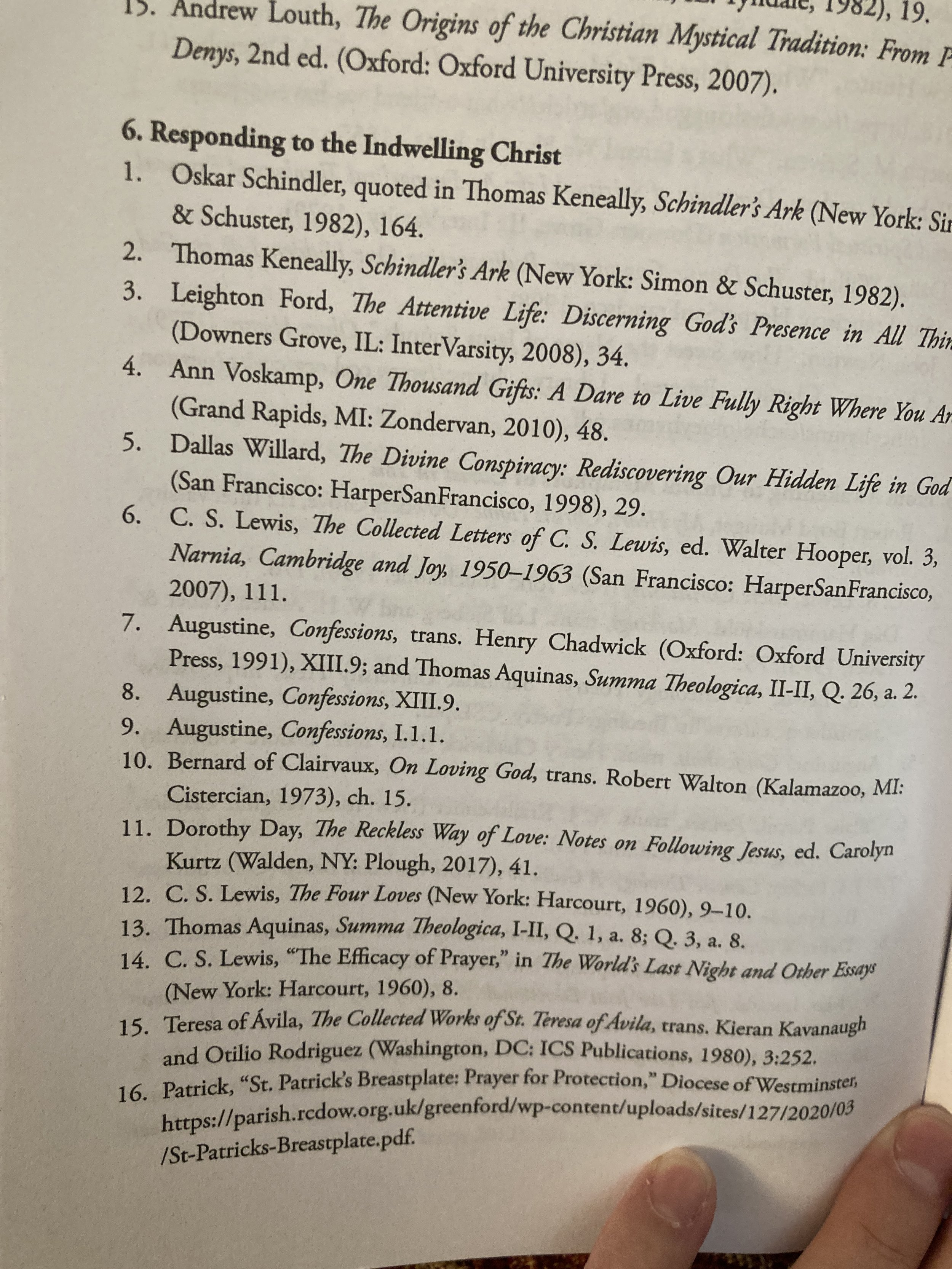
Christ in You is much more than a history lesson as we see as we continue to read through what Christ In You means, how we grow in understanding of this truth through imagery in the Scriptures, our response to the indwelling Christ and learning to see the world and ourselves through the better lens of God’s understanding.

There were too many quotes for me to include in this short book review, but the following came from the chapter titled: The Journey. This chapter speaks to how God speaks and we respond, and how this relationship with Him is personal and made for each of us individually.

“In the beloved children’s story The Velveteen Rabbit, the wise old Skin Horse explains that becoming real ‘doesn’t happen all at once. You become. It takes a long time.’ The rabbit becomes real not by staying polished and perfect, but by being loved until the seams show. The longer we walk with Him, the more love rewrites out story until the old self fades away. We are being reshaped by love itself, stripped of what is not eternal, until what remains in true, holy, and wholly His.”
— Christ in You p. 143

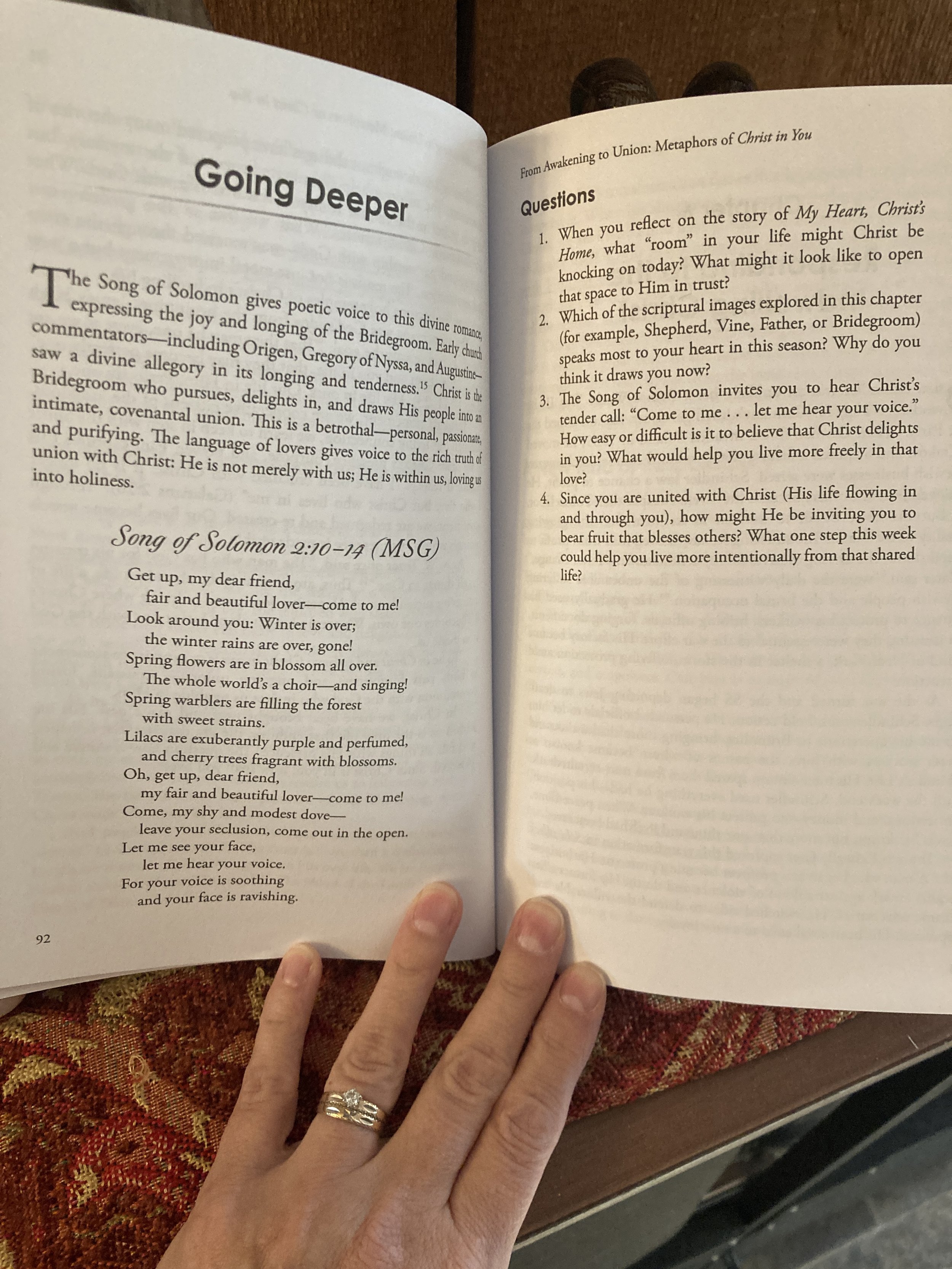
Besides the prolific end notes, I liked the way this book was set up and felt that it was well thought out, and organized. York moves through his thoughts and ideas in a logical fashion making it easy to read and to understand. I also like the Going Deeper sections at the end of each chapter giving us a hymn or writing from another source adding more depth to what we are learning. He follows this with a few questions to get us thinking more about what we have just read.
I wish I had this book when I was a young adult. It really would have helped me as I became a wife and mother in grounding myself in the One who was always with me all along. I also think this would have helped me teach my daughters the beautiful truth of a relationship with our amazing God.

I think Christ in You is a must for all Christians who want to grow in their relationship with God. I also think it would be a great book for a book club, a small group or a Sunday School class. I think York’s understanding and presentation of this spiritual reality could be revolutionary in changing the course of Christian leadership and teaching in the world.


Embracing Sadness and Finding Joy: A Study of Our Life in Christ During the Holidays - Part 3: Bending our Knees Like the Shepherds

Merry Christmas, everyone! If you have been following along, you know I have been doing a series on embracing the emotion of sadness during the holidays as it pertains to our life in Christ. In Part 1, we looked at why it is okay to be sad, that God is the author of emotions, and tips for maneuvering grief during the holidays. In Part 2, we looked back at God’s faithfulness and how that pertains to dealing with sadness, and mulled over why remembering His faithfulness is like a wall of defense for our minds.

Today we are going to go directly to the Christmas story and look at what we can learn from the Shepherds and how that enables us to have joy, even in the midst of heartache and grief.

Image by Eduin Escobar from Pixabay

“8 In the same region there were some shepherds staying out in the fields and keeping watch over their flock by night.
9 And an angel of the Lord suddenly stood before them, and the glory of the Lord shone around them; and they were terribly frightened.
10 But the angel said to them, “Do not be afraid; for behold, I bring you good news of great joy which will be for all the people;
11 for today in the city of David there has been born for you a Savior, who is Christ the Lord.
12 This will be a sign for you: you will find a baby wrapped in cloths and lying in a manger.”
13 And suddenly there appeared with the angel a multitude of the heavenly host praising God and saying,
14 “Glory to God in the highest,
And on earth peace among men with whom He is pleased.”
15 When the angels had gone away from them into heaven, the shepherds began saying to one another, “Let us go straight to Bethlehem then, and see this thing that has happened which the Lord has made known to us.”
16 So they came in a hurry and found their way to Mary and Joseph, and the baby as He lay in the manger.
17 When they had seen this, they made known the statement which had been told them about this Child.
18 And all who heard it wondered at the things which were told them by the shepherds.
19 But Mary treasured all these things, pondering them in her heart.
20 The shepherds went back, glorifying and praising God for all that they had heard and seen, just as had been told them.”
— Luke 2:8-20 (NASB 1995)

Shepherding was a vital industry all throughout the Old Testament with numerous “big names” in Biblical history doing this difficult, outdoor, sometimes life threatening job. Abel, Abraham, Issac, Moses and David were all shepherds. Though the socioeconomic status of a shepherd had declined by the time of Jesus’ birth, the commitment of shepherds to care for their flocks still stood strong. They regularly faced predators that included wolves, lions, bears, hyenas, and leopards. They walked many miles to find feeding areas, as well as water. Shepherds were always vigilant. Even after the sheep were led into the fold for the night, a shepherd would place his body across the doorway to keep out unwanted predators. Apparently there were occasions where shepherds would mix their herds together for the evening to split the guarding shifts. In the morning they were easily able to sort the sheep by the sound of each shepherd’s voice.

It might be, on the night the angel came to these shepherds that was the case. Perhaps four or five shepherds had come together, and while a few of them slept the others kept watch over the sheep. I am pretty sure they were all wide awake when that angel showed up!

Image by Jeff Jacobs from Pixabay

There are many things we can learn from the shepherds that can help us in our season of sadness around the holidays. Let’s take a look.

1 - Shepherds were living life. These shepherds were doing their work. They were guarding their sheep: leading, guiding, feeding, watching, giving aid, tending to wounds, and certainly searching for any lambs that may have wandered away. Any one of those shepherds or shepherdesses (yes, women were shepherds too…talk about bad a**) could have been feeling sad. They could have been grieving the loss of a family member, the loss of a sheep (they were required to pay for any sheep lost or killed); they could have been struggling with illness, or blisters on their feet, or maybe they were discouraged because they really wanted to be a singer in the temple choir, but here they are tending sheep.

When we are dealing with sadness or grief, one of the best things to do, is keep living life. Go to work, meet with friends, get groceries, work on a closet, clean a bathroom; even the most mundane tasks that contribute to living life help us to process and get through. Listen to this quick snippet that reminds us why even making the bed can help.

2. Shepherds were brave and intelligent. Frankly I find it fascinating that shepherds were not seen as super heroes. I mean, beating off wolves, bears, an occasional lion or two had to be a tough job. These people were not weak, nor were they soft. They were weathered, strong, and probably wiry. They also had to have job intelligence, meaning they knew where to go to feed the sheep, where to find water, which in itself was a challenge in an arid climate. Sheep being what they are don’t like to drink from moving water, as it spooks them. They needed still water that wasn’t tainted with bacteria or other things that would make the sheep sick.

Image by Richard Haddeman from Pixabay

If you are working through a time of grief, learn what works for you to not only process that grief, but also the things that help you to continue living life. That will look different for every person. I personally like the “grief blanket” idea. I can allow myself to feel sadness for a time, and then get up and do other things. Maybe for you dealing with sadness is easier when you keep busy while also allowing your mind to remember why you are sad. Know what things will cause you to give in to the sickness of despair and depression, and find “safe water” to drink - like the water of God’s truth in His word.

3 - The shepherds were curious. After they got over the initial shock of seeing angelic beings, the shepherds high tailed it for Bethlehem to see the child of which they were told. In your sadness, be curious. Ask God what He wants you to learn about His character, yourself, or someone else. Be curious about Biblical accounts of people who dealt with grief and sadness. Read about Sarah, Hannah, Naomi, David, Nehemiah, Job (read the whole book to not only understand his grief, but know better the God who deals, reveals and restores,) and even Jesus as he is moved with compassion, and yes grief in the Gospel accounts.

Image by Ag Ku from Pixabay

4 - The shepherds were humble. I will acknowledge I am making an assumption about the shepherds’ humility. However, seeing the type of job they had and the lifestyle they lived I do not think they were the type of people who would put on airs and act as though they knew everything or had it all together. They really strike me as just regular, hard working people, that maybe were a bit smelly. Ha, ha. But they were real. The thing I love about this Biblical account is their unbridled enthusiasm. Why does that make them humble? Because they didn’t care about what people would think, they didn’t care that they were the best dressed, or clean, or had lots of money. They just wanted Jesus, and isn’t wanting Jesus all about humility?

Wanting the true Jesus of the Bible is about choosing to give up ourselves: our preconceived ideas, our knowledge base, our education, our upbringing, our trauma, our grief, our discouragement, our wealth, our status, our identity, and letting it all go to embrace the baby in the manger - the Wonderful Counselor, the Mighty God, the Everlasting Father, and the Prince of Peace.

“For a child will be born to us, a son will be given to us;
And the government will rest on His shoulders;
And His name will be called Wonderful Counselor, Mighty God,
Eternal Father, Prince of Peace.”
— Isaiah 9:6 (NASB 1995)