
Faith Musings: Nothing to Boast About - Part 3

This second chapter of 1 Corinthians seems a perfect continuation of the verses we looked at previously in Faith Musings: Nothing to Boast About - Part 1, and Nothing to Boast About - Part 2.

Image by Joe from Pixabay

1 And when I came to you, brethren, I did not come with superiority of speech or of wisdom, proclaiming to you the testimony of God.
2 For I determined to know nothing among you except Jesus Christ, and Him crucified.
3 I was with you in weakness and in fear and in much trembling,
4 and my message and my preaching were not in persuasive words of wisdom, but in demonstration of the Spirit and of power,
5 so that your faith would not rest on the wisdom of men, but on the power of God.
6 Yet we do speak wisdom among those who are mature; a wisdom, however, not of this age nor of the rulers of this age, who are passing away;
7 but we speak God’s wisdom in a mystery, the hidden wisdom which God predestined before the ages to our glory;
8 the wisdom which none of the rulers of this age has understood; for if they had understood it they would not have crucified the Lord of glory;
9 but just as it is written,

“Things which eye has not seen and ear has not heard,
And which have not entered the heart of man,
All that God has prepared for those who love Him.”
— I Corinthians 2:1-9 (NASB 1995)

Paul continues his discourse on the wisdom of God versus the foolishness of man by stating that when he came to the church at Corinth he did not preach by his own ability, but by the ability God gave him.

“And when I came to you, brethren, I did not come with superiority of speech or of wisdom, proclaiming to you the testimony of God.”

If anyone could have boasted in his own abilities it was Paul. Born a Hebrew, he was raised in the prosperous city of Tarsus, a center for trade on the Mediterranean coast, a city which also housed a well known school.

Image by sebastiano iervolino from Pixabay

4 although I myself might have confidence even in the flesh. If anyone else has a mind to put confidence in the flesh, I far more:
5 circumcised the eighth day, of the nation of Israel, of the tribe of Benjamin, a Hebrew of Hebrews; as to the Law, a Pharisee;
6 as to zeal, a persecutor of the church; as to the righteousness which is in the Law, found blameless.
— Philippians 3:4-6 (NASB 1995)
6 But perceiving that one group were Sadducees and the other Pharisees, Paul began crying out in the Council, “Brethren, I am a Pharisee, a son of Pharisees; I am on trial for the hope and resurrection of the dead!”
— Acts 23:6 (NASB 1995)

Paul referred to his upbringing not to boast in his abilities, but to appeal to the audience he was talking to. He always made clear that his abilities to teach and preach were from God .

For I determined to know nothing among you except Jesus Christ, and Him crucified.

This stands out to me for two reasons. First, Paul determined. This word does not give us a feeling of being wishy washy. It shows us the apostle was firmly resolved. It is convicting to me, because when I ask myself what am I firmly resolved or determined about, I realize in this chaotic world we are living in I have become more uncertain, unsure and even doubtful about many things, even my relationship with Christ. Yes, there are things I am sure of: my salvation, the Bible, God’s good character and so on. Perhaps, like Paul I need to focus on the main thing.
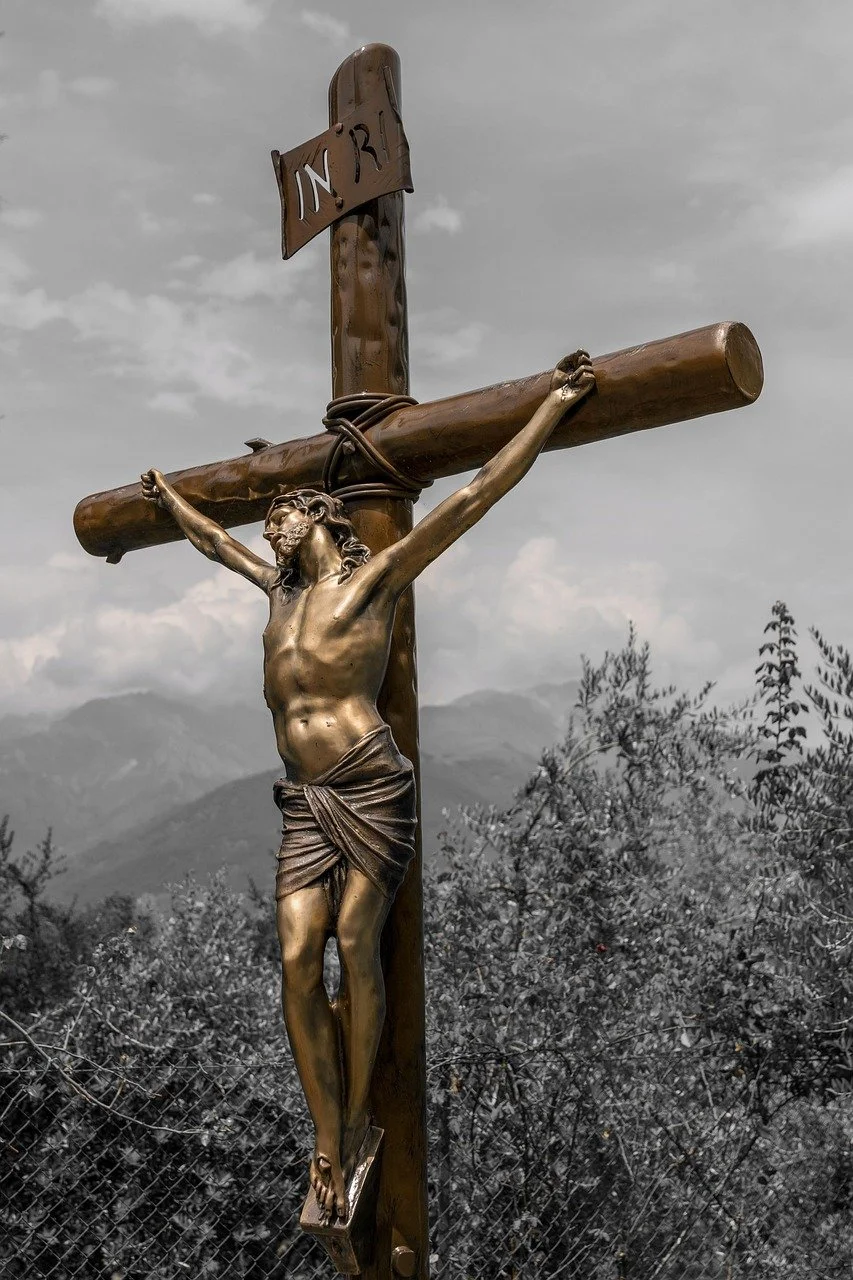
Image by DetBe from Pixabay

Second, what was Paul determined to know? Nothing…except Jesus Christ, and Him crucified. Why is this so important? Isn’t it more important to preach and teach love? After all Christ loves us and desires that we all be in heaven with Him. This is where I am beginning to see disparity in the church. If we do not preach the reason Christ came, and had to be crucified, all the love in the world will not fix all that is wrong with it. Christ came because we are sinners. Not one of us is good enough to earn our way into heaven, no matter how much love we show. And the truth is, if I only preach the love of God, then I do not really love. We have to talk about the darkness, the disobedience, and the distance between us and Him.

Remember these verses? Jesus said of Himself:

6 Jesus said to him, “I am the way, and the truth, and the life; no one comes to the Father but through Me.
— John 14:6 (NASB 1995)
5 I am the vine, you are the branches; he who abides in Me and I in him, he bears much fruit, for apart from Me you can do nothing.
6 If anyone does not abide in Me, he is thrown away as a branch and dries up; and they gather them, and cast them into the fire and they are burned.
— John 15:5-6 (NASB 1995)
23 He who hates Me hates My Father also.
24 If I had not done among them the works which no one else did, they would not have sin; but now they have both seen and hated Me and My Father as well.
25 But they have done this to fulfill the word that is written in their Law, ‘They hated Me without a cause.’
— John 15:23-25 (NASB 1995)
18 “Behold, we are going up to Jerusalem; and the Son of Man will be delivered to the chief priests and scribes, and they will condemn Him to death,
— Matthew 20:18 (NASB 1995)
31 And He began to teach them that the Son of Man must suffer many things and be rejected by the elders and the chief priests and the scribes, and be killed, and after three days rise again.
— Mark 8:31 (NASB 1995)

These are just a few of many verses in the Gospels where Christ talks about His purpose, which was to be obedient to the Father, and die on a cross for sinful humanity.

Does the Bible talk about God’s love? Of course it does. One of the most famous verses many of us memorized as youngsters in church follows:

16 “For God so loved the world, that He gave His only begotten Son, that whoever believes in Him shall not perish, but have eternal life.
— John 3:16 (NASB 1995)

Image by Engin Akyurt from Pixabay

However, even this verse talks about God’s love in the context of our need, and our sin. Why would we perish if we were perfect? Why would we need God if love was the answer to all our problems? Love is the answer, but it is God’s love; God’s pure, perfect, and holy love.

I would like to let these first two verses of this second chapter of 1 Corinthians sink in for the next week. Do you think we need to be more determined like Paul? If so, what are we to be determined about? I’d love to hear your thoughts, so leave a comment or two below.

Until next week, have a great weekend!

My Favorite Things - Trust, Healing and Refreshment

Many of you who follow me are familiar with the Sound of Music, a musical drama staring Julie Andrews and Christopher Plummer set in pre WWII Austria. The film, one of my favorites, is an adaption of a stage musical by Rogers and Hammerstein. The movie is filled with uplifting musical numbers, beautiful scenery and budding romance. A number that has been with me since our choir sang it in junior high was My Favorite Things.

I had the idea come to me this morning that it might be fun and beneficial to share with you a number of my favorite passages of scripture. There is always a reason we have favorites. We might have a favorite ice cream, perfume or movie. Our faves are ones we like to revisit over and over.

I love to see a garden full of bright colorful flowers. Flower gardening is an activity I would like to do, but like so many things, I just don’t seem to get to it. That is okay. I can still enjoy the flowers at our local botanical gardens and adorning the front walkways and porches of many homes I drive by in the summer time.

Scripture is something that I desire to cultivate in my life. I am learning over and over how important and powerful God’s word is in my life, and that is why I want to share with you passages that I go back to on repeat. Just like the beautiful flowers we see in the warm weather, God’s word is a beautiful. It is meant to be looked at, mulled over and enjoyed. Yes, there are hard bits, bits that I remind me of my sin and my short comings, but God’s word is so much more than that. Let’s take a look.

1 My son, do not forget my teaching,
But let your heart keep my commandments;
2 For length of days and years of life
And peace they will add to you.
3 Do not let kindness and truth leave you;
Bind them around your neck,
Write them on the tablet of your heart.
4 So you will find favor and good repute
In the sight of God and man.
5 Trust in the Lord with all your heart
And do not lean on your own understanding.
6 In all your ways acknowledge Him,
And He will make your paths straight.
7 Do not be wise in your own eyes;
Fear the Lord and turn away from evil.
8 It will be healing to your body
And refreshment to your bones.
— Proverbs 3:1-8 (NASB 1995)

God’s word is meant to teach us. As I look at this portion of Proverbs 3 I know the author is King Solomon, David’s son by Bathsheba. Isn’t it amazing how God took a messy, sinful situation and turned it into something for His glory and honor? He is a master at that.

Image by Pexels from Pixabay

As Solomon penned these words we know that he was inspired by God, and it is written like a father speaking to his son. Whether Solomon had a son in mind when he penned these words, or he was relaying what God’s spirit inspired him regarding the Father - child relationship we have with God, I am not sure, but these words apply just as readily to us today as they did to people from long ago.

These verses could be said to be written like poetic couplets. Each set of two verses goes together with the first verse being a command, and the second verse being the benefit of obeying the command.

1 My son, do not forget my teaching,
But let your heart keep my commandments;
2 For length of days and years of life
And peace they will add to you.
— Proverbs 3:1-2 (NASB 1995)

The writer is telling his son to not forget the things he taught him. He even speaks to the issue of his heart. Why is it important for our hearts to keep God’s commandments? The simple truth is, head knowledge does not make us more godly or Christ like. It is when we allow the words of the Scriptures to permeate our hearts that we truly delve into the layers that are God.

Image by Ben Kerckx from Pixabay

The author gives the reason heart knowledge is so important, because it benefits us. “…length of days and years of life and peace they will add to you.” Our society pushes the idea of exercise and eating right to help us live longer, but that is not the only piece of our health puzzle. Living our lives for God in obedience to, and in love with our Lord will benefit us in more ways than we can even understand.

3 Do not let kindness and truth leave you;
Bind them around your neck,
Write them on the tablet of your heart.
4 So you will find favor and good repute
In the sight of God and man.
— Proverbs 3:3-4 (NASB 1995)

We hear so much about being kind these days. We see the phrase, “Be kind” written on signs in front of schools, on tee shirts and other apparel and we are constantly telling our children and grand children to be kind. The idea of kindness isn’t new and obviously, if Solomon felt it was necessary to mention, then you can bet back in his day there were probably all sorts of bullies and social difficulties. The man had 700 wives and 300 concubines! How could there not be social difficulties? Have you ever heard of a cat fight? Ha, ha.

It wasn’t just kindness that Solomon suggested, he said kindness and truth. He told the reader to bind them around their neck and write them on the tablet of their heart. As women we like to adorn our necks with jewelry or pretty scarves. A pretty statement necklace or flowy scarf really take an outfit up a notch. Being kind is always more appealing than being nasty. Being truthful is typically better than being deceitful, especially if the first lie leads to more and more lies.

Once again we see a reason why the command is given, “So you will find favor and good repute in the sight of God and man.” We aren’t just pleasing God, but we will be looked up to and respected by others when we are kind and truthful.

5 Trust in the Lord with all your heart
And do not lean on your own understanding.
6 In all your ways acknowledge Him,
And He will make your paths straight.
— Proverbs 3:5-6 (NASB 1995)

These two verses are probably the more well known of all the verses in this chapter. Once again Solomon speaks of the heart. We are to trust the Lord, not just with our heads, but with “all” our hearts. The next phrase is huge. In a society where we are constantly being told we can do it, we can figure it out, we got this, we are fierce and infallible, it is very hard to not lean on our own understanding. Don’t I know what is best for me? Well, not really. Only the One who made you knows what is truly best for you.

The author goes on to say in all our ways to acknowledge Him and this is where we hone in on the real problem; the heart problem. We don’t acknowledge God in any of our ways, or maybe we do in one or two of our ways, but that is precisely why we lean on our own understanding. “I” will figure it out. “I” will fix this. “I” will do what it takes. “I” don’t need anyone’s help. We can be all about that, but in reality there will be times you can’t figure it out, fix it or do what it takes and you are going to need help. His help.

Image by Silvia from Pixabay

He will make your paths straight. Once again, the command is followed by the benefit. God will take all the crooked, messed up pile of chaos that you created and He will make it straight. Quit leaning on your own understanding. Trust with all of your heart. Acknowledge Him and He will do it.

7 Do not be wise in your own eyes;
Fear the Lord and turn away from evil.
8 It will be healing to your body
And refreshment to your bones.
— Proverbs 3:7-8 (NASB 1995)

The final couplet again speaks to wisdom and its source. Solomon tells the son to not be wise in his own eyes. Do you ever think of yourself as wise? Have you ever had one of those pride moments when you figured out how to fix something or found out something you said helped another person. It is wonderful to have those moments, but we have to remember where all wisdom comes from. Solomon speaks to it in the next line, “Fear the Lord…” Wisdom starts with the Lord. Solomon takes it one more step, “…and turn away from evil.”

Turning away from evil is essential to having true wisdom. Solomon is a case study, because as wise as he was, he ended up being influenced by all of his many wives who came from various heathen countries and worshipped various heathen gods. For all the wisdom he had, he wasn’t very wise about keeping things under God’s authority.

Why should we fear the Lord and turn away from evil? The answer is in the second part of the couplet: so we will have healing and refreshment. Following after evil can be hard on the body, not just the physical ramifications of overeating, drinking alcohol or taking drugs, but also on a person’s mental and emotional well being causing anxiety, fear, depression and even eventual suicidal tendencies.

I hope you enjoyed this look at one of my favorite passages. I hope you have a wonderful weekend.