Faith Musings: Nothing to Boast About - Part 8

I have been doing a series that looks more in depth at the first couple of chapters of 1 Corinthians. You can see each of the previous parts in this series by clicking on the following links: Part 1, Part 2, Part 3, Part 4, Part 5, Part 6, and Part 7. Today we are going to dive deeper into the role of the Holy Spirit in our lives.

Image by Aritha from Pixabay

10 For to us God revealed them through the Spirit; for the Spirit searches all things, even the depths of God.
11 For who among men knows the thoughts of a man except the spirit of the man which is in him? Even so the thoughts of God no one knows except the Spirit of God.
12 Now we have received, not the spirit of the world, but the Spirit who is from God, so that we may know the things freely given to us by God,
13 which things we also speak, not in words taught by human wisdom, but in those taught by the Spirit, combining spiritual thoughts with spiritual words.
14 But a natural man does not accept the things of the Spirit of God, for they are foolishness to him; and he cannot understand them, because they are spiritually appraised.
15 But he who is spiritual appraises all things, yet he himself is appraised by no one.
16 For who has known the mind of the Lord, that he will instruct Him? But we have the mind of Christ.
— 1 Corinthians 2:10-16 (NASB 1995)

Let’s get a running start at the next few verses.

Now we have received, not the spirit of the world, but the Spirit who is from God, so that we may know the things freely given to us by God,

If you read through last week’s post you know that when we receive Christ as our Lord and Savior we do not receive the spirit of the world, which has to do with the mindset of the world, a mindset that is against God and all He wants us to know. We receive the Spirit who is from God, or the Holy Spirit. We are given the Holy Spirit as a help so that we might know the things of God which are freely given to us.

In other words, the Holy Spirit is the one who gives us understanding of God’s mind and ways. He gives us understanding of the Words of God in the Holy Scriptures, and He enables us to have God’s wisdom in all situations.

…which things we also speak…

Image by Naveen Goyal from Pixabay

Paul was referring to himself and the preaching, teaching and letter writing he was doing for the churches

…not in words taught by human wisdom, but in those taught by the Spirit…

Image by Raindom from Pixabay

Paul, is one of the most famous of the apostles, whose own testimony tells of him persecuting the Christian church with a fervor that included having many believers imprisoned and killed. On the road to Damascus Jesus appeared to him (at the time Saul) in a bright, blinding light and questioned, “Saul, Saul, why are you persecuting me?” (See Acts 9.) Saul became Paul and became a major contributor to the spread of the Gospel.

This same Paul was not teaching or preaching words that came from his own human wisdom, but words taught to him by the Holy Spirit. While he was alive at the time of many of the disciples, he was not one of the twelve that originally lived and walked with Jesus. His learning was not first hand, but through the work of the Holy Spirit, just as ours is.

I love this, especially when I feel utterly stupid in my Christian faith. Obviously, I know lots of things, just as Paul did, but my book learning is not what drives me to write these posts. I do it as a ministry of the Holy Spirit to encourage anyone in their Christian walk. Believe me, I have had numerous moments where I have been ready to give it all up, but it is then that I get that little prodding in the back of my mind. Even if only one person benefits there is a ripple affect with a single drop of water.

…combining spiritual thoughts with spiritual words
Image by Hans from Pixabay

27 As for you, the anointing which you received from Him abides in you, and you have no need for anyone to teach you; but as His anointing teaches you about all things, and is true and is not a lie, and just as it has taught you, you abide in Him.
— I John 2:27 (NASB 1995)

I came across this verse in 1 John some months ago and and it keeps coming back around to me. It talks about our anointing which we received from Him and abides in us. This anointing is not something special that only comes to those who are prayed over for the ministry. His anointing is the living, breathing, Holy Spirit inside of us when we accept Christ.

As we see with Paul, and I would say even someone like Charlie Kirk, they did not need a theology degree to speak, preach or teach. They got their words, responses, messages from the Holy Spirit who dwelled inside of them. This verse clearly tells us that we have no need for anyone to teach us because the Holy Spirit teaches us about all things and He is true and not a lie.

Now, do we need to be careful to not take this out of context and start spouting off anything that comes to mind? Yes! But do we need to hide the light of Christ under a bushel because we are not “educated” and might not know what to say? No!! We are meant to be the light of Christ in a dark world, and can be confident engaging people in conversations about Christ because His Holy Spirit lives in us.

I will add to this idea next time as we finish off this chapter.

Have a great week and remember you are anointed by God and have the Holy Spirit in you. Abide in Him and shine His light!

Faith Musings: Nothing to Boast About - Part 3

This second chapter of 1 Corinthians seems a perfect continuation of the verses we looked at previously in Faith Musings: Nothing to Boast About - Part 1, and Nothing to Boast About - Part 2.

Image by Joe from Pixabay

1 And when I came to you, brethren, I did not come with superiority of speech or of wisdom, proclaiming to you the testimony of God.
2 For I determined to know nothing among you except Jesus Christ, and Him crucified.
3 I was with you in weakness and in fear and in much trembling,
4 and my message and my preaching were not in persuasive words of wisdom, but in demonstration of the Spirit and of power,
5 so that your faith would not rest on the wisdom of men, but on the power of God.
6 Yet we do speak wisdom among those who are mature; a wisdom, however, not of this age nor of the rulers of this age, who are passing away;
7 but we speak God’s wisdom in a mystery, the hidden wisdom which God predestined before the ages to our glory;
8 the wisdom which none of the rulers of this age has understood; for if they had understood it they would not have crucified the Lord of glory;
9 but just as it is written,

“Things which eye has not seen and ear has not heard,
And which have not entered the heart of man,
All that God has prepared for those who love Him.”
— I Corinthians 2:1-9 (NASB 1995)

Paul continues his discourse on the wisdom of God versus the foolishness of man by stating that when he came to the church at Corinth he did not preach by his own ability, but by the ability God gave him.

“And when I came to you, brethren, I did not come with superiority of speech or of wisdom, proclaiming to you the testimony of God.”

If anyone could have boasted in his own abilities it was Paul. Born a Hebrew, he was raised in the prosperous city of Tarsus, a center for trade on the Mediterranean coast, a city which also housed a well known school.

Image by sebastiano iervolino from Pixabay

4 although I myself might have confidence even in the flesh. If anyone else has a mind to put confidence in the flesh, I far more:
5 circumcised the eighth day, of the nation of Israel, of the tribe of Benjamin, a Hebrew of Hebrews; as to the Law, a Pharisee;
6 as to zeal, a persecutor of the church; as to the righteousness which is in the Law, found blameless.
— Philippians 3:4-6 (NASB 1995)
6 But perceiving that one group were Sadducees and the other Pharisees, Paul began crying out in the Council, “Brethren, I am a Pharisee, a son of Pharisees; I am on trial for the hope and resurrection of the dead!”
— Acts 23:6 (NASB 1995)

Paul referred to his upbringing not to boast in his abilities, but to appeal to the audience he was talking to. He always made clear that his abilities to teach and preach were from God .

For I determined to know nothing among you except Jesus Christ, and Him crucified.

This stands out to me for two reasons. First, Paul determined. This word does not give us a feeling of being wishy washy. It shows us the apostle was firmly resolved. It is convicting to me, because when I ask myself what am I firmly resolved or determined about, I realize in this chaotic world we are living in I have become more uncertain, unsure and even doubtful about many things, even my relationship with Christ. Yes, there are things I am sure of: my salvation, the Bible, God’s good character and so on. Perhaps, like Paul I need to focus on the main thing.

Image by DetBe from Pixabay

Second, what was Paul determined to know? Nothing…except Jesus Christ, and Him crucified. Why is this so important? Isn’t it more important to preach and teach love? After all Christ loves us and desires that we all be in heaven with Him. This is where I am beginning to see disparity in the church. If we do not preach the reason Christ came, and had to be crucified, all the love in the world will not fix all that is wrong with it. Christ came because we are sinners. Not one of us is good enough to earn our way into heaven, no matter how much love we show. And the truth is, if I only preach the love of God, then I do not really love. We have to talk about the darkness, the disobedience, and the distance between us and Him.

Remember these verses? Jesus said of Himself:

6 Jesus said to him, “I am the way, and the truth, and the life; no one comes to the Father but through Me.
— John 14:6 (NASB 1995)
5 I am the vine, you are the branches; he who abides in Me and I in him, he bears much fruit, for apart from Me you can do nothing.
6 If anyone does not abide in Me, he is thrown away as a branch and dries up; and they gather them, and cast them into the fire and they are burned.
— John 15:5-6 (NASB 1995)
23 He who hates Me hates My Father also.
24 If I had not done among them the works which no one else did, they would not have sin; but now they have both seen and hated Me and My Father as well.
25 But they have done this to fulfill the word that is written in their Law, ‘They hated Me without a cause.’
— John 15:23-25 (NASB 1995)
18 “Behold, we are going up to Jerusalem; and the Son of Man will be delivered to the chief priests and scribes, and they will condemn Him to death,
— Matthew 20:18 (NASB 1995)
31 And He began to teach them that the Son of Man must suffer many things and be rejected by the elders and the chief priests and the scribes, and be killed, and after three days rise again.
— Mark 8:31 (NASB 1995)

These are just a few of many verses in the Gospels where Christ talks about His purpose, which was to be obedient to the Father, and die on a cross for sinful humanity.

Does the Bible talk about God’s love? Of course it does. One of the most famous verses many of us memorized as youngsters in church follows:

16 “For God so loved the world, that He gave His only begotten Son, that whoever believes in Him shall not perish, but have eternal life.
— John 3:16 (NASB 1995)

Image by Engin Akyurt from Pixabay

However, even this verse talks about God’s love in the context of our need, and our sin. Why would we perish if we were perfect? Why would we need God if love was the answer to all our problems? Love is the answer, but it is God’s love; God’s pure, perfect, and holy love.

I would like to let these first two verses of this second chapter of 1 Corinthians sink in for the next week. Do you think we need to be more determined like Paul? If so, what are we to be determined about? I’d love to hear your thoughts, so leave a comment or two below.

Until next week, have a great weekend!

Mulling It Over: Romans 8:31-32 - What Shall We Say?

We are looking once again at Romans 8. I have been going through different chapters of the book of Romans in the New Testament on my own in recent months. I have started the practice of writing out several verses at a time, word for word as they are written in my English Standard Version of the Bible. After I write the verses out, I ask the question what do these verses tell me about God. It has been a wonderful practice to not only hand write, and yes I am doing it in cursive, but also to dwell on who God is and what He has done for us that has given us the ability to come into His presence as one of His children.

Image by Amanda Truscott from Pixabay

I have not written out Romans 8 as of yet, but it has been eye opening to go through this chapter over the last year and a half with all of you who read this little blog. Today we take a closer look at a few very familiar verses that I am sure many of you can quote.

31 What then shall we say to these things? If God is for us, who is against us?
32 He who did not spare His own Son, but delivered Him over for us all, how will He not also with Him freely give us all things?
— Romans 8:31-32 (NASB 1995)

Let’s do our usual and look at these verses a phrase at a time.

What then shall we say to these things? This question is a referring back to the previous verses. Verses 1 - 25 remind us of our deliverance from bondage, and the awaiting transformation to glory. Verses 26 - 30 remind us of our position in Him. What can we possibly say to all of that? Can we condemn God, saying He is a malevolent being who does not care for us; that he has not provided a way for us to have peace with Him; that He cares not for our well being? How could we say such untruths when it is clear that He provided the way, and He gives us all we need, and even in our weakest moments His own Spirit is praying for us; interceding according to the Father’s will.

If God is for us, who is against us? I can hear the voices accusing, “If God is really for us then why are there all these problems? Why is our world is such a state of chaos? Why is there so much hate? Why is there so much pain?”

I do not want to throw out pat answers or give a couple of other verses to support this idea and send you on your way. This is tough. Once again, however, I must remind all of us of our Savior’s very own words.

33 I have said these things to you, that in me you may have peace. In the world you will have tribulation. But take heart; I have overcome the world.
— John 16:33 (ESV)

Once again, we have to refer back to Genesis 3 when the serpent, Satan, tempted Eve. He didn’t just tempt her flesh, he tempted her ability to trust in her Creator. Isn’t that true of the world ever since? Why did Adam and Eve sin? Because they did not believe that God really loved them and wanted the best for them. They believed, with the help of Satan’s manipulation of God’s words, that they would be better off making their own choices and decisions.

Image by Briam Cute from Pixabay

We still live in that shadow of mistrust. We begin to doubt God’s Word, we stop going to church, we start reading and listening to philosophies and voices that tear apart Christian thoughts and beliefs, and we start focusing on what is going to make us happy. We become rights based. No matter how much faith we put in our founding fathers, the reality is they were fallen men, and only God and His truth can be fully trusted. The only true rights we have are those given to us by the Creator of life. Without Him we are nothing.

Why do we have trouble, problems, struggles and trials; because sin entered a perfect world, but the beautiful thing is God provided a way. It doesn’t require my work, my money, my time, my identity it only requires my faith. It isn’t just faith in a verse here or there, but in the whole inspired Word of God. When we start throwing scripture out the window we tear down the foundation He laid for our redemption, justification and glorification. We open the door to racism, fascism, humanism and communism. We make up justifications for our behaviors saying like Madonna sang, “I was born this way.” We descend into mind numbing chaos revolving around a continuous search for peace, identity and value.

But God….

It is God who is for us. It is God who created this little blue and green gem we live on. It is God who gave us the law as a foreshadow of a more perfect way, and then gave us His son Jesus Christ who died on a cross for our sin so that we might be made right with the Father.

Image by Pexels from Pixabay

15 For you have not received a spirit of slavery leading to fear again, but you have received a spirit of adoption as sons by which we cry out, “Abba! Father!”
— Romans 8:15 (NASB 1995)

It is God who imprinted His very own image on us and no matter how hard we try to run from that imprint we are distinctly God’s because of that image. God is not against us. He is the only one who is truly, purely for us, because He loves us and recognizes each one of us as His handiwork.

He who did not spare His own son, but delivered Him over for us all… This needs little explanation. God sent Jesus as a baby to Mary. He was born, and lived a human life for approximately 33 years. The last three of those years he ministered and taught His disciples doing miracles and teaching about His Father and the Kingdom of God. Most of the Jews in His time did not believe what he said, even accusing him of having a demon (see John 8:48). Eventually, it was His own people, the Jews, who condemned Him to death via Pilate. He died an agonizing death on a cross, but it was what He did after that made all the difference. If Jesus hadn’t risen from the dead, we would still be slaves to sin. It was God’s power displayed in this act of resurrection that gives us the ability to leave the world of shadow and emerge into His light.

…how will He not also with Him freely give us all things? So what does this mean? We know the triune God isn’t Santa Clause. We don’t just ask Him for anything we want like He is our very own Genie in a Bottle. When you grow in your relationship with Christ you come to realize He provides everything you need: peace, love, joy, strength, rest, hope, thanksgiving…these are not physical things, but He is also providing our physical needs as well. Things like jobs to buy food and pay our bills; family and friends to provide a space of security and joy; a home to live in, blankets on our beds…the list is pretty much endless. He will always come through and give you exactly what you need when you need it. I have found, the more I rely on Him for every single thing, the more He provides when I haven’t even asked.

Image by Pete Linforth from Pixabay

“For every beast of the forest is Mine, The cattle on a thousand hills.
— Psalm 50:10 (NASB 1995)

I hope these verses were a pertinent reminder of how very secure you are in Christ, and I hope that helps you to walk with peace, joy and confidence in Him.

Have a great weekend!

A Year of Waiting - Abide

Back in January I published a post on my word for the year 2024. The word was wait. At that time I decided I was going to spend once a month looking at different words and definitions related to the word wait. This month we are going to dive into the word abide.

Image by 32520394 from Pixabay

When I hear the word abide I think of an image like the one above. This is a fictional place where I would like to abide, or live. I want to dwell there, not just visit. To me abiding feels more cozy and desirable than the word wait, but what if you don’t like your abode? What if you would like to move to a different place to abide, but you can’t. At that point you might feel more like a prisoner than a resident.

We learn a lot about a word by looking at its definition. Webster’s Online Dictionary defines abide in this way:

- to continue in a place: sojourn (intransitive verb)

- to remain stable or fixed in a state (intransitive verb)

- to bear patiently: tolerate (transitive verb)

- to endure without yielding: withstand (transitive verb)

- to wait for; await (transitive verb)

- to accept without objection (transitive verb)

Grammar tends to drive most of us crazy, but I found the differentiation between transitive and intransitive curious. Since it has been a long while since I took an English class, I had to look at what those words meant and how that affects these meanings.

A transitive verb is one that makes sense only if it exerts its action on an object. An intransitive verb will make sense without an object. Some verbs can be used both ways.
— Grammarly (online)

I can say, “I abide in a house in California.” I can also say, “I cannot abide a house in California.” If I just said, “I cannot abide…” then you would have no idea what it is that I am not abiding. In the first sentence it is obvious, albeit an odd way of saying it, that I live in a house in California. You could have shortened the sentence and just said, “I abide in California.” Okay, that is enough grammar for one day. Ha, ha.

So when I use the word abide as it pertains to the idea of waiting what definition is most appropriate? Would it be odd to say, I believe all the definitions pertain. Let’s dig deeper.

One of the most familiar passages in scripture where Jesus talks about abiding is found in John 15.

1 I am the true vine, and my Father is the vinedresser.
2 Every branch in me that does not bear fruit he takes away, and every branch that does bear fruit he prunes, that it may bear more fruit.
3 Already you are clean because of the word that I have spoken to you.
4 Abide in me, and I in you. As the branch cannot bear fruit by itself, unless it abides in the vine, neither can you, unless you abide in me.
5 I am the vine; you are the branches. Whoever abides in me and I in him, he it is that bears much fruit, for apart from me you can do nothing.
6 If anyone does not abide in me he is thrown away like a branch and withers; and the branches are gathered, thrown into the fire, and burned.
7 If you abide in me, and my words abide in you, ask whatever you wish, and it will be done for you.
8 By this my Father is glorified, that you bear much fruit and so prove to be my disciples.
9 As the Father has loved me, so have I loved you. Abide in my love.
10 If you keep my commandments, you will abide in my love, just as I have kept my Father’s commandments and abide in his love.
11 These things I have spoken to you, that my joy may be in you, and that your joy may be full.
— John 15:1-11

When Jesus says, “Abide in Me…” He is talking about continuing or sojourning in Him. Basically, when we make Christ our Lord and Savior He wants us to come live with Him. He is also saying to remain stable or fixed in Him.

Image by Jill Wellington from Pixabay

The image of a grape arbor comes to mind when Jesus is talking. The base part of a grape plant, the vine, becomes like a mini tree trunk. The branches are the long arms that extend from the vine and the part that produces the beautiful clusters of grapes. The grape clusters don’t just happen. They have to be part of the bigger vine, the part that digs down into the soil and brings nutrients to the rest of the plant. Just as the branches have to be part of the vine to grow and produce, we have to be part of Christ to bear the fruit of the His Spirit.

This is where I want to make a connection between abiding and waiting. There are seasons in life where you might feel useless, or like you are not bearing any fruit. We start to question our relationship with Christ, and maybe even doubt our salvation, but lets look back at those transitive uses of the word abide. There are times where we have to bear patiently, endure without yielding, wait for, and accept without objection.

Image by Petra from Pixabay

Perhaps the whole point behind Jesus’ talk on abiding in Him was not only about bearing fruit, but about the changes that He knew we would all face living life in a fallen world. Just like the grape arbor we face all manner of storms, from wind and hail, to lightening, to torrential rains, to snow and ice. During those times we have to wait, stand firm, and sink our roots ever deeper into the good soil of our Heavenly Father. Most importantly we need to learn to accept without objecting. Our Father is a good Father, and He knows exactly what the arbor needs to produce the best fruit. During these times of waiting out the storms we can remember what Jesus said. “As the Father has love me, so I have loved you. Abide in my love.”

Finally, Jesus ends with the statement, “These things I have spoken to you, that my joy may be in you, and that your joy may be full.” Christ has made clear, by abiding in Him, not only will we bear fruit, but we will know the Father’s love and our Savior’s full joy.

If you are in a waiting time, don’t be discouraged. Look at it as the opportunity it is to abide and know your Savior even better.

Have a great weekend!

Faith Inspiration: Creation in the Fall

There are so many things that can inspire our faith, from music and sermons, to podcasts and movies, but nothing inspires my faith and my relationship with God more than His beautiful creation. I love living in an area that has all four seasons because each one comes dressed in natural finery that no fashion diva could ever mimic. Whether it be the sun and surf of the summer time, the changing leaves of the fall, the pristine white of a first winter snowfall or the greening of spring, God’s creation boasts of a mighty, loving and artistic Creator.

Here in the midwest, the leaves are beginning their yearly change, turning from all manner of green to pale yellow, fiery red, blazing orange, soft peach, and even alluring burgundy. This year, the colors don’t seem quite as vibrant as they did last year in 2022, but the leaves still change and eventually fall; a truth that is as real and solid as the truths in God’s word.

1 The heavens declare the glory of God;
the skies proclaim the work of his hands.
2 Day after day they pour forth speech;
night after night they reveal knowledge.
3 They have no speech, they use no words;
no sound is heard from them.
4 Yet their voice goes out into all the earth,
their words to the ends of the world.
In the heavens God has pitched a tent for the sun.
5 It is like a bridegroom coming out of his chamber,
like a champion rejoicing to run his course.
6 It rises at one end of the heavens
and makes its circuit to the other;
nothing is deprived of its warmth.
— Psalm 19:1-6 (NIV)

Psalm 19 has always been one of my favorite passages and I find myself often quoting the first two verses when I am out in the woods, or watching a fabulous sunset. The psalmist knew God. He had a personal knowledge of Him and he could see that in God’s creation.

If we look closely at these verses we see that God gave His creation the ability to communicate, not only with their Creator, but with humanity. Even though they do not have voices like we do, the flowers of the field, the majestic mountains, the running rivers all have the ability to proclaim, speak, and reveal knowledge. In fact, their voice goes into all the earth, and their words to the end of the world. Think about that. My words reach a few people. Government leaders might reach a broader audience, and those who are known in many countries an even larger population, but when God’s creation speaks it can be heard by anyone, anywhere who will listen.

To help understand this idea let me give you an example from my own life. My husband and I have a place about an hour and fifteen minutes from where we live that we like to go to for a hike. It’s actually a wildlife area with hunting year round, and fishing during the summer months. There is a great trail that goes around the main lake and is about 2.5 miles long. Perfect for a leisurely stroll. Sometimes we take a picnic lunch along, and find a log to sit on by the lake as we eat. That is where the first picture above was taken.

We went for a hike about two weeks ago and the leaves were just beginning to change, but as usual, I took my phone and snapped a few pictures because I always enjoy capturing the beautiful colors.

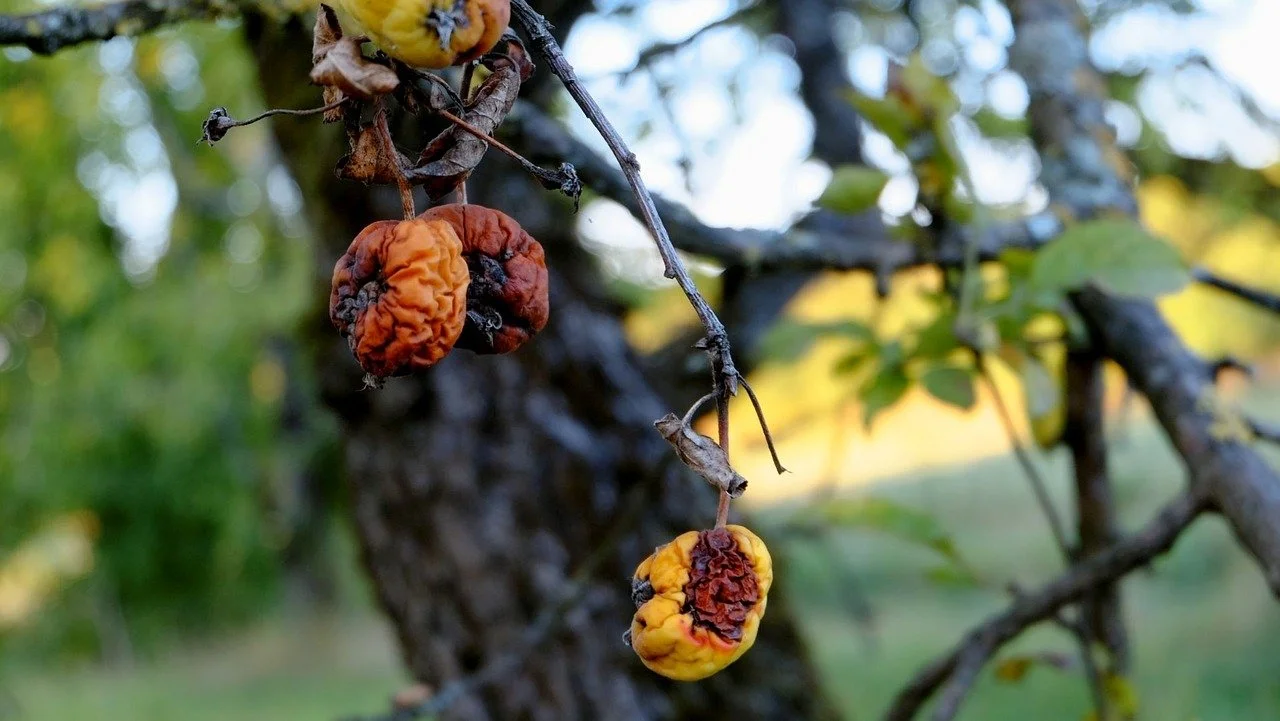
As I began to think about the leaves in all their different stages and hues of color change, I began to think about humanity. We are all so very different, but we are all God’s creation. All of us are going through the process of change.

Some of us may change gracefully, easily allowing God to work and bring the change about. These remain soft and pliable to the will of God.

Others change in small spurts, often stubbornly bending to God’s desire in their lives. A little rough around the edges they learn to love Jesus without abandon.

Still others, go through great difficulty as God allows change to color them differently than others. Sometimes these leathery individuals have the deepest knowledge and understanding of who God is.

This is just one way creation can inspire an individual. Has your faith been inspired by God’s creation? I would love to hear your thoughts and stories in the comments below. Please share, so others can hear how God has worked in your life.

I hope you have a great weekend!

Mulling it Over - Romans 8:18-25 Part 1: Of Suffering and Longing

Another month has gone by and we have come back around to Mulling Over Romans chapter 8. This chapter is full of information that is pertinent to our walk with Christ and to our future with Him. I know it can be hard to think about the future when our days are so full of the present, but one day we will know fully our inheritance in Christ Jesus. As it is, our lives at this point are merely reflections of Christ, and many of us have dirty mirrors. God is often trying to clean those mirrors with a glorified bottle of Windex and a rough cloth, and that can make us uncomfortable, but remember our goal is to be like Christ, so clean on Father, clean on!

Image by Simon Kadula from Pixabay

18 For I consider that the sufferings of this present time are not worthy to be compared with the glory that is to be revealed to us.
19 For the anxious longing of the creation waits eagerly for the revealing of the sons of God.
20 For the creation was subjected to futility, not willingly, but because of Him who subjected it, in hope
21 that the creation itself also will be set free from its slavery to corruption into the freedom of the glory of the children of God.
22 For we know that the whole creation groans and suffers the pains of childbirth together until now.
23 And not only this, but also we ourselves, having the first fruits of the Spirit, even we ourselves groan within ourselves, waiting eagerly for our adoption as sons, the redemption of our body.
24 For in hope we have been saved, but hope that is seen is not hope; for who hopes for what he already sees?
25 But if we hope for what we do not see, with perseverance we wait eagerly for it.
— Romans 8:18-25 (NASB 1995)

This is a longer section so we’ll take it a chunk at a time.

For I consider…

I wanted to take these three words by themselves because they are so important. One of the things I often hear Christians accused of is that they don’t think. They take the scriptures, and the historicity of their belief system on blind faith. While it is true that we are walking by faith, it is also true that we, with the Holy Spirit’s help, are able to think just as intellectually about our faith as someone who has studied for years and has multiple degrees.

Webster’s Online Dictionary defines the word consider in the following ways: to think about carefully; to think of especially with regard to taking some action; to take into account; to regard or treat in an attentive or kindly way; to gaze on steadily or reflectively; to judge or classify; regard; suppose; reflect or deliberate.

When we look at the book of God, the Bible, we need to consider what we are reading. We also need to look at life and consider what it means, and how what we are doing, or going through pertains to our faith, or how our faith pertains to it. We aren’t meant to just bull doze our way through life giving no regard to how our actions or words are affecting the people around us.

Image by Paul Brennan from Pixabay

In this particular passage the word consider relates directly to the words that follow.

…that the sufferings of this present time are not worthy to be compared with the glory that is to be revealed to us.

I have been emphasizing this idea of suffering over the last few months, not because I am trying to be a downer, but because suffering is inevitable. We all, at some point in time, will suffer. We will know illness, loss, grief, sadness, anger, fear and the overwhelming reality of a busy life in a chaotic and fallen world. It is not bad or wrong to consider our suffering.

12 Beloved, do not be surprised at the fiery ordeal among you, which comes upon you for your testing, as though some strange thing were happening to you;
13 but to the degree that you share the sufferings of Christ, keep on rejoicing, so that also at the revelation of His glory you may rejoice with exultation.
— I Peter 4:12-13 (NASB 1995)

Paul, however, did not want us to be solely focused on our suffering. In fact, He says that whatever we are currently suffering through is not worthy to be compared with the glory that is going to be revealed to us. Let’s just sit there for a minute.

Think about all the bad stuff you have been through. Some of you have lived through the typical minor inconveniences life offers like, car break downs, the fridge stops working, or the toilet backs up. Others have walked a bumpier path. You have lost a job, a home or been through a divorce. Still others have seen suffering in the form of addictions, jail time, death of a loved one, or a chronic, incurable disease. No matter what the suffering, it is not worthy of being compared to the glory that awaits us! Isn’t that amazing? What hope is ours that the suffering we are going through on this planet will pale in comparison to the joy and glory we will know when we see Jesus face to face.

For the anxious longing of creation waits eagerly for the revealing of the sons of God.

Have you ever thought about the fact that the world: the trees, birds, fish, animals, rocks and so on have longings? Is it possible for creation to be anxious as it waits for the revealing of the sons of God? Stay with me here. I am not talking about something weird or spooky. Let’s back up a minute.

In the beginning God created the heavens and the earth (Genesis 1). If God created them, don’t they have His signature on them in a similar way that we have His signature on us. Granted we are human beings and we are made in the image of God, while creation was not, but that does not mean that creation is unable to recognize its creator and recognize the position of humanity as its caretaker.

There is a reason creation waits eagerly which we see in the next verse.

For the creation was subjected to futility, not willingly, but because of Him who subjected it, in hope…

The creation did not want to be cursed. It enjoyed its relation to its Creator and to its caretaker. It rejoiced in the growing and the greening, the fullness and the fellowship. When sin came into the world, God didn’t just send Adam and Eve out of the the beautiful garden of Eden, but the creation changed. It became rife with weeds and thorns. Where once all animals lived in harmony, now certain animals became predators and all others became prey. In addition, creation no longer bore the fruit of the relation between it and its Creator, but was subject to futility, disease, rot and death.

Image by Ilo from Pixabay

But God…

In hope…

…that the creation itself will also be set free from its slavery to corruption into the freedom of the glory of the children of God.

This was God’s hope from the foundation of the world. He knew it all before it began. He knew when He set into motion the creation of a planet and the filling of that sphere of rock and stone with all that is living, and breathing, moving and reaching…He knew that His beautiful creation would suffer and die. So He also created the plan, the One, the Savior, the Son. It was only by this, the gift of pure, unselfish love, that the whole of creation would be able to be set free. But, it will not happen until we are face to face, fully knowing as we have been fully known (1 Corinthians 13:12); when we become His perfect reflection.

Next time we will continue our look at this section of Romans 8 by looking at the Groaning and the Hope.

Have a great weekend!