Faith Musings: Nothing to Boast About - Part 5

As we see August come to an end, and September begin, I feel the pull of fall. I have always loved this season. From the changing leaves and the cooling temperatures, to the pumpkin muffins and jack-o-lanterns, fall always gives me a feeling of expectation. I think part of that stems from the fact that fall includes Halloween, Thanksgiving and leads to winter and my favorite time of year, Christmas. Seasonal changes give us many things to think about with regard to our faith walk with Jesus, and I will be pursuing some of those ideas soon, but today, I want to continue our walk through 1 Corinthians 2.

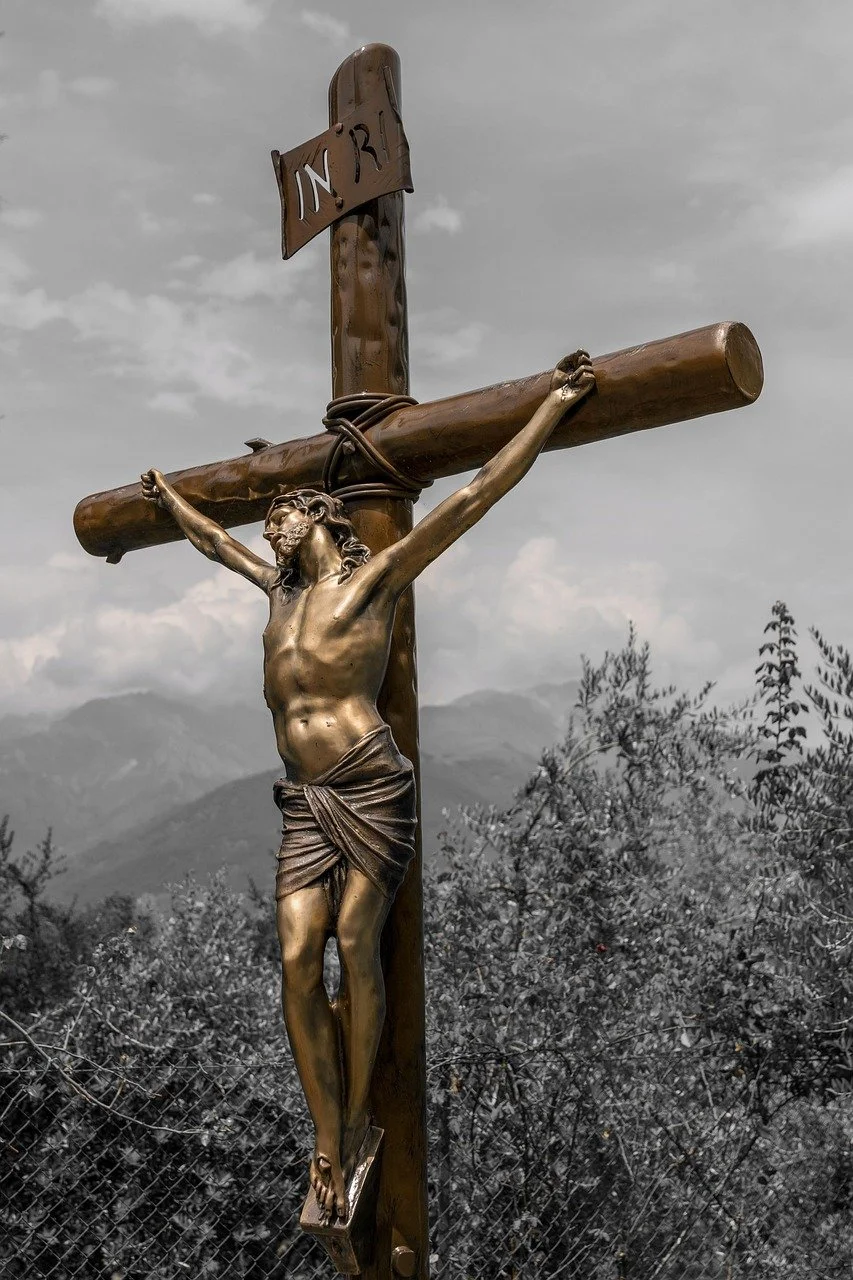
Image by claude alleva from Pixabay

1 And when I came to you, brethren, I did not come with superiority of speech or of wisdom, proclaiming to you the testimony of God.
2 For I determined to know nothing among you except Jesus Christ, and Him crucified.
3 I was with you in weakness and in fear and in much trembling,
4 and my message and my preaching were not in persuasive words of wisdom, but in demonstration of the Spirit and of power,
5 so that your faith would not rest on the wisdom of men, but on the power of God.
6 Yet we do speak wisdom among those who are mature; a wisdom, however, not of this age nor of the rulers of this age, who are passing away;
7 but we speak God’s wisdom in a mystery, the hidden wisdom which God predestined before the ages to our glory;
8 the wisdom which none of the rulers of this age has understood; for if they had understood it they would not have crucified the Lord of glory;
9 but just as it is written,

“Things which eye has not seen and ear has not heard,
And which have not entered the heart of man,
All that God has prepared for those who love Him.”
— 1 Corinthians 2:1-9 (NASB 1995)

Right now we are still looking at verses 1-9. We learned from Chapter 1:18-25 that man’s wisdom and God’s wisdom are two distinct things. The reality is God uses all that is contrary to our wisdom to accomplish His plan from the weak and foolish, to the cross of Christ, His wisdom is contrary to all that our wisdom believes is important. We see Paul reiterating these same ides as Chapter 2 begins and we read, “I determined to know nothing among you except Jesus Christ, and him crucified…”

6 - Yet we do speak wisdom among those who are mature; however, not of this age or of the rulers of this age who are passing away;

Paul, who has made clear that he was weak, and fearful when it came to his ability to speak, and who also made clear that his message was not of his own wisdom and ability, but God’s, now states with confidence he speaks wisdom among the mature.

Who were the mature? People who already knew the gospel, believed it and were living their lives following Jesus. Think of your own situation as a Christ follower. Do you feel like you know more now than when you first came to Him? Have you gained more understanding as you delved into His word? Would you consider yourself more mature than you were several decades ago? I say a resounding yes, but it is because of His work and His wisdom.

Let’s take a closer look at what this wisdom is (verses 6 - 9).

What it isn’t - Not of this age (and that is true just as much today as it was in Paul’s time). Not of the rulers of this age (who come and go, live and die). Not able to be understood without God.

What it is - Of God. A mystery. Hidden. Predestined before the ages. Prepared by God for those who love Him.

One may wonder if it is something God wants us to know and understand, why does He keep it a hidden mystery? Go back to the title of this series - Nothing to Boast About. He did the work. He does the work. He has hidden it, He will reveal it. What then is my part?

To believe.

It seems so very simple, but how often do we doubt? How often do we find ourselves second guessing? How often are we pacing the floor because we don’t see our prayers answered in our time line? How often do we live in the flesh, rather than in His Spirit?

Man’s wisdom says, “You do you! Be all you can be! Pull yourself up by your own bootstraps!”

God’s wisdom says, “Come to Me! Believe! Trust!”

How are you living today? By your own wisdom, or by trust God?

Faith Musings: Nothing to Boast About - Part 4

After a few more busy weeks we are at the end of our summer hiatus and schools are back in session. My spouse, who is a college professor, is back in the classroom next week. I wanted to return to the verses we had been looking at in 1 Corinthians. You can see the first three parts: Part 1, Part 2 and Part 3 by clicking on the links.

1 And when I came to you, brethren, I did not come with superiority of speech or of wisdom, proclaiming to you the testimony of God.
2 For I determined to know nothing among you except Jesus Christ, and Him crucified.
3 I was with you in weakness and in fear and in much trembling,
4 and my message and my preaching were not in persuasive words of wisdom, but in demonstration of the Spirit and of power,
5 so that your faith would not rest on the wisdom of men, but on the power of God.
6 Yet we do speak wisdom among those who are mature; a wisdom, however, not of this age nor of the rulers of this age, who are passing away;
7 but we speak God’s wisdom in a mystery, the hidden wisdom which God predestined before the ages to our glory; 8 the wisdom which none of the rulers of this age has understood; for if they had understood it they would not have crucified the Lord of glory;
9 but just as it is written,

“Things which eye has not seen and ear has not heard,
And which have not entered the heart of man,
All that God has prepared for those who love Him.”
— 1 Corinthians 2:1-9 (NASB 1995)

Image by Arnie Bragg from Pixabay

Last time we looked at the first two verses and we emphasized two important points: 1 - Paul determined, and 2 - to know nothing but Jesus Christ, and Him crucified. We looked at the disparity of a social gospel built only on the foundation of love and good works, and the true gospel of Christ’s death and resurrection. Make no mistake we are responsible to love and to do good works, especially to those who are less fortunate (see Matthew 25:31-46), for without the good works we are merely a clanging cymbal or a ringing bell in a symphony of humanity. Part of what makes Christianity different is the example Christ set of loving others, but not just that. The true difference lies in His death on a cross, and His ability to walk out of the grave. This is the power that gives us the ability to love the unlovely, and help the helpless.

Paul continues his letter by reminding them - I was with you in weakness, and in fear, and in much trembling. This was a reference to himself, and not to the people he was with. Paul was not an entertainer. Even though he was learned in the teachings and ways of the Torah and his own people, it is possible he felt “less than” among the intellectuals in Corinth. Orators of that time period were expected to wow the crowd, and this was not Paul’s gift. He simply preached the truth of the gospel. Paul continues this line of thought.

…and my message and my preaching were not in persuasive words of wisdom, but in demonstration of the Spirit and of power…

Image by Pexels from Pixabay

How often do we pine for the notoriety and visibility of being someone important? I grew up in an era where every young person wanted a guitar or a set of drums so they could become the next great rock and roll sensation; myself included. Now we live in a world saturated with images, and videos of people being “important” in what they say, how they dress, what they do, how they identify, and all of it being based on how many views, thumbs up or hits they get on their social media posts. We have people like Taylor Swift who started out by sharing her music on YouTube and now she is “…a cultural icon of the 21st century. She is the highest-grossing live music artist, the wealthiest female musician, and one of the best selling music- artists of all time.” (Wikipedia) How many will long to follow in her footsteps, but will never make it past the borders of the small town they grew up in?         

We now hear speakers in seminars, podcasts and talk shows discussing the art of persuasion. Being able to persuade seems to be important enough that it must be taught and discussed like ancient history or English grammar. Why are we so anxious to persuade? Because we want, not just recognition, but community in our ideologies and thoughts. We want people to agree with us, and join us in turning others to our side and our way of thinking.

Paul recognized the work of the Spirit was beyond a seminar on the art of persuasion. It was a supernatural affair. Any effect he had as an apostle he attributes to the work of the Holy Spirit. People coming to Jesus when he spoke were a demonstration of Spirit and the power. What power? God’s power?

but you will receive power when the Holy Spirit has come upon you; and you shall be My witnesses both in Jerusalem, and in all Judea and Samaria, and even to the remotest part of the earth.”
— Acts 1:8 (NASB 1995)

Image by Pexels from Pixabay

Do a quick walk through of the book of Acts and you will see numerous places where the Holy Spirit moved, and saved, and worked. His power filled the disciples and helped the fledgling churches to grow into a world wide movement that today still holds the power of God.

Once again we are reminded that we have nothing to boast about when Paul says, “so that your faith would not rest on the wisdom of men, but on the power of God.” God intended from the beginning that the foolish things would overcome the wise and the weak would overcome the strong.

Until next time, keep walking in His strength and in His Spirit!

Faith Musings: Nothing to Boast About - Part 3

This second chapter of 1 Corinthians seems a perfect continuation of the verses we looked at previously in Faith Musings: Nothing to Boast About - Part 1, and Nothing to Boast About - Part 2.

Image by Joe from Pixabay

1 And when I came to you, brethren, I did not come with superiority of speech or of wisdom, proclaiming to you the testimony of God.
2 For I determined to know nothing among you except Jesus Christ, and Him crucified.
3 I was with you in weakness and in fear and in much trembling,
4 and my message and my preaching were not in persuasive words of wisdom, but in demonstration of the Spirit and of power,
5 so that your faith would not rest on the wisdom of men, but on the power of God.
6 Yet we do speak wisdom among those who are mature; a wisdom, however, not of this age nor of the rulers of this age, who are passing away;
7 but we speak God’s wisdom in a mystery, the hidden wisdom which God predestined before the ages to our glory;
8 the wisdom which none of the rulers of this age has understood; for if they had understood it they would not have crucified the Lord of glory;
9 but just as it is written,

“Things which eye has not seen and ear has not heard,
And which have not entered the heart of man,
All that God has prepared for those who love Him.”
— I Corinthians 2:1-9 (NASB 1995)

Paul continues his discourse on the wisdom of God versus the foolishness of man by stating that when he came to the church at Corinth he did not preach by his own ability, but by the ability God gave him.

“And when I came to you, brethren, I did not come with superiority of speech or of wisdom, proclaiming to you the testimony of God.”

If anyone could have boasted in his own abilities it was Paul. Born a Hebrew, he was raised in the prosperous city of Tarsus, a center for trade on the Mediterranean coast, a city which also housed a well known school.

Image by sebastiano iervolino from Pixabay

4 although I myself might have confidence even in the flesh. If anyone else has a mind to put confidence in the flesh, I far more:
5 circumcised the eighth day, of the nation of Israel, of the tribe of Benjamin, a Hebrew of Hebrews; as to the Law, a Pharisee;
6 as to zeal, a persecutor of the church; as to the righteousness which is in the Law, found blameless.
— Philippians 3:4-6 (NASB 1995)
6 But perceiving that one group were Sadducees and the other Pharisees, Paul began crying out in the Council, “Brethren, I am a Pharisee, a son of Pharisees; I am on trial for the hope and resurrection of the dead!”
— Acts 23:6 (NASB 1995)

Paul referred to his upbringing not to boast in his abilities, but to appeal to the audience he was talking to. He always made clear that his abilities to teach and preach were from God .

For I determined to know nothing among you except Jesus Christ, and Him crucified.

This stands out to me for two reasons. First, Paul determined. This word does not give us a feeling of being wishy washy. It shows us the apostle was firmly resolved. It is convicting to me, because when I ask myself what am I firmly resolved or determined about, I realize in this chaotic world we are living in I have become more uncertain, unsure and even doubtful about many things, even my relationship with Christ. Yes, there are things I am sure of: my salvation, the Bible, God’s good character and so on. Perhaps, like Paul I need to focus on the main thing.

Image by DetBe from Pixabay

Second, what was Paul determined to know? Nothing…except Jesus Christ, and Him crucified. Why is this so important? Isn’t it more important to preach and teach love? After all Christ loves us and desires that we all be in heaven with Him. This is where I am beginning to see disparity in the church. If we do not preach the reason Christ came, and had to be crucified, all the love in the world will not fix all that is wrong with it. Christ came because we are sinners. Not one of us is good enough to earn our way into heaven, no matter how much love we show. And the truth is, if I only preach the love of God, then I do not really love. We have to talk about the darkness, the disobedience, and the distance between us and Him.

Remember these verses? Jesus said of Himself:

6 Jesus said to him, “I am the way, and the truth, and the life; no one comes to the Father but through Me.
— John 14:6 (NASB 1995)
5 I am the vine, you are the branches; he who abides in Me and I in him, he bears much fruit, for apart from Me you can do nothing.
6 If anyone does not abide in Me, he is thrown away as a branch and dries up; and they gather them, and cast them into the fire and they are burned.
— John 15:5-6 (NASB 1995)
23 He who hates Me hates My Father also.
24 If I had not done among them the works which no one else did, they would not have sin; but now they have both seen and hated Me and My Father as well.
25 But they have done this to fulfill the word that is written in their Law, ‘They hated Me without a cause.’
— John 15:23-25 (NASB 1995)
18 “Behold, we are going up to Jerusalem; and the Son of Man will be delivered to the chief priests and scribes, and they will condemn Him to death,
— Matthew 20:18 (NASB 1995)
31 And He began to teach them that the Son of Man must suffer many things and be rejected by the elders and the chief priests and the scribes, and be killed, and after three days rise again.
— Mark 8:31 (NASB 1995)

These are just a few of many verses in the Gospels where Christ talks about His purpose, which was to be obedient to the Father, and die on a cross for sinful humanity.

Does the Bible talk about God’s love? Of course it does. One of the most famous verses many of us memorized as youngsters in church follows:

16 “For God so loved the world, that He gave His only begotten Son, that whoever believes in Him shall not perish, but have eternal life.
— John 3:16 (NASB 1995)

Image by Engin Akyurt from Pixabay

However, even this verse talks about God’s love in the context of our need, and our sin. Why would we perish if we were perfect? Why would we need God if love was the answer to all our problems? Love is the answer, but it is God’s love; God’s pure, perfect, and holy love.

I would like to let these first two verses of this second chapter of 1 Corinthians sink in for the next week. Do you think we need to be more determined like Paul? If so, what are we to be determined about? I’d love to hear your thoughts, so leave a comment or two below.

Until next week, have a great weekend!

Faith Musings: Nothing to Boast About - Part 1

I want to apologize for the inconsistent status of my blog right now. Life is, as it has so often been in the last decade, relentless. Just trying to live each day has become something closer to survival and I often have to stop myself from saying, “If I can just make it to 5:00, or if I can get to Friday…” Many of you are living this life as well, so I know you get it.

It seems somewhat appropriate that the thoughts coming to my heart and spirit today for this blog post are a bit of a continuation of my post from last week on The Plague of Individuality. I was searching the Scriptures wondering what to write about and this passage came across my line of sight.

18 For the word of the cross is foolishness to those who are perishing, but to us who are being saved it is the power of God.
19 For it is written,

“I will destroy the wisdom of the wise,
And the cleverness of the clever I will set aside.”

20 Where is the wise man? Where is the scribe? Where is the debater of this age? Has not God made foolish the wisdom of the world?
21 For since in the wisdom of God the world through its wisdom did not come to know God, God was well-pleased through the foolishness of the message preached to save those who believe.
22 For indeed Jews ask for signs and Greeks search for wisdom;
23 but we preach Christ crucified, to Jews a stumbling block and to Gentiles foolishness,
24 but to those who are the called, both Jews and Greeks, Christ the power of God and the wisdom of God.
25 Because the foolishness of God is wiser than men, and the weakness of God is stronger than men.
— I Corinthians 1:18-25 (NASB 1995)

I want to focus on these verses and what follows for the next few weeks. From these eight verses we can see that God’s wisdom and man’s wisdom are vastly different. What man deems as wisdom, God deems as foolishness. What God sees as wise, the world sees as ludicrous. Let’s take a closer look.

The Cross - Foolishness or Power?

Verse 18 says “…the word of the cross is foolishness to those who are perishing, but to us who are being saved it is the power of God.” Paul used the phrase, “the word of the cross” in reference to the preaching and teaching of the gospel: the life, death and resurrection of Jesus. It is in the cross, and its purpose that we only experience the true power and might of God.

The world sees the cross of Christ as a crutch; as something offensive and undesirable, just as the Jews of Jesus’ time did. They could not believe Jesus was the chosen One of God, nor could they believe He was the Son of God as He had claimed, because that would mean everything they had built to control and govern their people would come crashing down around them. Jesus was supposed to be a victorious king; a man of noble birth. He certainly wasn’t suppose to be the son of a carpenter and die a horrible death on a few pieces of splintered wood.

As Christ followers it is in this “foolishness” of the cross we find our greatest power. Jesus and the sacrifice of His own life on that cross has given us the ability to not only have life in Him, but to have abundant life here on this earth, even amidst the struggles and relentlessness of the fleshly grind. The cross and the blood that flowed is what gives us hope. The cross is the reminder that we are not our own, but bought with a price. The cross deletes all our boldest attempts to have peace with God, because we can’t. Only the cross could do this!

…For it is written…

I cannot say enough how important the written word of God is to the believer’s faith walk. It is with increasing numbers that people, including our children, have walked away from the faith because they have chosen to disbelieve the authority and validity of the written word. Books like Josh McDowell’s Evidence That Demands a Verdict, and Lee Strobel’s The Case for Christ, are just two of the many books that explore the claims surrounding the inspiration, writing and collection of the word of God as it is laid out in our Bibles.

However, the true test of the validity of scripture is the Word itself. It baffles me how a person can read a news article, take it as God’s honest truth, with little validation, but the Bible which has been around for centuries is constantly doubted and touted as having all sorts of inconsistencies, etc. Jesus himself attested to the validity of God’s word in His high priestly prayer.

17 Sanctify them in the truth; Your word is truth.
— John 17:17 (NASB 1995)

The Wisdom of the Wise, or of God.

What follows, “For it is written…” is a reference to Isaiah 29:14. The main message of this Old Testament chapter had to do with the warning God was giving Jerusalem for pretending to follow His ways and His laws, but not really meaning it in their hearts. Matthew Henry’s Commentary says it rather well:

Image by djedj from Pixabay

Here, I. The prophet stands amazed at the stupidity of the greatest part of the Jewish nation. They had Levites, who taught the good knowledge of the Lord and had encouragement from Hezekiah in doing so, 2 Chron. 30:22. They had prophets, who brought them messages immediately from God, and signified to them what were the causes and what would be the effects of God’s displeasure against them. Now, one would think, surely this great nation, that has all the advantages of divine revelation, is a wise and understanding people, Deut. 4:6. But, alas! it was quite otherwise, Isa. 29:9. The prophet addresses himself to the sober thinking part of them, calling upon them to be affected with the general carelessness of their neighbours.
— Matthew Henry's Commentary

What follows is God’s discipline of His people by taking away their ability to be wise or clever. Does this seem at all familiar? “Where is the wise man? Where is the scribe? Where is the debater of this age? Has not God made foolish the wisdom of the world?”

The rest of this passage reminds us that it is through God’s wisdom, not man’s, that He is found. In other words, we can read all the books, listen to all the podcasts, watch all the YouTube How To’s, follow all the health, spirituality, exercise and mental well being gurus and still never find our way to God. The Jews asked for signs, which they rejected, because they could not believe Jesus was the long awaited Messiah. The Greeks searched for wisdom, but when it came in the form of the gospel of Jesus Christ it was just foolishness.

The wisdom of God is Christ crucified. This is our power. This is our wisdom.

Because -

The foolishness of God is wiser than men,

And -

The weakness of God is stronger than men.

All we need to do is put our trust in Him. End of story.