A Series of (Un)Fortunate Events - Part 2: The Necessity of Misfortune

Last week I introduced you to A Series of Unfortunate Events, a book series by Lemony Snicket (Daniel Handler) that has also been made into a movie with Jim Carey, and a Netflix series with Neil Patrick Harris. The series follows three orphans, Violet, Klaus, and Sunny Baudelaire, who are trying to find out why their parents died in a fire, while at the same time trying to find a guardian who will love and care for them. The inheritance of their future fortune marks them easy prey for villains wanting their money, specifically Count Olaf.

I made the comparison that often we are like the orphaned Baudelaire’s experiencing one tragedy after another. Misfortune is, as the word’s meaning defines, unfortunate. The word fortunate is defined as - “bringing some good thing, not foreseen as certain; receiving some unexpected good.” Misfortune is defined simply as, “an unhappy situation.” When we call someone unfortunate we are saying they are “marked or accompanied by misfortune.” (Definitions from Webster’s Online Dictionary.)

All of us experience misfortune, but we don’t necessarily see everyone as unfortunate, where every day seems to be a struggle and hope is as elusive as an early morning mist. In fact, when a tragedy happens we will often say, “You were very fortunate. It could have been so much worse.” While this is true, it isn’t always the best thing to say.

If you have been following me for a while, you have probably heard me say that struggles and difficulty are not always all bad. We’ve all heard stories or watched a Hallmark movie, where something beautiful has come out of a terrible situation. In my own life I have seen the hand of God extend mercy in situations where the outcome of people’s choices could have been total tragedy.

Last week I discussed the necessity of Jesus’ departure from earth, so the Holy Spirit could come. Without the Helper’s constant guidance and revelation of God’s word we would be lost. Thus the need to recognize, not all tragedies and difficulties are truly unfortunate. With the Holy Spirit’s help we can recognize four key things about our difficulties.

1 - Allowed by God.

If you believe what the Bible says about God’s characteristics then you must acknowledge His sovereignty. If God is sovereign, all things that come into our lives are sifted through His fingers. We have the book of Job as one for instance of God allowing great difficulty into one man’s life. But, even after all the tragedy, Job knew God was good and sovereign.

He said, “Naked I came from my mother’s womb,
And naked I shall return there.
The Lord gave and the Lord has taken away.
Blessed be the name of the Lord.”
— Job 1:22 (NASB 1995)
9 Then his wife said to him, “Do you still hold fast your integrity? Curse God and die!”
10 But he said to her, “You speak as one of the foolish women speaks. Shall we indeed accept good from God and not accept adversity?” In all this Job did not sin with his lips.
— Job 2:9-10 (NASB 1995)

I can still remember a sermon I heard a few years ago when we were going through an especially hard time. The preacher made two points:

1 - God is sovereign and God loves you.

2 - When you are going through something hard refer back to point number 1.

It sounds pretty simple, but in reality it is. Our Almighty God is not trying to trick us, or manipulate us. He is completely straight forward. His holiness is pure. His goodness is everlasting. His mercies are new every morning. Most importantly, He loves us. Plain and simple.

2 - For our benefit.

Image by Melk Hagelslag from Pixabay

Most of us want things that are beneficial for us whether healthy food and exercise, a place to get away and rest, peace of mind and loving, nurturing relationships. God wants things that are beneficial for us as well. The difference is that as the author of all creation He has a far better grasp of what we truly need.

And we know that God causes all things to work together for good to those who love God, to those who are called according to His purpose.
— Romans 8:28 (NASB 1995)

Notice in the verse it says that God causes ALL things to work together for good. It isn’t only the happy, joyful, peaceful things that work for our good, it includes the mind numbing, tragic and ugly parts of life. How can this be the case? Because it is God who is doing the working for the good. We are hardly capable of getting ourselves out of bed in the morning, how is it we are going to know the deep needs of our own selves? We think we do…happiness, peace, no longing, no fear, no confrontation…but we are unwilling to go to the One who knows us inside out.

3 - Meant for God reliance.

A trapeze artist knows the importance of being in excellent shape physically, and mentally. They know their muscles must be strong and their minds must not be distracted by the difficulties of life. In addition, they are completely reliant on their equipment. A broken wire, or rusty chain must be repaired or replaced. How do they know these things? By being taught by others who went before.

When we encounter unfortunate events it is the perfect opportunity to check our relationship with God. Are we maintaining our connection with Him. Are we keeping short accounts on our sin? Are we spending time in His word? Are we searching for scripture and advice on how to get through our difficulties by His strength and with His grace?

I don’t care what the commercials are telling you…be all you can be. I don’t care what the social media influencers are preaching…you are strong, you got this, you are woman hear you roar…most messages that come from a source outside of God Himself, while encouraging are not going to keep you sane when the bottom falls out of your world.

5 Trust in the Lord with all your heart
And do not lean on your own understanding.
6 In all your ways acknowledge Him,
And He will make your paths straight.
7 Do not be wise in your own eyes;
Fear the Lord and turn away from evil.
8 It will be healing to your body
And refreshment to your bones.
— Proverbs 3:5-8 (NASB 1995)
6 Therefore humble yourselves under the mighty hand of God, that He may exalt you at the proper time,
7 casting all your anxiety on Him, because He cares for you.
— 1 Peter 5:6-7 (NASB 1995)
63 It is the Spirit who gives life; the flesh profits nothing; the words that I have spoken to you are spirit and are life.
— John 6:63 (NASB 1995)
8 It is better to take refuge in the Lord
Than to trust in man.
— Psalm 118:8 (NASB 1995)
10 ‘Do not fear, for I am with you;
Do not anxiously look about you, for I am your God.
I will strengthen you, surely I will help you,
Surely I will uphold you with My righteous right hand.’
— Isaiah 41:10 (NASB 1995)

We are meant to be God dependent, not independent.

4 - Renewal: God’s best outcome.

Coming through a series of unfortunate events is the perfect time for God to build something new in you. As you practice abiding in Him and relying on Him He will begin to weed that garden that He is cultivating in you. It may be that the misfortunes are actually His way of pulling the weeds of pride, self-centeredness and bitterness from your soul. Let Him be about His work for this will have the best outcome. You will come through your difficulties with a deeper, new found faith and knowledge, not only of who you are, but more importantly of who God is.

And do not be conformed to this world, but be transformed by the renewing of your mind, so that you may prove what the will of God is, that which is good and acceptable and perfect.
— Romans 12:2 (NASB 1995)
Therefore we do not lose heart, but though our outer man is decaying, yet our inner man is being renewed day by day.
— 2 Corinthians 4:16 (NASB 1995)
He saved us, not on the basis of deeds which we have done in righteousness, but according to His mercy, by the washing of regeneration and renewing by the Holy Spirit,
— Titus 3:5 (NASB 1995)

I want to encourage you to remember, you are not alone in your difficulty. There is a loving, omnipotent God working through your series of (un)fortunate events.


What am I Rejoicing In?

As I continued to look at the word rejoice, I came across another story in the Old Testament that I thought might be worth sharing. From the beginning of time God wanted to be the center of men’s worship. As we look at the Biblical account of how the world came into being and how God made everything in it, we see that He created man with a purpose much different than any of the other things He created. God made man to have a relationship with Him.

Pixabay

26 Then God said, “Let Us make man in Our image, according to Our likeness; and let them rule over the fish of the sea and over the birds of the sky and over the cattle and over all the earth, and over every creeping thing that creeps on the earth.”
27 God created man in His own image, in the image of God He created him; male and female He created them.
28 God blessed them; and God said to them, “Be fruitful and multiply, and fill the earth, and subdue it; and rule over the fish of the sea and over the birds of the sky and over every living thing that moves on the earth.”
— Genesis 1:26-28 (NASB 1995)

We see that God gave man a job, to rule over the earth, and that means take care of it, not abuse and misuse it.

8 They heard the sound of the Lord God walking in the garden in the cool of the day, and the man and his wife hid themselves from the presence of the Lord God among the trees of the garden.
9 Then the Lord God called to the man, and said to him, “Where are you?”
10 He said, “I heard the sound of You in the garden, and I was afraid because I was naked; so I hid myself.”
— Genesis 3:8-10 (NASB 1995)

Pixabay

From the above text we can reason that God regularly walked in the garden, and he also walked and talked with Adam and Eve. They heard the sound of the Lord, so they were familiar with His footfall, his voice or maybe he was singing as he walked along. They hid from Him, because they were ashamed. They knew they had displeased the One who walked and talked with them in the garden.

It is not that God needs us. He is God and is outside our understanding of what need is. God is, and God moves. One day He decided to create and from that creation came our world, and us. However, His creating wasn’t a random act. He had thought it through and had a plan. Part of that plan was that He would have preeminence in our lives. He created us with His image imprinted on us. He and we are connected.

After the days of Moses leading the people out of Israel and wandering around the wilderness, the people became set on having someone who could rule them. They no longer wanted God to be their ruler. After going through a period of various judges, God gave them what they wanted. They wanted a man who could be king, and so we have Saul, the first in a long line of kings for Israel.

Pixabay

15 So all the people went to Gilgal, and there they made Saul king before the Lord in Gilgal. There they also offered sacrifices of peace offerings before the Lord; and there Saul and all the men of Israel rejoiced greatly.
— ! Samuel 11:15 (NASB 1995)

When I read this verse I was suddenly struck by the question, “I wonder what Saul and the men of Israel were rejoicing in?” In Deuteronomy the act of rejoicing always had to do with the Lord. It was associated with feasts and celebrations of remembrance of God’s provision and salvation. When we read Hannah’s story in I Samuel we also see that she rejoiced in the Lord and in His provision for her and for the nation of Israel. It does say that the people made Saul king “before the Lord,” and “they also offered sacrifices of peace offerings before the Lord.” It does not say that they specifically rejoiced in the Lord or in what He had done.

I may just be nitpicky and perhaps looking for something that is not there, but it does make me ask myself, “In what or whom am I rejoicing?” You see, it was only a few chapters later and we read that Saul had only been king for two years and he messed up.

8 He waited seven days, the time appointed by Samuel. But Samuel did not come to Gilgal, and the people were scattering from him.
9 So Saul said, “Bring the burnt offering here to me, and the peace offerings.” And he offered the burnt offering.
10 As soon as he had finished offering the burnt offering, behold, Samuel came. And Saul went out to meet him and greet him. 11 Samuel said, “What have you done?”...
— 1 Samuel 13:8-11 (ESV)

Saul decided he could be both king and priest, which was not God’s plan. Saul was impatient and prideful and we see that he eventually becomes obsessed with David’s demise, eventually making him unfit to be king. It seems trouble followed Saul, which brings me back to the question, who did Saul rejoice in?

There are two questions we should ask ourselves when it comes to rejoicing.

What are the circumstances that led us to rejoice? Was it something we did? Was it a task we accomplished? Or was it something God accomplished?

Who is receiving the honor and glory in this celebration? Is it me? Is it another individual? Or is it God? We honestly like to receive honor and glory don’t we? I’ve often felt if I became a best selling author would I be able to handle that honor and glory? Or would I become big headed about my talent and ability?

Image by Gerd Altmann from Pixabay

If we are rejoicing in ourselves and our accomplishments, or if we are rejoicing in someone else and their accomplishments, that celebration is momentary. You see the root word in rejoice is joy. To rejoice is to have and impart joy over and over again. There is only one being who can bring us that sort of deep, unyielding joy and that is God. Yes! It is good to rejoice and find joy in good things and in good situations; to celebrate life and all the special moments, but true rejoicing happens in the wilderness when we remember who got us through every single moment of every single day.

“Rejoice in the Lord always; again I will say, rejoice.” (Philippians 4:4 - NASB)

Becoming a Child to Tear Down a Wall

Writing a faith post is not always as easy as writing a fashion post. A fashion post is just a matter of choosing an outfit, taking a few pictures and then talking about it. The hardest part is probably deciding what to put on. That, and my photography skills are still a work in progress. However, a faith post requires more thought. Not only that, but when I talk about God, and His word, I want to make sure that what I am saying makes sense and is accurate according to His truth.

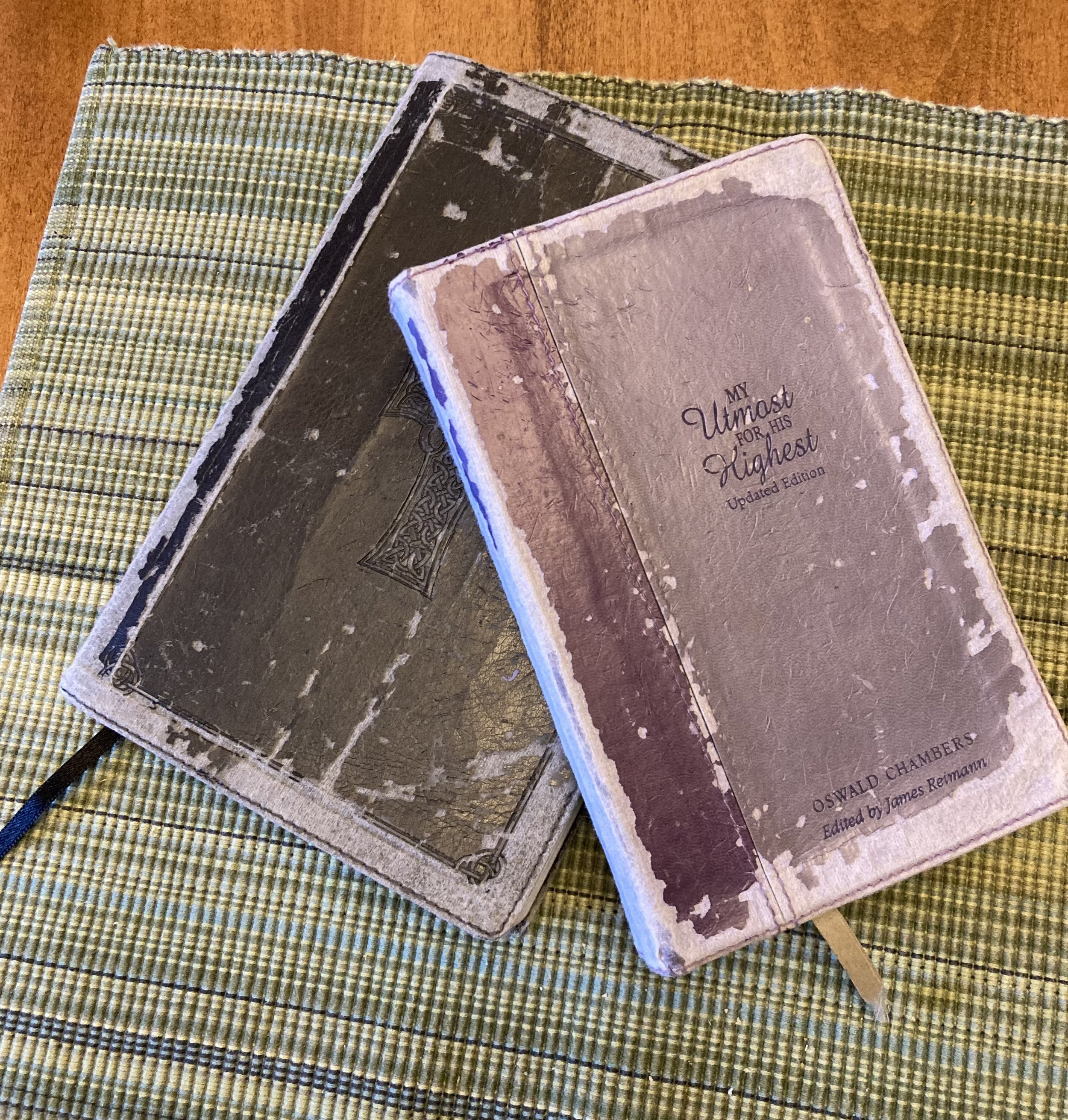
Today I was reading in my devotional book. I have a copy of Oswald Chamber’s My Utmost for His Highest. I have been using this devotional for years. The copy I currently have is 15 years old. It is pock marked, highlighted and written all over, much like my oldest Bible. The thing I like about this devotional is that the truths he spoke about, back in the early years of the 19th century are still just as true today. That is the thing about God’s word and devotionals that stick to Biblical truth, it does not change. It is constant.

I know many people will say that is the problem. We need to change to keep current in this crazy world. The problem is I do not believe that. God’s word is living and active. It has, is and will continue to have the ability to move and change lives. The focus in today’s world is what will make me happy. After all, being happy is all that matters, right? If I am happy, and everyone else is doing what they want to be happy, then there will be no more wars, no more greed, no more racism, no more hatred and no more crime. Everything will be perfect. Not!

Oswald said something interesting this morning.

It is our own opinions that make us dense and slow to understand, but when we are simple we are never dense; we have discernment all the time.
— My Utmost for His Highest - Oswald Chambers

Have you ever noticed how set in our ways we become as we get older. Our brains stop making new pathways and we just do the same things over and over again. Now, researchers and scientists studying Alzheimer’s are saying we need to do things differently. We need to be learning and changing our routines to keep our brains active and get longevity. The same is true in our spiritual lives. We don’t need to change God’s word so that it fits our lives, we need to change our hearts and minds to get back to the basics of God’s word.

Pixabay

When is the last time you had a deep, gut wrenching prayer time with God? How often do you spend really reading and understanding His written word? Is your worship just a Sunday morning thing, or do your regularly lift your voice and your heart heavenward?

When I think of simplicity I think of what Jesus said regarding children.

16 But Jesus called for the little ones, saying, “Allow the children to come to Me, and do not forbid them, for the kingdom of God belongs to such as these.
17 Truly I say to you, whoever does not receive the kingdom of God like a child will not enter it at all.”
— Luke 18:16-17 (NASB)

Pixabay

As Oswald said, it is our own opinions or creeds that keep us from really hearing and understanding what Christ is saying to us. Jesus puts it straight forward in the above verses. It is only by becoming like children that we will be able to enter heaven. What qualities does a child have, that makes it easier for them to believe?

1 - An ability to believe without seeing.

Pixabay

If you tell a child there is an ice cream truck outside, they will probably go running out the door to see it. Children take what we say at face value. They don’t try to rationalize, or come up with arguments for why they shouldn’t believe, they just do it. Children are the most likely to believe in magic, Santa Claus and the Tooth Fairy, even though they have never seen the real deal. Jesus knows, in order for us to have eternal life, we have to believe without actually seeing Him with our physical eyes.

2 - An ability to trust.

Pixabay

Children are very trusting, especially when they are little. Unfortunately, this is why predators target them. It is easy to coax a small child at a park to come see the box of puppies you have in your car trunk, because they will trust you. It is not until they have gone through bad experiences that children learn to not trust people. Jesus is absolutely trust worthy. He knows that without that complete, unreserved trust in Him we will not see the kingdom of Heaven.

3 - An imagination.

Pixabay

What are we without the ability to imagine, whether it is to imagine a world in a fictional story, or the ability to imagine that English Cottage garden we’ve always wanted? God gave us an imagination. Being able to imagine God, in all His forms is harder for us to do as adults. A child, however, will create a God who is all at once super hero and amazing bearded giant all rolled into one. Using the imagination that God has given us is the very means for the camel to fit through the eye of the needle. (Matthew 19:24)

4 - Joy.

Pixabay

Going back to my study of the word rejoice and eventually the word joy, I find it fitting that one of the simplest traits of children is that of joy. Think about how children view things like Christmas, animals at the zoo, rides at the park, picnics, puppies, kittens and flying kites. They most often do these things with a celebratory air of joy. This joy is that which gives us the ability to transcend this earthly shell and commune with the very being whose name is “I AM.”

Recently, in my Saturday morning Zoom group we were looking at 2 Corinthians 10. This section stood out.

3 For though we walk in the flesh, we do not war according to the flesh,
4 for the weapons of our warfare are not of the flesh, but divinely powerful for the destruction of fortresses.
5 We are destroying speculations and every lofty thing raised up against the knowledge of God, and we are taking every thought captive to the obedience of Christ,
— 2 Corinthians 10:3-5 (NASB - 1995)

I am not going to get into the whole idea of spiritual warfare as I have covered that previously on the blog, but there was something that stood out to us. In the above version we see the term “lofty thing”. In other versions we see, “high thing” (KJV), “lofty opinion” (ESV), “every pretension” (NIV), and “every proud obstacle” (RSV). Our facilitator, April, said that according to one thing she read these lofty things or lofty thoughts are like walls. These are barriers that have been built by us and keep the truth of God’s word from getting through.

Pixabay

Think about this for a minute. What does pride, bitterness, hatred, and other strong emotions do to our minds when left untended? In addition, what does a regular diet of vain philosophies, manipulative ideologies and other false doctrines do in our minds? They begin to be the bricks in a wall that we build, separating us from the one who loves us most; the only one who is always looking out for our best interests and who always speaks truth to us.

What Oswald said nearly 100 years ago is still true today…we are dense! We are too thick headed to see that we are being manipulated by the enemy. We come up with these ideas and opinions, not because we are being so open minded, but because we are cutting ourselves off from His truth. We don’t like what the Bible says about this or that, so we rationalize, then we cauterize and burn it away. While the coals from that fire are still glowing we start adding bricks to our wall.

Dear ones, I recognize that not everything the Bible says is easy to hear. Not every command is easy to follow. We might even say that not every story or example is applicable to the lives we are now living. BUT, this same God who created the world with a word, set the heavenly bodies in their exact places and breathed life into dust, also provided a way…the Way, the Truth and the Life, (John 14:6)

The only way we are going to be able to tear down the walls that are making us dense is becoming like a child once again, with the ability to believe without seeing, trust without reserve, imagining the reality of the spiritual realm and experiencing joy in all that He has given and done for us.

Have you built a wall between yourself and God? Ask Him today to help you tear it down.

Come to the Table

A good friend of mine started a Zoom devotional group a while back and asked me to be a part of it. Every Saturday, with a few exceptions here and there, the two of us along with four to six other ladies connect via the internet to study God’s word. We have been working through a particular devotional, so every week the scripture is something different. It has been the most rewarding thing I have done in a long time. It has been such pure joy to be back in God’s word with other like minded people. We are learning from passages we have read and reread over the years proving the very thing the Bible says about itself:

Pixabay

For the word of God is living and active, and sharper than any two-edged sword, even penetrating as far as the division of soul and spirit, of both joints and marrow, and able to judge the thoughts and intentions of the heart.
— Hebrews 4:12 (NASB)

This past week we focused on Psalm 23. As a Christ follower this is a very familiar passage. The chapter consists of only six verses, but they are verses that pack an incredible punch with regard to our relationship with the Almighty. My eyes were opened anew as we read and discussed this simplistic poem written by the shepherd who would become a king.

1 The Lord is my shepherd; I shall not want.
2 He makes me lie down in green pastures.
He leads me beside still waters.
3 He restores my soul.
He leads me in paths of righteousness
for his name’s sake.

4 Even though I walk through the valley of the shadow of death,
I will fear no evil,
for you are with me;
your rod and your staff,
they comfort me.

5 You prepare a table before me
in the presence of my enemies;
you anoint my head with oil;
my cup overflows.
6 Surely goodness and mercy shall follow me
all the days of my life,
and I shall dwell in the house of the Lord
forever.
— Psalm 23 (ESV)

I do not want to take the time in this post to focus on all of the verses. We could easily spend a whole post on each verse, because there is so much to unpack. I feel compelled to talk specifically about verse 5 for today’s lesson. Let’s plumb the depths of this incredible verse together.

You prepare a table before me.

Pixabay

I think this is an appropriate follow-up to our study of Hannah over the last couple months. It became obvious to me as I read and reread those verses detailing Hannah’s struggle, her ability to lean into the Lord and her complete trust in Him, that she was drawing from a source of strength and peace that we all need. Let’s look at a few questions.

Who is doing the preparation? God is. The whole passage is about the Good Shepherd and we know that the Good Shepherd is referring to the triune God: Father, Son and Holy Spirit.

What is He preparing? A table. When I prepare a table for a family meal, the first thing I do is make sure the table is clean. Next, I add either a table cloth or place mats, partly to protect the table surface and partly to make the table look nice. After this, I might add some sort of decoration, from a simple candle, to a vase of flowers, to some more elaborate centerpiece. I am a pretty simplistic person, so typically less is more when it comes to decor. Finally, I will set the table with plates, silverware, napkins and glasses. Finally, I will cover the table with the food that was prepared for the meal, including butter for bread, salt and pepper and extra napkins. I try to take care to think about the needs and desires of those who will be coming to my table.

For whom is the table prepared? For me. God has done this great thing in preparing a table before me. He does it in my sight, so I might know it is there and come feast from it whenever I need or want. He does not hide the table and all its delicacies in a room behind some sort of intricate maze or secret passages. It is right there in front of me. In addition this table is prepared by the Good Shepherd who stays with me prepared to meet every need I might have.

I want you to pay special attention to the tense of the word - prepare. It is present tense. This is all at once something He has done, is doing and will do. There is never any lack or anything wanting at the table the Good Shepherd has prepared for me. The fact that He prepares the table before me, means that He is always preparing it. He doesn’t prepare it and then leave. A good host or hostess, doesn’t leave the room when dinner is served. They stay and sit and eat with their guests, always attentive to any need or desire that might arise.

Even as I type this, I am floored by the lavish love of our gracious Lord and Savior.

…in the presence of my enemies…

Pixabay

More questions.

Why does the Good Shepherd prepare this table before me in the presence of my enemies? I believe that God wants us to know two things. The first is His provision is for us; those who have allowed Him to brand His name on their hearts. That ornate table, full of good things is for those who call Him Lord.

The second is to remind us that we do have enemies.

Be sober-minded; be watchful. Your adversary the devil prowls around like a roaring lion, seeking someone to devour.
— I Peter 5:8 (ESV)

Just like the sheep have enemies, we too, need to be reminded that we have a real enemy who is seeking to devour us. The fact that our table is there for the enemy to see is a reminder that we do not need to be afraid, as long as we are in the Good Shepherd’s care. It is also a reminder to our enemies that we are provided for, always.

…you anoint my head with oil…

Pixabay

The practice of anointing with oil was traditional in Jewish culture for many reasons. Let’s look at a few of these.

A Form of Respect - Anointing with oil was a way for the host or hostess to honor the guests invited to their meal. It was a way to show respect.

Designation of Position - There were three offices that would commence with oil of anointment: prophet, priest and king. Anointing usually took place when a person was becoming one of these offices or some time at the beginning of their post.

Helping the Sick - Anointing with oil became a more regular practice in the church starting with the disciples who would anoint sick people. Even today, there are still churches who practice anointing with oil and may or may not be reserved for those with illnesses or needs.

Setting Aside - Often one who is anointed with oil is being set aside for God’s purposes. This would also be applicable to inanimate objects such as an altar, a building or a specific furnishing or item used in worship.

When the Good Shepherd anoints our head with oil, He is doing all of these things. He is showing us respect as the guests who dine at His table. He is designating our position as His chosen ones. He is healing our ills and mending our wounds, and He is also setting us aside for His eternal purposes.

…my cup overflows.

Pixabay

Our Good Shepherd would certainly look to our need for quenching our thirst as well.

Jesus answered her, “If you knew the gift of God, and who it is that is saying to you, ‘Give me a drink,’ you would have asked him, and he would have given you living water.”
— John 4:10 (ESV)

What is this living water and where do we get it? Living water is the only water that can truly satiate our thirst. Not the physical thirst that our bodies use to signify we need to drink, but our spiritual thirst, that constant longing and looking for something to satisfy and make us feel complete. There is only one place that we can get this water and it will be given with such generosity and enthusiasm that our cups with splash joyfully as they overflow. Our cups overflow at the table our Good Shepherd prepares for us.

As a believer, we all have access to this table. This table is where we will find fellowship with the Good Shepherd. This table is where will find food to bring energy and life back to our battle weary souls. This table is where we will find rest and repose. This table is where we will quench or innermost desires and longings. This is the table Hannah ate from as she walked her little boy into the House of the Lord and left him.

The Good Shepherd prepares this table for you and for I. Come eat with me!

Rejoice Always: A Case Study - Part 4

Today I am going to finish up this particular case study of Hannah in the Old Testament. Hannah, who was Samuel’s mother, was a woman a great strength, deep desire and phenomenal trust in her God. A portion of the scripture we are going to look at is Hannah’s song of thanksgiving. This is what we are going to focus on and I want to do it just a few verses at a time, so we can slowly savor the thoughts and ideas.

Pixabay

Then Hannah prayed and said,

“My heart exults in the Lord;
My horn is exalted in the Lord,
My mouth speaks boldly against my enemies,
Because I rejoice in Your salvation.
— I Samuel 2:1 (NASB)

Keep in mind, Hannah is singing this song of thanksgiving after she has given her only son, Samuel, to Eli the priest to serve in the House of the Lord.

Hannah exults in the Lord. The word horn as it is used in this passage refers to strength, so Hannah is saying her strength is exalted in the Lord. The word exalt is a verb that means to lift high, to elevate by praise, to raise in rank or to enhance the activity of. In other words we could say, “My heart lifts high because of the Lord.” “My strength is elevated in the Lord.”

I do not know if Hannah was thinking of Penninah, her husband’s other wife, when she sang these words, or if she was thinking of her status as an Israelite, but either way she speaks boldly, because she rejoices in God’s salvation.

There is no one holy like the Lord,
Indeed, there is no one besides You,
Nor is there any rock like our God.
— 1 Samuel 2:2 (NASB)

PIxabay

Hannah states the truth she knows. As an Israelite she has been taught the scriptures, the laws and the commands. Her husband was a committed Jew, making sure he and his family got to the House of the Lord. But now, Hannah also has personal experience. She took her heart’s desire to have a child to God, and He remembered her and provided.

Do not go on boasting so very proudly,
Do not let arrogance come out of your mouth;
For the Lord is a God of knowledge,
And with Him actions are weighed
— 1 Samuel 2:3 (NASB)

Pixabay

I have a feeling Hannah was a pretty observant woman. She knew her scriptures, which probably also meant she knew the history of her people. This verse could have been a reference to Penninah, but for some reason I think Hannah was above that. I think this had more to do with the enemies of Israel.

The following verses are both declarative and somewhat prophetic for the state of Israel and the future of the nation as well.

4 The bows of the mighty are broken to pieces,
But those who have stumbled strap on strength.
5 Those who were full hire themselves out for bread,
But those who were hungry cease to be hungry.
Even the infertile woman gives birth to seven,
But she who has many children languishes.
6 The Lord puts to death and makes alive;
He brings down to Sheol and brings up.
7 The Lord makes poor and rich;
He humbles, He also exalts.
8 He raises the poor from the dust,
He lifts the needy from the garbage heap
To seat them with nobles,
And He gives them a seat of honor as an inheritance;
For the pillars of the earth are the Lord’s,
And He set the world on them.
9 He watches over the feet of His godly ones,
But the wicked ones are silenced in darkness;
For not by might shall a person prevail.
10 Those who contend with the Lord will be terrified;
Against them He will thunder in the heavens,
The Lord will judge the ends of the earth;
And He will give strength to His king,
And will exalt the horn of His anointed.”
— 1 Samuel 2:4-10 (NASB)

This ends Hannah’s song, but it certainly does not signify the end of her adventure with God. If we read further in this chapter we see God’s continued blessing on her.

18 Now Samuel was ministering before the Lord, as a boy wearing a linen ephod.
19 And his mother would make for him a little robe and bring it up to him from year to year when she would come up with her husband to offer the yearly sacrifice.
20 Then Eli would bless Elkanah and his wife, and say, “May the Lord give you children from this woman in place of the one she requested of the Lord.” And they went to their own home.

21 The Lord indeed visited Hannah, and she conceived and gave birth to three sons and two daughters. And the boy Samuel grew up before the Lord.
— 1 Samuel 2:18-21 (NASB)

Pixabay

Hannah did not forget Samuel. She lovingly made him a robe and every year when they would go up to offer their yearly sacrifice they would bring the robe and she would give it to him. She kept her promise to the Lord and He gave her more children.

What can we learn from our study of Hannah on the word rejoice?

Our joy is not dependent on our circumstances.

Pixabay

We all like to think that if we only had this or that, or if our circumstances changed then we would have joy. Joy, unlike happiness is eternal. It is a state of being that comes from God and is not dependent on what is going on in our lives.

Remember the definition of rejoice: to give joy to; to feel great joy or delight. We learned from the book of Deuteronomy in the Old Testament that rejoice was a command given by God to the people of Israel and it always coincided with a feast or celebration of remembrance of God’s faithfulness and provision.

Our ability to rejoice is a choice to remember how God has provided and been faithful throughout our lives. Even in our current difficult circumstances.

Our joy is directly linked to our choice to focus on God.

Pixabay

I know this can be hard, but this is what makes the difference between living large and languishing. When I choose to remember God’s faithfulness, I take my eyes off my current difficulties and place them on Him. Even if life has been difficult for a while, I can still focus on His character and His promises. He is good. He is faithful. He is just. He is holy. He is pure. He is righteous.

Back in Chapter 1 we saw when Hannah prayed she lifted up the name of God. She exalted Him. She said, “Lord of armies.” It was a simple statement, but think about all that it encompasses. The word Lord, would signify power and authority. Lord of armies, shows that He is in charge of all those who can bring about justice and peace. That three word statement was one of worship and direct focus on the powerful and amazing God.

Focusing on God and who He is and His great faithfulness will make rejoicing as important as drinking water. It is essential for life.

Like C.S. Lewis, we might be Surprised By Joy.

Pixabay

Hannah found joy even after she gave up her son. She gave him to God before he was even conceived. She had no regrets. She did not waver in her promise. When the boy was old enough, she took him to the House of the Lord and left him there. Yet, she had joy.

In the middle of our adversity, in the crushing weight of our darkness, we will be surprised by joy, because it is God who gives us the ability to rejoice. Just like hope, patience, goodness, kindness and all the other fruit we can bear, it comes from Him.

Rejoice always!